What Should We Expect Of The Immigrant? On 'Assimilation'
In a press conference a few weeks ago, US House Speaker Mike Johnson responded to a question concerning Pope Leo’s condemnation of the mass deportation
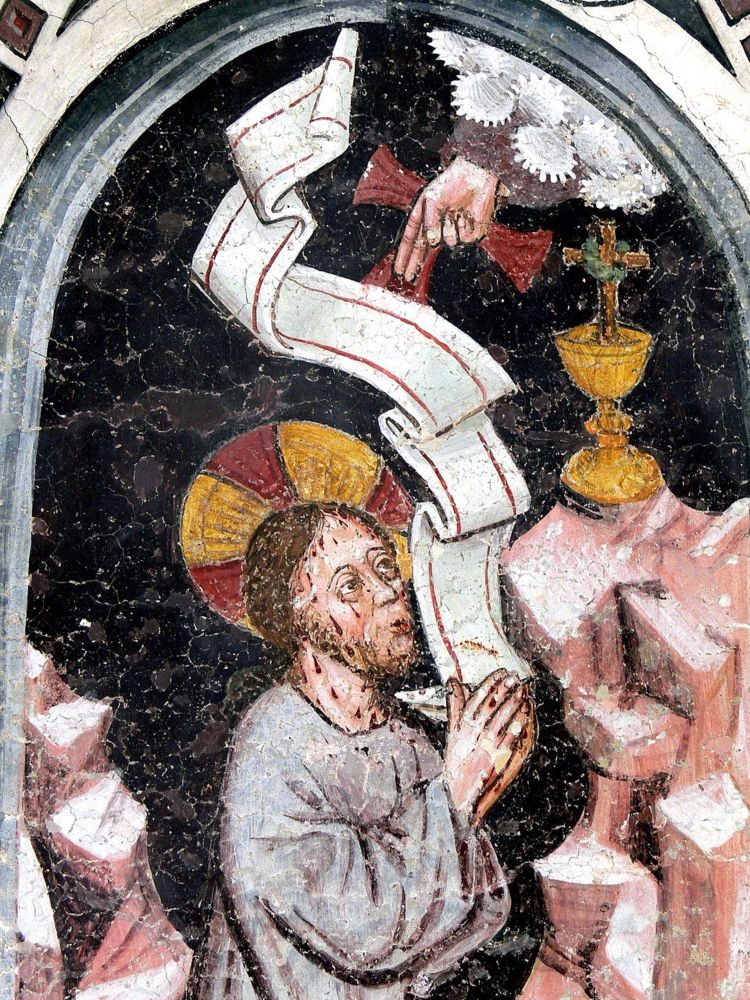
What should we expect of the immigrant? Mike Johnson claims the Bible expects ‘assimilation’ of the immigrant into a society—read about how early Christians would find this untenable.
17.02.2026 09:06
👍 0
🔁 0
💬 0
📌 0
As part of living in the Arctic this year, I have learned quite a bit about geopolitical and security concerns in the region. I have seen firsthand the strength of our relationship with NATO and the EU, as well as this relationship’s vital role in protecting the Arctic from hostile intervention.
20.01.2026 12:10
👍 2
🔁 2
💬 1
📌 0

Coming soon: Origen's homilies on Ezekiel (Latin) + all of the Greek fragments — the latter having been translated for the first time into English.
Many thanks to Roger Pearse for allowing us to use the translation by Mischa Hooker than he commissioned and painstakingly edited a decade ago.
20.01.2026 06:05
👍 8
🔁 2
💬 0
📌 0

Yancey, Gregory, And Theology Amidst Sin
It was recently revealed in a Christianity Today article that Philip Yancey is “retiring from writing, speaking, and social media,” after having
What do we do with the writings of theologians and writers who commit egregious sins? Read about how to consider Philip Yancey’s writings through the thought of Gregory of Nazianzus, a theologian from the fourth century.
20.01.2026 06:13
👍 1
🔁 0
💬 0
📌 0
Plus, you get to read about one of the figures featured in the Advent devotional that @lmillerrenberg.bsky.social and I co-wrote, “Candles in the Darkness”.
16.12.2025 09:38
👍 0
🔁 0
💬 0
📌 0

On The ‘Middle’ Coming: Advent Reflections With Romanos
Time and space are peculiar during the Advent season. The emphasis on repeated family traditions resurrects memories of the past amidst present
Time and space get a bit weird in the liturgical poems of Romanos the Melodist. Learn from the sixth century hymnographer, as his Advent reflections transports us to Eden, Bethlehem, the River Jordan, and the baptismal font in our own church.
16.12.2025 09:38
👍 4
🔁 1
💬 1
📌 0

A candle in front of a book cover, blue with gold lettering that reads “Candles in the Darkness,” sitting in front of a dark and snowy landscape.
In the darkness of the winter, as we look forward to the coming of Christ during this season of Advent, we look for lights to remind us of the hope we have in the Gospel.
30.11.2025 15:10
👍 4
🔁 2
💬 1
📌 0

Learning Patience: On Art And Liturgical Seasons
Western society has an odd relationship with patience. While most would claim patience is a virtue in some sense, our entire society is set up to deny its
Why practice the waiting of Advent when the Nativity has already taken place? It gives the opportunity to cultivate patience in a society obsessed with instant gratification. Read about how medieval Christians in Norway experienced Advent through church art and what we can learn from them:
18.11.2025 07:35
👍 4
🔁 0
💬 0
📌 0


📚 Great news for patristics scholars!
The proceedings of the International Conference on Patristic Studies (Oxford, 2011 & 2015) are now available in Gold Open Access.
That’s 42 volumes of cutting-edge research—now free to read on our website!
🔗 www.peeters-leuven.be/search_resul...
22.10.2025 14:20
👍 10
🔁 7
💬 1
📌 1

Mothers Of The Church: Paula Of Rome
Of all the passages of the Gospels, I find Christ’s words in Luke 14 to be among the most challenging: “If anyone comes to me and does not hate father and
In my continued attempts to bring more attention to the ‘Mothers of the Church’, I have written a piece on Paula of Rome. While known for her great spiritual discipline in fasting and living in austere conditions, perhaps her greatest form of long-suffering for Christ was putting up with Jerome.
21.10.2025 07:45
👍 3
🔁 1
💬 0
📌 0


It was a privilege to share my research on theological anthropology and singing in Origen's homilies at the Dynamics of Religious Practice workshop at University of Tromsø. Great conversation around methodology, cognitive science of religion, and early Christian practice – glad to be a part of it!
22.09.2025 07:36
👍 1
🔁 0
💬 0
📌 0

I’m Only Human: Sin As The Rejection Of Human Nature
How should we think about our flaws and misbehavior? For some, flaws are something to be embraced: we should be loved ‘warts and all’. For others,
I recently reflected on Origen of Alexandria and his understanding of sin and human nature. Read if you are interested in some strange exegesis, 'serpent-humans', and some questions about the phrase 'I'm only human'.
16.09.2025 11:38
👍 0
🔁 0
💬 0
📌 0


Our Greek-English edition of Cyril of Alexandria's Five Books/Tomes Against Nestorius is now for sale! Order your copy on our website: luxpatrum.com
Includes the authoritative critical Greek text by Eduard Schwartz, along with the only complete translation of the work available in English.
23.08.2025 16:28
👍 8
🔁 6
💬 0
📌 1

Is Faith Required For Reading The Bible Properly?
Who reads the Scriptures better—Bart Ehrman or my grandmother? One is a world-renowned scholar of the New Testament and textual critic, the other has no
What is required for reading the Bible properly? History degrees? Knowledge of biblical languages? Perhaps, faith? Read about the contrasting assumptions of early Christian exegesis and historical critical exegesis, with the former prioritizing a life of virtue in Christian community.
19.08.2025 13:58
👍 2
🔁 0
💬 0
📌 0
“How do we interpret the human weakness of Christ, if he does not have any weakness as the Son of God? Through debate amidst controversy, the early church developed a particular way to read the Bible which might guide us on this, sometimes called partitive exegesis.
15.07.2025 18:57
👍 2
🔁 0
💬 1
📌 0
Research Fellow/Senior Research Fellow (Early Christianity) - Vacancy Details
I am delighted to announce the IRCI has 2 job openings in early Christianity (specialisation open, research-focus, early career). Closing date 15 Aug. Contact me with any questions. We hope you'll consider joining our excellent group of scholars!
candidate.aurion.cloud/acu/producti...
03.07.2025 08:47
👍 26
🔁 35
💬 0
📌 3

Come study with us! Fully-funded Ph.D. scholarship opportunity to work on the Late Antique translation of texts.
www.acu.edu.au/research-and...
09.05.2025 06:46
👍 24
🔁 22
💬 1
📌 1
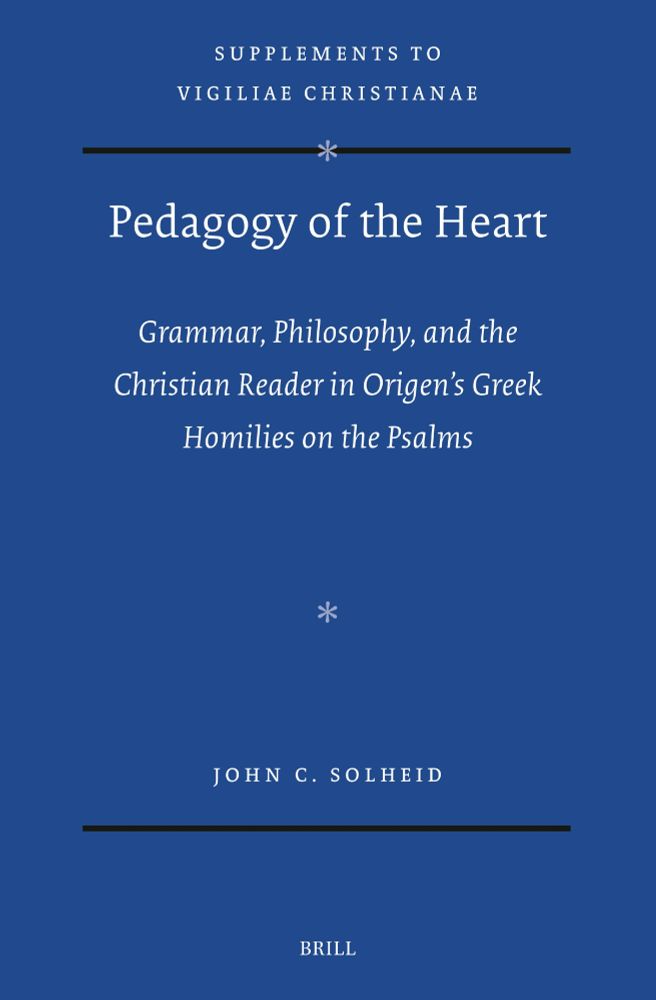
Pedagogy of the Heart: Grammar, Philosophy, and the Christian Reader in Origen’s Greek Homilies on the Psalms. By John C. Solheid. Supplements to Vigiliae Christianae, Volume 190. Brill, 2025.
Another new volume from VCS 🎉💙 John C. Solheid’s “Pedagogy of the Heart” presents a detailed and accessible analysis of the recently discovered Greek “Homilies on the Psalms” preached by Origen in the late 240s CE.
Check it out here! ⬇️
brill.com/display/titl...
#ISBL #EABS #AcRel #Theology #SBL
24.06.2025 09:09
👍 15
🔁 5
💬 1
📌 1

Women Scholars of NT and Early Christianity
Circulating this growing list of women NT/EC scholars again if any one else wants to add their name!
Please share if you can!
tinyurl.com/WomenNTECsch...
18.06.2025 21:09
👍 17
🔁 13
💬 1
📌 0
Ancient Church Discipline: On Sin And Rehabilitation
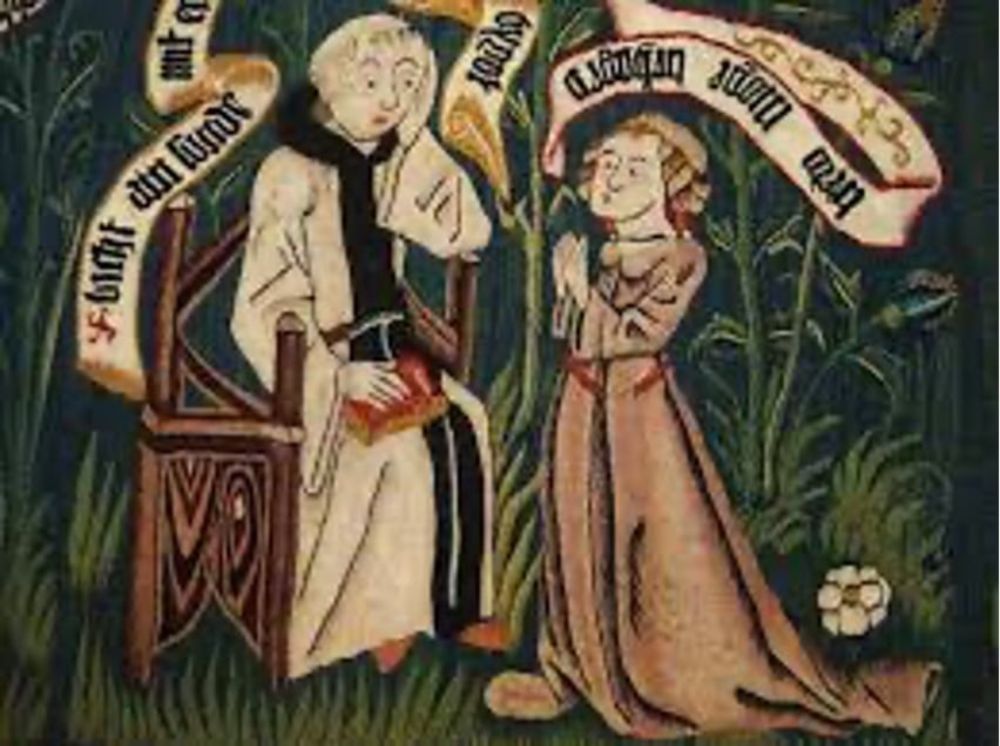
Moral failings in the church are not a new phenomenon—to read the pages of Christian history is to see sin’s stain throughout. The writings of the New
The early church provides a model for church discipline that acknowledges the severity of sin while always offering a way back into fellowship—but sometimes it took up to 20 years to do so! Read about it, here:
17.06.2025 09:49
👍 1
🔁 0
💬 0
📌 0
In recent years, moral failings in the church have been especially prominent as numerous Christian leaders have been embroiled in scandals. How should we treat grave sins, especially amongst our leaders? And should there always be a path towards rehabilitation?
17.06.2025 09:49
👍 1
🔁 0
💬 1
📌 0
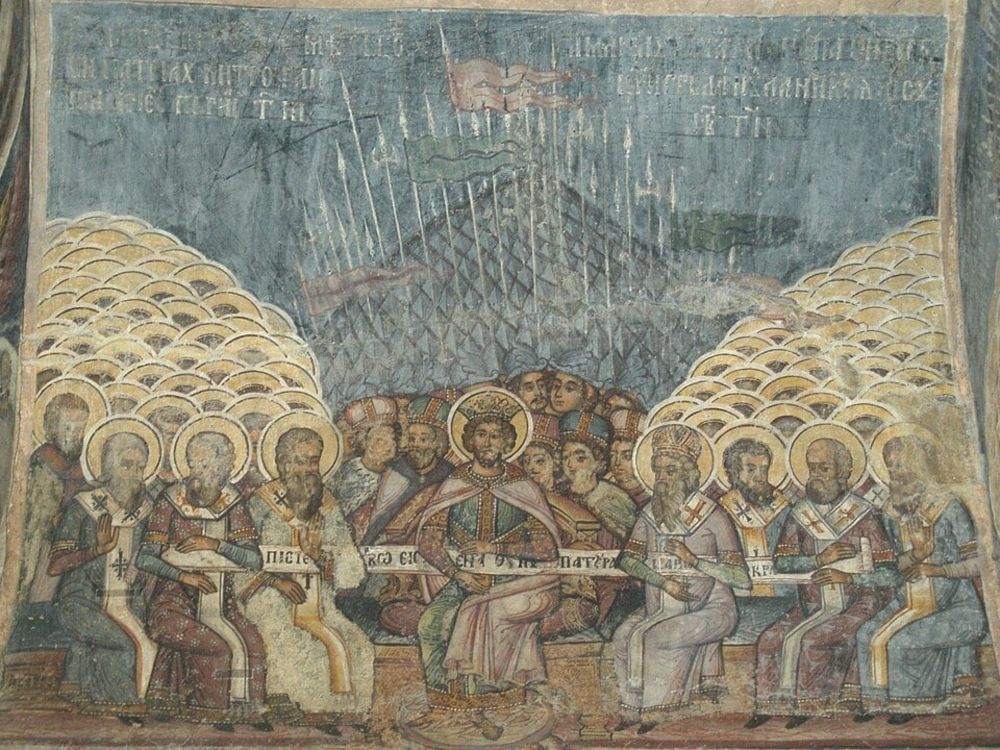
Nicene Worship: Then And Now
I had the privilege of attending a conference in Rome on the Council of Nicaea about a month ago. Throughout the various plenaries, panels, and
As scholars continue to investigate the historical and theological dimensions of the Council of Nicaea (325), we cannot forget what was at stake for the original contributors of the creed - proper worship.
www.patheos.com/blogs/anxiou...
20.05.2025 09:16
👍 4
🔁 1
💬 0
📌 0
Interactive Passage Network
📢Try out this tool built by Dr. Moshe Blidstein, my partner in the Josephus Christianus project, which maps the similarity of passages in ancient Hebrew and Greek texts. It provides visualizations and filtering capabilities as well as the texts themselves in parallel. mblida.pythonanywhere.com
13.05.2025 07:27
👍 2
🔁 2
💬 0
📌 0
We were able to discuss the Council's historical context, address how systematic theologians and historical theologians conceptualize ’Nicene Theology’, and consider the place of the Nicene Creed in modern worship. And Eusebius came up a few times!
30.04.2025 19:41
👍 2
🔁 0
💬 0
📌 0

Nicene Theology and Eusebius of Caesarea with Adam Renberg
The London Lyceum · Episode
If you are interested in learning more about the theology of the Council of Nicaea for its 1700 year anniversary (or my work!), this podcast episode from the London Lyceum is a good start.
open.spotify.com/episode/5qGJ...
30.04.2025 19:41
👍 5
🔁 2
💬 1
📌 0