Increasingly severe rainstorms put people and structures built on floodplains at risk – World Weather Attribution
The storms caused over 50 deaths and displaced hundreds of thousands of people, mostly in Morocco, and caused billions of Euros in damages.
You can read the full study here: www.worldweatherattribution.org/increasingly... 5/5
26.02.2026 09:48
👍 21
🔁 5
💬 1
📌 1

The southern region was impacted by an atmospheric river that gained additional moisture by passing over a marine heatwave in the Atlantic.
Our colleagues at @climatecentral.org found that this marine heatwave was made 10x more likely by climate change. 4/5
26.02.2026 09:48
👍 30
🔁 12
💬 1
📌 0

Observational-based data shows that the highest rainfall days are now approximately one-third wetter than they were before the planet warmed by 1.3°C
Carbon emissions are responsible for about an 11% increase in rainfall intensity in the northern region we studied. 3/5
26.02.2026 09:48
👍 17
🔁 12
💬 1
📌 0

In Grazalema, southern Spain, over a year’s worth of rain fell in just a matter of days forcing the town’s population to evacuate. 2/5
26.02.2026 09:48
👍 19
🔁 6
💬 1
📌 2

NEW STUDY: Winter downpours are getting heavier in parts of Spain, Portugal and Morocco as the region recovers from a month of relentless storms.
Between mid-January and mid-February nine named storms brought torrential rain hurricane force winds causing major damage and disruption. 1/5
26.02.2026 09:48
👍 84
🔁 61
💬 1
📌 13

a map of southern south America showing the location of burning fires with lots of red dots.
Patagonian wildfires show how denying climate change & pushing environmental destruction make the reality of climate change much worse. Threatening the destruction of trees that have been alive when the bronze age collapsed. @wwattribution.bsky.social www.worldweatherattribution.org/climate-chan...
11.02.2026 09:13
👍 89
🔁 56
💬 2
📌 3

Some of world’s oldest trees hit by climate-fuelled wildfires in Patagonia
Wildfires that left 23 people dead were made about three times more likely by global heating, researchers say
Some of world’s oldest trees hit by climate-fuelled wildfires in Patagonia
- Some Alerce trees had stood undisturbed for thousands of years, say researchers, but global heating is now supercharging blazes
@wwattribution.bsky.social
#climatecrisis
Story by me
www.theguardian.com/world/2026/f...
11.02.2026 09:21
👍 38
🔁 27
💬 2
📌 3
While climate change is the primary driver, other factors are at play. La Niña also played a smaller role in these dry conditions.
Critically, large budget cuts for fire management in Argentina are believed to have amplified the impact of the blaze there. 4/5
11.02.2026 09:27
👍 13
🔁 1
💬 1
📌 1
We found a very clear climate change signal, with the weather behind these wildfires made about 2.5 to 3x more likely.
Impacted areas are also receiving about 20-25% less rainfall than they would have in a world without fossil fuel burning, providing lots of dry vegetation for fires to feed on 3/5
11.02.2026 09:27
👍 13
🔁 5
💬 1
📌 1

Between Jan 17-19, wildfires in Chile’s Biobío & Ñuble regions killed 23 people and destroyed 1,000+ homes.
Across the border in Argentina, blazes have torn through Los Alerces National Park and are still burning. 2/5
11.02.2026 09:27
👍 8
🔁 1
💬 1
📌 0

NEW STUDY: Climate change is fueling deadly fires that threaten some of the world’s oldest living things: the ancient Alerce trees of Patagonia, which can live for over 3,000 years.
Our analysis shows that human-induced warming is making weather conditions more conducive to fire. 1/5
11.02.2026 09:27
👍 68
🔁 45
💬 2
📌 6
The impact is a "textbook case of climate injustice."
90% of homes in some impacted areas are made of sun-dried earth - structures that simply cannot withstand rainfall of this intensity.
Vulnerable communities are paying the price for a crisis they didn't cause. (3/4)
29.01.2026 10:18
👍 2
🔁 2
💬 1
📌 0
The current weak La Niña phase naturally brings wetter conditions to the region, but it is now operating in a much warmer, moisture-rich world.
While still a rare 1-in-50 year event, climate change acted as a "force multiplier," turning a heavy rain event into a more deadly deluge. (2/4)
29.01.2026 10:18
👍 1
🔁 1
💬 1
📌 0

💡New Study: Southern Africa was hit by intense rainfall this month. Our analysis has found that downpours in the region are now 40% more intense than they were in pre-industrial times.
The resulting floods across Mozambique, South Africa, Zimbabwe, and Eswatini have been catastrophic. 🧵 (1/4)
29.01.2026 10:18
👍 25
🔁 19
💬 1
📌 2

A map of southeastern Australia showing the temperature anomalies during the heatwave.
While Australian heatwaves were some of the very first extreme events attributed to climate change, people still underestimate how much worse they got - killing more people than all other natural hazards combined. New @wwattribution.bsky.social study. www.worldweatherattribution.org/climate-chan...
22.01.2026 13:55
👍 189
🔁 117
💬 0
📌 6
Those with access to cooling relied heavily on solar - which met 60% of the peak demand during the heatwave - a major contrast from the fossil-fuel heavy responses to previous heatwaves. 5/6
22.01.2026 13:03
👍 15
🔁 0
💬 1
📌 0
That has a human cost: Melbourne’s airport saw temperatures top out at 44.4°C on Jan 9 and one hospital reported a 25% spike in emergency admissions. Heatwaves kill more Australians than all other natural hazards combined. 4/6
22.01.2026 13:03
👍 36
🔁 9
💬 2
📌 2
Yet the world continues to heat with 2.6°C of warming expected by the end of the century under current global policies. This would turn a once rare event into a normal part of the Australian summer. 3/6
22.01.2026 13:03
👍 10
🔁 0
💬 1
📌 0

Even with a weak La Niña - which typically brings cooler weather - fossil fuel emissions "far outweighed" natural cooling. This heatwave was 1.6°C hotter than it would have been in a world without human-caused warming. 2/6
22.01.2026 13:03
👍 12
🔁 0
💬 1
📌 0

🚨 NEW STUDY: As Australia prepares for another heatwave, our latest study found the early January heatwave which hit SE Australia was made 5x more likely due to climate change. What was once a relatively rare 1-in-25-year event is now expected about every 5 years. 🧵 1/6
22.01.2026 13:03
👍 92
🔁 53
💬 2
📌 4

Record temperatures linked to human-caused climate change
New research by climate scientists at Maynooth University in conjunction with Met Éireann has found Ireland's record summer night time temperatures this year were made 40 times more likely by human-ca...
Great to see coverage of our first full @wasitusie.bsky.social study on RTE (and elsewhere). Kudos @clairebergin.bsky.social and Lionel swan as well as met Éireann colleagues and thanks as ever to @wwattribution.bsky.social for the hugely valuable collaboration www.rte.ie/news/ireland...
24.09.2025 05:45
👍 16
🔁 11
💬 0
📌 1

Spain and Portugal wildfire weather made 40 times more likely by climate crisis, study finds
Wildfires were 30% more intense than would have been expected without global heating, scientists say
🚨 Wildfires in Spain & Portugal were made 40x more likely by climate breakdown, says @wwattribution.bsky.social
“The sheer size of these fires has been astonishing,” adds CEP’s Clair Barnes (@clairbarnes.bsky.social) 🌍🔥
#ClimateCrisis #Wildfires
05.09.2025 09:04
👍 23
🔁 13
💬 0
📌 3

⚠️Climate change made the hot, dry and windy weather that fueled the deadly July wildfires in Spain and Portugal 40 times more likely 🧵
📝 ow.ly/SoRo50WPvih
04.09.2025 09:34
👍 51
🔁 30
💬 1
📌 1
Extreme fire weather conditions in Spain and Portugal now common due to climate change – World Weather Attribution
The extremely hot, dry weather conditions that primed Spain and Portugal for this year's catastrophic wildfire season are no longer a rare occurrence thanks to human-caused warming. This probably shouldn't come as a surprise, but if it does, the full study is @wwattribution.bsky.social...
04.09.2025 10:19
👍 9
🔁 3
💬 0
📌 0
📣Job alert!
We're hiring a Media Relations Manager at Imperial College London. Applications are closing tomorrow.
www.jobs.ac.uk/job/DOK861/m...
04.09.2025 08:52
👍 8
🔁 5
💬 0
📌 0
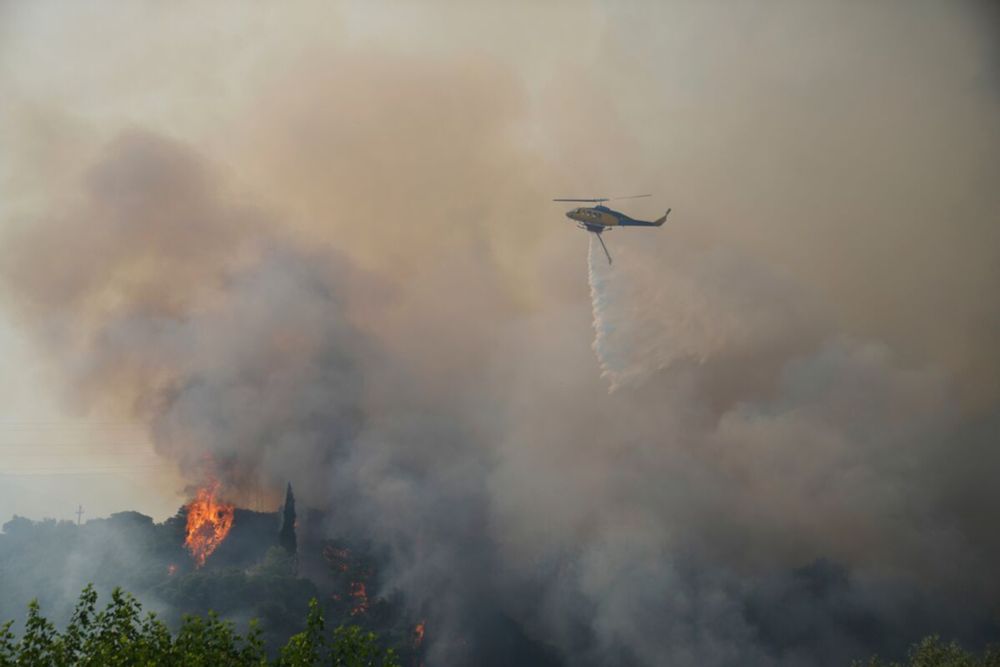
Climate Change Made Turkey, Greece Wildfires 10 Times More Likely
Hot, dry and windy conditions in the eastern Mediterranean will happen more often in a warmer world.
🌡️ Scientists from @wwattribution.bsky.social say this summer’s wildfires in Greece, Turkey & Cyprus were 22% more intense & 10x more likely due to climate change.
Events that were once 1-in-100-year now happen every 20 years. 🔥
#ClimateCrisis #Wildfires
29.08.2025 15:04
👍 7
🔁 6
💬 0
📌 0