

"The message, consistent and unrelenting, is that trans people are a threat to the nation. The subtext is that we are not of this nation."
17.03.2025 13:08
👍 496
🔁 151
💬 9
📌 13
"The message, consistent and unrelenting, is that trans people are a threat to the nation. The subtext is that we are not of this nation."

The study above came out in 2020. No, it hasn't gotten better: projectplay.org/news/2025/2/...

You'd think folks who care about equity in youth sports would talk a lot more about money:
projectplay.org/news/low-inc...
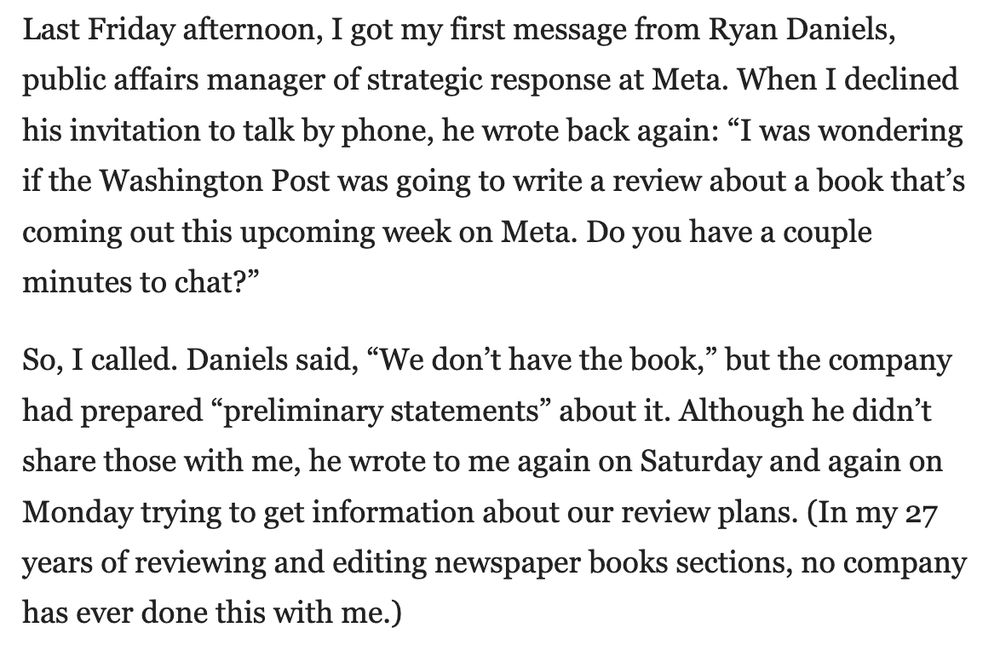
Last Friday afternoon, I got my first message from Ryan Daniels, public affairs manager of strategic response at Meta. When I declined his invitation to talk by phone, he wrote back again: “I was wondering if the Washington Post was going to write a review about a book that’s coming out this upcoming week on Meta. Do you have a couple minutes to chat?” So, I called. Daniels said, “We don’t have the book,” but the company had prepared “preliminary statements” about it. Although he didn’t share those with me, he wrote to me again on Saturday and again on Monday trying to get information about our review plans. (In my 27 years of reviewing and editing newspaper books sections, no company has ever done this with me.)
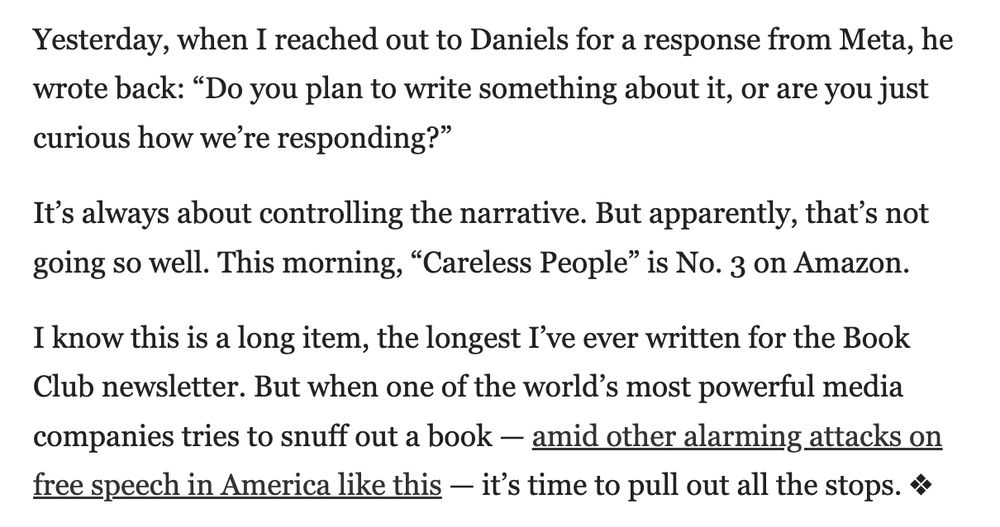
Yesterday, when I reached out to Daniels for a response from Meta, he wrote back: “Do you plan to write something about it, or are you just curious how we’re responding?” It’s always about controlling the narrative. But apparently, that’s not going so well. This morning, “Careless People” is No. 3 on Amazon. I know this is a long item, the longest I’ve ever written for the Book Club newsletter. But when one of the world’s most powerful media companies tries to snuff out a book — amid other alarming attacks on free speech in America like this — it’s time to pull out all the stops.
WaPo's Ron Charles, in his Book Club newsletter, on Meta's repeated questions about his plans to review Sarah Wynn-Williams's "Careless People":
"In my 27 years of reviewing and editing newspaper books sections, no company has ever done this with me."

"Call it a 'culture war' if you like. Only consider how the underlying mechanism dovetails with actual war, murder and annihilation."
wapo.st/4iw5bUk

Let’s imagine, just for a second, that you have institutional power. Specifically, let’s imagine you have influence and sway from within a media company, corporation, or political party. Now let’s imagine a group without that power is critical of how you are wielding your power or concerned that you are doing so without due consideration of its impact on their lives. But along with your institutional power, you have status—wealth, relationships, and means of exerting influence from within and perhaps even beyond the institution itself. When others challenge your credibility, that prestige acts as an immune system against their calls for accountability. You can define the terms of the debate—they cannot. You can define the language of the debate—they cannot. You can reduce them in the public eye to a formless cloud of irrational dissent online—they can only make the cloud grow louder and, thus, less intelligible. This kicks off a cycle where your status and their lack of it becomes self-evident. Why should you have to listen to this mob and their shouting, these nonbinary campus activists, these uncompromising ideologues, these brainrotted online trolls? You, in contrast, are so much more intelligible and rational, gifted as you are with the ability to make a living off rhetoric. They do not just appear to you as irrational because you only encounter them through Twitter—they are irrational and thus are only heard on Twitter. QED.
Some thoughts on power, prestige, and social media open.substack.com/pub/autonomy...
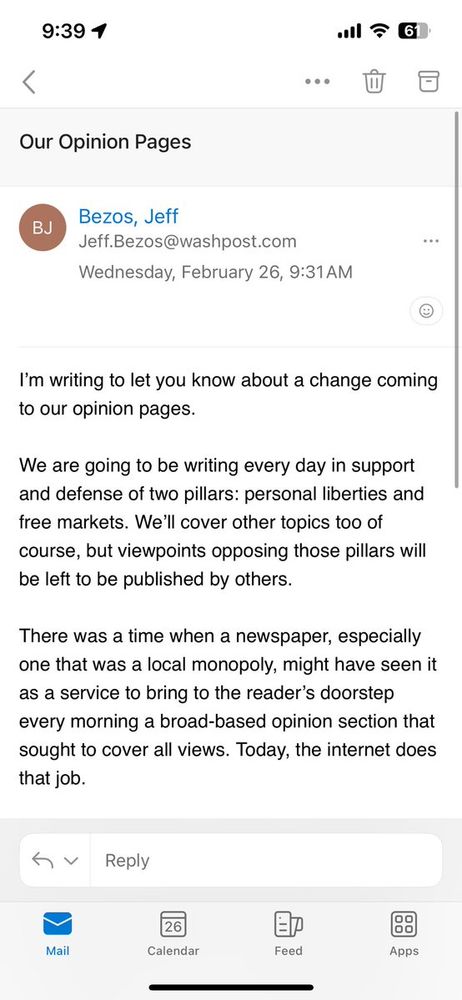
Massive encroachment by Bezos into The Washington Post’s opinion section - makes clear dissenting views will not be published
I still have not felt encroachment on my journalism on the news side, but if Bezos tries interfering with the news side I will be quitting immediately and letting you know
Personal liberties:
* Women making their own health care decisions
* Children reading the books they want in school
* Freedom of identity
* Freedom of opinion
going to exercise my personal liberty or whatever that means and say what the fuckity fucking fuck
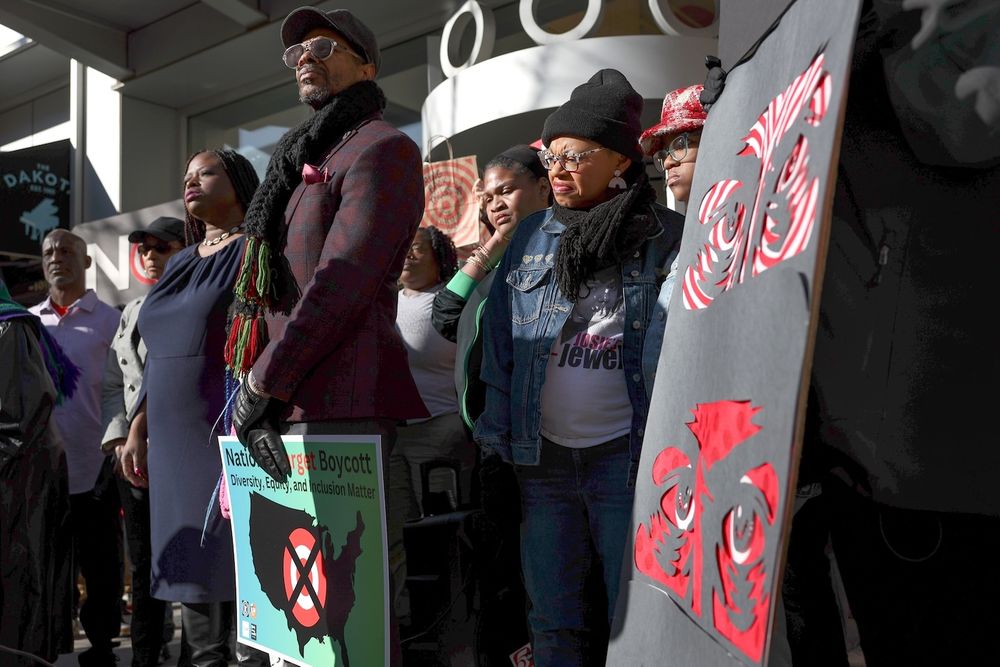
My latest.
As journalists and writers, we have a duty to use language that is accurate and describes our current reality.
I’m no longer going to talk about DEI/Anti-DEI.
Let’s be clear. We are facing racial purges and re-segregation.
www.washingtonpost.com/opinions/202...
All good! "Why them? Why now?" is always a question worth asking. And with all the things going on right now and all the public distrust in media (including, of course, the paper i work for), i'm more than happy to talk through this stuff 🤎
Anyway, I hope I didn't overstep here if all you wanted to do was vent. Just thought your question was a fair one -- one my editor and i thought quite a bit about -- and was worth answering

(3) They're currently *investing in technologies* that they say would screen embryos for things like IQ, and say they've done this with their own children. This is alarming to geneticists, including one who called it "market-based...techno-eugenics." That, to me, also seems worth keeping an eye on
(2) Their ideas are fringe, but their circle of influence is not. They have made strident efforts to develop relationships with the White House, including pitching a pronatalist task force (the White House didn't deny this, btw). Their ability to impact policy is what's important, imo
Hi there. The reason you're hearing about them in my piece is because (1) the issue of depopulation/population decline is real, and is one with national and geopolitical implications. it's the kind of stuf nobel laureates are releasing working papers on, happy to share if you're interested. And...