
#democracyassistance #democracyaid
#OECD-DAC
#USAID #democracy #civilsociety
@vdeminstitute.bsky.social
17.04.2025 12:37
👍 0
🔁 0
💬 0
📌 0
#democracyassistance #democracyaid
#OECD-DAC
#USAID #democracy #civilsociety
@vdeminstitute.bsky.social
To conclude, our findings show a positive link between earmarked aid channelled through CSOs and improvements in civil society and democracy indices. While the effects are modest, the indicate that more significant investments are needed for substantial change.
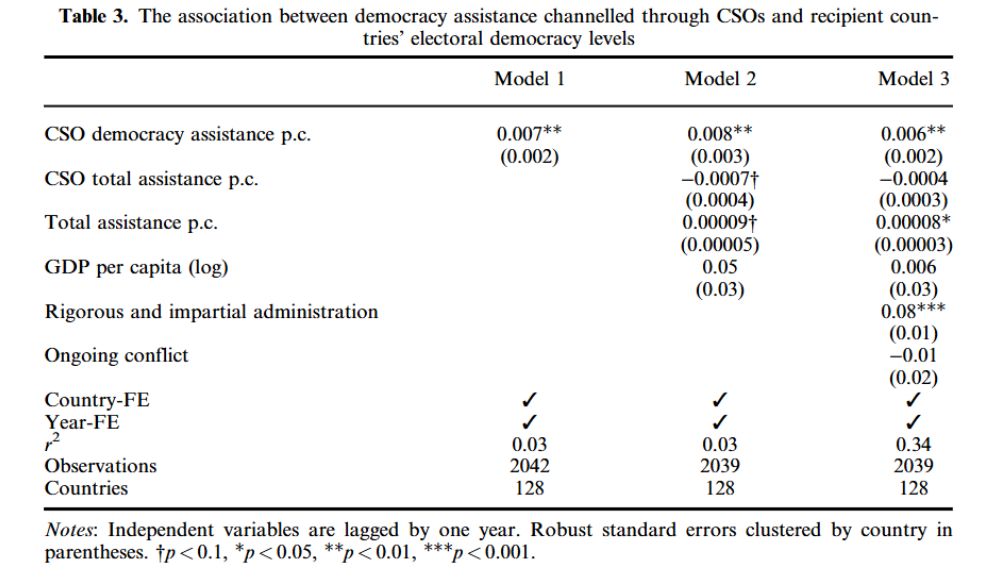
Beyond strengthening civil society, we argue that aid channelled through CSOs is also linked to higher democracy levels.
CSOs educate and mobilize citizens and help hold leaders accountable. Our results show modest improvements in democracy levels.

We find that these associations to be slightly stronger in closed authoritarian regimes.This may be due to closed autocracies coming from lower levels of democracy which allow them to experience relatively larger increases in their democracy scores.
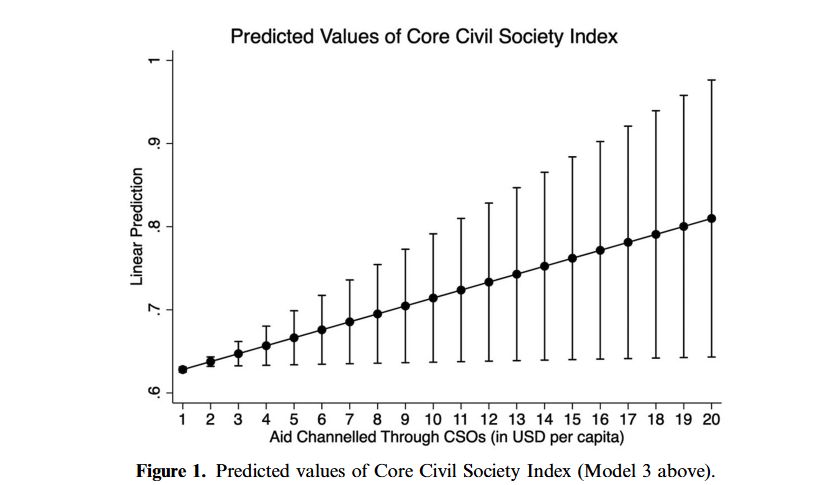
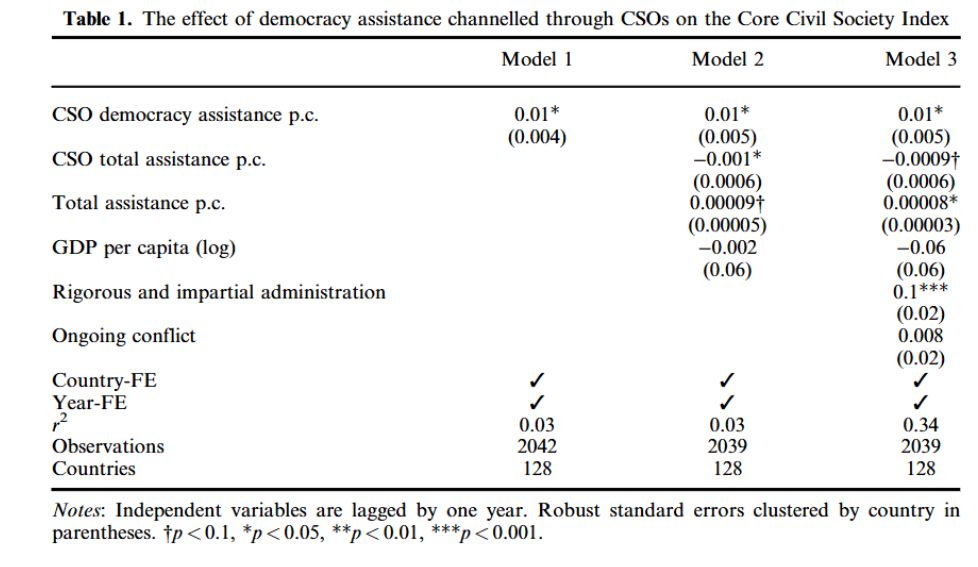
On average, a one USD per capita increase in democracy aid channelled through CSOs is associated with an increase in civil society robustness of 0.01 units on the Core Civil Society Index scale, ranging from 0 (low) to 1 (high).
We argue that earmarked democracy aid i.e.,targeted funding channelled through CSOs can strengthen CSOs capacity, is less prone to misallocation, and helps close information gaps.
We find a modest but positive impact of such aid on civil society.
Our analysis is the most comprehensive to date on earmarked funding via CSOs.
📊 Using data from 128 countries (2005–2021), we test:
a) Does earmarked aid via CSOs strengthen CSOs?
b) How does it work across regime types?
c) Does it improve democracy?
Aid might not make poor countries rich - but it can strengthen civil society and democracy
📢 In our new open-access study with Marike Blanken &
@FelixWiebrecht
we show how earmarked democracy aid via CSOs empowers CSOs and improves democracy.
www.tandfonline.com/doi/full/10....
We learned a lot from the presented research papers running in two parallel workshop rooms; the networking and collaborative ideas suggest that this is the start of more things to come ✨
We were also honored to have Professor Paula Pickering who has 25 years of experience working in the region and came all the way from the US, serve as a keynote speaker. We were also delighted to have Aida Hadžialić mayor of Metropolitan Stockholm, welcome everyone.
We welcomed 20 distinguished scholars in Stockholm from all over the world, who focus on party politics, democratization, Europeanization, geopolitical influence, gender, and climate issues in the Western Balkans.
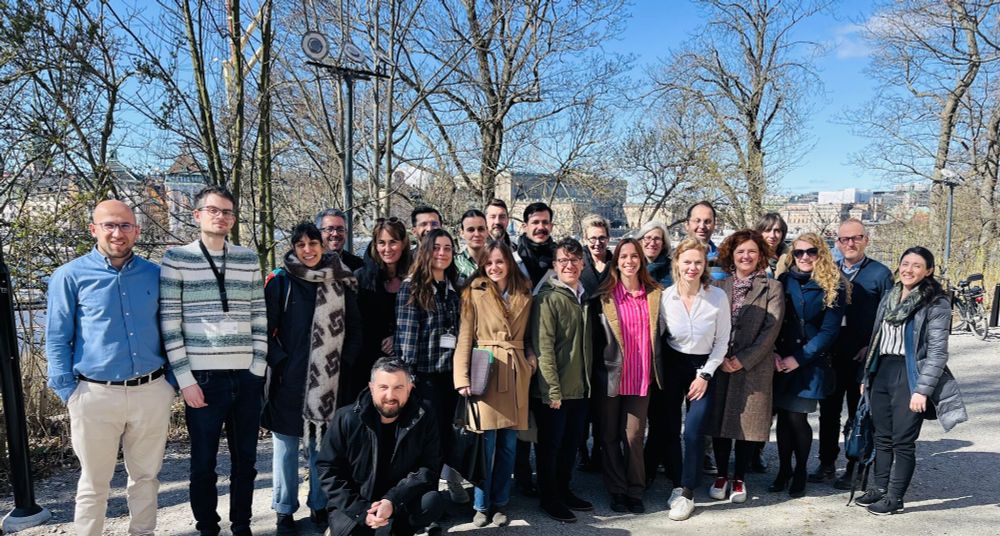
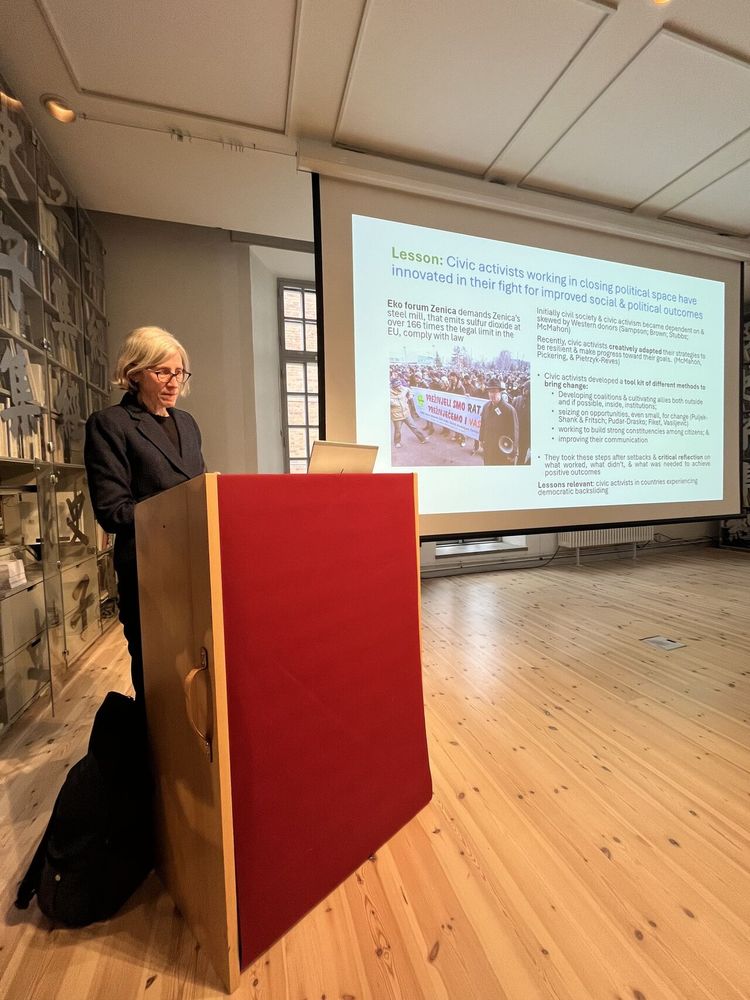
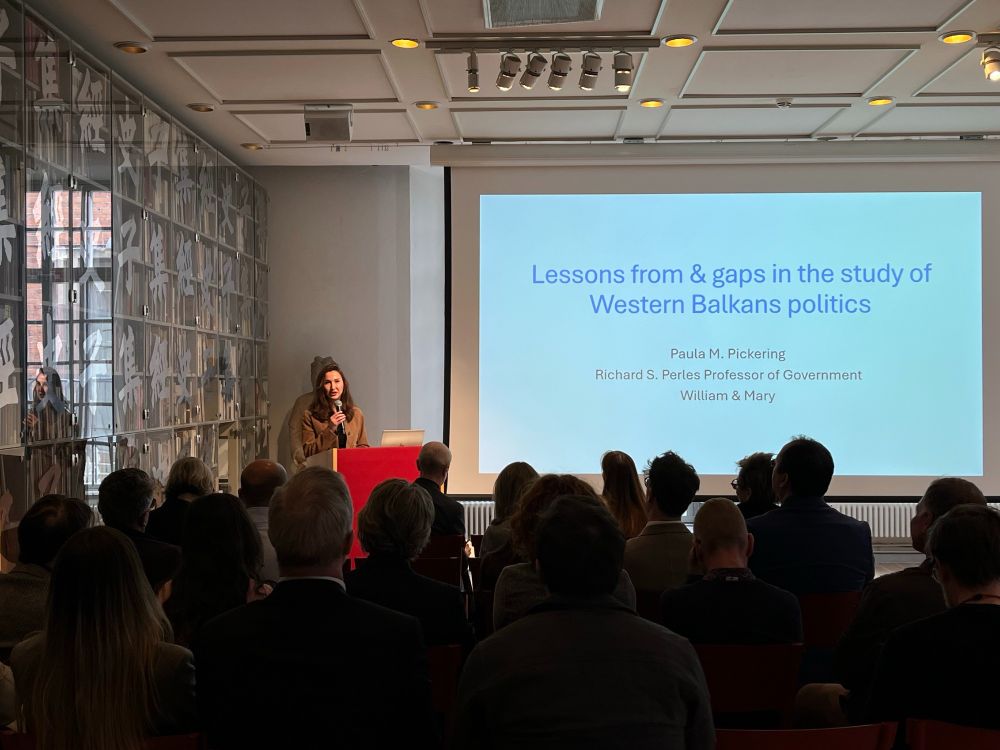
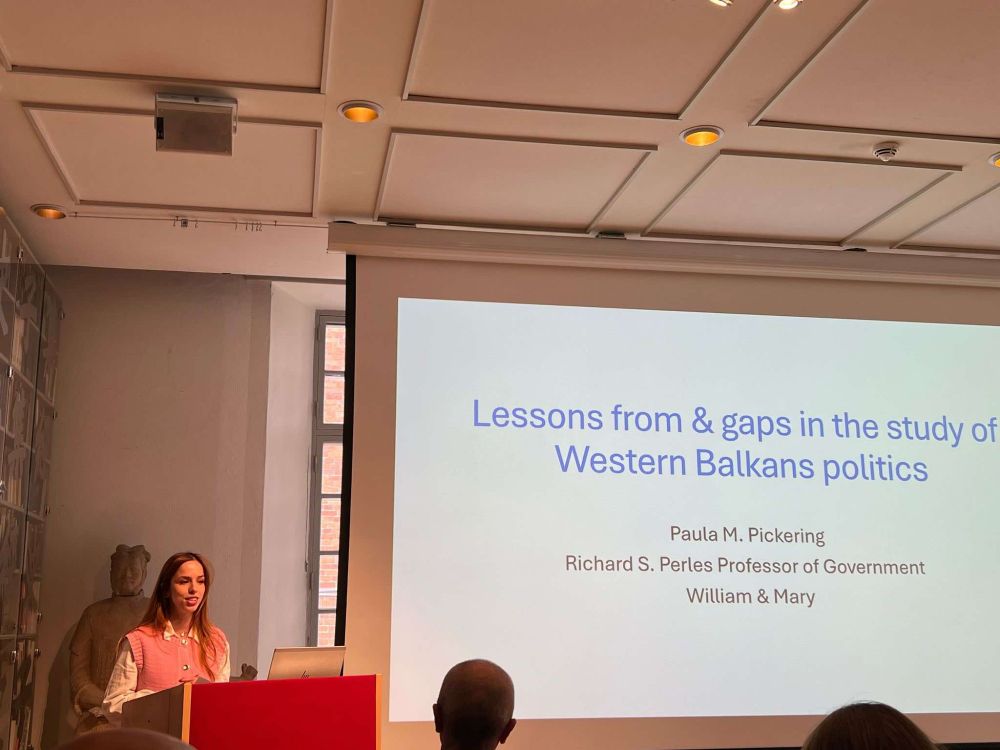
Last week @nicholasaylott.bsky.social Johanna Mannergren & I did something very cool!
We hosted the first workshop on 'Contemporary Politics in the Western Balkans, 10–11 April 2025.'
We welcomed 20 distinguished scholars who focus on the Western Balkans at
@uisweden.bsky.social
@uisweden.bsky.social
This can explain why protests escalate over projects linked to autocratic donors.
Citizens push against donors who they associate with the risk of corruption and lack of voice in decision-making.
🔗 Read the full article here
@SCID__journal: link.springer.com/article/10.1...
Citizens see local politicians as unresponsive, regardless of who they cooperate with (a common trend in the Western Balkans). However, they believe democratic donors (mainly the #EU) are more likely to address their demands, if there are mishaps related to projects.
My latest article in
@SCID__journal
using survey experiments with citizens in Serbia shows that citizens prefer the least donors who are autocratic (where citizens dont get to elect their own representatives) and that they prefer the most cooperation with transparent donors.
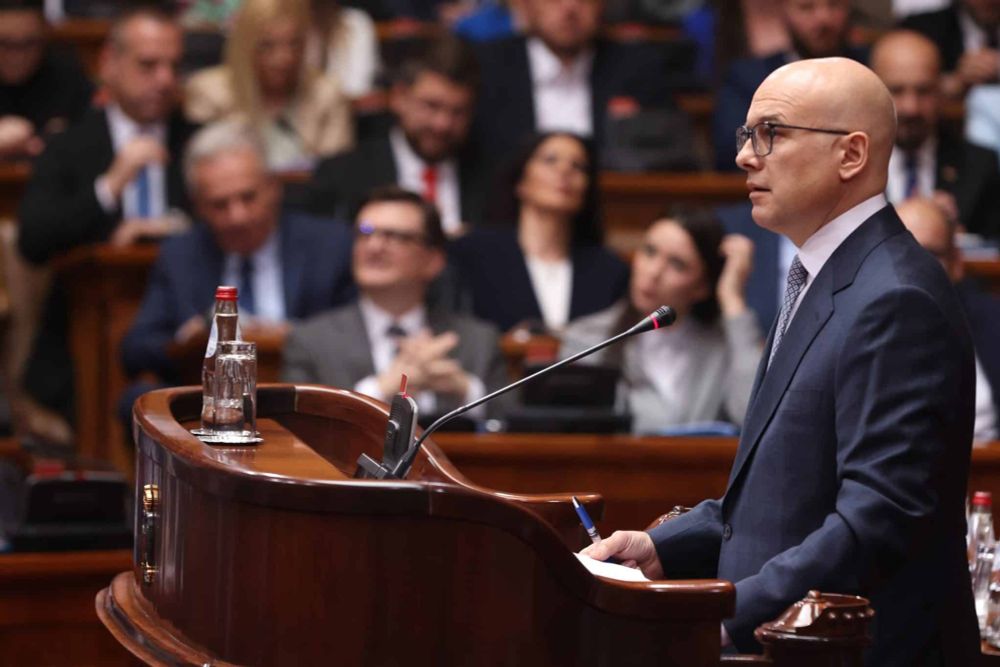
The latest #protests in #Serbia and the resignation of prime minister, over the failed Novi Sad train station renovation by Chinese firms confirm my findings in
@SCID__journal: Serbian citizens prefer democratic donors over autocratic ones, they see them as less corrupt & more responsive
🚨New Publication! 🚨
This is a special one for me because it’s in @chinaquarterly.bsky.social but also because it looks at the key question that motivated me to do a PhD in the first place!
What’s the point of having authoritarian institutions that by design cannot constrain? A short 🧵

📅 Save the Dates: #Demscore Conference 2025, June 9-10 in Gothenburg.
📢 Call for Papers and Panels open now, learn more at www.demscore.se/events/demsc...
@ucdp.bsky.social @vdeminstitute.bsky.social
@medem.bsky.social @digitalsocietyproject.org
@sampol.bsky.social @prioresearch.bsky.social
Grateful for the opportunity to talk about potential divides between young men and women with
@mdressler.bsky.social at FEPS. Truly appreciate the thoughtful questions and time to elaborate on our argument.
Listen here: open.spotify.com/episode/4E2Z...
Congratulations!
I thank Agnes Cornell, Amy Alexander & Phil Roessler for their thorough feedback
during the early stages of the experiment. I also thank Monika Bauhr, Ann-Sofie Isaksson, Kristen Kao,
Ellen Lust, & Matthew Winters, @gefjonoff.bsky.social , @jacobgunderson.bsky.social for their valuable suggestions.
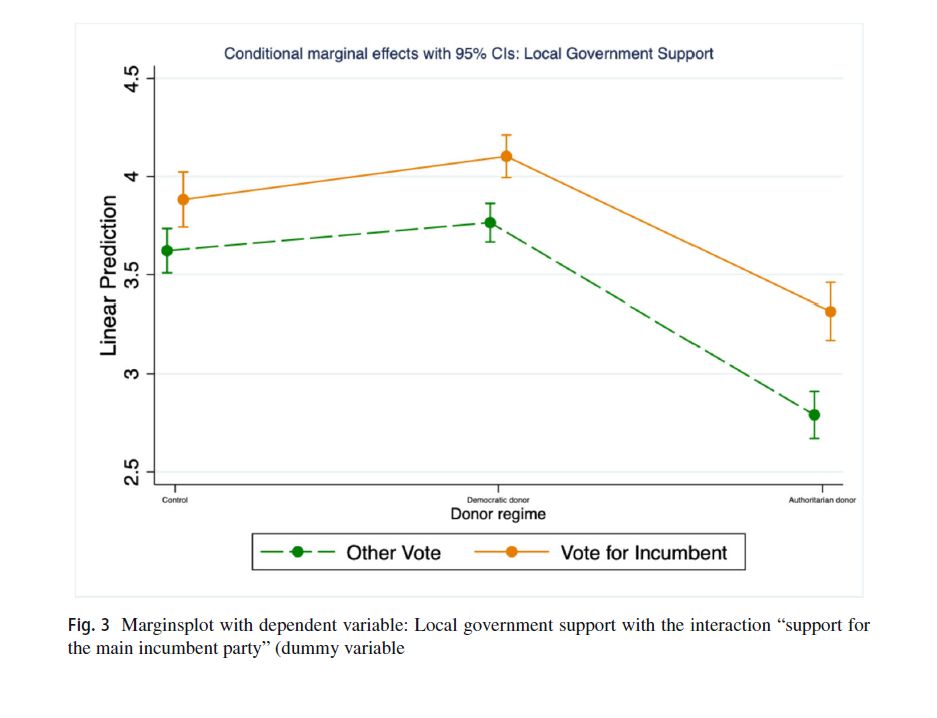
Citizens with authoritarian values often vote for radical right parties. In Serbia, an interesting finding is that voters of the far-right incumbent, known for its authoritarian tendencies, are less likely to oppose cooperation with authoritarian donors.
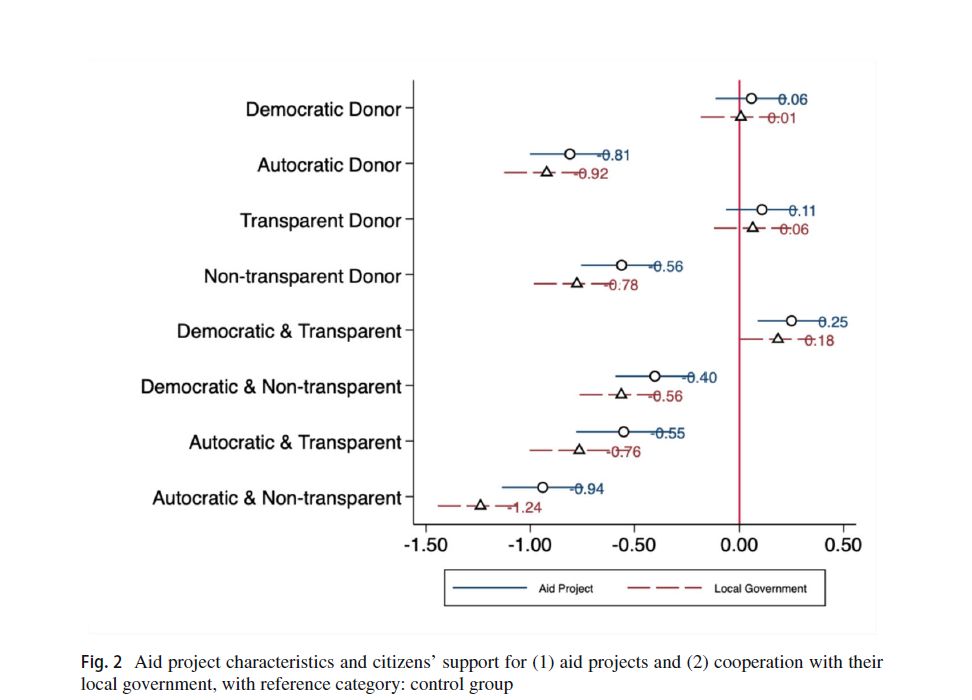
Citizens like the least 'authoritarian regimes' even in #Serbia’s context where authoritarian values have
been on the rise. They perceive authoritarian donors are the most likely to engage in corruption and be least responsive to their demands.
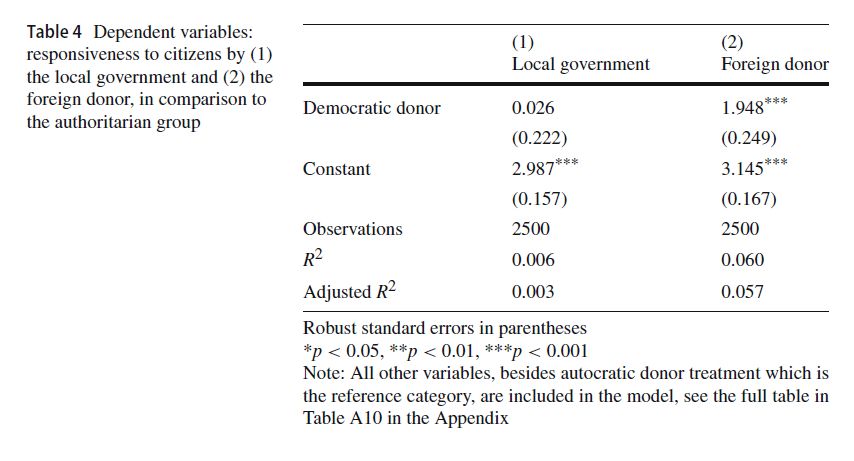
Citizens perceive that democratic donors are more likely to consider citizens' complaints. However, they do not believe that cooperation with democratic donors will improve local politicians' responsiveness toward them.
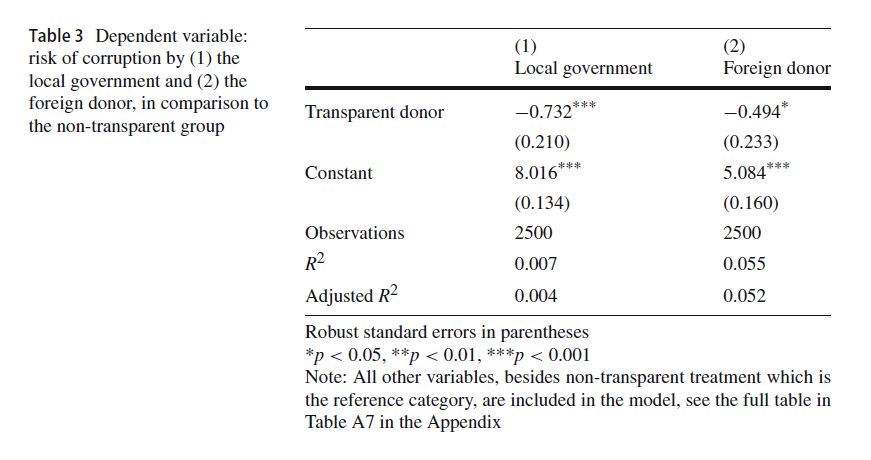
Foreign aid from transparent donors is associated with less misuse of
funds and corrupt behaviour by both domestic local politicians and foreign donors.
The article argues that transparency in the aid project affects citizens’ perceptions of corruption, while the donor’s regime—whether democratic or authoritarian—signals to citizens whether they can voice their criticism toward their local politicians and foreign donors.

🚨new pub 🚨
Does it matter to citizens where #foreignaid comes from? Survey experiment with citizens in #Serbia (N=2500) now on @SCID__journal :
link.springer.com/article/10.1...
I find that donors' regime and practices impact citizens' views of their local politicians and donors