At a time when Western exceptionalism is proving illusory, there is much to learn from peoples who have fought for just peace & liberation for centuries. Our call for critical/Majority World research on resistance in psych of peace & conflict:
www.apa.org/pubs/journals/pac/resistance-peace-conflict
23.10.2025 14:11
👍 3
🔁 1
💬 0
📌 0
Acting as if we were free: Prefigurative politics in repressive contexts
YouTube video by Resistance Psychology Network
Did you miss the session on "Prefigurative Politics in Repressive Contexts" with activists and researchers from Lebanon, Serbia and Turkey?
Here's the recorded session, now available in the Resistance Psychology Network's Youtube channel:
youtu.be/Q0S65MPOu8E
12.02.2026 06:13
👍 3
🔁 3
💬 0
📌 1

📢 Call for Papers
Special Issue: Rethinking Resistance in Peace & Conflict
#peace #psychology #APA
We invite work that challenges dominant models of #peace ✊🏽
See www.apa.org/pubs/journals/pac/resistance-peace-conflict for more information
@apajounals.bsky.social
@lauraktaylorPHD.bsky.social
09.02.2026 12:41
👍 2
🔁 3
💬 0
📌 0
![A CT ING A S I F WE WERE FREE: PREF I G U R A T IVE
P O L I T ICS IN REPRESSIVE C ONTEXTS
Ps y c h o l ogy o f Re s i s t a n c e Vir t u a l M e e t i ng Se ri e s
This roundtable will bring together activists from Lebanon and Serbia who have engaged in some form of prefigurative politics, and researchers who have studied prefigurative movements in these two contexts and Turkey. All three contexts were or are marked with extensive use of police violence and other forms of severe repression. Researchers will present key insights from their studies on prefigurative movements. The roundtable will invite activists to reflect on what kinds of research, knowledge, or theoretical tools could best support their struggles, and will also give them the opportunity to respond directly to academic interpretations of their work.
TIJANA KARIĆ [UNIVERSITY OF MARBURG]
CHADEN NOUEIHED HANI [ACTION RESEARCH ASSOCIATES, LEBANON]
THIA SAGHERIAN-DICKEY [UNIVERSITY OF DUNDEE]
YASEMIN GÜLSÜM ACAR [UNIVERSITY OF ST. ANDREWS]
JELENA BOŽIĆ [SVIĆE, SERBIA]
ORHAN KAYA [UNIVERSITY OF MARBURG]
MONDAY, FEB 9, 2026
9:00 San Francisco 11.00 Managua
12:00 New York 17.00 London 18:00
Belgrade 19.00 Beirut 20.00 Istanbul
REGISTER: TINYURL.COM/PREFIGURATIVE](https://cdn.bsky.app/img/feed_thumbnail/plain/did:plc:rzd2rzfa3cod4htijhkd2jcn/bafkreiastrigdcgey5kajf3u3jjcrkhtvcxraelfqcyganwatnokwy24tm)
A CT ING A S I F WE WERE FREE: PREF I G U R A T IVE
P O L I T ICS IN REPRESSIVE C ONTEXTS
Ps y c h o l ogy o f Re s i s t a n c e Vir t u a l M e e t i ng Se ri e s
This roundtable will bring together activists from Lebanon and Serbia who have engaged in some form of prefigurative politics, and researchers who have studied prefigurative movements in these two contexts and Turkey. All three contexts were or are marked with extensive use of police violence and other forms of severe repression. Researchers will present key insights from their studies on prefigurative movements. The roundtable will invite activists to reflect on what kinds of research, knowledge, or theoretical tools could best support their struggles, and will also give them the opportunity to respond directly to academic interpretations of their work.
TIJANA KARIĆ [UNIVERSITY OF MARBURG]
CHADEN NOUEIHED HANI [ACTION RESEARCH ASSOCIATES, LEBANON]
THIA SAGHERIAN-DICKEY [UNIVERSITY OF DUNDEE]
YASEMIN GÜLSÜM ACAR [UNIVERSITY OF ST. ANDREWS]
JELENA BOŽIĆ [SVIĆE, SERBIA]
ORHAN KAYA [UNIVERSITY OF MARBURG]
MONDAY, FEB 9, 2026
9:00 San Francisco 11.00 Managua
12:00 New York 17.00 London 18:00
Belgrade 19.00 Beirut 20.00 Istanbul
REGISTER: TINYURL.COM/PREFIGURATIVE
The next session of Psychology of Resistance Virtual Meetings is next Monday, February 9:
We do a Roundtable Session on Prefigurative Politics in Repressive Contexts with activists from Lebanon and Serbia and researchers studying prefigurative movements.
To register: tinyurly.com/prefigurative
05.02.2026 07:41
👍 5
🔁 4
💬 0
📌 1

TITLE:
Privileged representations of peace: Perpetuating systemic violence
AUTHORS:
Ekin Birdir, Ludwin Molina, canan coşkan
ABSTRACT:
Privileged representations of peace: Perpetuating systemic violenceEkin Birdir, Ludwin Molina, canan coşkanAbstractSocial psychological research typically focuses on promoting peace between groups in conflict by fostering intergroup harmony through prejudice reduction or advancing social justice through collective action. Unfortunately, these investigations rarely consider the mainstream discursive structures and epistemic engagement that normalize collective ethnic/racial violence. We addressed this gap with two mixed-method (i.e., qualitative and quantitative) studies in two contexts (Turkey and the United States), utilizing decolonial frameworks informed by liberation psychology, critical race theory and privileged ethnic/racial (Turkishness and White racial) contracts. Comparative analysis of meta-representations of peace among Turks (Study 1; N = 116) and White Americans (Study 2; N = 151) exposed the overlapping (i.e., negative peace and reliance on the nation-state order) and divergent (i.e., assimilative inclusion and neoliberal individuality) elements of privileged epistemic engagement with peace that align with Turkishness and White racial contracts, perpetuating collective violence. Furthermore, both Turks' and White Americans' ethnic/racial identity endorsement predicted higher perceptions of the state/military contribution to peace, suggesting the role of racial privilege in maintaining systemic violence. To our knowledge, this work is the first social psychological investigation of the Turkishness contract and the comparative analysis of privileged meta-representations of peace.
📢Fresh article out:
Comparing the White racial contract (Mills) in the U.S. and the Turkishness contract (Ünlü) in Turkey through mixed-methods, Ekin, Ludwin and I exposed how "peace" is used to maintain the status quo rather than achieve justice.
bpspsychub.onlinelibrary.wiley.com/doi/10.1111/...
19.01.2026 09:24
👍 5
🔁 4
💬 1
📌 0

UPDATE: Three Palestinian students wounded as Israeli forces storm Birzeit University campus
Haven’t seen this reported in the UK news at all. My colleagues there report that faculty members were also stopped and prevented from entering campus.
english.wafa.ps/Pages/Detail...
06.01.2026 11:37
👍 1
🔁 3
💬 1
📌 0
Happening today!
Still time to register: tinyurl.com/disruptive-p...
10.11.2025 06:49
👍 1
🔁 1
💬 0
📌 0

I’ve voted ‘yes’ & ‘yes’ in the @ucu.org.uk ballot. Enough is enough. #WeAreTheUniversity
24.10.2025 11:53
👍 4
🔁 1
💬 0
📌 0
At a time when Western exceptionalism is proving illusory, there is much to learn from peoples who have fought for just peace & liberation for centuries. Our call for critical/Majority World research on resistance in psych of peace & conflict:
www.apa.org/pubs/journals/pac/resistance-peace-conflict
23.10.2025 14:11
👍 3
🔁 1
💬 0
📌 0

And so we choose to do battle against the forces of darkness,
#ghting back against a malevolent movement that represents all that
is bad in the world— fascism, authoritarianism, racism, misogyny,
and bigotry— a movement that uses antiscienti#c disinformation as
its preferred weapon. We do this not because our success is guaranteed.
Given the forces mobilized against us, we are clearly the underdog.
And no white wizard will come to our rescue. But we have truth
and justice on our side. And the stakes simply couldn’t be greater. We
#ght for a livable planet, for us, our children, and future generations.
Because it’s worth #ghting for.8
The concluding paragraph of #ScienceUnderSiege
(www.hachettebookgroup.com/titles/micha...)
18.09.2025 01:56
👍 393
🔁 137
💬 7
📌 20
Join the Methods in Social Change and Inertia series on Oct 20 at 2pm UK time for a workshop on the Social Change Algorithm by Roxane de la Sablonniere, Diana Cardenas, and Jean-Marc Lina! Register: events.teams.microsoft.com/event/25bb20...
#psychology #socialsciences #socialpsych #socialchange
10.10.2025 10:25
👍 3
🔁 2
💬 0
📌 0

Psychological Research on Resistance and Repression: A Research Method Bazaar
Interactive Workshop (90 mins)
Led by Aya Adra, Fouad Bou Zeineddine, canan coşkan, Ali Teymoori, and Johanna Ray Vollhardt)
Monday, Oct 13, 2025
Many questions in social psychological research on resistance and repression have not been systematically addressed– in part because of the methodological limitations and rigidities in the field, in addition to practical and ethical considerations. For example, how does one examine covert resistance under conditions of surveillance and risk, how does one access forms of everyday resistance that may not be articulated as such, how does one conduct research on resistance that is under repression without creating further risk or harm to the participant and/or to the research team, how does one access information about resistance under extremely violent and most repressive conditions, such as genocide?
This session is an interactive methods workshop, a bazaar of ideas and research experience, where participants will share and swap knowledge about underutilized methods that have been or could be used to examine different forms of resistance (above all those forms of resistance that are understudied) in various contexts of violence and repression. The organizers will bring examples of a relevant, underutilized research method and share it with participants in a brief (5 min) blitz presentation. We also invite participants (optional, not required for participation) to bring along their methods, ideas, suggestions, questions and dilemmas, and experiences to share (5 mins max), with or without a slide or two. We will also discuss more general, overarching questions related to methodological limitations in research on resistance and repression and ways to address these.
7.00 am NYC, 8.00 Santiago (Chile), 12 (noon) London, 13.00 Barcelona, 14.00 Ramallah & Istanbul, 16.30 New Delhi, 19.00 Manila, 21.00 Brisbane.
Registration link in the original post.
The 1st session of this year's Psychology of Resistance Virtual Meetings is next Monday, October 13:
We start with an interactive workshop to diversify our methodological toolbox to better investigate forms of resistance and repression in different contexts.
To register: tinyurl.com/resistancere...
06.10.2025 09:44
👍 5
🔁 4
💬 0
📌 4
This is an interactive "methods bazaar". Thus, you can also bring along your methods, ideas, suggestions, questions and dilemmas, and experiences to share (5 mins max), with or without a slide or two (optional, not required for participation).
Remember to register: tinyurl.com/resistancere...
06.10.2025 11:54
👍 3
🔁 2
💬 0
📌 0

The image contains the schedule of the planned events for the Psychology of Resistance Network. The schedule can be found online: https://resistancepsych.blogspot.com/p/schedule.html
The 3rd year of the Psychology of Resistance (in violent, repressive contexts) Virtual Meeting Series is starting this month - here is the schedule for the academic year 2025/26. More information, recordings, and form for mailing list to receive registration links here:
resistancepsych.blogspot.com
04.10.2025 13:34
👍 3
🔁 4
💬 0
📌 0
Interested in state-of-the-art methodologies to study social change? My brilliant colleague @drfbzen.bsky.social is hosting Dr. Agnieszka Rychwalska next week, funded by British Academy! 👉 resistancepsych.blogspot.com/p/methods-in... Come and learn all things functional connectivity analysis! 🧐
18.09.2025 15:24
👍 3
🔁 2
💬 0
📌 0

Doughnut academia.
Adapting the “doughnut” model of economics to the academic world enables us to visualize the inner social foundations that universities should provide, and the outer human and planetary boundaries that universities need to avoid overshooting. Note that the ordering of elements within the inner and outer rings is random; there is no direct pairing between foundations and ceilings.
Adapted from Raworth, 2017 under a CC-BY-SA license.

Seven ways to think like a 21st century scientist.
1. Change the goal: from a business that produces papers and graduated students, towards a university that works towards the inside space of the academic doughnut. 2. Get savvy with systems: from feeling like a cog in the university machine, towards being gardeners of our academic system. 3. See the big picture: from academics who look out over the world from their ivory tower, towards scholarship which accepts its own embeddedness in (and dependence on) society and the planet. 4. Create to regenerate: from a rat race where we tread water, towards “slow scholarship” that values community building, deep thinking and rest crucial for intellectual work. 5. Nurture human nature: from the lone genius, towards team science. 6. Design to distribute: from a funding system where the rich get richer, towards a fair distribution of opportunities and resources. 7. Be agnostic about growth: from a focus on increasing numbers of papers, citations and students, towards rebuilding trust in our own academic communities and with society.
Feeling like academia is in pretty bad shape? You're not alone.
@clarekelly.bsky.social and I previously wrote about the need to collectively rethink and reshape scientific practice: the academic doughnut. Read more at elifesciences.org/articles/84991
But, have these ideas changed anything? 👇
10.02.2025 12:15
👍 107
🔁 38
💬 2
📌 4

Abstract: Under the banner of progress, products have been uncritically adopted or
even imposed on users — in past centuries with tobacco and combustion engines, and in
the 21st with social media. For these collective blunders, we now regret our involvement or
apathy as scientists, and society struggles to put the genie back in the bottle. Currently, we
are similarly entangled with artificial intelligence (AI) technology. For example, software updates are rolled out seamlessly and non-consensually, Microsoft Office is bundled with chatbots, and we, our students, and our employers have had no say, as it is not
considered a valid position to reject AI technologies in our teaching and research. This
is why in June 2025, we co-authored an Open Letter calling on our employers to reverse
and rethink their stance on uncritically adopting AI technologies. In this position piece,
we expound on why universities must take their role seriously toa) counter the technology
industry’s marketing, hype, and harm; and to b) safeguard higher education, critical
thinking, expertise, academic freedom, and scientific integrity. We include pointers to
relevant work to further inform our colleagues.

Figure 1. A cartoon set theoretic view on various terms (see Table 1) used when discussing the superset AI
(black outline, hatched background): LLMs are in orange; ANNs are in magenta; generative models are
in blue; and finally, chatbots are in green. Where these intersect, the colours reflect that, e.g. generative adversarial network (GAN) and Boltzmann machine (BM) models are in the purple subset because they are
both generative and ANNs. In the case of proprietary closed source models, e.g. OpenAI’s ChatGPT and
Apple’s Siri, we cannot verify their implementation and so academics can only make educated guesses (cf.
Dingemanse 2025). Undefined terms used above: BERT (Devlin et al. 2019); AlexNet (Krizhevsky et al.
2017); A.L.I.C.E. (Wallace 2009); ELIZA (Weizenbaum 1966); Jabberwacky (Twist 2003); linear discriminant analysis (LDA); quadratic discriminant analysis (QDA).

Table 1. Below some of the typical terminological disarray is untangled. Importantly, none of these terms
are orthogonal nor do they exclusively pick out the types of products we may wish to critique or proscribe.

Protecting the Ecosystem of Human Knowledge: Five Principles
Finally! 🤩 Our position piece: Against the Uncritical Adoption of 'AI' Technologies in Academia:
doi.org/10.5281/zeno...
We unpick the tech industry’s marketing, hype, & harm; and we argue for safeguarding higher education, critical
thinking, expertise, academic freedom, & scientific integrity.
1/n
06.09.2025 08:13
👍 3786
🔁 1897
💬 110
📌 390
Free BA-funded workshop by Dr Agnieszka Rychwalska on using functional connectivity analysis to analyse complex social systems on Sep 23 & 24! For details & registration: resistancepsych.blogspot.com/p/methods-in...
#psychology #socialsciences #socialpsych #socialchange
16.09.2025 12:00
👍 1
🔁 0
💬 0
📌 1
Methods in Social Change Workshops
This is a methods series that Dr. Fouad Bou Zeineddine (University of Greenwich) is organizing in parallel with the Psychology of Resistance...
Last chance to register! Free workshops on computational & network approaches to research on social change! Sep 1-2: Prof. Simon Angus. Sep 4-5: Dr. Joshua Uyheng. More details here: resistancepsych.blogspot.com/p/methods-in...
#psychology #socialsciences #socialpsych #socialchange #researchmethods
26.08.2025 19:10
👍 1
🔁 0
💬 0
📌 0
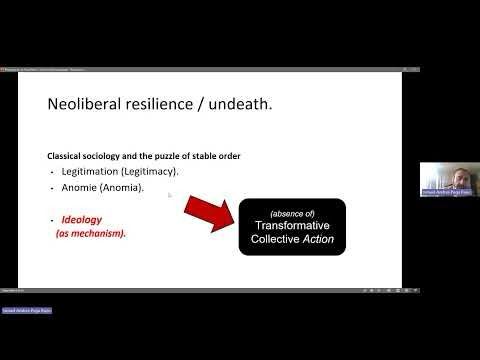
This seems a clear manifestation of what Ismael Puga calls ideological inversion & the social psychological concept of pluralistic ignorance more broadly. agreed, politicians and the media clearly driving it - bc they can’t & won’t properly address the economy, environment, intl relations.
26.08.2025 13:00
👍 0
🔁 0
💬 0
📌 0
Methods in Social Change Workshops
This is a methods series that Dr. Fouad Bou Zeineddine (University of Greenwich) is organizing in parallel with the Psychology of Resistance...
In September, we have 3 brilliant scholars providing free methods workshops on computational and network approaches to research on social change. Registration is now open for in-person and online attendance. More details here: resistancepsych.blogspot.com/p/methods-in...
08.08.2025 13:34
👍 1
🔁 2
💬 0
📌 0
We are here today precisely because the humanities and social sciences have largely been marginalised as they became more inclusive. The solution can not be to double down. I wish people could look at what is happening and understand - we all stand for knowledge and humanity or we all fall.
13.08.2025 22:07
👍 1
🔁 1
💬 0
📌 0

Resistance Psychology Virtual Session Proposals
After the successful conclusion of the third round of our Psychology of Resistance in Repressive and Violent Contexts meeting series, we are excited to launch the submission form for sessions in 2025-...
Call for presentations and sessions in the next round of the Psychology of Resistance Virtual Meeting Series, September '25 - June '26! Details and formats as well as proposal submission form here: forms.gle/jcs2XEx9igdS... and more information about the series in the thread!
11.08.2025 18:44
👍 7
🔁 8
💬 1
📌 1
Methods in Social Change Workshops
This is a methods series that Dr. Fouad Bou Zeineddine (University of Greenwich) is organizing in parallel with the Psychology of Resistance...
In September, we have 3 brilliant scholars providing free methods workshops on computational and network approaches to research on social change. Registration is now open for in-person and online attendance. More details here: resistancepsych.blogspot.com/p/methods-in...
08.08.2025 13:34
👍 1
🔁 2
💬 0
📌 0
Third workshop of the Methods in Social Change and Inertia series is coming up on Tuesday June 3! Ismael Puga and Cristobal Moya will discuss methods to examine ideological inversion, a key factor in inertia. For more, see: resistancepsych.blogspot.com/p/methods-in-societal-change-and-inertia.html
29.05.2025 11:42
👍 2
🔁 3
💬 1
📌 0
Third workshop of the Methods in Social Change and Inertia series is coming up on Tuesday June 3! Ismael Puga and Cristobal Moya will discuss methods to examine ideological inversion, a key factor in inertia. For more, see: resistancepsych.blogspot.com/p/methods-in-societal-change-and-inertia.html
29.05.2025 11:42
👍 2
🔁 3
💬 1
📌 0

Microsoft Virtual Events Powered by Teams
Microsoft Virtual Events Powered by Teams
Second workshop of the Methods in Social Change and Inertia series is Thursday, May 29! Emma Thomas (Flinders) will be showing us new approaches to using person-centred analyses in collective action research. Register here: tinyurl.com/MSCI25No2
16.05.2025 12:58
👍 4
🔁 4
💬 0
📌 0