
Thanks Jeff!
19.08.2025 20:37
👍 1
🔁 0
💬 0
📌 0
Thanks Jeff!

For further details, see my 2018 essay in @twqgw.bsky.social. The situation is different now that Israel has already attacked but some of the conclusions may still hold. doi.org/10.1080/0163... 8/8
In sum, the following things would increase the odds of success: 1. Belief that the US/Israel knew the location of all relevant nuclear materials and components and could destroy them 2. Iran's ability or willingness to forcefully retaliate is reduced. 3. Iran resolve to get a nuke now goes down 7/
3. The target’s costs of conflict exceed its determination to proliferate. How costly is US involvement in the war for Iran? Are those costs greater than its desire for a bomb? If yes, the odds of success for a US threat go up. 6/
2. The threat-maker’s costs of attacking are low relative to the stakes. The stakes for the US are clear. POTUS has consistently said that Iran can't get the bomb. More uncertainty about how Iran might retaliate. If the costs would be massive for the US, the credibility of its threat goes down. 5/
Maybe the bigger challenge is the uranium that Iran has already enriched and its centrifuge components. Does the US or Israel know for sure where this stuff is and have confidence they can destroy it? If the answer is no, this complicates things for the US. 4/
I have questions about exactly how far underground Fordow is. For years, public sources said 200-300 feet. Now lots of sources are saying half a mile -- 2,640 feet -- apparently based on comments by IAEA DG Grossi. Big difference b/n 300 and 2,640. 3/
Condition 1: The threat-maker has the capacity to erode the nuclear program. Here one challenge is the Fordow enrichment plant, buried deep underground. Could the US destroy it in airstrikes using GBU-57 bunker busters? Probably. But I wouldn't say success is guaranteed. 2/
The US may be using threats to attack Iran's nuclear facilities to get Iran to the negotiating table. Will it work? I can't credibly answer that. But I can tell you the factors that influence whether this type of threat works. There's 3 conditions for success, based on my research. 1/
On preventive strikes:
Feaver and Niou 1996 ISQ
Reiter 2006 Nonpro Rev.
Goldstein 2006 book
Ramberg 2006 BAS
Fuhrmann and Kreps JCR 2010 JSS 2011
Whitlark 2021 book
Ludvik 2019
Debs and Monteiro 2017 book
Fuhrmann 2018 TWQ
Bas and Coe 2016 JCR 2018 ISQ
Spaniel 2019 book
Braut-Heggehammer 2016 book
🧵IR scholars, let's start a thread of what we know that's relevant for a US attack on Iran. Won't change any minds, but might help us teach this crisis and learn new angles. Please add (incl. your own work!), forgive/correct omissions. Nobody can cover everything and it's great to find new work. 1/?

For context on Israel-Iran, here's a list of cases where countries considered or used military force to stop nuclear proliferation in peacetime. It's from my new @cambup-polsci.cambridge.org book Influence Without Arms. Chapter 6 is devoted to explaining why preventive strikes happen.

Curious about a potential strike against Iran? I spoke to an expert (@mcfuhrmann.bsky.social) on preventive action targeting nuclear programs last month. Still relevant today! Skip to 24:52.
www.youtube.com/watch?v=bqVx...
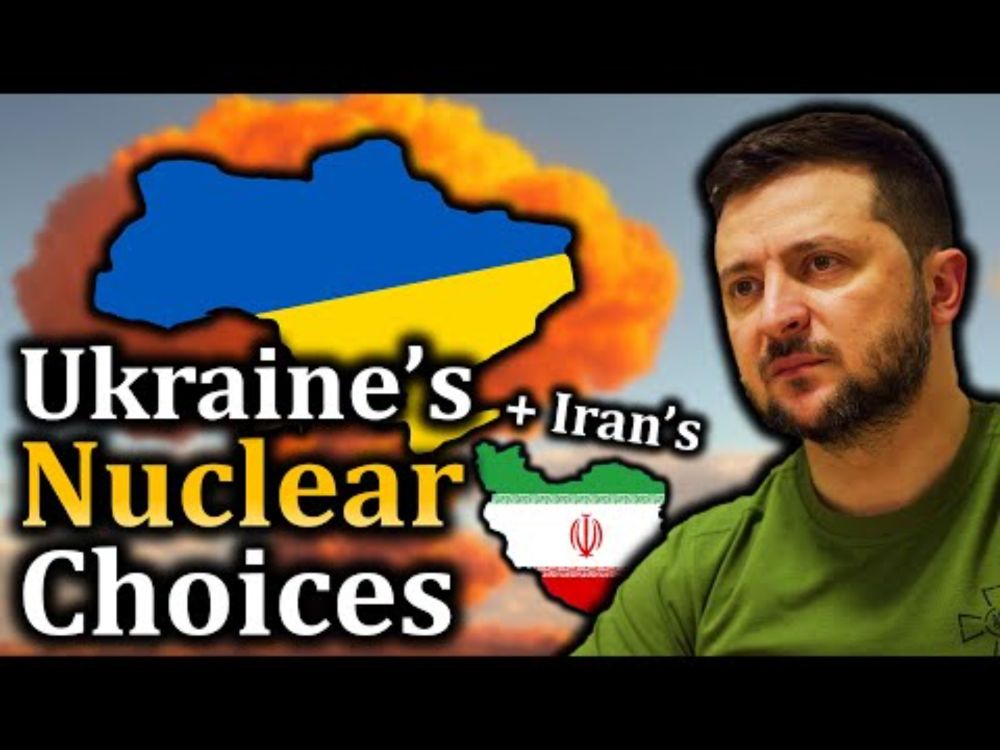
After a long break, Lines on Maps Extra is back! Today, the topic is Ukraine's nuclear pathways, with some bonus thoughts about Iran. I brought in @mcfuhrmann.bsky.social, a professor and expert on nuclear proliferation, to share his thoughts.
www.youtube.com/watch?v=bqVx...
Had a great time visiting Carnegie Mellon’s @cmist-cmu.bsky.social to talk about my new book “Influence Without Arms.” Link to video is below if you’re interested in checking it out.
Great opportunity for recent or soon to be college graduates
New job alert. The Council on Foreign Relations is searching for a Stanton Nuclear Security Senior Fellow: careers-cfr.icims.com/jobs/2615/st...
Thanks, Maria. Your help with Egyptian sources was super helpful, and you'll see that cited in Chapter 2!
Thanks, Chris!
I hope you'll check it out! It's the culmination of nearly a decade of work. There were times I thought I'd never get to the end. Excited to now share this!
Can countries gain leverage over adversaries and allies with nuclear technology even if they don't have assembled bombs? Why does seeking nuclear technology sometimes invite military attacks? When do we see nuclear arms races?
The book helps answer some big questions: Why have only 10 countries built nuclear weapons? Would the world be safer and more secure if all nuclear powers disarmed? Will Iran or South Korea build nuclear weapons in the coming months/years?

It's publication week! Influence Without Arms: The New Logic of Deterrence is now available: www.cambridge.org/9781108824071. The book examines the role of nuclear technology in international relations.
Great, thanks!
Can you please add me to polisky?