
The ladies are still in the area and drained the water bowl again overnight.
Doe mule deer and possible 2025 fawn. #mammals
Water=Life 🥤
27.02.2026 15:36
👍 63
🔁 6
💬 1
📌 0

@andrewzampetti
PhD student @ Sapienza University 🇮🇹 🐒🐺🦌Conservation biology 📊 Ecological modeling 📸 Camera-traps 🤖 Leveraging AI to transform wildlife conservation 🐾 📖 https://www.researchgate.net/profile/Andrea-Zampetti-4
The ladies are still in the area and drained the water bowl again overnight.
Doe mule deer and possible 2025 fawn. #mammals
Water=Life 🥤

New #causalinference paper just dropped! As an ecologist, I was trained to ask: "What do the data tell me?"
This paper: there are only specific instances when this question is appropriate—when you lack domain knowledge, which we often have!
www.nature.com/articles/s41...

#ECCB2026 deadline extended!
The deadline for parallel (regular) sessions is now March 1, 2026.
📍 July 6th-10th, Leiden, NL
👉 Submit here: eccb26leiden.eu/parallel-ses...
Share this opportunity with colleagues and collaborators who might be interested in participating!
#conservation #networking
Grateful to @anabenlop.bsky.social (PI of the #TROPECOLNET project at @mncn-csic.bsky.social) and to @lsantinieco.bsky.social, my PhD supervisor, for their leadership and support; and many thanks to all the collaborators who made this work possible! 🤝🌎

Curious to try it? Test it on the web demo (here huggingface.co/spaces/andrewzamp/TropiCam-AI-demo), then explore our project page below for step-by-step tutorials and tips for running it on your own datasets.🔍📸

Percentage of correctly classified images (recall) from TropiCam-AI on a testing dataset, divided for primates, other arboreal mammals, and birds. Blue dots represent the taxon-specific baseline performance, while red dots showcase the net gain in model performance when allowing the model to decide the best taxonomic levels for confident and accurate predictions.
TropiCam-AI was trained on both camera-trap and citizen science images/videos and makes predictions at multiple taxonomic levels (species → genus → family → order → class) to maximize confidence. Peak accuracy reported: ~95%. 📊✅

An arboreal camera-trap image form the Brazilian Amazon rainforest. An animal is detected by TropiCam-AI, which analyzes its features and tries to determine what species it is.

TropiCam-AI analyzes the prompted image, and classifies it at the species level as a black spider monkey. Users can decide to let the model predict at the taxonomic level that achieves the highes confidence and accuracy, or force predictions at the desired taxonomic level.
New paper out in @methodsinecoevol.bsky.social!
📷We present TropiCam-AI: a machine learning model that identifies 84 taxa of Neotropical arboreal mammals and birds from camera-trap images and videos. 🐒🦜
📃Paper → doi.org/10.1111/2041-210x.70213
🌐Project → github.com/andrewzamp/TropiCam-AI

Un nuovo BioSpritz è in arrivo! 🍹
Questa volta, @andrewzampetti.bsky.social ci parlerà di intelligenza virtuale e biodiversità 🖥️🌿
Appuntamento fissato per il 23 febbraio alle ore 18.00, in Viale dell'Università 32 (Roma)📆
Link: forms.gle/vUkcziENT1bU...
#scbitaly #conservationbiology
How do we do more with biodiversity data we've already collected?
I gave a TED Talk on scientific discovery in ecological databases at a joint TED Countdown and Bezos Earth Fund event for #NYClimateWeek this year, and it's now live!
@inaturalist.bsky.social #AIforConservation

Mammal density estimates are usually higher in small study areas. This can reflect several factors, like studies targeting high-density sites, edge effects from high perimeter-area ratios, or methodological artefacts; however, the actual causes remain untested. Understanding how this pattern originates and its consistency across methods is crucial for reliable population assessments and comparative analyses. Using a global dataset of mammal density estimates, we quantified the effect of sampling extent on population density across different estimators, and then ran simulations to isolate its contribution from other biological signals. We found that when sampled area is below ~3 times animal home-range size, density is systematically overestimated (+80% on average) due to high perimeter-area ratio. Yet, some methods (e.g. capture-recapture) are more sensitive than others (e.g. spatial capture-recapture), while others are robust to this effect (e.g. Random Encounter Model). Explicitly accounting for this bias will improve both local population assessments and cross-study analyses.
Does survey area extent bias population density estimates? Spoiler: yes, and method matters.
Want the details? Come check my poster next week at
@britishecologicalsociety.org #BES2025 (Tuesday 16th, 18:00 - Lennox Suite, n°A5.25), and let's have a chat!💬
Co-authored with @lsantinieco.bsky.social.


🎉Proud to share GMA Lab member Marco Davoli won the Early Career Researcher Best Paper Award2024 @consbiog.bsky.social🏆Thanks to @jcsvenning.bsky.social @tobiaskuemmerle.ecoevo.social.ap.brid.gy Sophie Monsarrat Jennifer Crees Michela Pacifici Andrea Cristiano onlinelibrary.wiley.com/page/journal...
Thrilled to announce our webinar series:
🌱📈 Quantifying Ecology 📈🌱
We are collaborating with our SIG friends to bring you quantitative methods in different ecological contexts.
Kicking off with Dr @jamesaorr.bsky.social and @bes-aquaticgroup.bsky.social on 5th August. More details to come!
A game-changing new opponent has stepped onto the badminton court. But don’t worry; it’s still a beginner.
Researchers have developed a robot that can successfully volley a shuttlecock, tracking down the object and moving across the court to send it back to its human adversary: scim.ag/4kz3nKW

Another promising paper on the transition from AI models for image classification to user friendly apps.
Let's see how it works!
#cameratrapping
peercommunityjournal.org/item/10.2407...
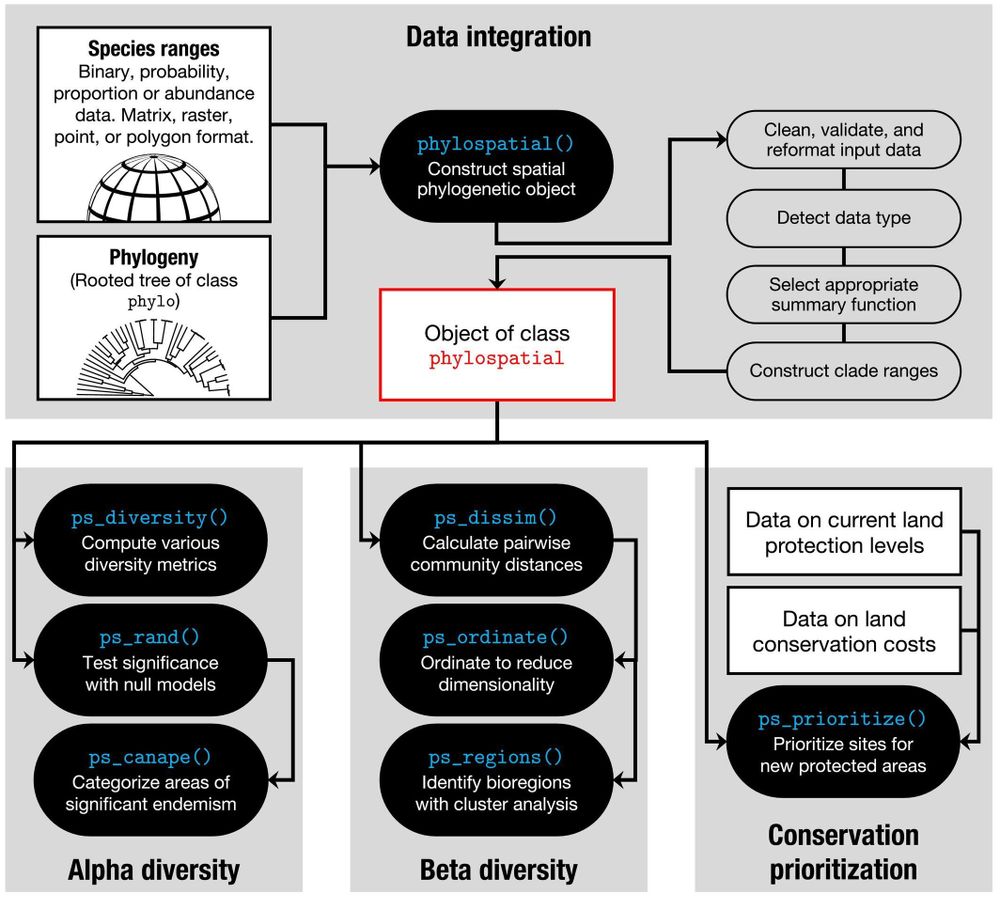
📖Published📖
Matthew Kling presents phylospatial, a new R package that fully supports probability, abundance, and binary community data across a range of spatial phylogenetic diversity (PD) analyses 🌎 🧪 Check the article out here 👇
buff.ly/onf4BV6
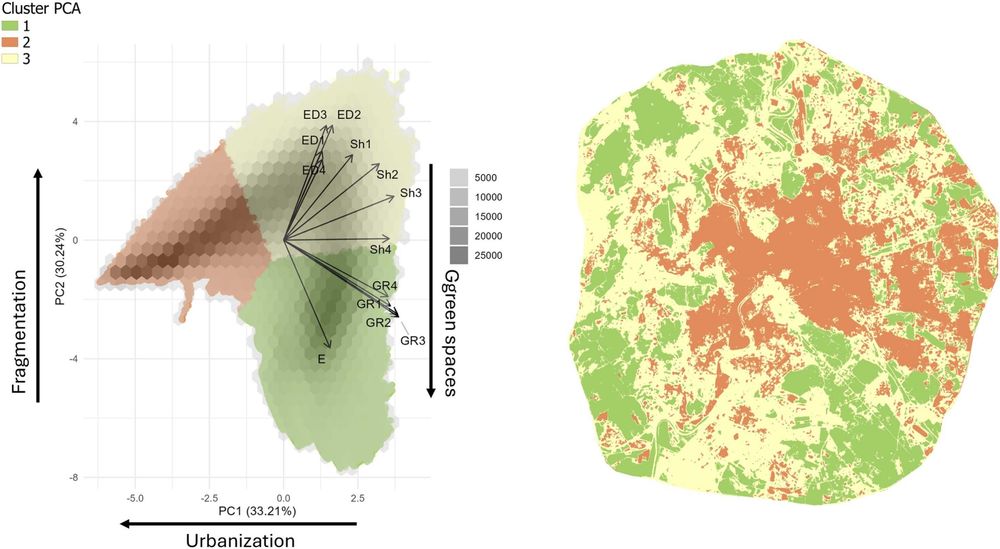
The first paper of the "Urbis project" focusing on the urban ecosystem of Rome is out in Urban Forestry & Urban Greening!
Here we characterize the urban landscape and propose a multiscale framework to better support urban biodiversity research and planning
doi.org/10.1016/j.la...

Capuchin monkeys kidnap baby howler monkeys, shocking scientists www.popsci.com/environment/...
A new preprint on the best configuration settings of BirdNET for improving bird detections, lead by Cristian Pérez-Granados & David Funosas. A derived paper of the WABAD dataset, with more than 4,000 minutes of annotated audios. Enjoy reading!! #bioacoustics
www.researchsquare.com/article/rs-6...
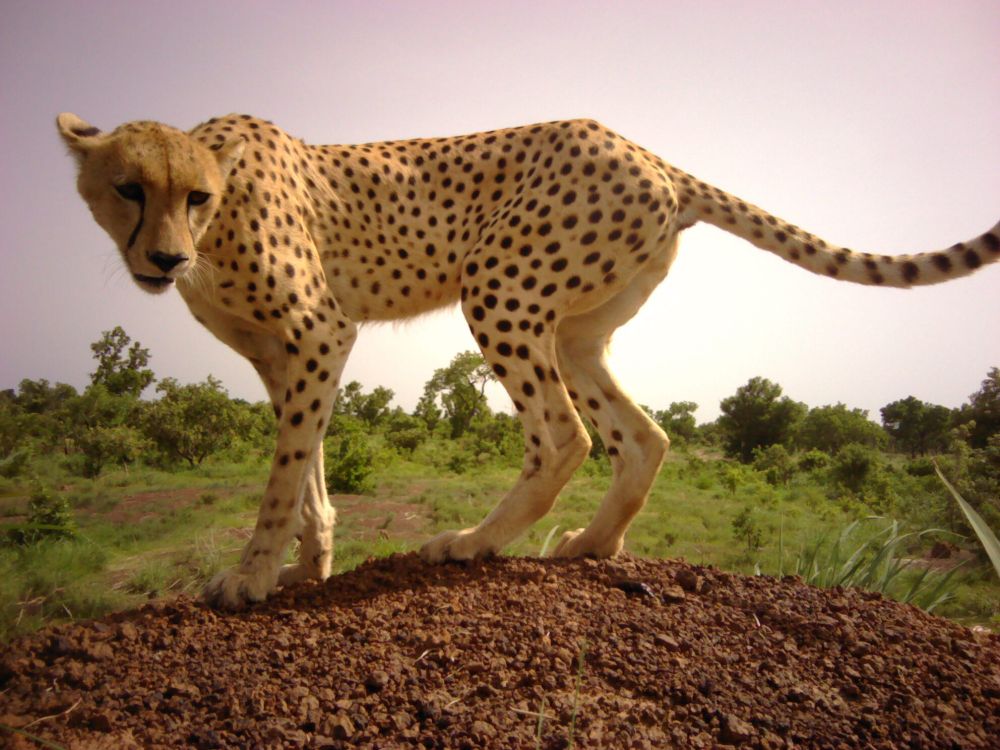
This new approach minimises on-the-ground fieldwork in an area where conflict is widespread, and provides vital data needed to support conservation interventions for this rare and iconic subspecies. Find out more:
besjournals.onlinelibrary.wiley.com/doi/10.1002/...

🚨New data paper/open data alert!🚨 BioTIME v2.0 is out now! We've expanded the database with improved spatial and taxonomic coverage, with a new R package! As always, free, public, and open acess :)
Paper:
onlinelibrary.wiley.com/doi/10.1111/...
Database:
biotime.st-andrews.ac.uk
More shots fired in the #causalInference #ecology literature! 🌍
Our paper is now out in Nature Human Behaviour! 🎉 We use games from behavioural economics to explore how LLMs behave in repeated social interactions, revealing both self-interested strengths and coordination blind spots, and propose strategies to improve AI-human collaboration.
Here are a few slides to present our paper in a short talk for the annual days of our national group in statistical ecology ecostat2025.sciencesconf.org
doi.org/10.6084/m9.f...
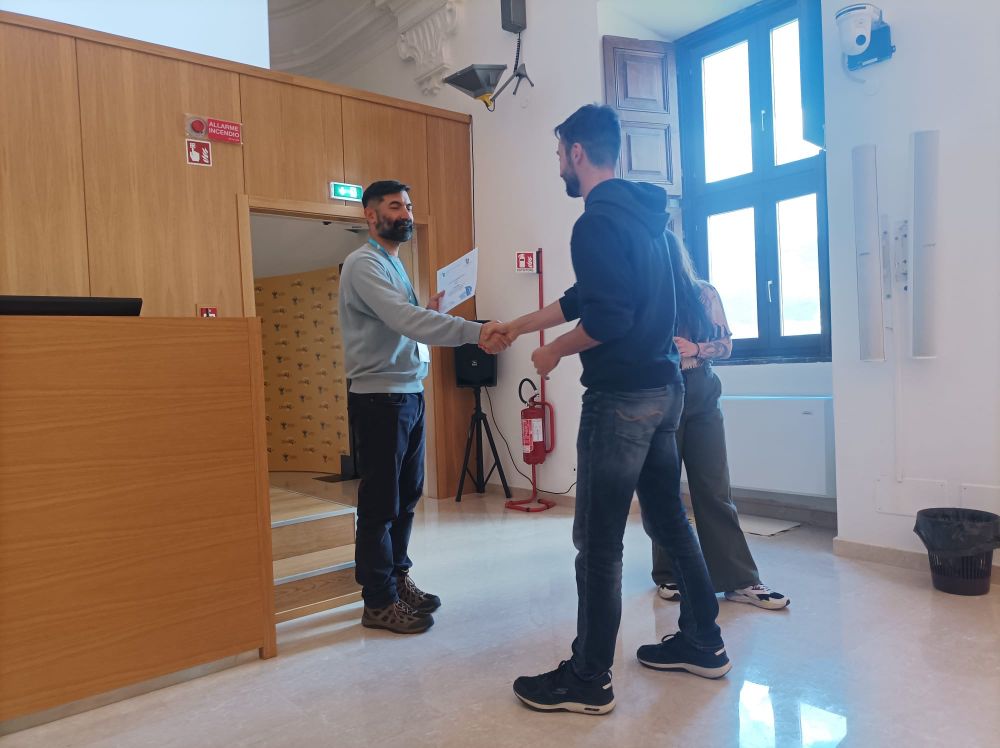
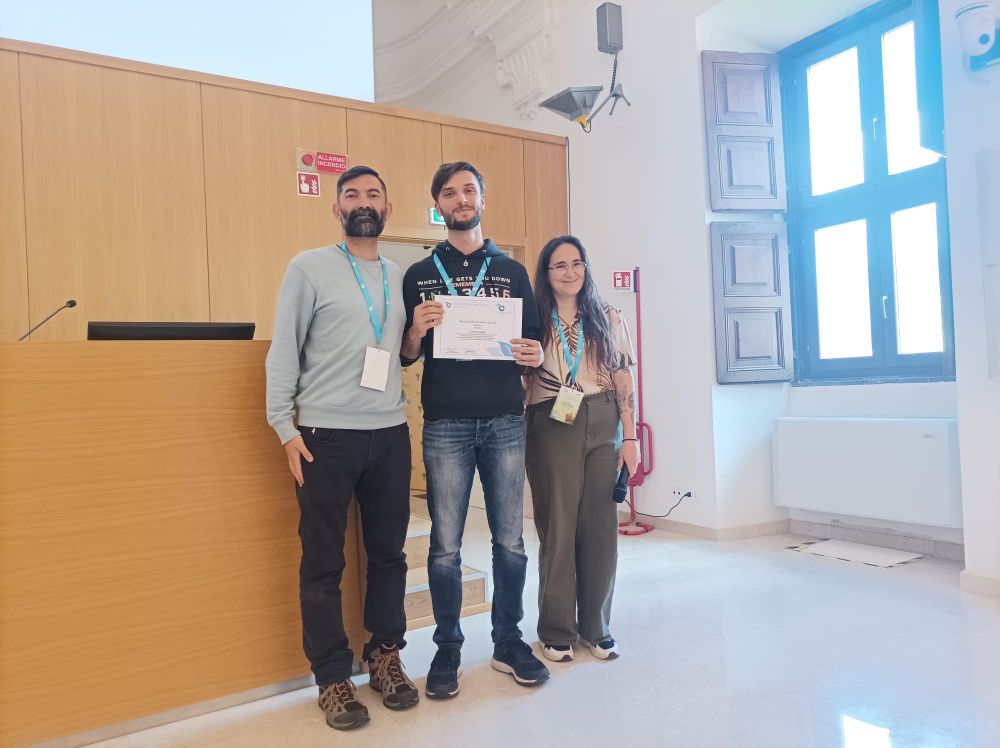
The Student Award for Best Oral Presentation goes to @andrewzampetti.bsky.social for his talk on TropiCam-AI: an automated classifier of Neotropical arboreal mammals and birds from camera-traps. Well done, Andrea!
Special mention to Claire Louise Penton for securing 2nd place—congrats! #ECR2025
Currently, roughly 90–95% of AI usage in biodiversity
and conservation research is simply identifying
a species of interest in gobs of data, says
@sarameghanbeery.bsky.social of the Massachusetts Institute of Technology, co-founder of MegaDetector.
But that promises to change swiftly.
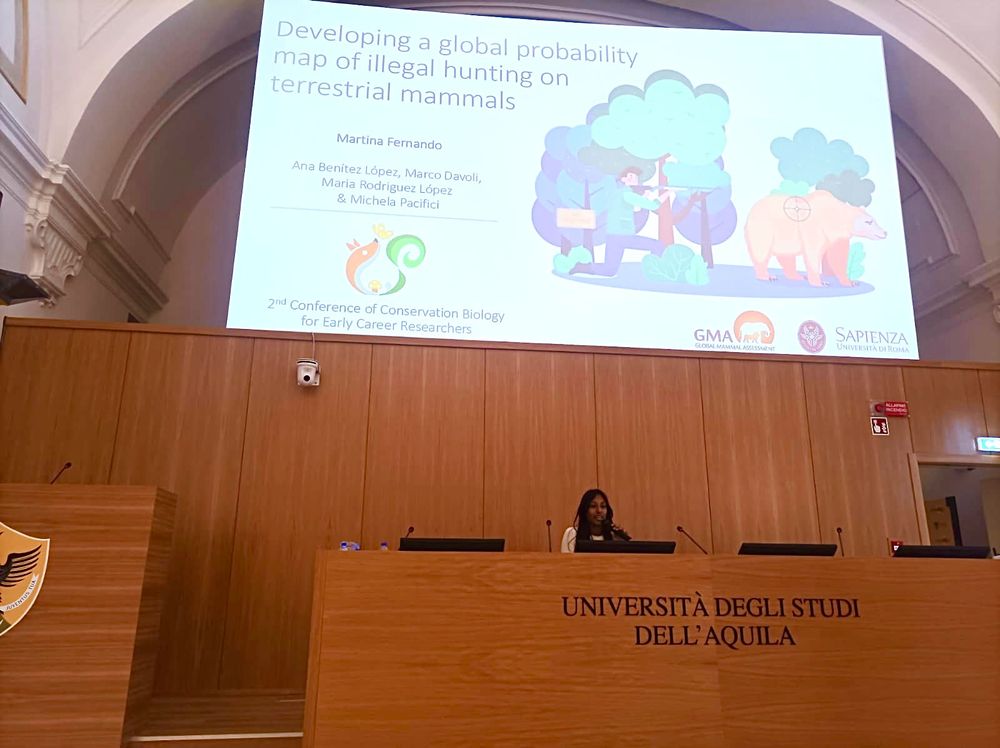
Excited to share that Martina Fernando, PhD student at our Global Mammal Assessment Lab, just presented her work "Developing a global probability map of illegal hunting on terrestrial mammals"with Michela Pacifici and Marco Davoli 🐘🌍 #ConservationScience #IllegalHunting #ECR2025

The SDM (Species Distribution Modelling) course is back, now in its 10th edition. With Babak Naimi.
www.maraujolab.eu/2025/02/13/2...
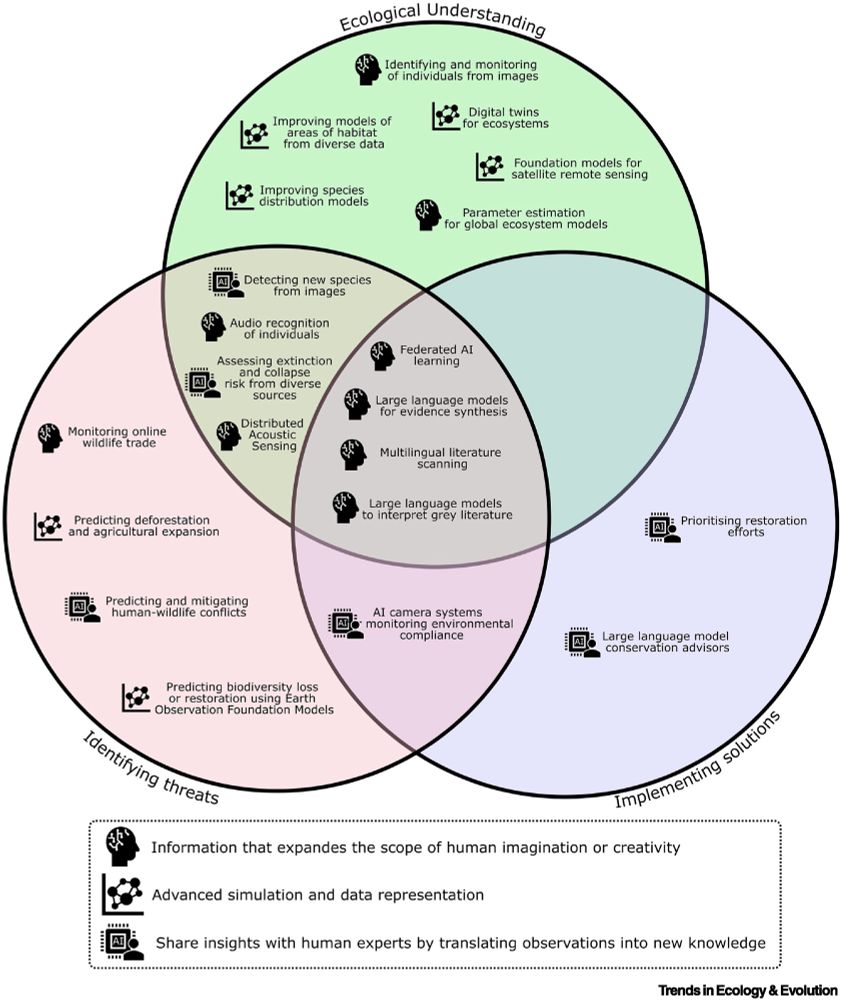
Adoption of AI in conservation will lead to beneficial outcomes for conservation effectiveness and improve our understanding of the natural world. However, it will not wholly replace established conservation techniques, education, and on-the-ground research.
📑 doi.org/10.1016/j.tr...

😳 WithdrarXiv 🙏
- Dataset of 14K+ withdrawn arXiv papers
- associated retraction comments
- entire history through 09/24
- taxonomy of retraction reasons, from critical errors to policy violations
- WithdrarXiv-SciFy, enriched version w/ scripts for parsed full-text PDFs
arxiv.org/abs/2412.03775

