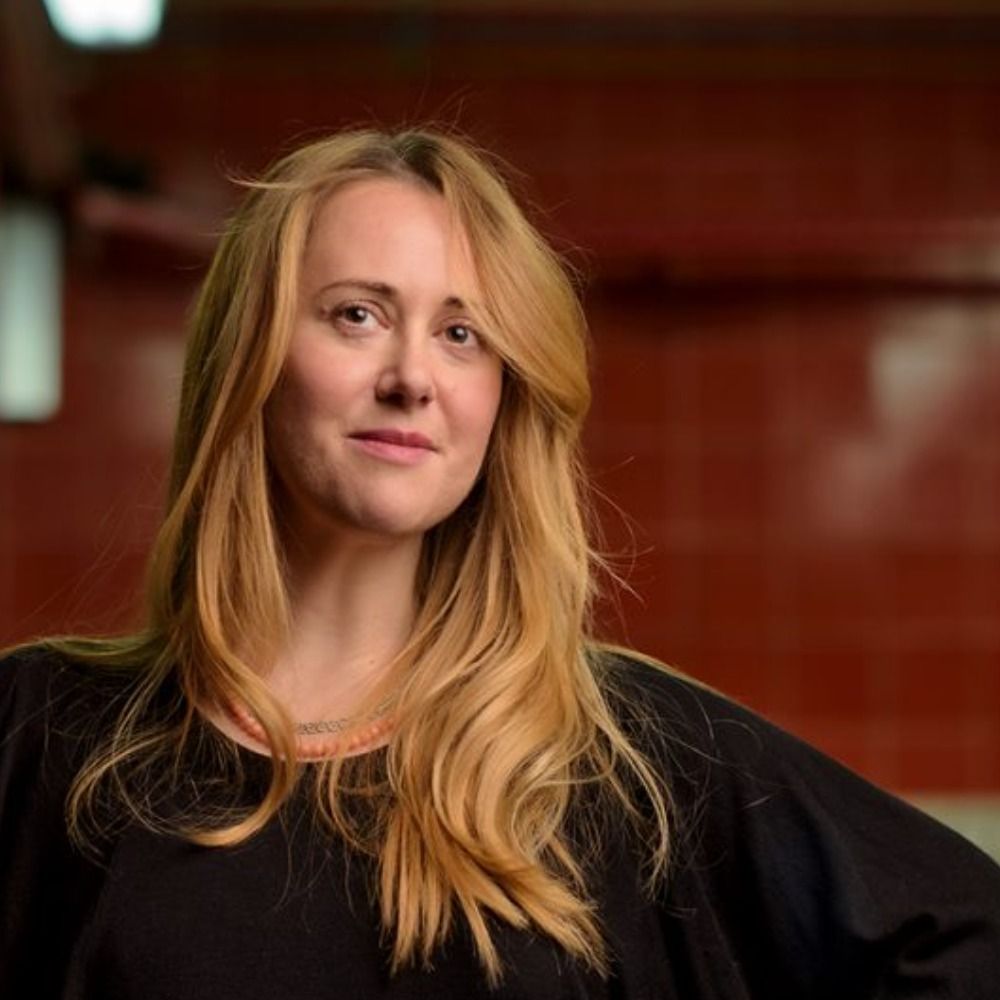
After several years of work, my lab is starting to put out our first papers on learning in a unicellular organism (Stentor coeruleus).
Here we show evidence for a form of associative learning in Stentor:
www.biorxiv.org/content/10.6...
26.02.2026 11:39
👍 176
🔁 57
💬 5
📌 7

The microbiome of marine mat-forming cyanobacteria - A microcosm of taxonomic novelty and phototrophic diversity academic.oup.com/ismecommun/a...
02.03.2026 07:55
👍 4
🔁 2
💬 0
📌 0

MicroSEA (Microbial Sea Eukaryotes) course is a one-week, field-based summer school to train early-career researchers in the diversity, ecology, and single-cell biology of marine protists. MicroSEA course integrates lectures, field sampling, and lab-based practicals in advanced techniques, such as flow cytometry, microscopy, culturing, and molecular analysis.
The main objectives of MicroSEA course are:
Fostering a deep understanding of marine protist diversity, ecology and biology;
Providing hands-on training in advanced single-cell methods that are not commonly available in university programs;
Building participants' confidence in designing and conducting research projects from field to data analysis;
Promoting international collaborations and peer networking among students and speakers/trainers.
The course will take place at the Station Biologique de Roscoff - SBR (France) - 7th to 12th of June, 2026 (arrival on the 6th, departure on the 13th).
20 participants will be selected, including 10 from EuroMarine member institutes.
https://opbc.sciencesconf.org/
Protist lovers: Please apply for a week of rhapsody! Learn by doing:
MicroSEA (Microbial Sea Eukaryotes) course is a one-week, field-based summer school to train early-career researchers in the diversity, ecology, and single-cell biology of marine protists. opbc.sciencesconf.org
#protistsonsky
26.02.2026 22:15
👍 46
🔁 36
💬 5
📌 6
It was crazy week! Looooved it!
27.02.2026 14:24
👍 1
🔁 0
💬 0
📌 0
I am!!! wanna meet up after this session?
27.02.2026 14:12
👍 0
🔁 0
💬 1
📌 0

This 🫶
27.02.2026 11:58
👍 0
🔁 0
💬 0
📌 0

#protistsonsky top global CaCO3 stock 🫶
27.02.2026 11:56
👍 1
🔁 0
💬 1
📌 0

In my opinion one of the best slides of #OSM26 ... there might be more in this exciting talk:
"Coccolithophore diversity drives global calcium carbonate stock: New machine-learning estimates"
@nanophyto.bsky.social @fannymonteiro.bsky.social
27.02.2026 11:53
👍 10
🔁 0
💬 2
📌 0

A mind blowing plenary #OSM26 by Deborah Kelley, University of Washington
25.02.2026 11:53
👍 2
🔁 0
💬 0
📌 0

#OSM26 is awesomely full of #coccolithophores!
Our last contribution will be on Thursday Poster Session!
Find Borna at his poster on board 0376 @ Hall 4:
➡️Establishing a novel methodology to estimate particulate inorganic carbon of coccolithophores by tracking calcification in vitro!
24.02.2026 22:28
👍 3
🔁 0
💬 0
📌 0

Expansion Microscopy Has Transformed How We See the Cellular World | Quanta Magazine
How physically magnifying objects using a key ingredient in diapers has opened an unprecedented view of the microbial world.
Funded through our Science Program, this technique expands the scientific toolkit in ways that can reshape what researchers are able to ask and answer. New research – #ExpansionMicroscopy enlarges cells up to 60x by embedding them in a water-absorbing gel www.quantamagazine.org/expansion-mi...
23.02.2026 19:26
👍 2
🔁 2
💬 0
📌 0
YES!!!! We should do a meet up 🍻
18.02.2026 14:13
👍 1
🔁 0
💬 1
📌 0

Look what I found @ Leakey's bookshop! #OSM26
18.02.2026 11:24
👍 14
🔁 1
💬 1
📌 0

A 🆕 #Ichthyosporea story
Led by@margaridaaraujo.bsky.social, in Co. @gautamdey.bsky.social & @hiralshah.bsky.social+🔥team across @embl.org & @sciencesunige.bsky.social
We finally have a look at what #microtubules are doing during #cellularization in #Sphaeroforma
▶️ tinyurl.com/MTSARC
#ProtistsOnSky
17.02.2026 13:02
👍 89
🔁 41
💬 4
📌 4
Getting ready for #OSM26
16.02.2026 17:52
👍 3
🔁 0
💬 0
📌 0

The ISME20 abstract submission deadline has been extended to 22 February. Microbial ecologists worldwide are invited to submit abstracts for oral, short talk, or poster presentations and contribute to the ISME20 programme.
isme-microbes.org/isme20-abstr...
#ISME20 #MicrobialEcology
12.02.2026 12:00
👍 15
🔁 18
💬 1
📌 0
I would prefer if she divides ‼️✌️👯♀️😂
14.02.2026 13:41
👍 2
🔁 0
💬 0
📌 0
A da, tak sam i mislila! Ali ok! Onda se ipak vidimo! Idem i ja na njega! 🎉🎉🎉
14.02.2026 13:39
👍 1
🔁 0
💬 1
📌 0
I guess love is not cocolitho-FOR everyone!
This is a heart shaped cell of Syracosphaera pulchra.... swimming away!
#protistsonsky #coccolithophores #CoccoChannel
14.02.2026 05:12
👍 19
🔁 2
💬 1
📌 0
Izgledaju savrseno! Dolazis morti na OSM?
14.02.2026 05:00
👍 1
🔁 0
💬 1
📌 0
FRED: a universal tool to generate FAIR metadata for omics experiments www.biorxiv.org/content/10.6... #jcampubs
05.02.2026 14:31
👍 10
🔁 5
💬 0
📌 1

Mapping of the viral shunt across widespread coccolithophore blooms using metabolic biomarkers | PNAS
The viral shunt is a fundamental ecosystem process which diverts the flux of organic
carbon fixed through photosynthesis during algal bloom events ...
🌊Paper announcement! 📣
Viral infections rewire the metabolic makeup of their host and thereby create distinct chemical signatures. Can we use metabolic biomarkers to diagnose infections of algal blooms in the ocean?
Well, take a look at our new article led by Conny Kuhlisch in @pnas.org
>>
05.02.2026 17:22
👍 28
🔁 15
💬 2
📌 1


How many people does it take to sample a single Calcidiscus! 😉 #CoccoChannel
02.02.2026 18:51
👍 6
🔁 1
💬 0
📌 0

The EMBO Young Investigator Network consists of young investigators, installation grantees and global investigators. 🧪
Find more information on the individual programmes here:
https://www.embo.org/the-embo-communities/embo-young-investigator-network/
#LifeSciences #research #funding
02.02.2026 06:55
👍 8
🔁 8
💬 0
📌 0


Starting the first field trip with some unique cat cookies! #CoccoChannel
01.02.2026 11:31
👍 8
🔁 0
💬 0
📌 0

⚠️New in @aslo.org L&O:
Phosphorus stress makes #coccolithophores bigger: in the Red Sea & E. Med, Gephyrocapsa coccosphere size tracks P limitation (validated with nutrient-addition bioassays) — a potential in situ biomarker for nutrient regimes.
👉 doi.org/10.1002/lno....
27.01.2026 21:04
👍 14
🔁 5
💬 0
📌 0

Congrats to @institutrb.bsky.social colleagues on this paper!
Using high-frequency monitoring+satellites+FlowCyto, they show 2024 Adriatic mucilage: linked to warming and Po River; driven by microalga blooms; & aggregates made of single cells and reduced diversity!
👉 www.nature.com/articles/s41...
27.01.2026 20:53
👍 3
🔁 2
💬 0
📌 0
🌊🧪 Many microscopic plants and animals also produce hard parts consisting of CaCO3 or SiO2. - Broecker and Peng (1982), Tracers in the Sea
25.01.2026 22:41
👍 1
🔁 1
💬 0
📌 0

Paleoclimate pattern effects help constrain climate sensitivity and 21st-century warming | PNAS
Paleoclimates provide examples of past climate change that inform estimates of modern
warming from greenhouse-gas emissions, known as Earth’s clima...
Really excited to see this paper out!! Led by @vtcoop.bsky.social we show that if you use cold and warm paleoclimates together, you can reduce uncertainty in Earth's climate sensitivity by quantifying the pattern effect and more precisely constrain future climate change www.pnas.org/doi/10.1073/...
23.01.2026 15:36
👍 104
🔁 45
💬 1
📌 2