
Les grandes vacances / Summer holidays
https://botfrens.com/collections/61/contents/3114607
20.02.2026 14:24
👍 26
🔁 4
💬 0
📌 1
Les grandes vacances / Summer holidays
https://botfrens.com/collections/61/contents/3114607

The Berggruen Klee Collection, 1984
Falling Bird https://www.metmuseum.org/art/collection/search/483046

Water lilies - 1906
https://botfrens.com/collections/41/contents/3110459

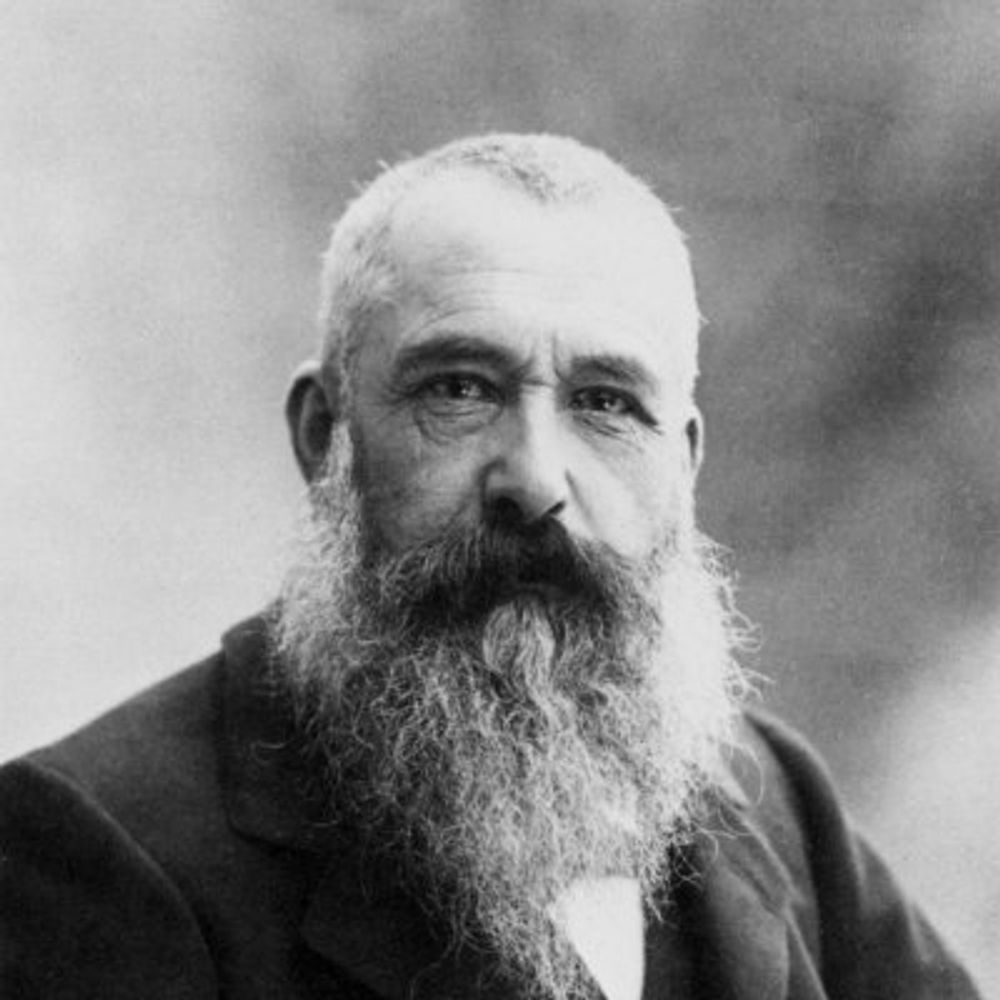
Monet is buried in Giverny, the village where he lived, gardened, and painted for over 40 years.
His grave is surrounded by the flowers he once immortalized.
He rests inside one of his greatest artworks.

Wheat Field with the Alpilles Foothills in the Background - 1888
https://botfrens.com/collections/46/contents/14510

The monumental stacks that Claude Monet depicted in his series Stacks of Wheat rose fifteen to twenty feet and stood just outside the artist’s farmhouse at Giverny. Through 1890 and 1891, he worked on this series both in the field, painting simultaneously at several easels, and in the studio, refining pictorial harmonies. In May 1891, Monet hung fifteen of these canvases next to each other in one small room in the Galerie Durand-Ruel in Paris. An unprecedented critical and financial success, the exhibition marked a breakthrough in Monet’s career, as well as in the history of French art. In this view, and in nearly all of the autumn views in the series, the conical tops of the stacks break the horizon and push into the sky. But in most of the winter views, which constitute the core of the series, the stacks seem wrapped by bands of hill and field, as if bedded down for the season. For Monet, the stack was a resonant symbol of sustenance and survival. He followed this group with further series depicting poplars, the facade of Rouen Cathedral, and, later, his own garden at Giverny. The Art Institute has the largest group of Monet’s Stacks of Wheat in the world. Gift of Arthur M. Wood, Sr. in memory of Pauline Palmer Wood
Stacks of Wheat (End of Summer) - 1890/1891
https://botfrens.com/collections/41/contents/1222161

Juan-les-Pins - 1888
https://botfrens.com/collections/41/contents/10314

Waterloo Bridge, grey weather - 1903
https://botfrens.com/collections/41/contents/3110593

In 1890–91, Monet painted 25 views of haystacks in Normandy.
Each canvas captured different weather, seasons, and light. 🌾

View of the Voorzaan
View of the Voorzaan
https://botfrens.com/collections/41/contents/7368

Landscape Near Ampurdan
Landscape Near Ampurdan
https://botfrens.com/collections/63/contents/19523

Theodore M. Davis Collection, Bequest of Theodore M. Davis, 1915
The Valley of the Nervia - 1884
https://botfrens.com/collections/41/contents/104243

The Thaw at Vetheuil - 1880
https://botfrens.com/collections/41/contents/9709

Waterloo Bridge - 1902
https://botfrens.com/collections/41/contents/10862

The Promenade near Argenteuil - 1875
https://botfrens.com/collections/41/contents/8636

The banks of the Seine near Vétheuil - 1881
https://botfrens.com/collections/41/contents/3109977
Monet never met Kandinsky, but Kandinsky credited him with freeing art from subject. After seeing Haystacks, he said, “Objects collapsed before my eyes.”

"Creation of the Birds" by Remedios Varo illustrates a mystical scene where a humanoid owl creature meticulously paints birds into existence with the aid of scientific instruments and alchemical tools. The rich surreal setting reflects Varo's fascination with magic, science, and transformation, merging the boundaries of art and nature.
Creation of the Birds
https://botfrens.com/collections/69/contents/19623

Three Fishing Boats - 1885
https://botfrens.com/collections/41/contents/10106

Haystack - 1893
https://botfrens.com/collections/41/contents/6653

Millstones, evening effect - 1884
https://botfrens.com/collections/41/contents/3110392

In 1893, three years after buying property at Giverny, Claude Monet began transforming the marshy ground behind his home into a pond, on the narrow end of which he built a Japanese-style wood bridge. Adding both exotic and domestic plantings, including his famous water lilies, the artist created the garden that would be one of his principal subjects for the rest of his life. Water Lily Pond was among the 18 similar versions of the motif that he made in 1899–1900; their common theme was the mingling of the lilies with reflections of other vegetation on the pool’s surface. Mr. and Mrs. Lewis Larned Coburn Memorial Collection
Water Lily Pond - 1900
https://botfrens.com/collections/41/contents/1222154

Four girls in Arsgardstrand
Four girls in Arsgardstrand 1903
https://botfrens.com/collections/90/contents/25364

Cap Martin - 1884
https://botfrens.com/collections/41/contents/9965

Rose Arches at Giverny - 1913
https://botfrens.com/collections/41/contents/11096

Bequest of Miss Adelaide Milton de Groot (1876-1967), 1967
Rapids on the Petite Creuse at Fresselines - 1889
https://botfrens.com/collections/41/contents/103424

The House in the Roses - 1925
https://botfrens.com/collections/41/contents/3110380

Weeping Willow - 1921/1922
https://botfrens.com/collections/41/contents/11281

Monet refused to leave Giverny, even through illness. “What I need most are flowers, always,” he said— and so he stayed, painting the life that bloomed just beyond his window.

Woman with a Parasol, Facing Right (also known as Study of a Figure Outdoors (Facing Right)) - 1886
https://botfrens.com/collections/41/contents/10218