Stellenanzeigen Archiv | Senckenberg Naturforschung
🚨 PhD position in annelid genomics (EuroWorm) 🚨
If you love biodiversity, evolution & bioinformatics — apply or share! 🪱🧬
Details here: www.senckenberg.de/de/stellenan...
#PhD #Genomics #Annelida #MarineBiology #EuroWorm
14.02.2026 01:10
👍 10
🔁 10
💬 0
📌 0
Reminder! Get those names in! www.youtube.com/watch?v=G7Hk...
01.02.2026 20:20
👍 7
🔁 3
💬 1
📌 1

There is a great opportunity to work on some cool worms and join the #IPC15 this summer. Details below! Apply here: 🔗 forms.gle/w9DKstARVaki...
@oceanspecies.bsky.social
16.01.2026 05:43
👍 3
🔁 2
💬 0
📌 0


Worm news! 🪱 Two new polychaete species + a new subfamily from #Indonesia, led by Joko Pamungkas (Senckenberg Global Fellow). Fresh out in #ZJLS. @linneansociety.bsky.social @sgn.one @oceanspecies.bsky.social
#Polychaeta #Taxonomy #NewSpecies #Nereididae #Dendronereidinae #Tylorrhynchinae
13.12.2025 05:09
👍 11
🔁 3
💬 1
📌 1

📢 The First Circular for the 15th International Polychaete Conference (IPC15) is out! Join us in Frankfurt, Germany • 27–31 July 2026
#IPC15 #Polychaetes #Annelida
polychaete-association.com/ipc15-frankf...
23.10.2025 19:32
👍 10
🔁 8
💬 1
📌 0


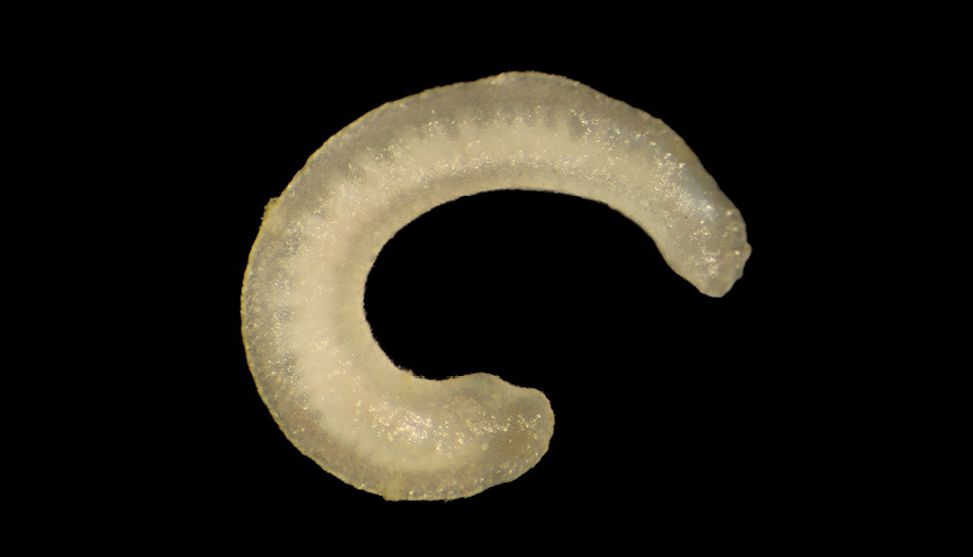
Meet Spinther bohnorum n. sp. Tilic & Rouse 2025 ✨— a tiny but stunning worm!
Spinther species are enigmatic worms that always seem to dwell on sponges, but we still don’t know exactly where they belong on the annelid tree of life. A shiny small mystery wrapped in glitter, basically. 😅🪱
16.10.2025 03:55
👍 4
🔁 3
💬 0
📌 0
I would say that’s a less accurate name similar to “whiskers” - they are homologous to palps.
08.09.2025 13:44
👍 1
🔁 0
💬 1
📌 0
1: palps
2: the second pair of tentacular cirri or cirriform appendages. Also called whiskers ( which I think is pretty cute )
So - what’s labeled in the book is the internal chaeta/acicula. Not the whole structure. Developmentally it’s a modification of the second segment.
Hope this helps ;)
08.09.2025 06:26
👍 3
🔁 0
💬 1
📌 0

Remember, the next Polychaete Conference #IPC15 is coming to Frankfurt in 2026! Make sure you save the dates - and in the meantime check out the website for the polychaete-association.com
16.08.2025 04:21
👍 14
🔁 8
💬 1
📌 0
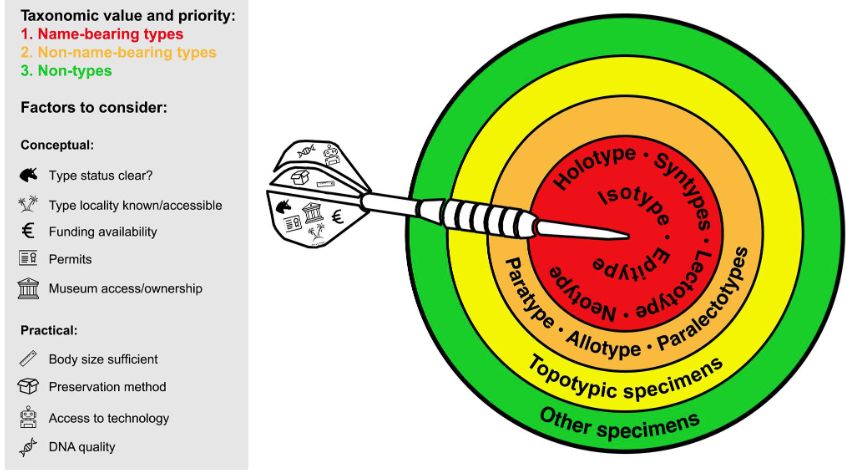
For about 2y, colleagues from @leibnizlib.bsky.social @sgn.one @univie.ac.at @mncn-csic.bsky.social met to discuss how to contribute to #biodiversity #taxonomy research by sequencing #genomes of type natural history #collection specimens. The result is published at @systbiol.bsky.social
23.05.2025 09:08
👍 10
🔁 9
💬 1
📌 1
Job Alert! We are recruiting one postdoc to work on spiralian embryos and their crazy polar lobes. More info about this HFSP-funded position on our website baronelab.org: scroll to the end, click on "this could be you"...start your adventure!
28.05.2025 02:48
👍 79
🔁 47
💬 3
📌 3


“A story of Neomicrorbis” is out!
Our paper on these fascinating and rare bathyal serpulid worms has just been published.
The study is beautifully illustrated with SEM and microCT images—we hope you’ll enjoy it! It’s open access: 🔓🔗 rdcu.be/ekuGc
03.05.2025 02:54
👍 8
🔁 3
💬 0
📌 0

Mehrere kleine, weiße, fünfarmige Seesterne der Art Caymanostella scrippscognaticausa auf schwarzem Hintergrund. Ihre Körper sind abgeflacht und mit zahlreichen feinen Stacheln bedeckt, die ihnen ein flauschiges Aussehen verleihen.

Nahaufnahme eines weißen, fünfarmigen Seesterns der Art Caymanostella scrippscognaticausa auf schwarzem Hintergrund. Der Seestern hat eine abgeflachte Körperform und ist mit zahlreichen kleinen, haarartigen Stacheln bedeckt. Seine Oberfläche zeigt eine feine, strukturierte Musterung.

Mikroskopische Aufnahme von zwei juvenilen Seesternen der Art Caymanostella scrippscognaticausa auf schwarzem Hintergrund. Die winzigen, fünfarmigen Seesterne haben einen halbtransparenten, stacheligen Körper mit zahlreichen feinen Fortsätzen entlang der Ränder.
Als Newcomer direkt in die Top Ten! 🌟 Der von Ekin Tilic & Team entdeckte wunderhübsche kleine Seestern Caymanostella scrippscognaticausa hat es in die #toptenmarinespecies der 2024 beschriebenen Arten von @marinespecies.bsky.social (WoRMS) geschafft! Glückwunsch @etilic.bsky.social! 🥳
📸 Greg Rouse
19.03.2025 16:43
👍 14
🔁 4
💬 0
📌 1
Happy Taxonomist Appreciation Day! Very exciting that this little sea star we described last year made it into the #toptenmarinespecies list. 🌟🤗
19.03.2025 05:58
👍 10
🔁 4
💬 0
📌 0
👏🏻🦑
28.02.2025 05:30
👍 1
🔁 0
💬 0
📌 0
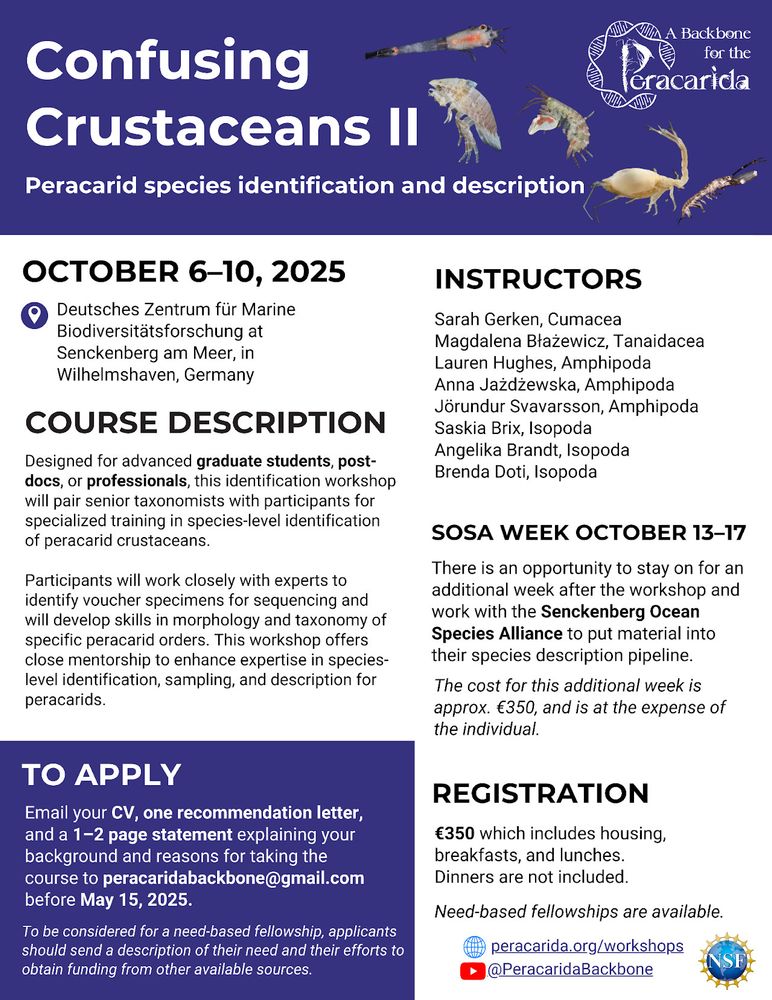
Taxonomy training workshops are an incredibly valuable experience for everyone involved. The next #ConfusingCrustaceans workshop will be in Wilhelmshaven, Germany from Oct. 6-10, 2025. See peracarida.org for more details. #Peracarida #SweatTheSmallStuff #IcyInverts
15.02.2025 04:01
👍 23
🔁 12
💬 2
📌 0

Buntstfitzeichnung von allerlei schwimmendem Meeresgetier. Rechts daneben Überschrift "Sammeln ohne Ende" sowie Vorspann des im Post verlinkten Artikels.
Wie viele und welche #Organismen leben im #Meer? Forscherinnen und Forscher dokumentieren die #Artenvielfalt im World Register of Marine Species (WoRMS) – darunter auch @etilic.bsky.social vom @oceanspecies.bsky.social … Christina Mikalo erzählt mehr darüber: www.laborjournal.de/editorials/3...
26.07.2024 10:35
👍 1
🔁 1
💬 0
📌 0

Discovery and characterization of a transient chaetal gland during the development of Capitella teleta (Sedentaria: Annelida)
The Journal of Morphology publishes research in cytology, protozoology, embryology, and general animal morphology in vertebrates and invertebrates.
Capitella is one of the best-studied polychaetes, and polychaete chaetae are among the most extensively researched features of all annelids. Yet, we discovered an elusive, transient gland associated with Capitella chaetae. If you’re curious, here’s the link:
t.co/mEciM6b348
09.06.2024 18:22
👍 1
🔁 0
💬 0
📌 0

Prince Albert’s Sea Daisy doesn’t look like your typical starfish. It is a delicate, flower-shaped sea star with an unusual life style, living on sunken wood or tube worms 🧪 lifewatch.be/en/worms-top...
19.03.2024 04:44
👍 13
🔁 4
💬 1
📌 0
Happy Taxonomist Appreciation Day! How cool is it that our tiny little sea daisy made it into the top 10! 🌟🤗
19.03.2024 05:00
👍 5
🔁 2
💬 2
📌 0
Thank you 🙏🏻☺️ all worms are quality worms 🪱✨😜
08.03.2024 16:56
👍 4
🔁 0
💬 1
📌 0