wild to know that every time I'm on Bluesky, somewhere obscured and opaque to my sight and knowledge is endless roiling, cascading fields of Drama, occasionally interpenetrating my sense faculties full of sound and fury, like seeing lightning flash from a mile away, the sky lit up with death threats
05.03.2026 23:25
👍 28
🔁 6
💬 1
📌 1
Variable correlated with GDP, or log(variable) correlated with log(GDP)?
23.02.2026 12:07
👍 1
🔁 0
💬 1
📌 0
What if you don't want to predict life outcomes but instead want to understand how people think?
20.02.2026 06:30
👍 0
🔁 0
💬 0
📌 0
Agree that it can't be resolved by switching statistical models.
19.02.2026 17:51
👍 0
🔁 0
💬 0
📌 0
The main disadvantage here relative to a Q-sort is probably that standard psychometric scales are not very exact, so this won't be predictive on an individual level. Whereas maybe if you start out by ranking X and Y relatively within-person, maybe it becomes more accurate on an individual level.
19.02.2026 15:14
👍 0
🔁 0
💬 1
📌 0
I'm not sure how necessary it is to do it like a Q-sort, by the way. If you have some outcome variable Z that you are interested in, then you can put X and Y on the same scale by regressing Z onto them, and then you can compare the predicted outcomes from X vs from Y respectively.
19.02.2026 15:13
👍 1
🔁 0
💬 1
📌 0
But yes, the idea of rating variables relative to each other within a person, instead of rating people relative to each other within a variable, is very much Q-sort-inspired.
19.02.2026 15:11
👍 1
🔁 0
💬 1
📌 0
My thoughts on this were inspired partly by thinking about Q methodology, but Q methodology still AFAIK tends to focus on the overall pattern of the variables rather than the strongest variable, and it doesn't do root cause analysis and therefore also suffers from symptoms rather than causes.
19.02.2026 15:08
👍 1
🔁 0
💬 1
📌 0
One can then iterate, e.g. screen for people who have the outcome without having the main cause, and see if they have some other cause. But if you do that, the clustering will sort of emerge naturally without any algorithms.
19.02.2026 15:06
👍 2
🔁 0
💬 0
📌 0
... the subset with the outcome in question will probably already be a minority of the sample, and it's probably more productive to be looking for the main cause, rather than untangling all the causes.
19.02.2026 15:05
👍 2
🔁 0
💬 1
📌 0
... Clustering makes the most sense if you have some polycausal outcome of interest (e.g. sickness), and you want to group together people with similar causes for the outcome. But if you study people "representatively" (or, y'know, college students, point is generic sample)...
19.02.2026 15:04
👍 2
🔁 0
💬 1
📌 0
Yep. Though I also think in most psych journal articles, there would be a lack of sample size necessary for clustering to make sense. ...
19.02.2026 15:03
👍 2
🔁 0
💬 1
📌 0
Also, for it to work well, one kinda needs to precede it by a root cause analysis so one isn't just getting confused by superficial symptoms, and statistical clustering algorithms just don't do this at all.
19.02.2026 14:59
👍 1
🔁 0
💬 0
📌 0
This doesn't work well with standard statistical algorithms because those algorithms try to capture the whole patterns of issues the patient is facing, rather than the most severe one, and thus the clustering is willing to trade away accuracy in the worst issue for accuracy in the holistic view.
19.02.2026 14:58
👍 0
🔁 0
💬 1
📌 0
That is, patients might have a number of issues, and these issues can be ranked relative to each other in severity. The cluster the patient belongs to is then defined by the most severe issue they are experiencing.
19.02.2026 14:57
👍 2
🔁 0
💬 3
📌 0
I think the biggest part of the problem is that clustering algorithms are misspecified and could not be correctly specified. Useful clustering is often more like argmax than like the conditional independence that clustering algorithms usually optimize for.
19.02.2026 14:56
👍 2
🔁 0
💬 1
📌 0
Sent an access request.
31.01.2026 13:20
👍 0
🔁 0
💬 0
📌 0
Is there anywhere one can get the bot weights directly, or an API for computing correlations for pairs of items, or an API for items, or similar?
31.01.2026 11:21
👍 0
🔁 0
💬 1
📌 0
See deep double descent
05.08.2025 17:11
👍 1
🔁 0
💬 0
📌 0
I've got similar numbers in surveys on reddit.
17.07.2025 18:53
👍 1
🔁 0
💬 0
📌 0
Different tests give correlated results.
11.07.2025 08:20
👍 1
🔁 0
💬 0
📌 0
Pretending virtue seems worse, but open hypocrisy seems better.
05.07.2025 10:21
👍 0
🔁 0
💬 0
📌 0
Well, it's up to you, I can't force you to fix yourself.
02.07.2025 07:08
👍 0
🔁 0
💬 0
📌 0
Emotions are there for a reason.
02.07.2025 06:45
👍 0
🔁 0
💬 0
📌 0
Some judgements feel too shameful to broadcast, and then it's ok to seek a less judgemental community or a better thought-through judgement before broadcasting it.
02.07.2025 06:44
👍 0
🔁 0
💬 1
📌 0
Develop your own judgement in places where you're currently deferring to another person or to the consensus of a community. And then broadcast your judgement to others.
02.07.2025 06:44
👍 0
🔁 0
💬 1
📌 0
It helps others achieve higher states of consciousness.
02.07.2025 06:25
👍 0
🔁 0
💬 0
📌 0
Then you'd probably have a fun time in the psych ward. At least that's my experience.
02.07.2025 05:56
👍 0
🔁 0
💬 0
📌 0
benjaminrosshoffman.com/predation-as...
02.07.2025 04:36
👍 0
🔁 0
💬 0
📌 0
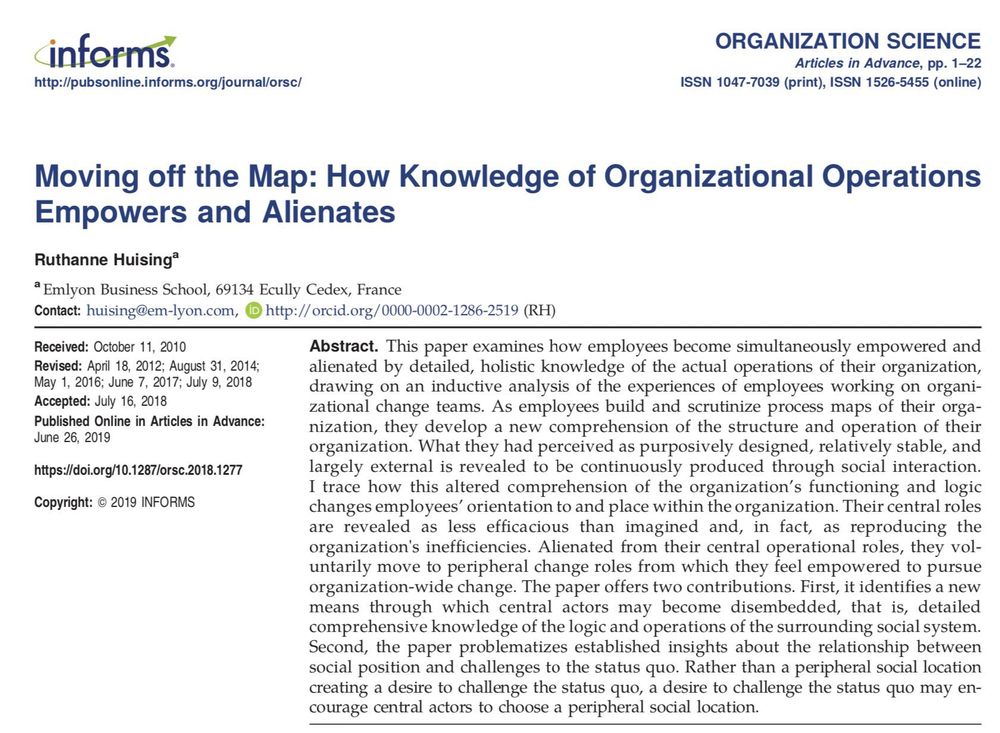
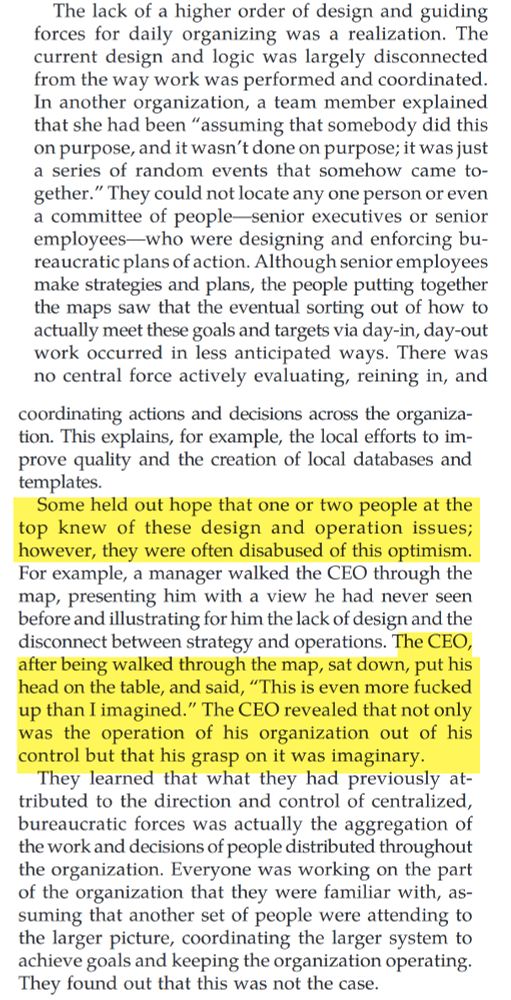
A challenge with AI adoption is that organizations are not built to a Grand Plan where AI can just be slotted in by leaders, but rather socially constructed, semi-random & in flux
Here's an anecdote from a paper on how a CEO realized he didn't understand how things really worked (& that nobody did)
01.07.2025 22:14
👍 70
🔁 14
💬 9
📌 1