
Please also check out our blog post on our findings here: go.nature.com/4hNnsNi! 🌊
15.12.2025 21:53
👍 6
🔁 3
💬 0
📌 0
Please also check out our blog post on our findings here: go.nature.com/4hNnsNi! 🌊

While these signs of recruitment are encouraging, they are not uniformly distributed among all species. Notably, some of the most severely affected corals—such as Dendrogyra cylindrus (pillar coral) and Meandrina meandrites (maze coral)—are showing limited signs of recovery.

This, in part, suggests that some species retained the capacity to reproduce sexually despite their reduced numbers. Coral recruitment driven by surviving adults capable of reproducing could potentially support the gradual rebuilding of coral populations under favourable conditions.

👶🪸 Can Caribbean corals recover naturally after the devastating effects of SCTLD? - Our new study in @commsearth.nature.com reveals that corals in their early life stages—either survived the outbreak or recruited afterwards—offering a positive sign of resilience at regional scales rdcu.be/eUJBc

Online now: Keystone coral species population collapse after unprecedented heat stress

The 2023 marine heatwave was devastating for Caribbean reefs; in this study, we report full mortality of over 5,000 Acropora palmata colonies across a reef scale. What is worrisome is that nearly 70% of reef crests across the Caribbean faced equal or higher levels of stress doi.org/10.1016/j.is...
A beautifully written story about parrotfishes and coral reefs by @lisasgardiner.bsky.social

Nature research paper: Reduced Atlantic reef growth past 2 °C warming amplifies sea-level impacts
go.nature.com/3VjkuWL

Coral reefs will stop growing and many will start to erode if global warming hits 2°C, according to a new study of 400 sites.

This is figure 2, which shows reef accretion potential across western Atlantic reefs.
Over 70% of coral reefs in the tropical western Atlantic Ocean are projected to be in a state of erosion by 2040, increasing to nearly all reefs in 2100 if warming exceeds 2 °C above preindustrial levels, a study in Nature suggests. go.nature.com/48m9Y8F 🌊 🧪

Dispersal Ability Reduces Thermal Specialization and Prevents Climate‐Driven Extinctions in a Neotropical Rainforest
buff.ly/nNuQFG7

www.science.org/doi/10.1126/...
Published today in Science:
“The pace of new interventions is outstripping the capacity to prevent unintended consequences - because governance systems are not yet in place.”
Stop the cowboys before they do even more damage!

Across warming seas, record-breaking marine heatwaves in 2023 underscored the growing vulnerability of ecosystems and human livelihoods. These events contributed to fishery losses and revealed region-specific drivers, including enhanced shortwave radiation, oceanic advection, and changes in upper-ocean stratification. Together, these mechanisms illustrate the intensifying influence of climate variability on ocean heat extremes.
The global marine heatwaves of 2023 were unprecedented in their intensity, persistence, and scale, according to a new Science study.
The findings provide insights into the region-specific drivers of these events, linking them to broader changes in the planet’s climate system. scim.ag/4lOzfwm
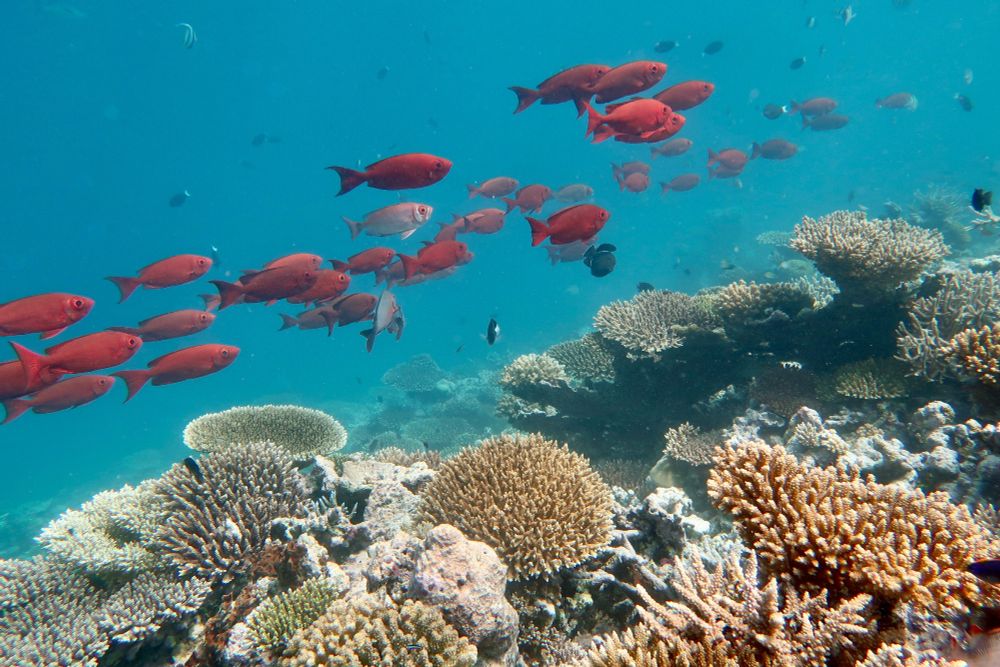
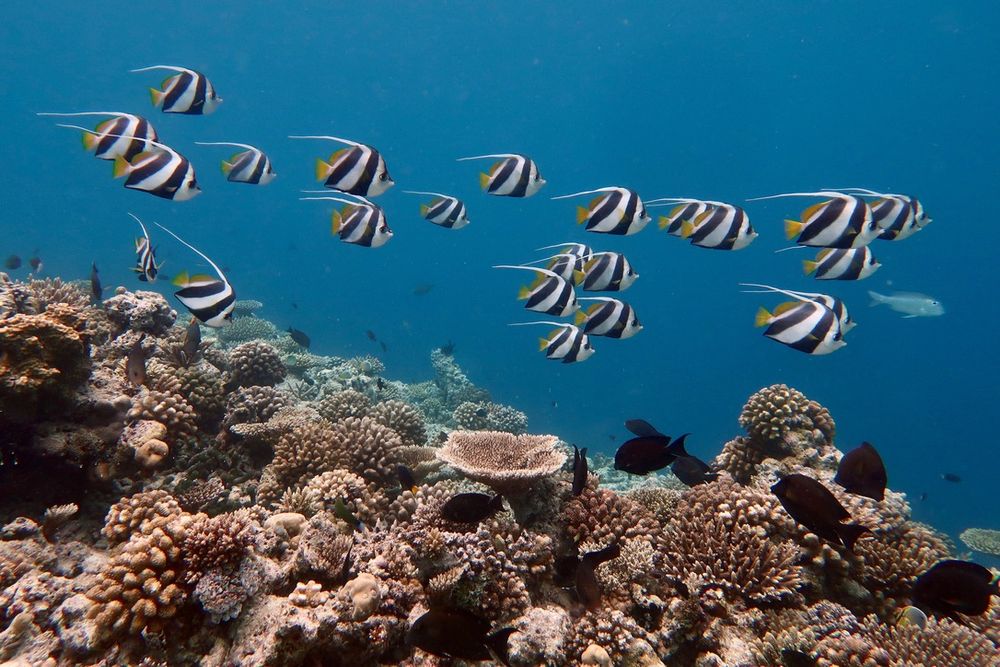
Heard of "Darwin's paradox"? It refers to Charles Darwin's observation that coral reefs are wildly productive despite occurring in nutrient-poor tropical oceans. Reefs are, so the story goes, oases in marine deserts 🏝️...
Turns out that 2/3 of these assertions are very wrong...
🌐
🦑🧪
🧵⬇️

New research challenges the long-held belief that coral reefs are “oases” in marine deserts. While among the world’s most productive ecosystems, their existence in nutrient-deprived oceans is the exception rather than the rule. @gobyone.bsky.social @utmsi.bsky.social
cns.utexas.edu/news/researc...
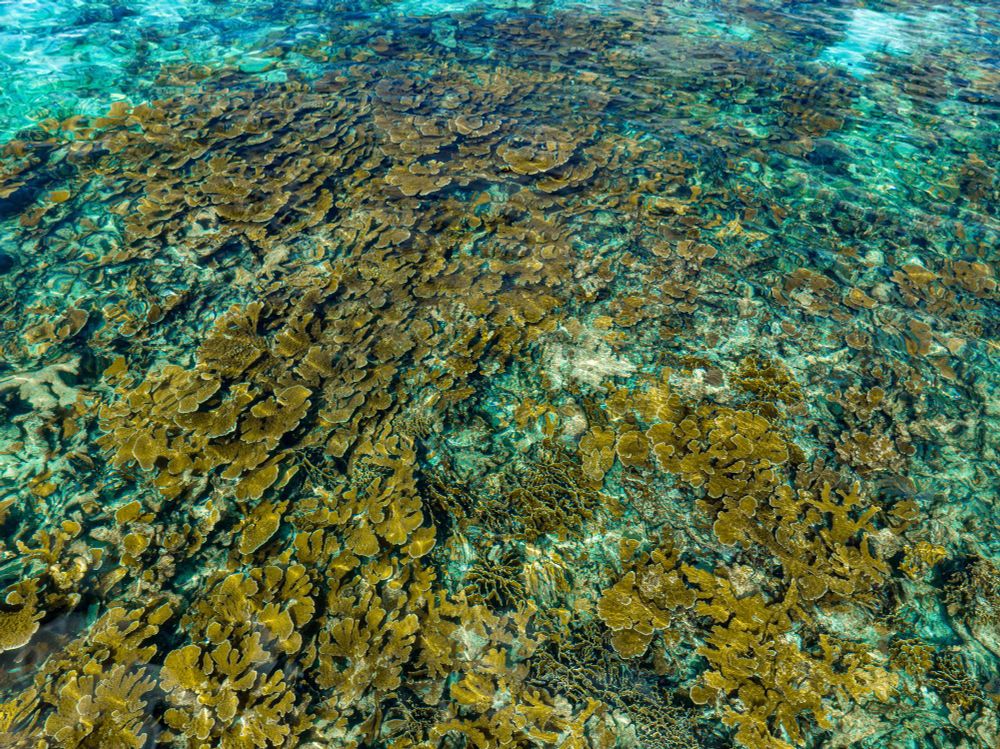
In all of them, we found that strategically conducting restoration activities near or bordering existing patches of the target species can enhance the structural connectivity of the landscape, while also increasing the potential for fertilization between the wild population and outplanted specimens.
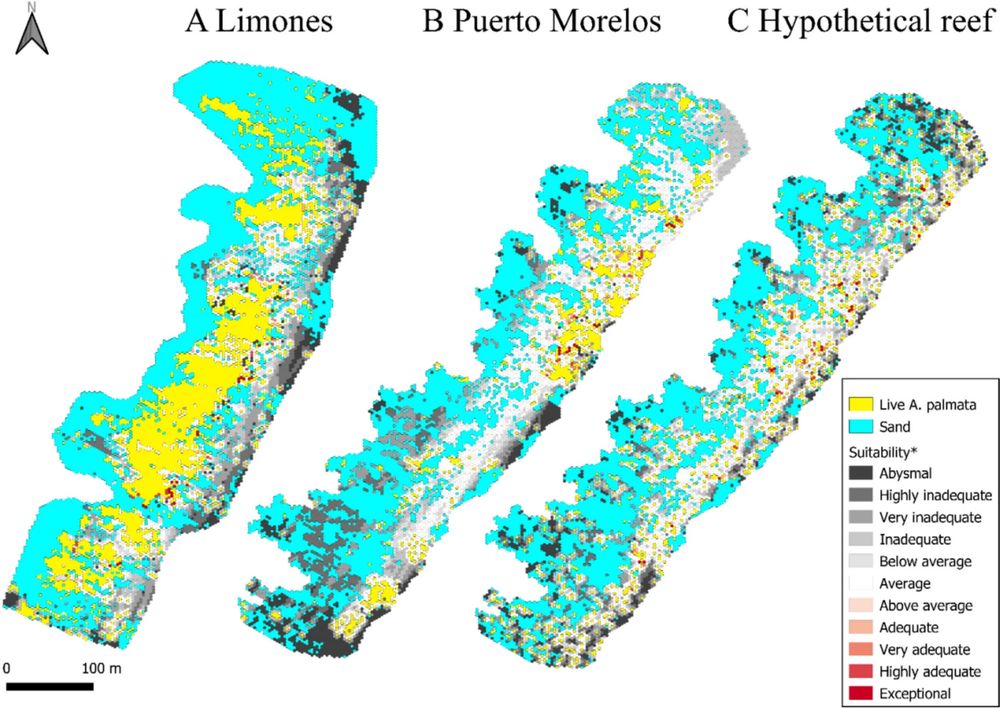
Our models show that considering the spatial distribution of the focal species is crucial in restoration activities. We tested our models under three different reef scenarios (degraded, healthy, and randomly distributed).
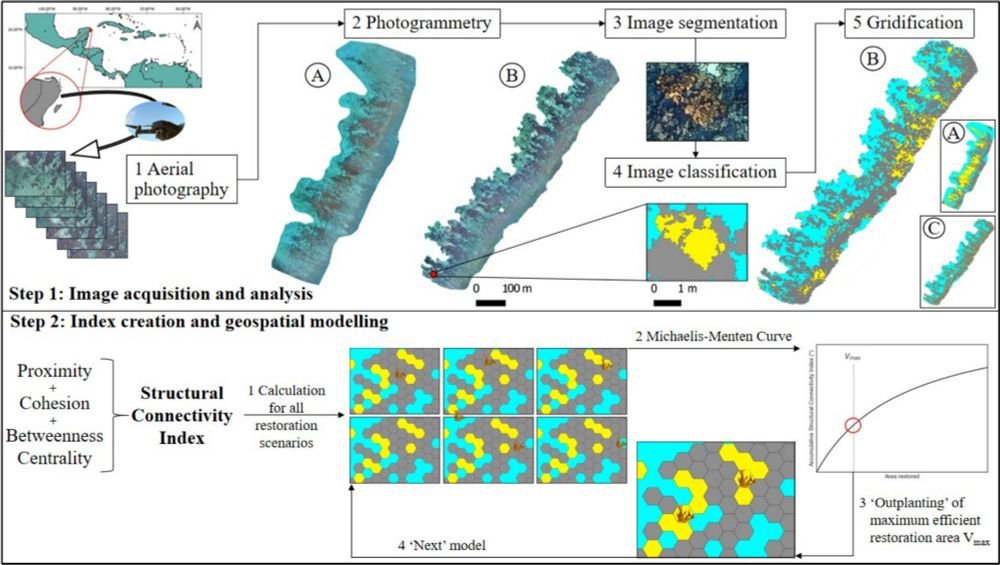
Specifically, we propose a framework that integrates image analysis of commercial drone data and spatial modelling based on landscape ecology theory to identify restoration sites that structurally connect patches of a key reef-building coral across ecologically meaningful scales.
Coral restoration is a rapidly growing field; however, the scalability of interventions is often a limitation to reverse coral losses at meaningful scales. We address this issue by proposing a spatially explicit approximation to optimize the outplanting design at the reefscape scale bit.ly/4kiVxoH

BBC News - Attenborough at 99 delivers 'greatest message he's ever told'
www.bbc.com/news/article...

1/6 Call for session proposals
16th International Coral Reef Symposium, 19–24th July 2026, Auckland, Aotearoa New Zealand.
Session proposal deadline: Sunday 15th June 2025.
Details and submission link at www.icrs2026.nz/call-for-ses...
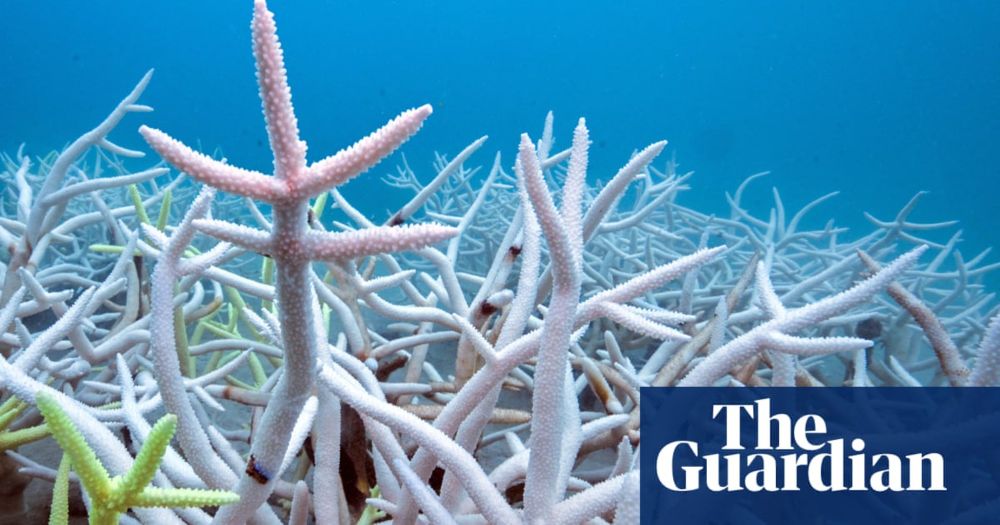
According to data from Coral Reef Watch, the worst global bleaching event on record has now hit more than 80% of the planet’s reefs, prompting scientists to warn that we are in “uncharted territory.”
Read more from @readfearn.bsky.social in @theguardian.com:
www.theguardian.com/environment/... 🌍🧪

Science Feedback provides valuable context behind the headline.
science.feedback.org/review/84-of...
We need more contextualizing of clickbait stories.
Often, as in this case, there is an important, albeit nuanced, story not easily summarized in a catchy headline.
@sciencefeedback.bsky.social
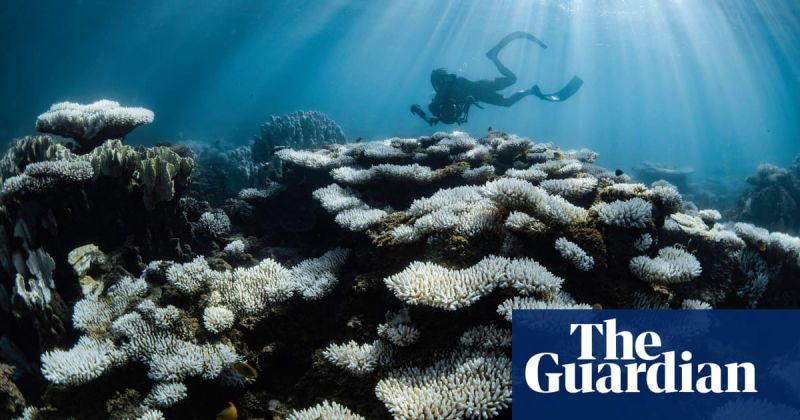
More than 80% of the world’s reefs hit by bleaching after worst global event on record #Climate

“Major barriers include the small scale of restoration programs, high costs per hectare, and the …. vulnerability (of corals) to future heat stresses. phys.org/news/2025-04...
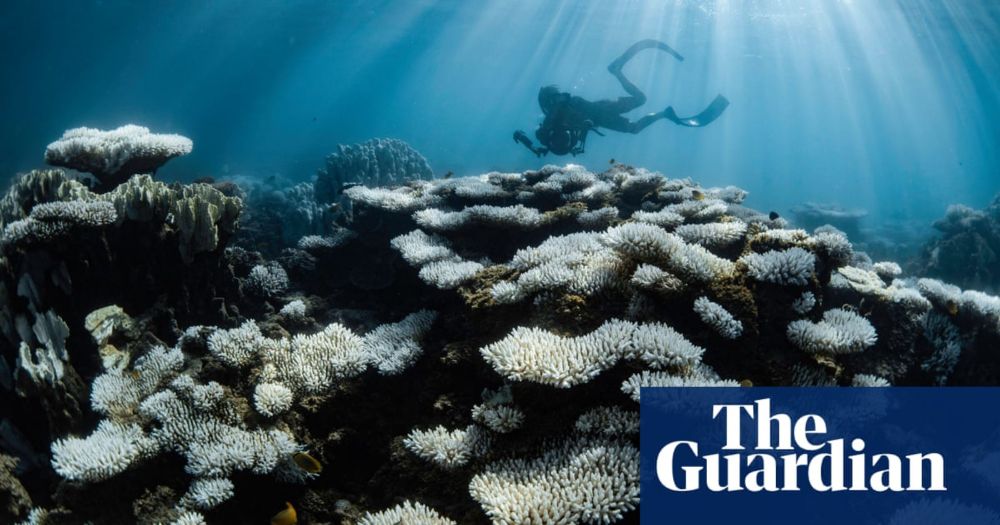
If we continue burning fossil fuels and warming the ocean, coral reefs will become a thing of the past.
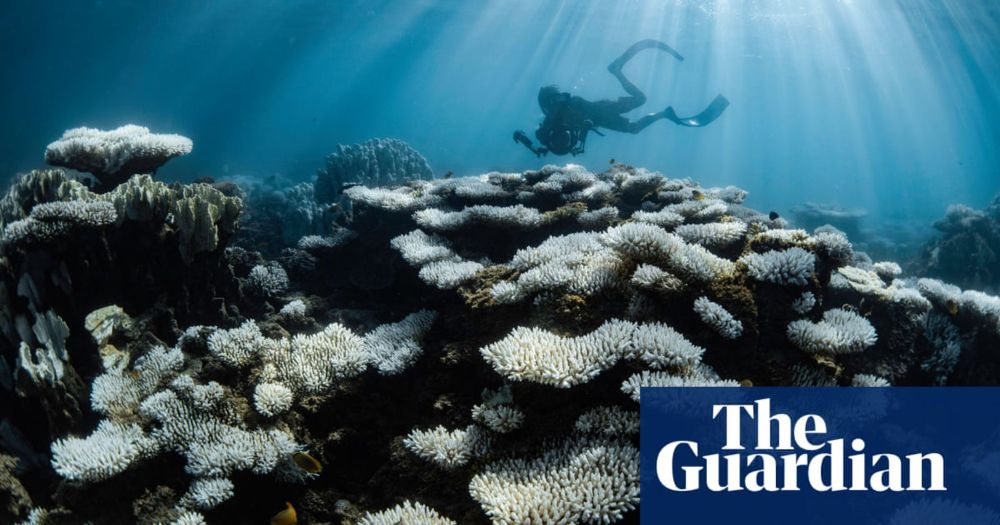
"The fact that so many reef areas have been impacted ... suggests that ocean warming has reached a level where there is no longer any safe harbour." 🪸💔
www.theguardian.com/environment/...
Update on Trump’s savage anti-science agenda:
“The White House is ready to ask Congress to eliminate NOAA’s climate research centers and cut hundreds of federal and academic climate scientists who track and study human-driven global warming.”
www.science.org/content/arti...
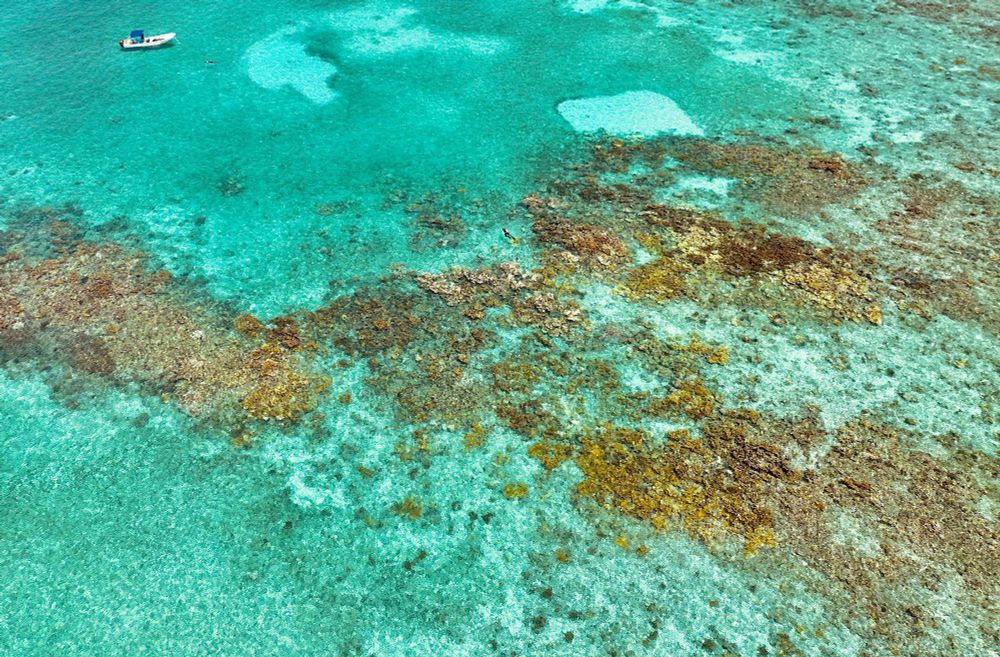
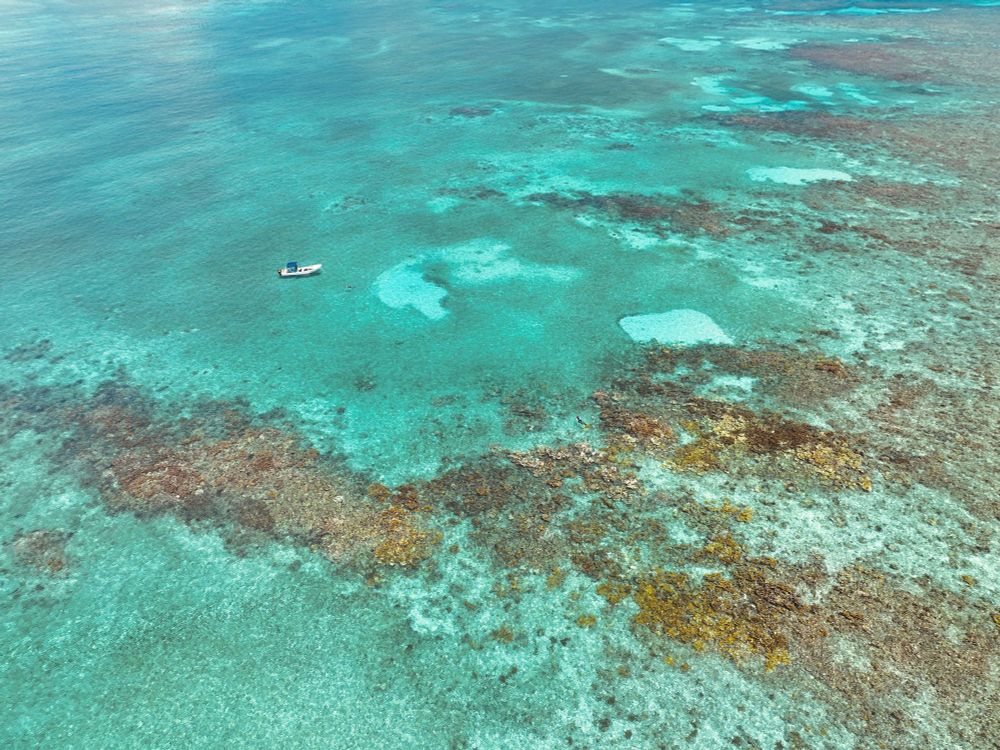
The hurricane impacts we report in this study occurred in 2020. Many may wonder whether Limones Reef withstood the 2023 bleaching event. The good news is that, unlike many other shallow reefs in the Caribbean, this reef still has a healthy population of A. palmata (although it underwent losses).
