Just sent you a message!
22.10.2025 04:24
👍 0
🔁 0
💬 0
📌 0
Just sent you a message!
"Prisoners in the Park: German PoWs in Riding Mountain National Park" by @michaelsohagan.bsky.social
niche-canada.org/2013/06/21/p...
#envhist #warhistory #cdnhist #parkhistory

Prisoners of War and their pet cat.
#Caturday Reading
"Some prisoners acquired cats and dogs through sales orchestrated by camp staff or through illicit trade with guards, while others simply "adopted" stray animals that wandered into the barbed wire enclosures." - @michaelsohagan.bsky.social
niche-canada.org/2020/04/23/h...
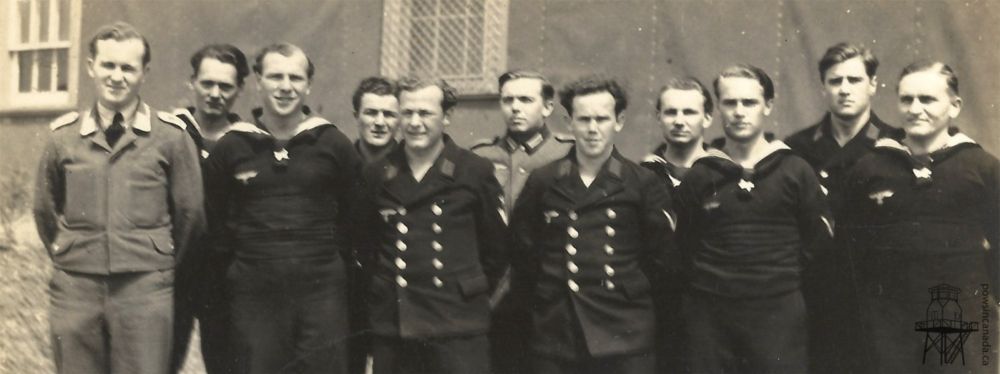
The survivors spent more time as prisoners of war in Canada than on board the Bismarck, but Canada is rarely mentioned in Bismarck histories. As is the case with most POWs, the POW experience is often overshadowed by combat stories.
Read more at powsincanada.ca/2025/05/20/w...
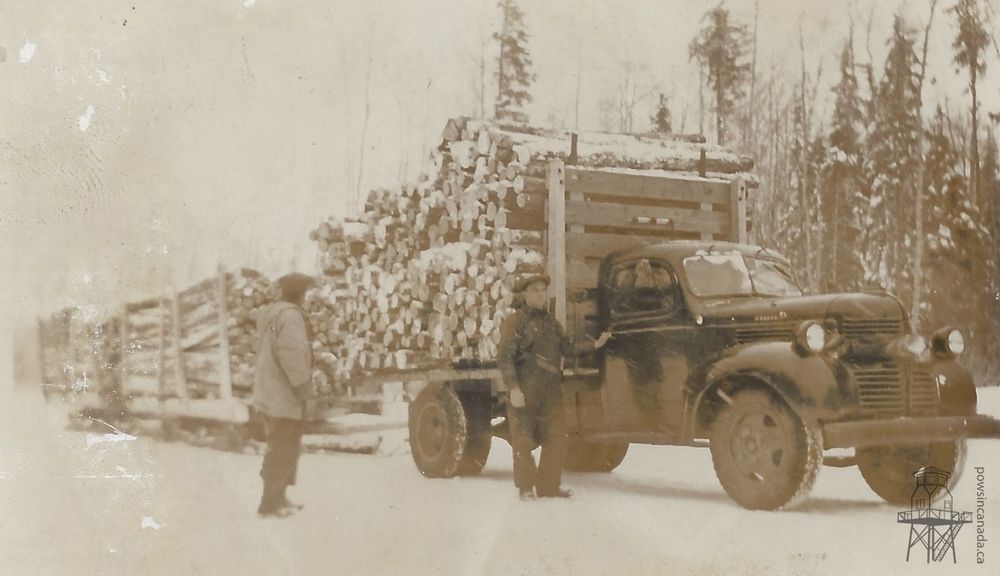
Black and white photo of two men standing next to a truck hauling loads of pulpwood.
Like thousands of other POWs, some Bismarck crewmen volunteered to work in bush camps in Northern Ontario where they cut and stacked pulp wood for 50¢ a day.
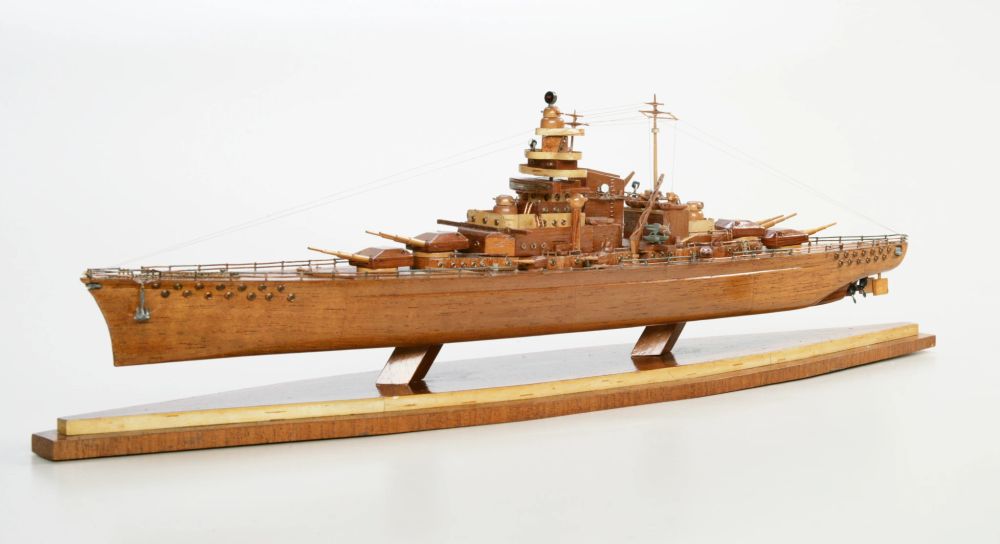
Wooden model of the German Battleship Bismarck.
The ship's fame captivated many talented POW craftsmen and models of the Bismarck are among the most common examples of POW handicraft. This example in the collection of the Canadian War Museum is attributed to attributed to Bismarck survivor Erwin Blödern.
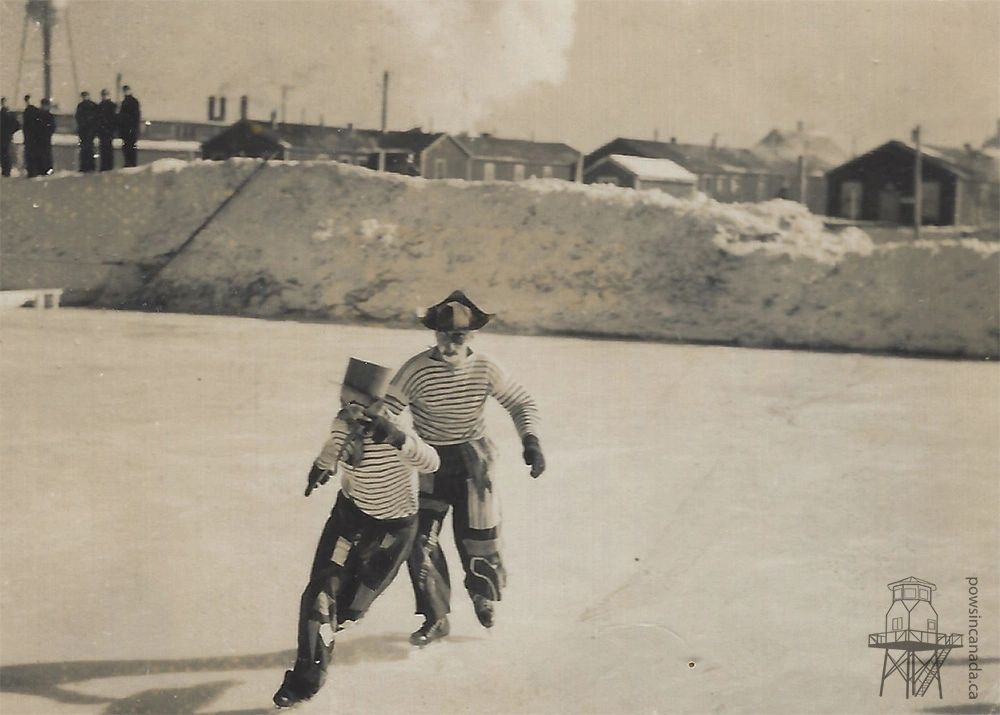
Black and white photo of two men performing a ice-skating routine dressed as clowns at Prisoner of War Camp 23 (Monteith).
In 1942, the enlisted crewmen arrived at Camp 23 at Monteith, Ontario and the officers at Camp 30 at Bowmanville, Ontario. Like the rest of the POWs in these camps, they busied themselves with activities like sports, music, theatre, educational courses, art, and handicrafts.
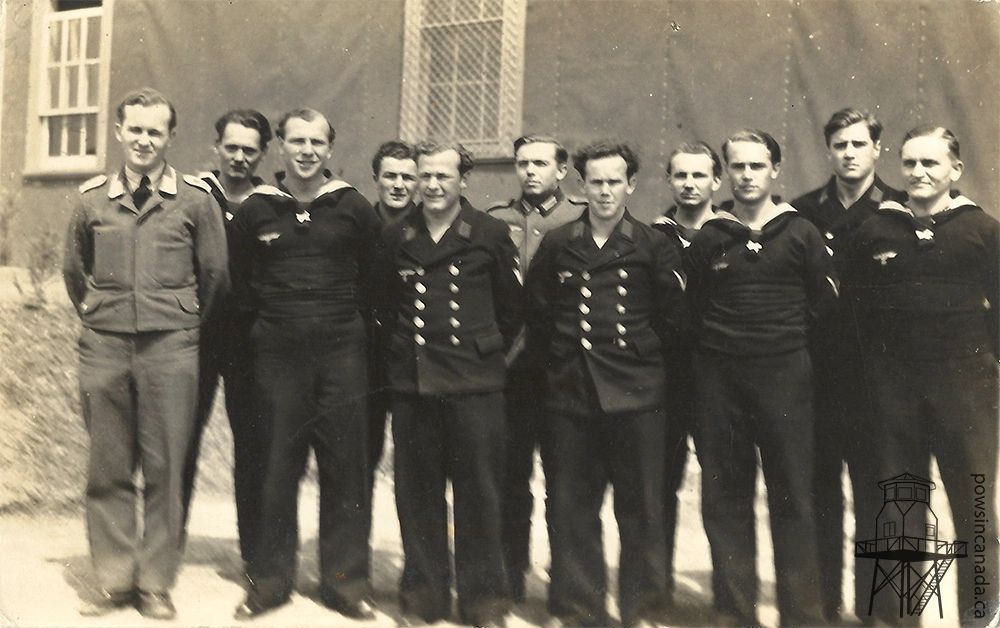
Black and white photo of German soldiers, sailors, and airmen standing in front of a building. They are prisoners of war at Camp 23 (Monteith).
Today marks the 84th anniversary of the sinking of the Bismarck, Germany's famed battleship. But this event has a little-known Canadian connection - the 109 survivors rescued by the British were all transferred to Canada as prisoners of war.
#cdnhist #wwii #Bismarck
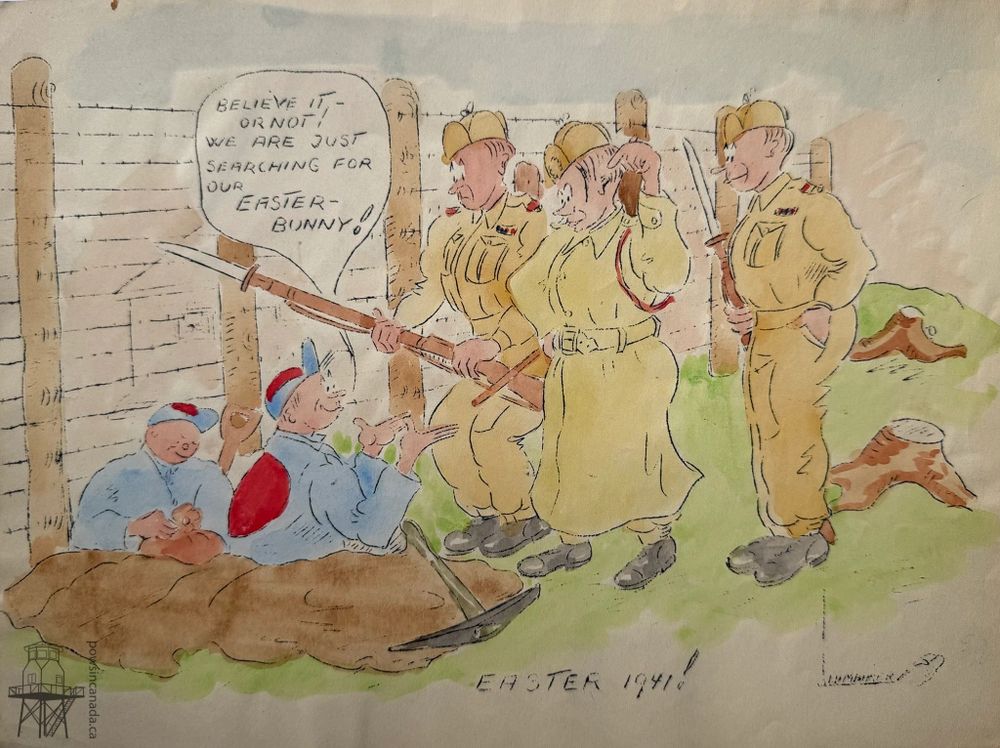
Print of two prisoners of war emerging from a hole dug under a barbed wire fence but are caught by three guards. One prisoner tells the guards “Believe it or not! We are just searching for our Easter Bunny!”
“Easter 1941” by Otto Ellmaurer, a civilian internee interned in Camp K near Kananaskis, Alberta.
Hopefully everyone has better luck with the Easter Bunny than these two internees!
More about Ellmaurer and his art at powsincanada.ca/2025/03/18/k...
#cdnhist #wwii
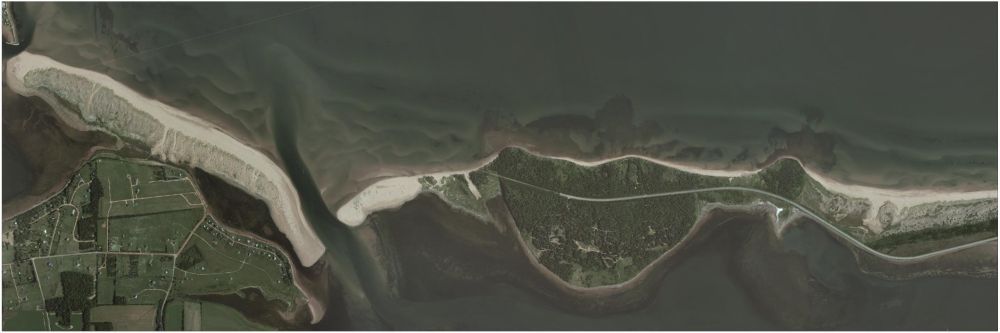
The webmap I designed to run behind GeoPEI: PEI Historical Map Viewer and the Time Flies, Online Edition e-book (both free, by the way at upei.ca/timeflies) has just passed 20,000 views! Not the biggest number in DH project history, but pretty neat for a small place like PEI.
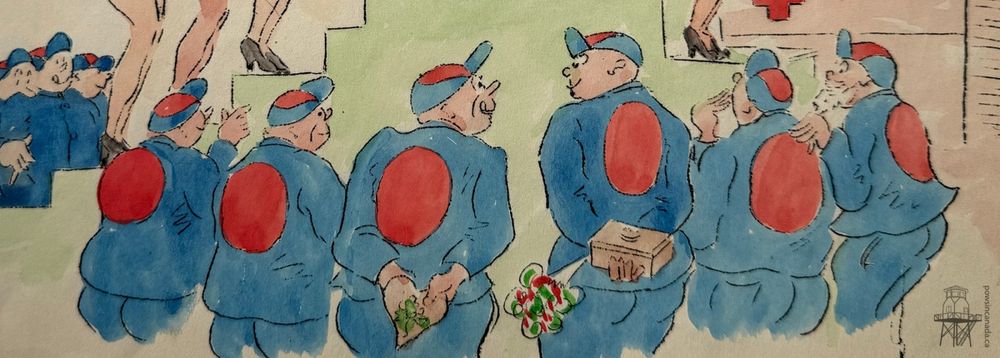
Otto Ellmaurer was eventually released in October 1944 and he returned to the Montreal area. He passed away in 1979. While he may not have received fame and recognition for his art, many internees kept his prints as cherished souvenirs and reminders of their internment.
See more at the link below
![Cartoon print of a camp scene. Several internees mill about while a guard states “It’s so nice and homelike — But that Goddamn Parade [swearing symbols]”](https://cdn.bsky.app/img/feed_thumbnail/plain/did:plc:j6d27hrtwv5qe6azv7bptbqt/bafkreif3suoyq4vjx5hzc7epvtun4hfotwndjegvvyeyg7z3ex4dhht4ai@jpeg)
Cartoon print of a camp scene. Several internees mill about while a guard states “It’s so nice and homelike — But that Goddamn Parade [swearing symbols]”
In July 1941, Ellmaurer and his fellow internees were transferred to Camp B (later Camp 70), near Fredericton New Brunswick. He continued sketching and painting, although he appears to have produced fewer pieces. Notably, then Montreal Mayor Camillien Houde can be seen here holding the cigar.
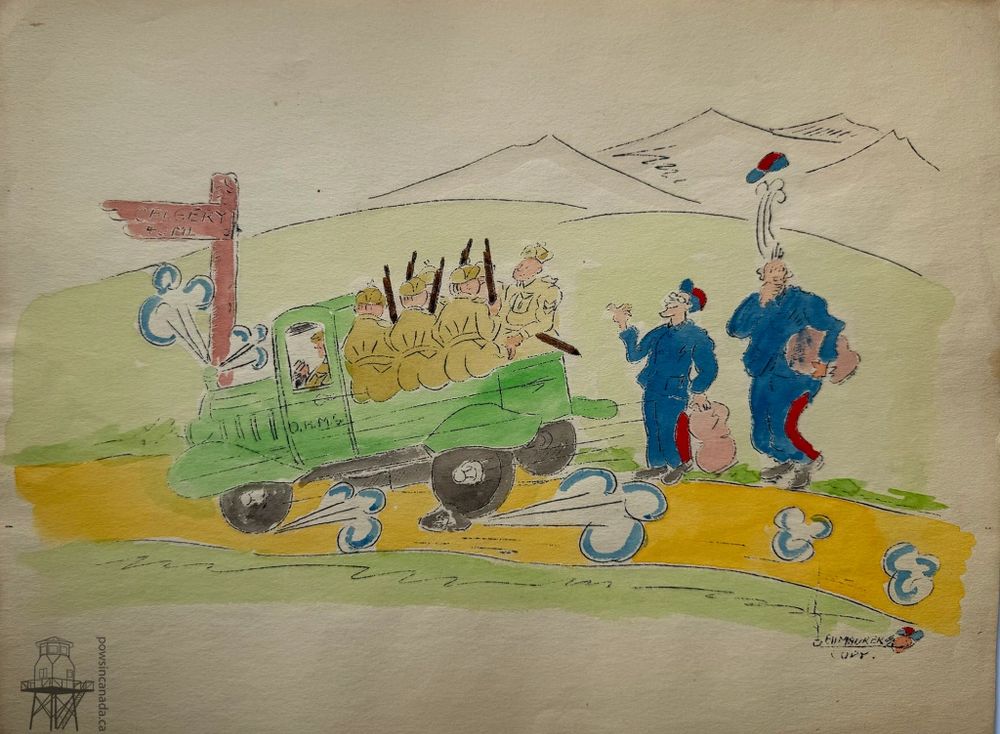
A truck transporting armed guards screeches to a halt in front of two internees. One internee gestures to hitch a ride while the other is extremely surprised.
For those who did manage to escape, they had to navigate their way back to the real world while avoiding checkpoints and guard patrols. No internee managed a successful escape from Camp K.
Some of the babies are engaged in digging – and disappearing through – a tunnel under the floorboards, one destroys the barrack walls with a hammer, while the “nanny” holds “privileges” (candy, in this case) behind their back. Withholding privileges was a common tactic to prevent or reduce trouble.
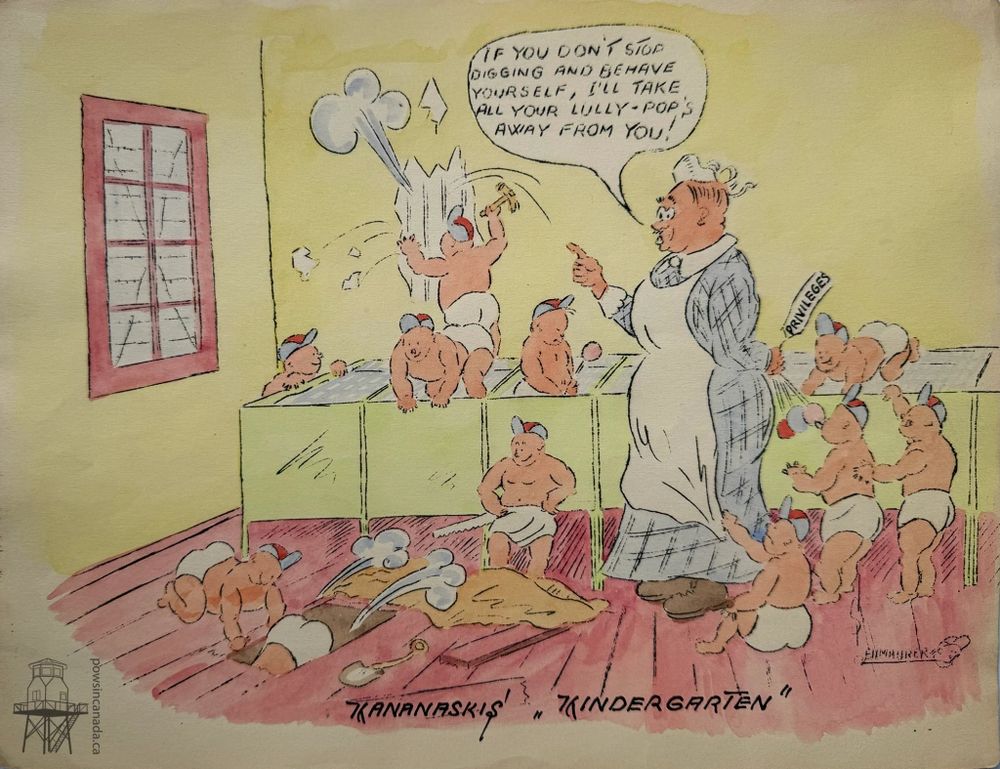
Cartoon print of a prisoner of war guard dressed as a nanny and several internees as babies. Some babies dig a tunnel, one hammers on a wall, while the others ignore the nanny. The nanny states “If you don’t stop digging and behave yourself, I’ll take all your lolly-pops away from you!”
Following last week’s post, here are more cartoons by Otto Ellmaurer, a German Canadian civilian internee, from Camp K in Kananaskis, Alberta.
This print likens internees to babies and their guards to nannies. Utter chaos appears to reign in the room.
Three guards stand in front of two prisoners emerging from a tunnel dug under a barbed wire fence. One of the prisoners exclaims “Believe it or not! We are just searching for our Easter Bunny!”
But not all prisoners were content to remain in camp. Several internees attempted to escape, with this pair digging a tunnel under the camp fence. Caught in the act, this pair claim to be seeking the Easter Bunny. But there would be no chocolate for them, only a stay in the detention barracks.
Check out more of Ellmaurer’s sketches here: powsincanada.ca/2025/03/18/k...
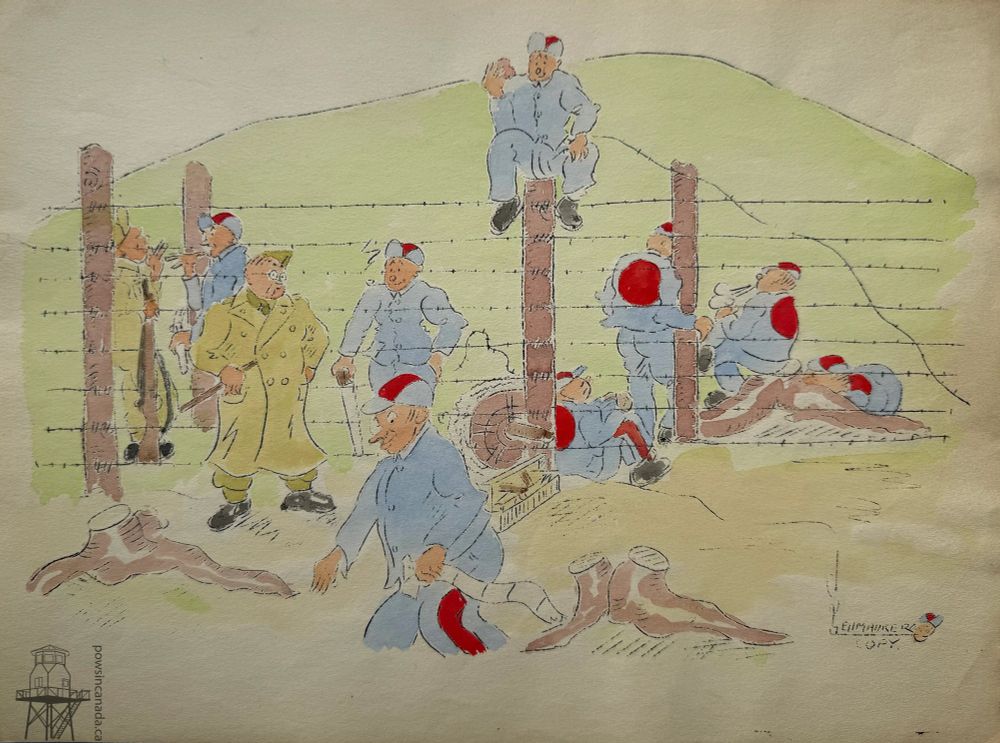
Coloured sketch of a prisoner of war work crew. A guard stands disapprovingly as the prisoners do anything but work on a barbed wire fence. One prisoner chats with a guard, one is off to the washroom, another eats an apple while sitting on a fence post, while the rest smoke or sleep.
Select groups were also permitted to work outside the camp on various projects like cutting firewood or, as seen here, even helping to build the barbed wire fences. Although Ellmaurer suggests these parties varied in their effectiveness.
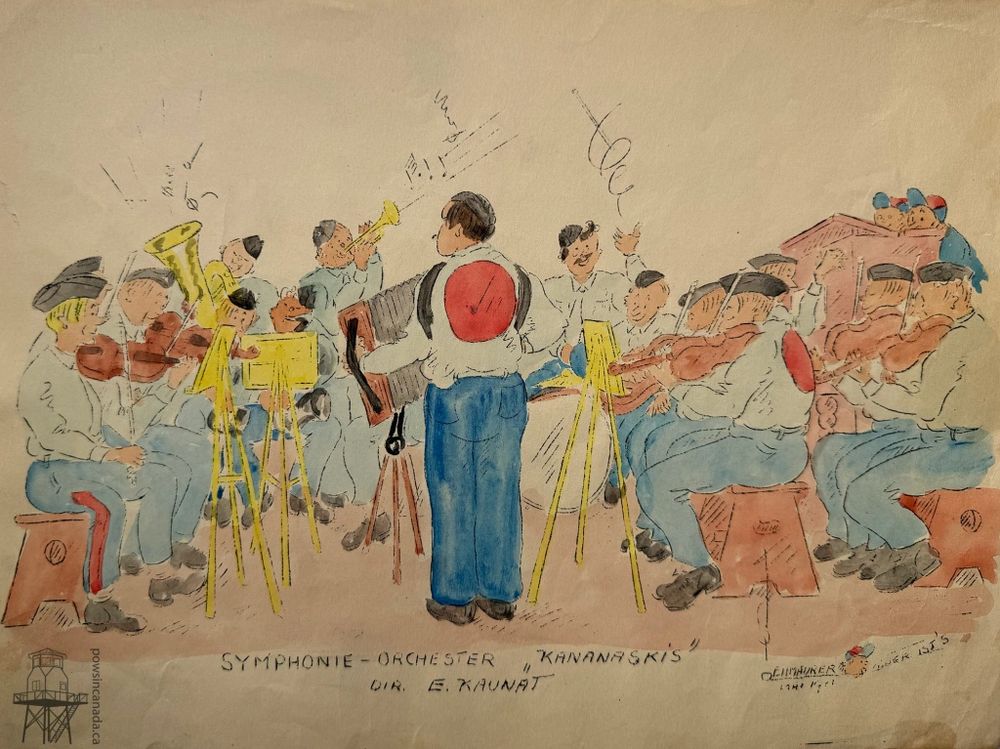
Coloured sketch of a small orchestra. The conductor stands in the foreground wearing a prisoner of war shirt with a large red circle on the back.
With nothing but time on their hands, prisoners like Ellmaurer turned to art while others turned to music, theatre, sports, and learning. The prisoners soon established a small orchestra under the direction of Erich Kaunat, another Montreal resident.
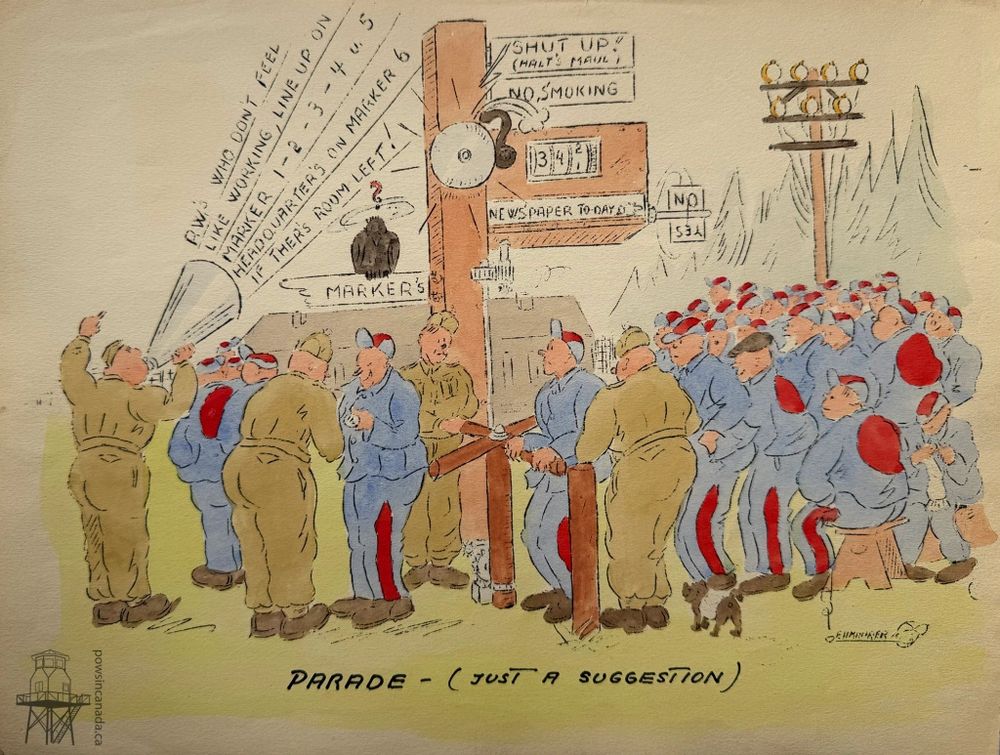
Coloured sketch of prisoners standing together for a morning parade. The guards struggle to keep order.
Thrust into a military environment, these men had to quickly learn to adapt to ice behind barbed wire fences. Daily parades and roll calls became routine, although there was an adjustment period…
These internees included members of the Nazi party and other pro-German organizations in Canada. However, it soon became clear many of these individuals posed no threat and were eventually released on parole on a case-by-case basis.
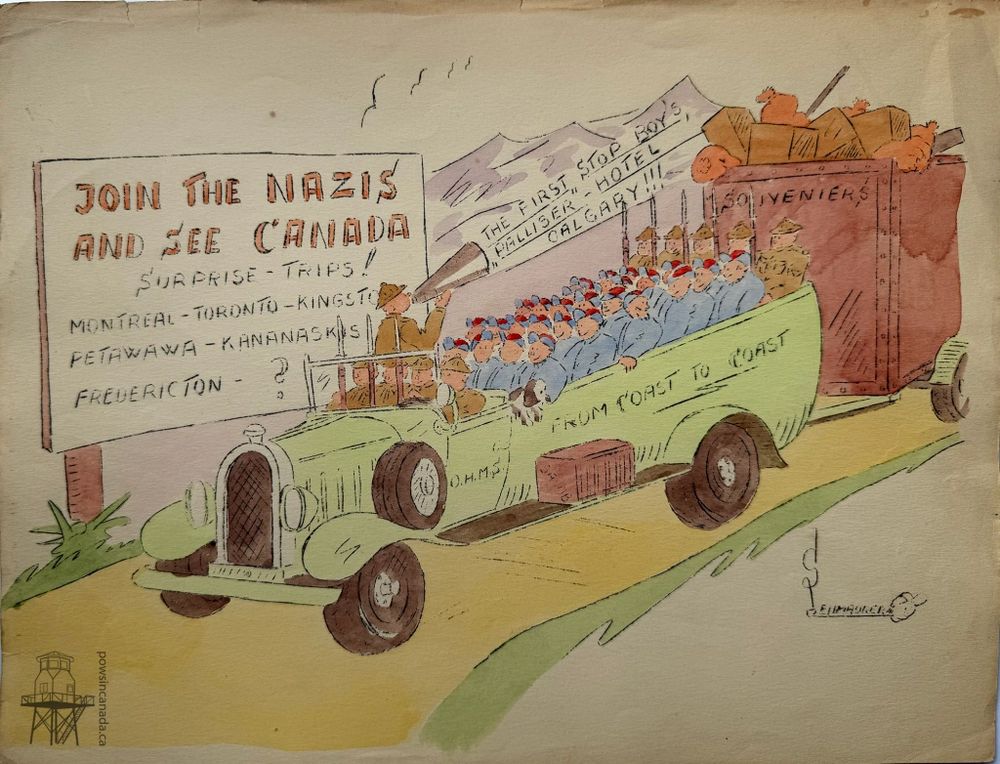
Coloured sketch of an extended truck carrying prisoners of war and their guards. A trailer full of souvenirs is pulled behind. A billboard reads “Join the Nazis and See Canada - Surprise Trips! Montreal-Toronto-Kingston-Petawawa-Kananaskis-Fredericton-?”
Internees at Camp K came from across Canada and, as this cartoons suggests, they became “accidental tourists” as they were transferred from camp to camp. Those interned had been deemed potential threats to national security by the RCMP and arrested shortly after war broke out.
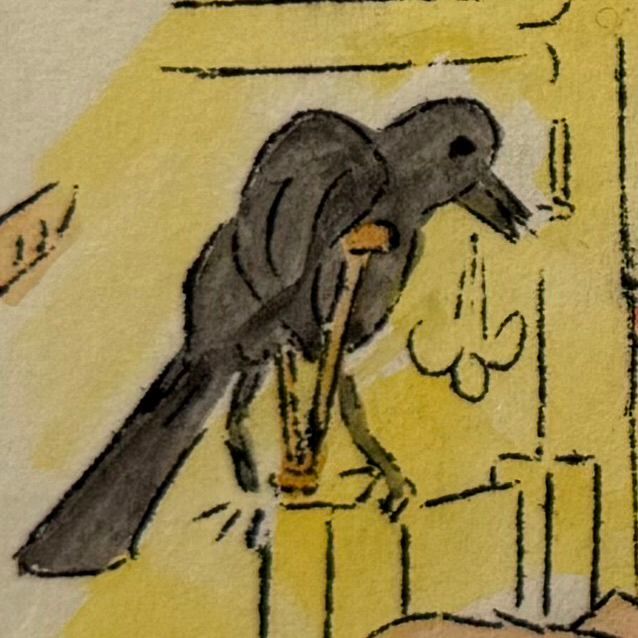
Cartoon of a crow standing with a crutch
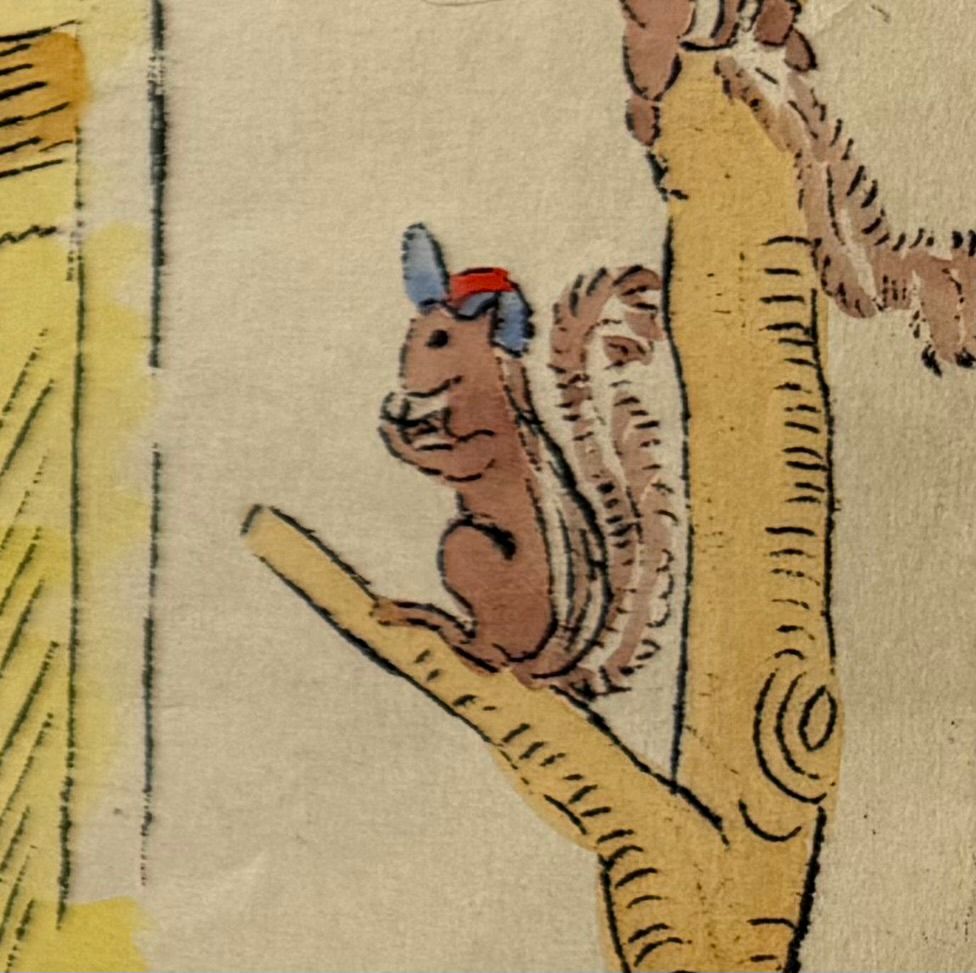
Cartoon of a squirrel wearing a prisoner of war cap
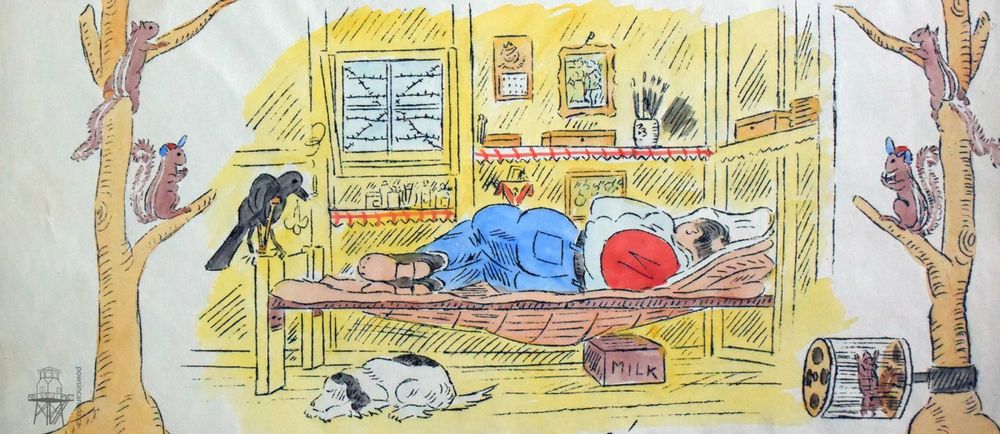
Unfortunately some of the details and stories in Ellmaurer’s cartoons have been lost or forgotten, like why the crow (or raven?) is sporting crutches or why several squirrels are wearing POW caps.
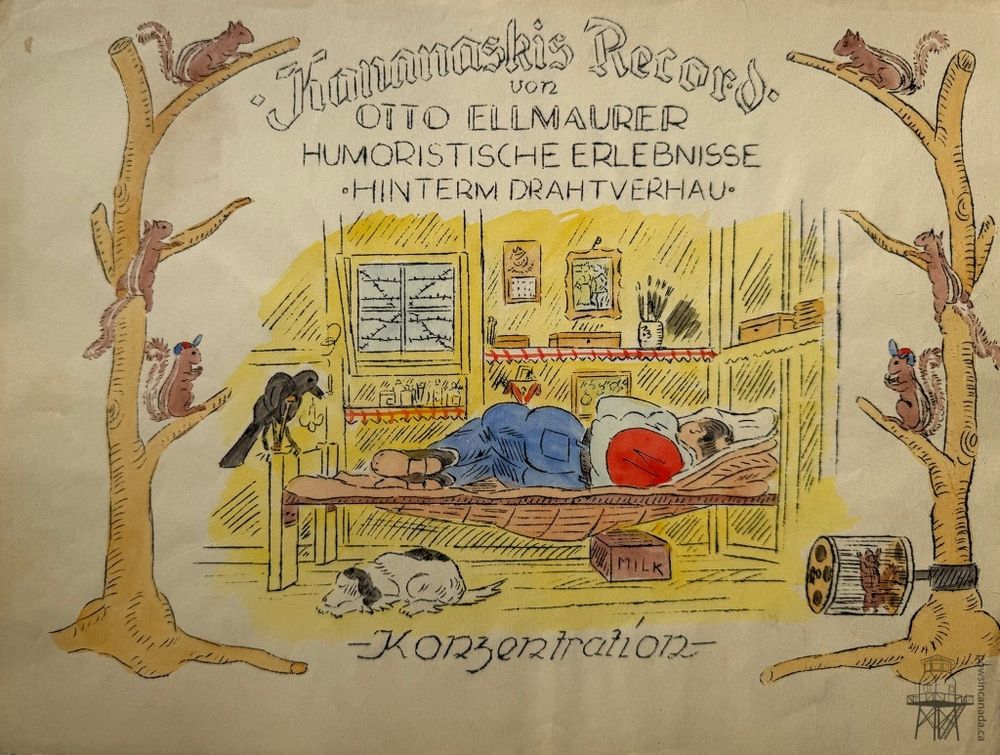
A coloured sketch showing a man wearing a prisoner of war uniform asleep on a bunk. Barbed wire fences are visible through a window. A dog sleeps next to the bed while a crow with crutches stand on the bedpost. The picture is flanked by two trees with several squirrels, two of them wearing POW caps, on the branches.
In July 1940, Otto Ellmaurer arrived at Camp K, an internment camp in Kananaskis, Alberta. A civilian internee from Montreal, Ellmaurer began work on his “Kananaskis Record,” a series of cartoons depicting - and, often, mocking - life in Canada’s first internment camp of the Second World War.
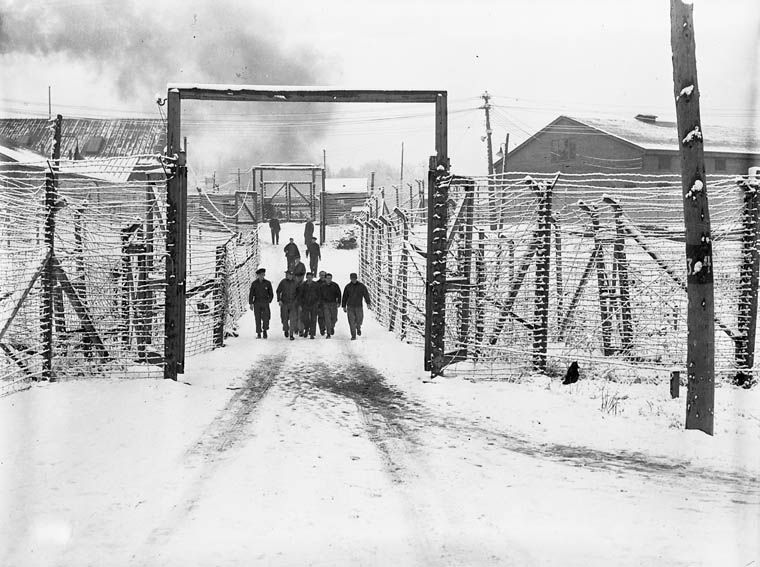
Read more about Christmas at Camp 42 at powsincanada.ca/2024/12/20/c...
The remaining toys were handed out to local children at a special Christmas party held in the guards’ mess.
“I cannot describe my feelings,” one prisoner described, “it sounds so cold in writing, but during that very short hour my heart was very warm.”
After reading about an expected toy shortage thar Christmas, internees busied themselves with building toys in their free time. The toys were donated to the local Red Cross but the internees had produced more than the branch could accept.
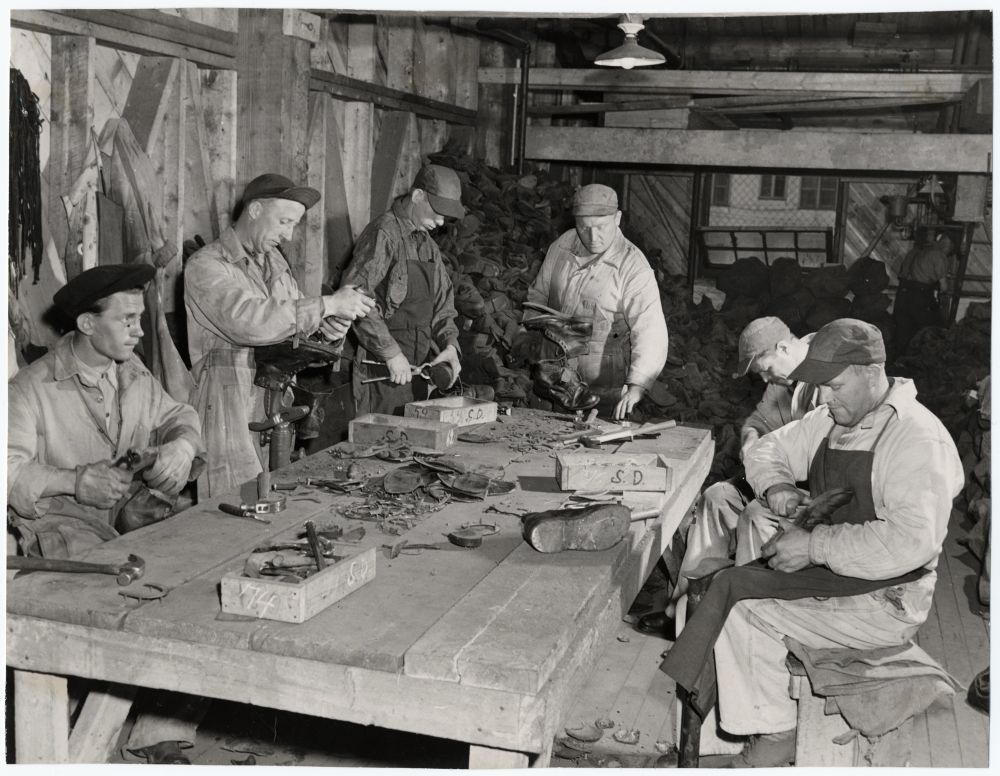
In December 1944, the workshops at Camp 42 in Sherbrooke, Quebec were in full swing. But rather than making the usual crates and netting or repairing shoes, some of the internees were focused on building something new: children’s toys.
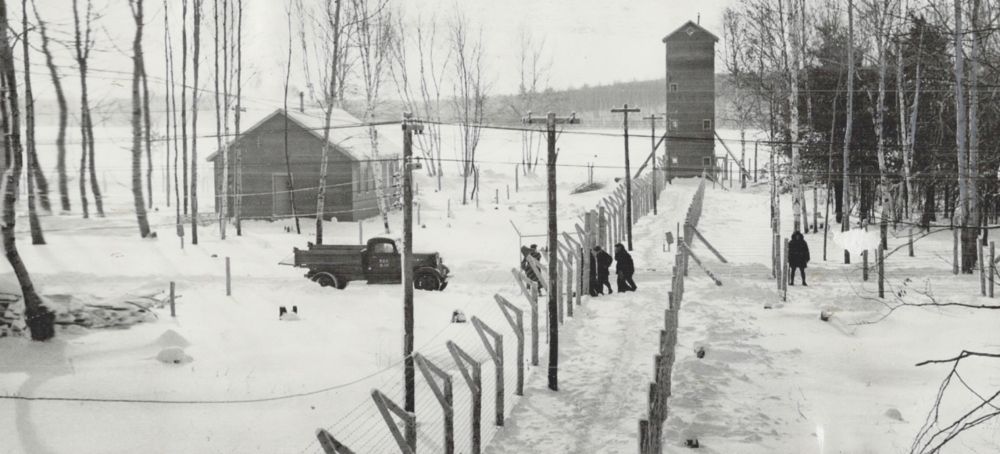
Camp P would later become Camp 33. The camp continued to evolve, later holding German Enemy Merchant Seamen and then Combatant Prisoners of War. Camp 33 closed in April 1946.
You can find the rest of the film and images at powsincanada.ca/2024/11/19/a...
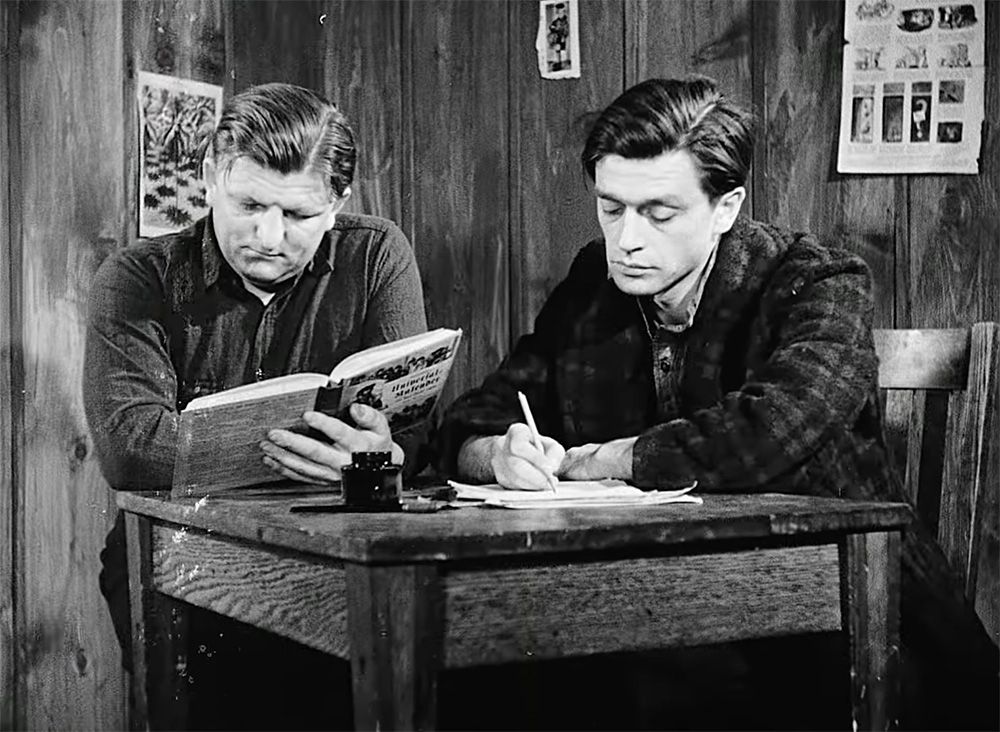
Others preferred to advance their education or simply write letters home. Most would be released within the next year or two as they posed no credible threat. Some ardent Nazis would remain behind barbed wire until the end of the war.
