Distribution of variables used in the calculation of Proactive Conservation Index (PCI) for six species of land vertebrates. Values in spider plots were scaled between 0 and 1. Values on the upper part of each photograph indicate our assigned PCI scores (inner, values closer to 1 indicate a higher conservation priority, relative to other species in the same class), and their IUCN Red List categories (outer, LC, Least Concern; CR, Critically Endangered; DD, Data Deficient; NE, Non-Evaluated). To keep the area of spider plots proportional to PCI scores, the authors have inverted variables that reduce PCI score, and changed their names here accordingly: inverted brood size is named “Reproductive Restriction,” inverted range size is named “Range Restriction,” and inverted protected range is named “Unprotected Range.” Cyrtodactylus metropolis photograph provided by L. Lee Grismer, Latonia nigriventer image by UR, all other photographs obtained from Wikimedia Commons (authors: Momofelit, Ólafur Larsen, Charles Lam, Omid Mozaffari).
Human-induced pressures are expected to intensify this century. @uriroll.bsky.social &co present #ProactiveConservationIndex, a new tool for #conservation prioritization regarding future threats for any group of species, & apply it to all terrestrial #vertebrates @plosbiology.org 🧪 plos.io/3WVRpRH
22.10.2025 17:06
👍 8
🔁 5
💬 1
📌 1

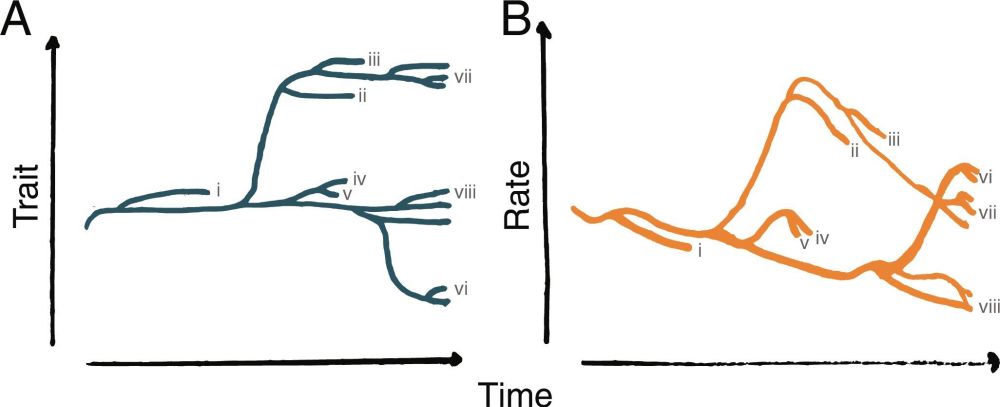
Evolutionary consequences of extreme climate events
Simon Baeckens and Colin Donihue review case studies of rapid evolutionary change
in response to extreme climate events and sketch a framework for future studies in
the rapidly changing climate of the...
Extreme climate events can catalyze rapid evolutionary change! in our new Current Biology (@currentbiology.bsky.social) piece, Colin and I argue it’s time to study their evolutionary consequences systematically — beyond opportunistic observations. www.cell.com/current-biol...
08.09.2025 19:17
👍 50
🔁 19
💬 2
📌 2
Congratulations!!🥳
01.09.2025 17:54
👍 1
🔁 0
💬 0
📌 0

Electroreception in treehoppers: How extreme morphologies can increase electrical sensitivity | PNAS
The link between form and function of an organism’s morphology is usually apparent
or intuitive. However, some clades of organisms show remarkable ...
Why do treehoppers look so weird?! Our latest paper, out this week in @pnas.org, suggests a perhaps unexpected reason - static electricity ⚡ We show that treehoppers can detect the electrostatic cues of predators and that their crazy shapes may boost their electrosensitivity! doi.org/10.1073/pnas...
24.07.2025 11:41
👍 415
🔁 166
💬 13
📌 38

a figure from the linked paper, showing size global maps and lots of strong geographic gradients
Ecology and Biogeography of Sexual Size Dimorphism in Squamates, Liang et al., GEB
onlinelibrary.wiley.com/doi/full/10....
30.06.2025 11:02
👍 2
🔁 2
💬 0
📌 0
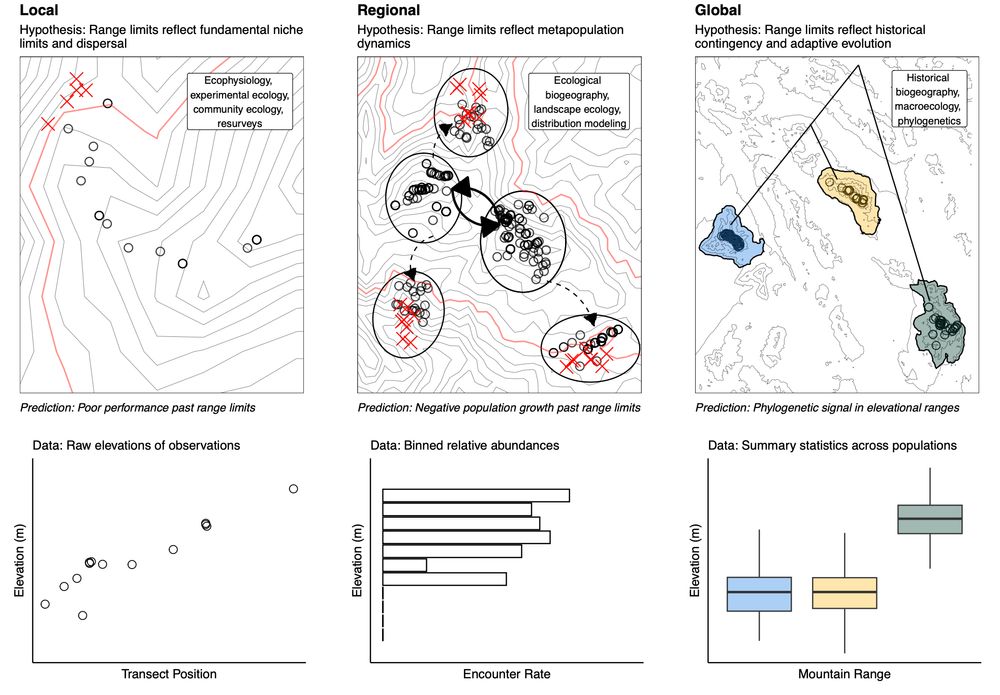
maybe my favorite paper I've written, I have a synthesis out today early access in @asn-amnat.bsky.social today that attempts to answer a simple but slippery question: what is an elevational range? doi.org/10.1086/737130
11.06.2025 21:44
👍 118
🔁 43
💬 6
📌 2

bird
NEW SCIENCE! 🚨🚨🚨🧪🪶🌐
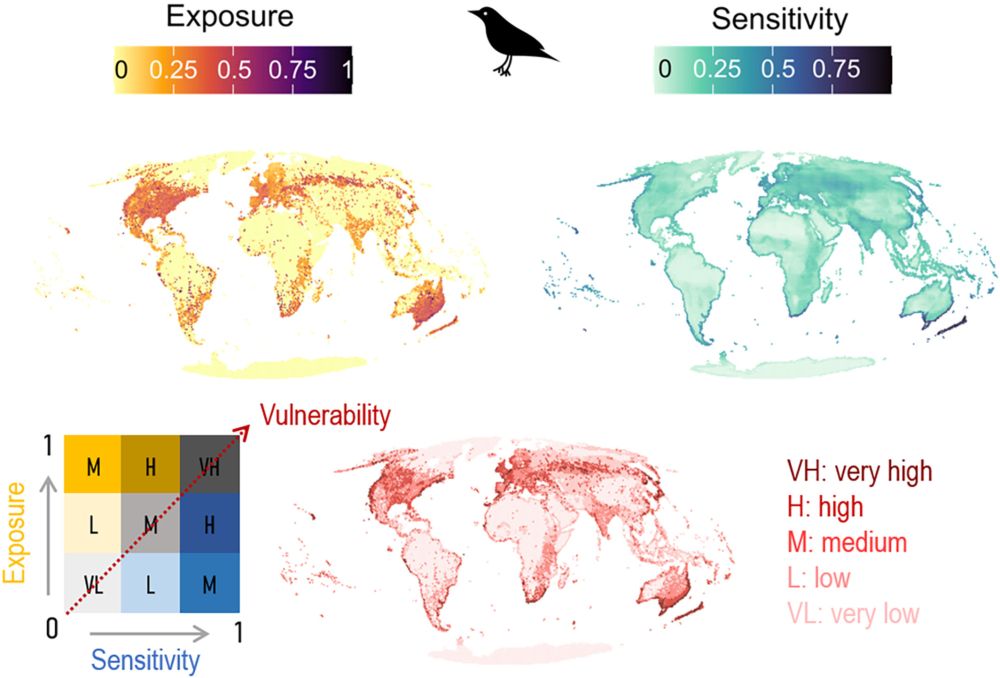
Our paper is now online at @natecoevo.nature.com! “Geographic redistributions are insufficient to mitigate exposure to climate change in North American birds”. We know birds are moving north with climate change, but what are the consequences?
www.nature.com/articles/s41...
10.06.2025 16:33
👍 43
🔁 16
💬 3
📌 0

Photo of Dan Janzen holding a caterpillar - image from Guardian article where the photo credit reads: Daniel Janzen has been monitoring insects since the 1970s in Costa Rica’s Guanacaste conservation area. He says he has seen biodiversity crash even in pristine environments.
Photograph: P Greenfield/Guardian

Photo of Winnie Hallwachs and Dan Janzen in ACG from Guardian article where the photo credit reads, Janzen and Hallwachs say that while the lack of insects in areas with heavy pesticide use is well documented, the collapse in protected areas is relatively new.
Photograph: P Greenfield/Guardian

Photo of light sheet collecting insects in 1984. Photo credit in Guardian article reads, A light trap set up by Daniel Janzen and Winnie Hallwachs two weeks after the beginning of the rainy season in 1984 and at the same period in 2019

Photo of light sheet collecting insects in 2019. Photo credit in Guardian article reads, A light trap set up by Daniel Janzen and Winnie Hallwachs two weeks after the beginning of the rainy season in 1984 and at the same period in 2019
“There’s just no moths on that sheet.” @tessairini.bsky.social writes in the @theguardian.com about #InsectDecline with #DanJanzen, #WinnieHallwachs and the caterpillars of the Area de Conservacion Guanacaste #ACG in #CostaRica @gdfcf.bsky.social
www.theguardian.com/environment/...
03.06.2025 10:37
👍 32
🔁 13
💬 1
📌 4
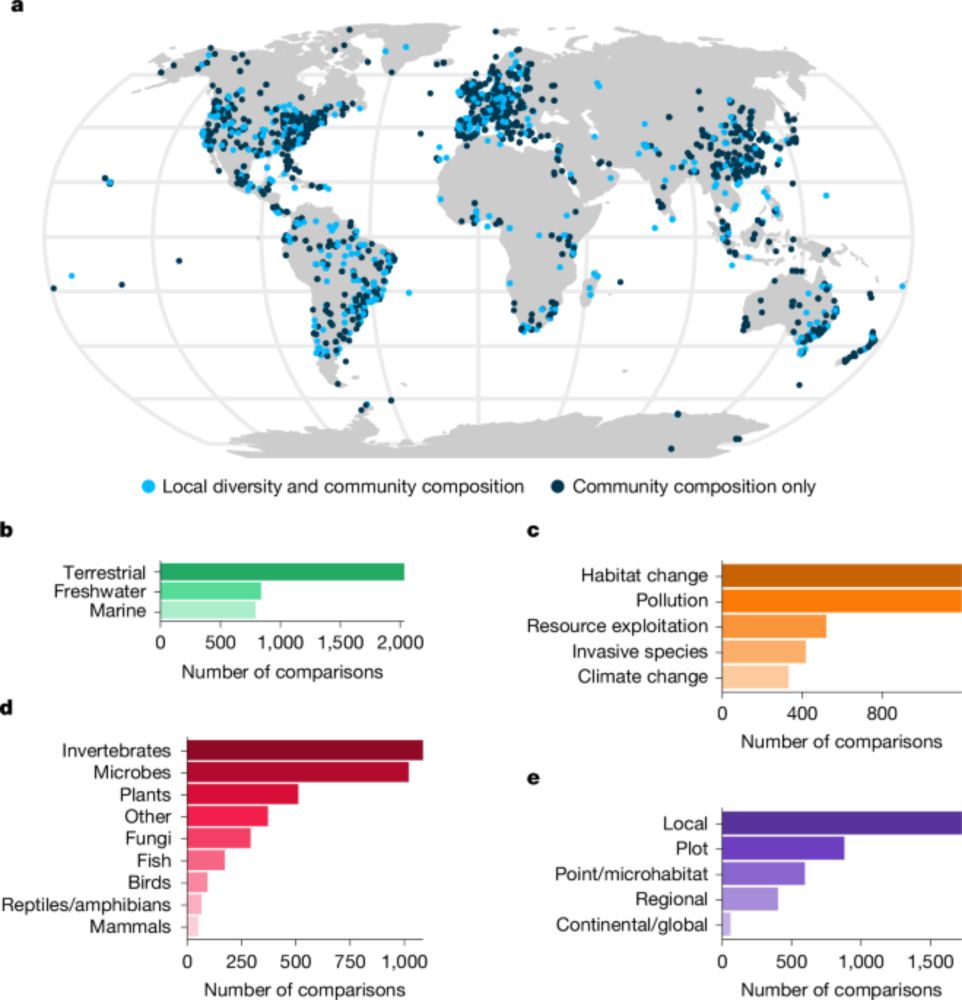
The global human impact on biodiversity - Nature
Key measures of biodiversity were quantified and found to be affected by human pressures that shifted community composition and decreased local diversity across terrestrial, freshwater and marine ecos...
Human pressures reshape biodiversity, but not always in expected ways. No global biotic homogenization found. Impacts vary by threat, taxa, and scale. #LandUse #Overexploitation #Pollution #ClimateChange #Invasives
👉Conservation must get specific
#KnowYourPressure #TailorYourStrategy #BendTheCurve
31.03.2025 09:17
👍 11
🔁 5
💬 0
📌 0

Exciting news! @wcratcliff.bsky.social and I published an essay last week in @nature.com reviewing the substantial contributions of 'long-term' studies to evolutionary biology
www.nature.com/articles/s41...
1/n
25.03.2025 15:45
👍 95
🔁 37
💬 1
📌 3

Welp this is horrifying. These researchers quantified the "stratigraphy" of plastic waste used in Common Coot nests. Using expiration dates, they found one nest that contained 635 (!!!) pieces of trash, including plastic dating back to 1991.
esajournals.onlinelibrary.wiley.com/doi/full/10....
28.02.2025 18:37
👍 49
🔁 20
💬 0
📌 2
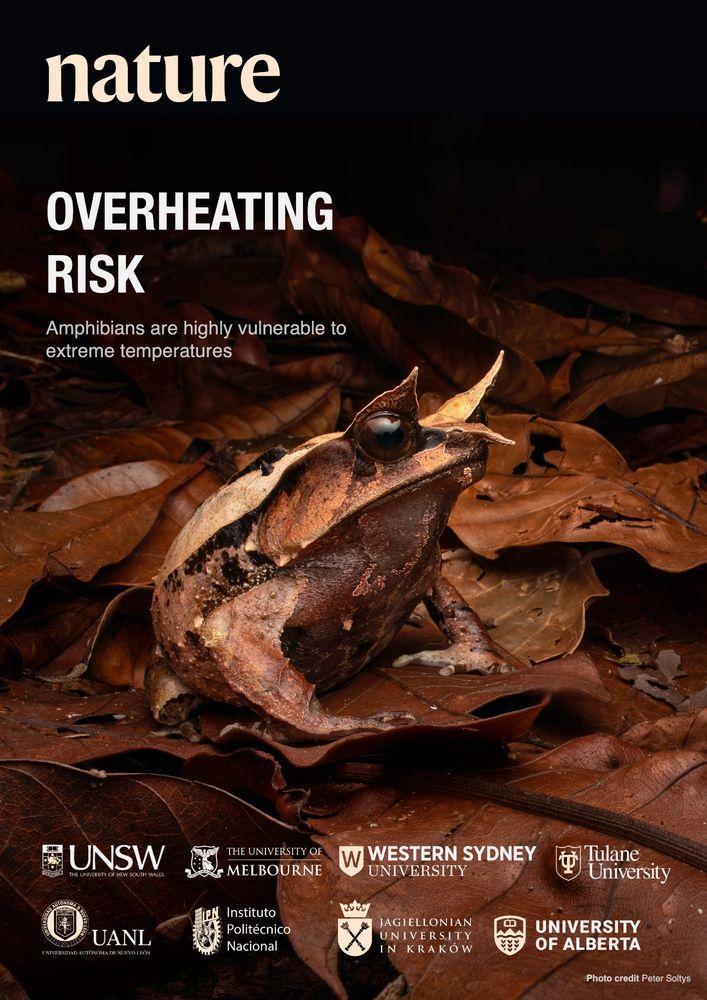
New paper in @nature.com led by @patricepottier.bsky.social! We demonstrated global vulnerability of amphibians to warming, threatening 10% of >5,000 species examined. How did we do it? See thread🧵
Paper: www.nature.com/articles/s41...
06.03.2025 10:27
👍 134
🔁 62
💬 7
📌 6

The global distribution patterns of alien vertebrate richness in mountains
Nature Communications - Among contemporary threats to mountain biodiversity, biological invasions have been understudied. This large-scale synthesis on alien vertebrates in global mountains delves...
📢Our new paper on alien vertebrates in the world's mountains is now out @naturecomms.bsky.social. Using data on 700+ spp across ~3,000 mountains we explore their distribution patterns,flows across realms, presence in protected areas, and the factors driving these trends.
🐟🐸🦎🦜🦝⛰️
👉 rdcu.be/ebidu
26.02.2025 08:31
👍 43
🔁 19
💬 5
📌 2

Our study on Duttaphrynus melanostictus evolution published in Nature Communication. We showed how these toads likely spread across the Indian Ocean via human transport, from ancient trade routes to modern shipping. 🌍🐸
@chrisdufresnes.bsky.social
@naturecomms.bsky.social
@comeniusuni.bsky.social
01.02.2025 18:34
👍 12
🔁 4
💬 1
📌 0

Climate change and the cost-of-living squeeze in desert lizards
Climate warming can induce a cost-of-living “squeeze” in ectotherms by increasing energetic expenditures while reducing foraging gains. We used biophysical models (validated by 2685 field observations...
The late Eric Pianka made thousands of observations of desert lizard body temperature and activity. We used them to test biophysical models of their cost of living and projected the models to past and future climates in Africa and Australia #unimelb #ARC @science.org
www.science.org/doi/10.1126/...
16.01.2025 21:59
👍 42
🔁 13
💬 1
📌 1

Extreme lead tolerance in an urban lizard
Lead (Pb) is an extremely toxic heavy metal pollutant pervasive in many environments with serious health consequences for humans and wildlife. Identifying organisms that can serve as biomonitors of le...
New work from the lab! Annelise Blanchette found that brown anole lizards may be the most lead (pb) tolerant vertebrate known to date by integrating physiological studies of field and lab exposed animals and transcriptomics #urbanecology #ecotox #anolis 🦎 1/n
www.biorxiv.org/content/10.1...
11.12.2024 14:35
👍 43
🔁 17
💬 4
📌 3

🌍🌱 It’s often believed that plant communities with greater phylogenetic diversity also have higher functional diversity. In other words, the more evolutionary lineages present, the greater the range of traits. But is this always true?
04.12.2024 17:05
👍 36
🔁 13
💬 2
📌 0
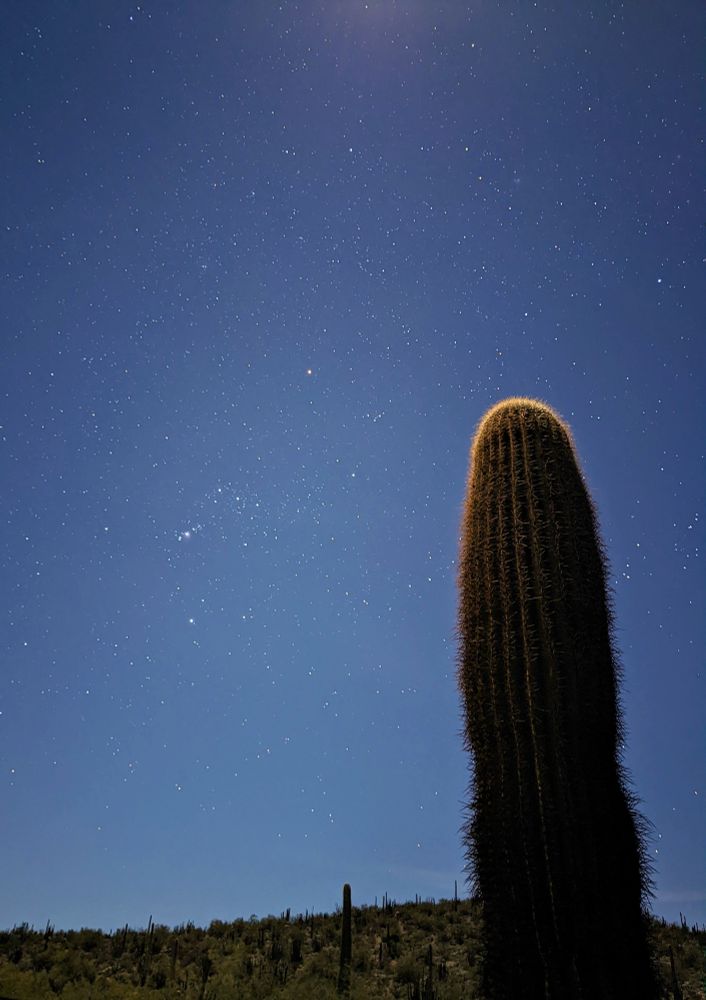
A photo of the Sonoran Desert at night with a saguaro cactus in the foreground with the top glowing from the moonlight. A field of stars is visible in the sky behind the cactus.
Come join us in Tucson!! I am excited to announce a tenure track faculty position on the genomics of resilience
@uofa-eeb.bsky.social! Read more about the position in the updated link below! We will begin reviewing applications on December 9! arizona.csod.com/ux/ats/caree...
26.11.2024 22:19
👍 142
🔁 90
💬 1
📌 0