Yay! Found myself! Thank you! 😋
10.02.2026 04:37
👍 2
🔁 0
💬 0
📌 0

russia and USA population comparison, infographic
100 years ago USA and russia had almost an equal population.
100 years after USA have more than 2 times bigger population. If russians think their brutality, purges, genocides and meat grinders are advantages - they are wrong.
#demography
19.12.2025 12:57
👍 2
🔁 1
💬 0
📌 0
Congratulations!
19.12.2025 22:39
👍 1
🔁 0
💬 0
📌 0

The demographic future that we do not know about
The demographic future of the planet has rarely been as questioned as it is today. For much of the 20th century, the demographic transition theory provided a clear narrative: With modernization and de...
"We are entering a post-transition world in which the tools and theories that served demography so well are under strain—especially when it comes to anticipating future fertility," writes Anne Goujon in a new #ScienceExpertVoices article. scim.ag/44uUwnT
01.12.2025 05:56
👍 17
🔁 6
💬 2
📌 0

[Due to huge interests in this, I post it here as well] I came across this interesting demography problem on X. It looks obvious until you actually think about it. And if you ask GPT, it will not give you the correct answer!
02.12.2025 14:47
👍 2
🔁 1
💬 2
📌 0

Births fluctuate, but over five decades fertility in the EU27 was remarkably similar: almost all countries had a total fertility rate between 1.5 and 1.9. Ireland was the exception, at 2.4.
#demography #fertility #EU27 #Ireland #Poland #Germany
03.12.2025 07:49
👍 4
🔁 2
💬 1
📌 0

High rates of polygyny do not lock large proportions of men out of the marriage market | PNAS
There is a widespread belief, in both the scholarly literature and the popular press,
that polygyny prevents large numbers of men from marrying by ...
🚨 The Economist has been telling you for years that polygamy causes civil war by locking men out of marriage. A new article with @rebeccasear.bsky.social and @anthrolog.bsky.social explains that the demography of marriage markets doesn't actually work that way. 🧵
www.pnas.org/doi/10.1073/...
06.10.2025 12:43
👍 130
🔁 51
💬 3
📌 9

When asked if Jesus “will return to Earth someday,” more than half of all U.S. adults (55%), including three-quarters of Christians, say this will happen. Protestants in the evangelical (92%) and historically Black (86%) traditions are more likely than other Christians to say there will eventually be a second coming of Jesus. Roughly four-in-ten Americans either do not believe Jesus will return to Earth (25%) or say they do not believe in Jesus (16%).
Respondents who said they believe Jesus will return to Earth were also asked how certain they are that this will happen during their lifetime. One-in-ten Americans say they believe the second coming of Jesus will definitely or probably occur during their lifetime, 27% are not sure if Jesus will return in their lifetime, and 19% say the return of Jesus will definitely or probably not occur during their lifetime.
The proportion of Americans who say they believe Jesus will definitely or probably return during their lifetime is higher among Protestants in the historically Black tradition (22%) and evangelical Protestants (21%), and lower among Catholics (7%) and mainline Protestants (6%). And the share of Black (19%) and Hispanic (14%) Americans who believe that the second coming of Jesus will likely occur during their lifetime is greater than the corresponding share of White, non-Hispanic Americans (8%).
When asked if Jesus “will return to Earth someday,” more than half of all U.S. adults (55%), including three-quarters of Christians, said this will happen.
www.pewresearch.org/short-reads/...
27.09.2025 14:38
👍 183
🔁 59
💬 88
📌 128
I am actively searching for a remote internship or graduate fellowship (in 2026) in social, demographic, health, or social policy research. I would appreciate any ideas, suggestions, recommendations, or leads. Thank you!🙏🏾
#internship #social #demography #health #research #fellowship #datascience
22.09.2025 00:54
👍 5
🔁 3
💬 0
📌 0
Does anyone want to be formal demography reading buddies? I have a bunch of areas I’m trying to read up on and I feel like I’d get it faster if I had someone to explain results to and ask questions of.
15.09.2025 16:44
👍 9
🔁 9
💬 2
📌 0

New publication - if you're interested in demography and bias, this is for you:
17.06.2025 00:55
👍 1
🔁 1
💬 0
📌 0
Essential Demographic Methods - Kenneth W. Wachter
17.06.2025 22:57
👍 1
🔁 0
💬 1
📌 0

More than 9,000 studies, reports, & book chapters published based on 400+ DHS surveys that were conducted in 91 countries, according to our bibliometric analysis (by @aasli.bsky.social). The termination could set the global research community back for years or even decades.
osf.io/preprints/so...
26.05.2025 17:33
👍 36
🔁 20
💬 1
📌 0
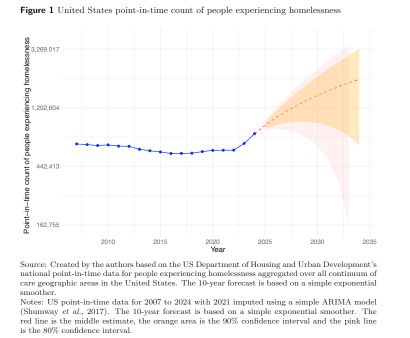
‼️New Review Article just out! Zack Almquist and colleagues tackle the challenges of measuring📏 and defining homelessness in the US, a key rising 📈 phenomenon that deserves attention from demographers.
🔗 austriaca.at?arp=0x004053...
#demography
@oeaw.bsky.social @demographyvienna.bsky.social
27.05.2025 00:51
👍 13
🔁 5
💬 1
📌 1
Demography paper: we explore the link between mental or physical health and fertility desires across the life course. Mental health seems to trigger changes in reproductive goals at young ages (men), physical health becomes more important at older reproductive ages.
@erc.europa.eu
@univie.ac.at
01.04.2025 09:03
👍 25
🔁 8
💬 0
📌 0

Figure from academic paper showing decrease in employment, working hours, and earnings after menopause, with increases in likelihood of taking social benefits.
Thanks to @gabriconti.bsky.social & colleagues for this excellent paper bringing attention to the economic impacts of menopause.
Hopefully the big Oprah menopause TV special last night provides some new RDD opportunities! #econsky #demography #menopause
jenndowd.substack.com/p/hot-and-bo...
01.04.2025 15:19
👍 15
🔁 5
💬 1
📌 0
Men suffer significantly more loneliness, and almost no one is referring merely to gfs when they talk about it. There are many who do not have friends, aren't close to their family, and don't even make small talk. The demography of this means it's facile to frame it as individual failing.
02.04.2025 20:10
👍 2
🔁 1
💬 0
📌 0

Comic with Dog sitting at a table drinking coffee in a room saying "This is fine"
1/ If it feels like a tsunami of bad news right now, I’m here to cheer you up with one trend that is moving in a positive direction:
➡️ Age-specific rates of #dementia have decreased substantially since 1984.
#SomeGoodNews
jenndowd.substack.com/p/some-good-...
27.03.2025 22:10
👍 60
🔁 11
💬 1
📌 1

Trends in dementia prevalence over time in the US.
3/ But within each cohort, the percentage of people getting dementia is getting lower over time, as illustrated in this recent piece in @jama.com:
jamanetwork.com/journals/jam... #demography
27.03.2025 22:10
👍 7
🔁 1
💬 1
📌 1
Meanwhile, a graduate student has been waiting more than 9 months for a first round review at a major journal.
Because nothing says "we support our junior scholars" more than knee-capping their publication chances in advance of what is shaping up to be one of worst US job markets in recent memory.
24.03.2025 21:33
👍 24
🔁 1
💬 0
📌 0