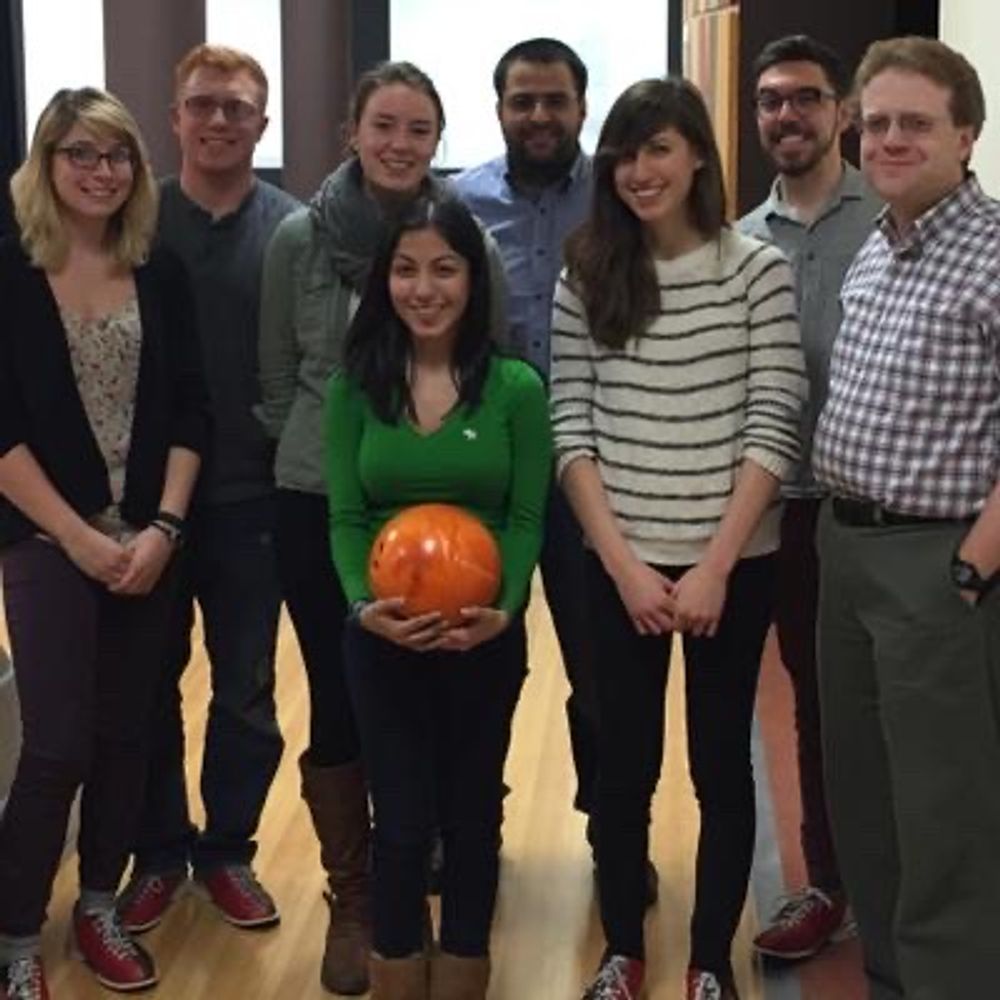

Had a fantastic metabolism and aging retreat yesterday with the @judisimcox.bsky.social and @wiscosurgicalmetab.bsky.social labs!
29.01.2026 20:59
👍 10
🔁 1
💬 0
📌 0
Had a fantastic metabolism and aging retreat yesterday with the @judisimcox.bsky.social and @wiscosurgicalmetab.bsky.social labs!
I find it easy to make - but they are ugly and I find the 10 citations max infuriating
Thanks to all of the @lamminglab.bsky.social members past and present for another terrific year, all our collaborators and colleagues for their help and friendship, and thanks as well to everyone who has participated in great conversations online and off about healthy aging, diet and mTOR!


We celebrated the graduation of two of our graduate students, Dr. Reji Babygirija and Dr. Mariah Calubag! Reji is now a postdoc with @WiscoSurgMetab while Mariah is looking for a postdoc – snap her up soon!

And we helped push a fascinating story over the finish line, “Dietary lipids are largely deposited in skin and rapidly affect insulating properties” www.nature.com/articles/s41...

Working with Adam Konopka and colleagues we continued to study rapamycin, showing that “Rapamycin Does Not Compromise Exercise-Induced Muscular Adaptations in Female Mice” onlinelibrary.wiley.com/doi/10.1111/...

We also participated in several collaborative publications, including the amazing “A low-protein diet drives short- and long-term improvements in metabolic health in a mouse model of sleeve gastrectomy” from @wiscosurgicalmetab.bsky www.sciencedirect.com/science/arti...

Finally, our fifth manuscript of the year, a collaboration between Spencer Haws, Yang Liu, @drcaragreen.bsky.social and @johndenu.bsky.social, "Depletion of individual dietary amino acids induce distinct metabolic and chromatin states" www.jbc.org/article/S002...

That brings us to our fourth manuscript of the year, “Ketogenesis is Dispensable for the Metabolic Adaptations to Caloric Restriction”, by lab postdoc Dr. Chung-Yang Yeh, onlinelibrary.wiley.com/doi/10.1111/...
Thanks to all our collaborators and colleagues who helped make this possible, including @drcaragreen.bsky.social @mikemacarthur.bsky.social Cholsoon Jang @judisimcox.bsky.social Kristen Malecki and many more!
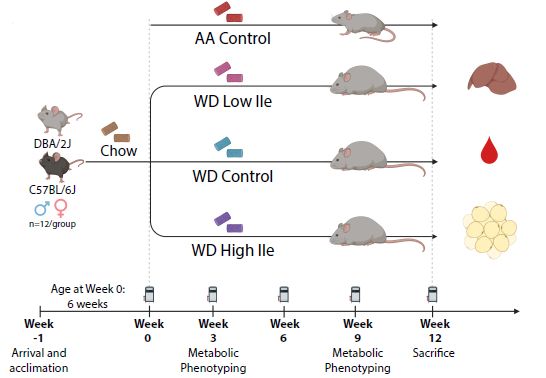
The third was the final paper of former graduate student Dr. Michaela Trautman, other lab members, and collaborators, “Dietary isoleucine content modulates the metabolic and molecular response to a Western diet in mice”: www.clinicalkey.com#!/content/pl...
Many current lab members collaborated on this paper, including Michelle Sonsalla, Mariah Calubag, @drcaragreen.bsky.social, Dr. Chung-Yang Yeh, and more, and it was done in collaboration with @johndenu.bsky.social, @wiscosurgicalmetab.bsky.social and Luigi Puglielli!
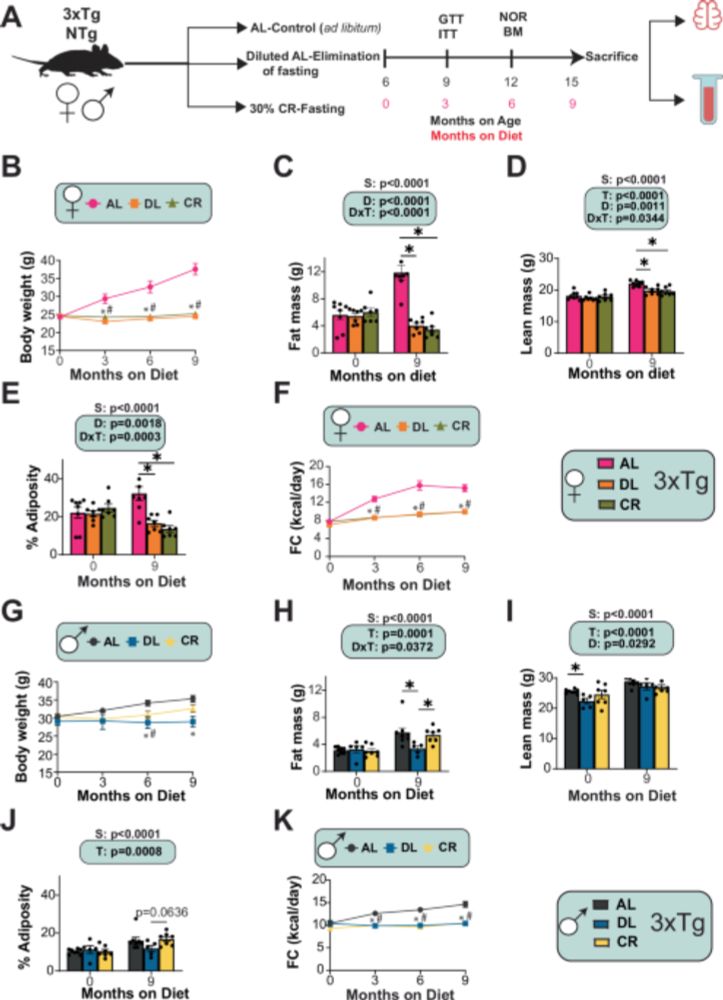
Next came our paper focused on Alzheimer's disease, “Fasting is required for many of the benefits of calorie restriction in the 3xTg mouse model of Alzheimer's disease” by graduate student www.nature.com/articles/s41...

We published 5 research papers, beginning with “Tissue-Specific Effects of Dietary Protein on Cellular Senescence Are Mediated by Branched-Chain Amino Acids” by graduate student Mariah Calubag and other lab members and collaborators: onlinelibrary.wiley.com/doi/10.1111/...
With the end of the year upon us, it's time for the 2025 @lamminglab.bsky.social year in review! Some of our accomplishments and successes are described in the thread below.
This was the result of a great partnership with @johndenu.bsky.social led by his postdoc Spencer Haws, with Yang Liu, @drcaragreen.bsky.social and Reji Babygirija from the Lamming Lab contributing!
These effects are not only cell-intrinsic, but are distinct from the effects of rapamycin, suggesting that the effects of AA-depletion on the epigenome are largely mTOR-independent
Isoleucine, the focus of much of our labs research recently, had the strongest effect, w/ "expression of select chromatin modifying and metabolic enzymes that led to a prominent epigenetic state of histone H2A/H4 hypoacetylation and maintained hepatic acetyl-CoA levels"
This long-awaited article demonstrates that depletion of individual essential amino acids induces profound changes in the liver epigenome, with AA-specific molecular changes at the level of histone PTMs, the transcriptome, and metabolome www.jbc.org/article/S002...

Pleased to annouce the publication of our new collaboration with Spencer Haws and @johndenu.bsky.social "Depletion of individual dietary amino acids induce distinct metabolic and chromatin states"
Thanks to all our lab members who contributed to this paper!
It's been almost a century and we still don't know exactly why CR improves health and extends lifespan - but we are making progress!
Surprisingly, this is not the case - ketogenesis is dispensable for the metabolic effects of CR. Indeed, Dr. Yeh discovered that CR mice adapt to the repeated fasting by CR, and over time stop inducing ketogenesis during their inter-meal fast.
CR as typically delivered leads to long periods of fasting between meals - and fasting normally induces ketogenesis. So here, Dr. Yeh tested the hypothesis that ketogenesis contributes to the metabolic benefits of CR.
The paper is available here: onlinelibrary.wiley.com/doi/10.1111/...

Pleased to announce the publication of talented postdoc Dr. Yeh's new paper "Ketogenesis is Dispensable for the Metabolic Adaptations to Caloric Restriction"!
We are excited to share our first WiSLiM manuscript! With the help of @lamminglab.bsky.social and Dr. Cholsoon Jang, we attempt to challenge the dogmatic approach to post-bariatric surgery diet with some surprising results... @wiscsurgery.bsky.social @uwhealth.bsky.social
Perhaps the most important paper of the decade with respect to how cells sense amino acid insufficiency, finally laying to rest the idea that GCN2 is activated by uncharged tRNAs!
Thanks to all our collaborators and colleagues who helped make this possible, including @drcaragreen.bsky.social @mikemacarthur.bsky.social Cholsoon Jang @judisimcox.bsky.social Kristen Malecki and many more!
Diet analysis by Michael MacArthur shows that humans who score highly on the Healthy Eating Index (HEI) score have a lower relative isoleucine intake.