Not sure if it’s a testament or condemnation of my culinary skills that my six-year-old’s favorite dish that I make is uotmil (oatmeal) 😂
09.09.2025 00:40
👍 3
🔁 0
💬 2
📌 0

@suyh
Assistant Professor at Westmont College, Santa Barbara, CA. 19th century US | capitalism | immigration. Author of Flowering Gold: American Capital and the Opium War (forthcoming with Yale University Press). YNWA.
Not sure if it’s a testament or condemnation of my culinary skills that my six-year-old’s favorite dish that I make is uotmil (oatmeal) 😂

An illustration of a figure in Western dress fighting a giant snake with a sword
I recently became acquainted with "Osanaetoki Bankokubanashi" 童絵解万国噺, a Japanese illustrated history of America from 1861. The retelling of the revolutionary era is quite something. Here, for instance, is John Adams wielding a sword in mortal combat with a gigantic serpent.

This year's rising seniors have never experienced a year of college without generative AI. It's AI's senior year, too. And AI is ubiquitous: Over 90 percent of college students now use it in some way.
I wrote about how AI already changed college forever. (Gift link)
Brilliant write-up, thank you.
Definitely the second best discipline

A great read on UChicago, arguing we’re seeing the result of decades of mismanagement: “The university’s trustees and leaders view it preeminently as a tax-free technology incubator, and its debt load is so great that it is abandoning ideals it once held dear in order to sustain that goal.”
I’m delighted to be featured in the SSRC’s latest issue of Frontiers in Social and Behavioral Science. Working on my article made me rethink of opium not as a social “vice” but as a resource for managing epidemic risk, explaining its prevalence on the high seas and the Chinese coolie trade.

Historians don’t always get to visit the places they write about, but I’m so glad I did!
Why did you have to choose violence
The academic’s mid-summer crisis is a mid-life crisis in miniature:
You realize summer is half gone, & not only that: you see that the longest & least burdened days came early, & they are well past. You compare all you thought you’d do against the days remaining & grieve for what never will be
RIP Diogo 🥺 You were always one of my favorites.
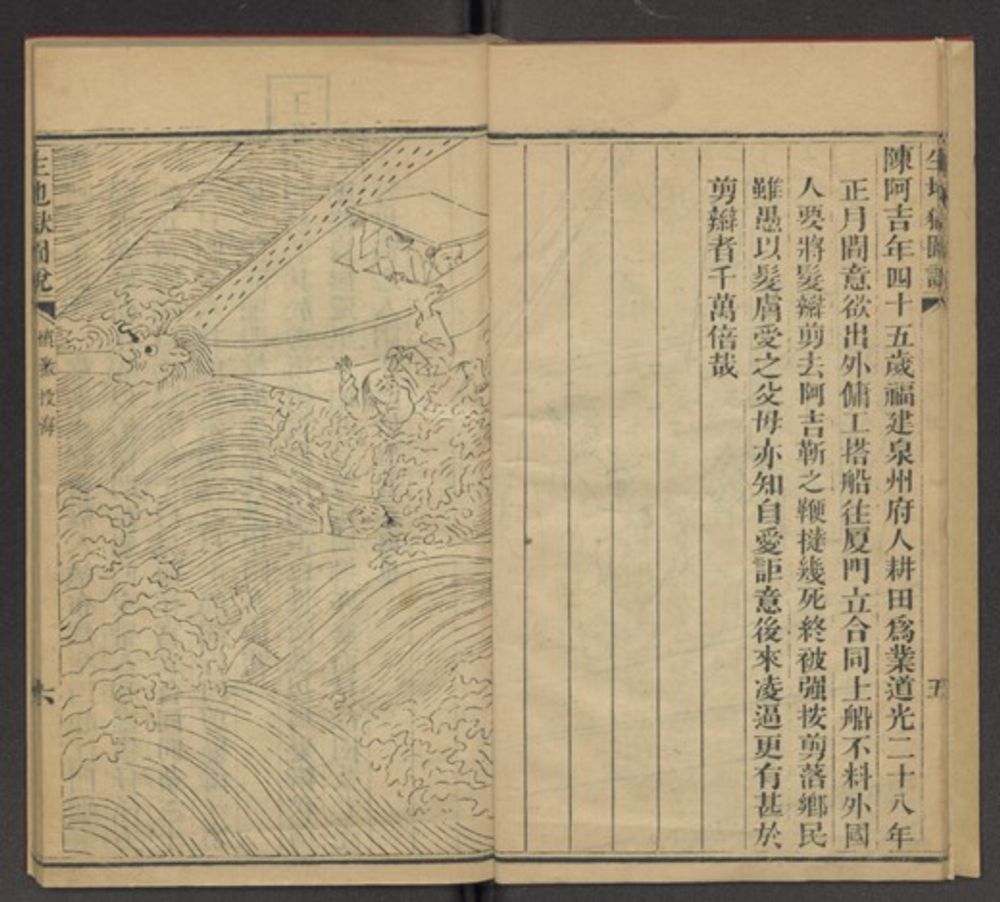
In “The Opiated Ocean,” @suyh.bsky.social analyzes the regulation of opium in 19th century Chinese trade, arguing its widespread provision among the indentured workers was a means to stave off seaborne epidemics to preserve profitability of contract labor. #AHR 🗃️
That’s the article in brief: due to maritime epidemic risk, governments and labor contractors conjoined the circulation of coolie labor and smoking opium beyond China’s borders. If you’d like more, please give it a read! (5/5)
Thus began my four-year investigation through multiple archives that included Spanish and Chinese sources. In short, I learned that smoking opium wasn’t causing sickness; it was sickness that caused many Chinese to smoke opium, which forced contractors to make the drug freely available. (4/5)
I was puzzled: smoking opium is not something you overdose from. So why were they being tagged like that? And where did the opium come from? (3/5)
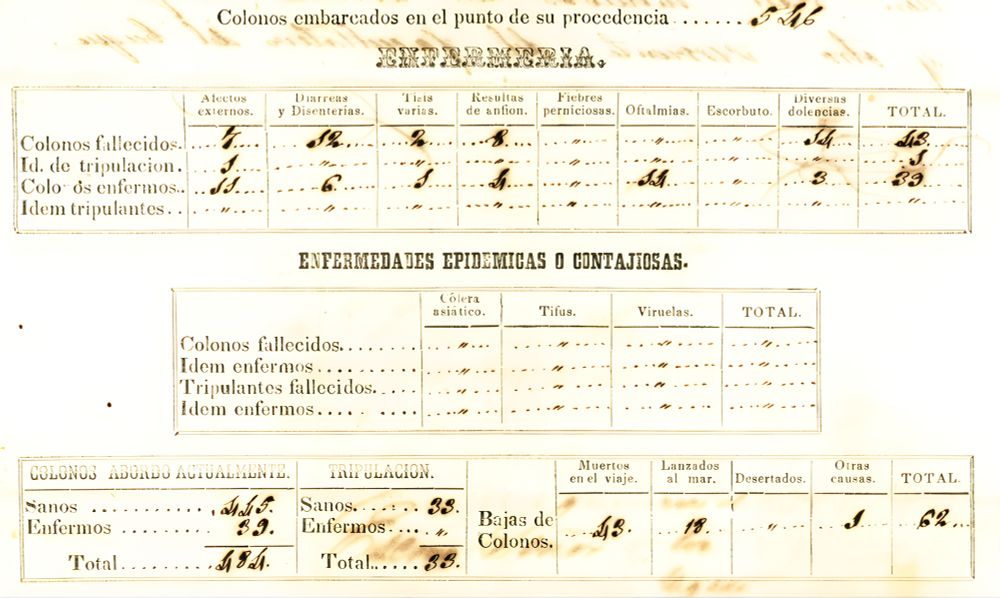
A mortality table for the “Golden Eagle,” a Chinese coolie vessel. 12 passengers died from opium (“resultas de anfion”).
I was researching Chinese coolie voyages (la trata amarilla or “the yellow trade”) when I stumbled into a weird finding. In Hong Kong and Havana, authorities were noting cases of passengers that died from smoking opium (Spanish: “resultas de anfion”) while at sea. (2/5)
I’m delighted to share that my article, “The Opiated Ocean” is out today in the #AHR: doi.org/10.1093/ahr/....
For those curious, here’s how the article came about🧵 (1/5)
My firstborn daughter graduated kindergarten today. Where has all the time gone 😭
when this is over I’m getting a J Pow tattoo

Per Curiam: The Constitution assigns Congress the exclusive powers to “lay and collect Taxes, Duties, Imposts and Excises,” and to “regulate Commerce with foreign Nations.” U.S. Const. art. I, § 8, cls. 1, 3. The question in the two cases before the court is whether the International Emergency Economic Powers Act of 1977 (“IEEPA”) delegates these powers to the President in the form of authority to impose unlimited tariffs on goods from nearly every country in the world. The court does not read IEEPA to confer such unbounded authority and sets aside the challenged tariffs imposed thereunder.
BREAKING - A 3-judge panel of the US Court of International Trade has just INVALIDATED Trump's tariffs.
Says Trump CANNOT use the International Emergency Economic Powers Act of 1977 to unilaterally impose tariffs; that power belongs to Congress.
MORE TK
storage.courtlistener.com/recap/gov.us...
I’m pleased to share that “The Opiated Ocean” will appear in this June’s #AHR issue as the opening article. For those interested in drug, labor and commodity history—stay tuned!
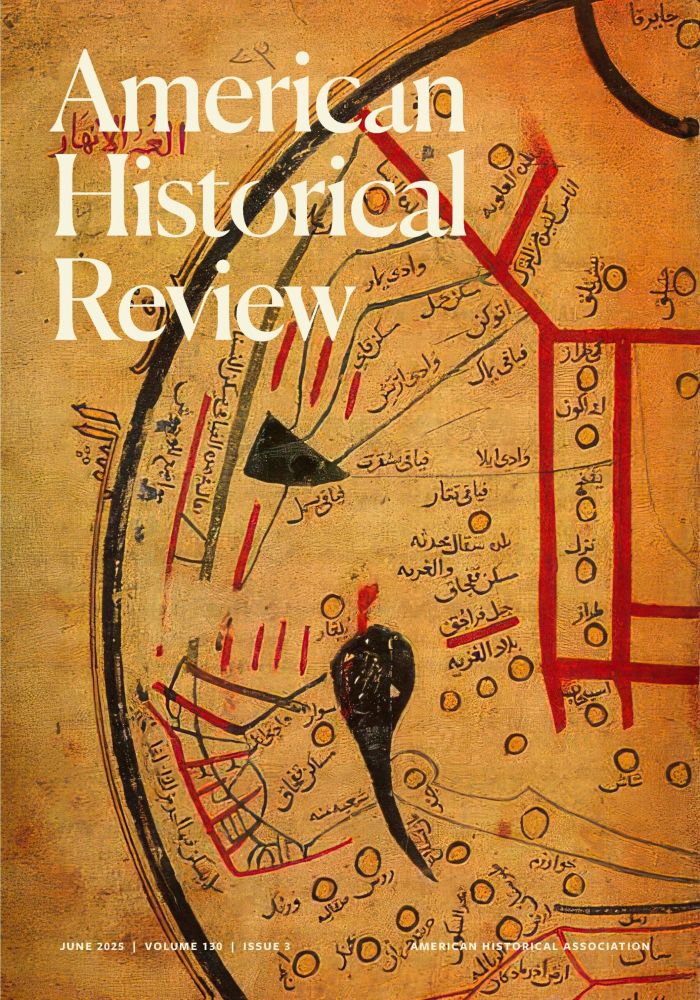
In #AHAPerspectives, get a sneak peek of the June issue of the American Historical Review, including articles on opium, terminology for slavery, and counterrevolution, a forum on the concept of "Big Asia," and contributions on searchability and using archival databases in the classroom. 🗃️
Thanks Jonathan! Can’t wait to read more of your work too.
A bill how the government makes law; coo coo birds are the people currently making them.
ELF final: stoppable force meets moveable object

The front page of the Chicago Sun-Times, featuring the pope waving under the words "DA POPE!" Subheadline says, "Chicagoan Robert Prevost, known to many on the South Side as 'Father Bob' and now to millions as Pope Leo XIV, becomes first American pontiff. The best coverage of Chicago's pope, pages 2-10."
Today's front page.
How’s compliance been?
An alarmist take, but mostly correct. Over the last two years, I have seen how robots have not only eaten my students’ homework, but the concept of homework itself.
The only check left is convincing my students that outsourcing one’s thinking is a bad idea. Some will agree; most will not.