È in corso a #Roma, nella sede centrale #INGV, il workshop internazionale “Earthquake Early Warning: Strategies for Italy”, dedicato alle strategie per sviluppare un sistema operativo di #allertasismica precoce in #Italia.
17.02.2026 10:42
👍 1
🔁 1
💬 0
📌 0

Mesozoic palaeogeography impacts the present-day seismogenesis of the Apennines.
Most of the seismicity concentrates within the Permian-Triassic syn-rift basins.
Read more at:
doi.org/10.1016/j.te...
06.02.2026 18:44
👍 3
🔁 0
💬 0
📌 0
Public Call for a Tsunami Researcher permanent position at Istituto Nazionale di Geofisica e Vulcanologia - INGV - Rome, Italy – Code: 8RIC-VS-01-2026
Link on InPA web site (in Italian)
www.inpa.gov.it/bandi-e-avvi... applications must be submitted within 30 days from
21/1/2026
23.01.2026 09:57
👍 0
🔁 2
💬 0
📌 0

We are excited to inform you that you can also consult the Greek Database of Seismogenic Sources directly from our homepage
seismofaults.eu
16.10.2025 10:13
👍 2
🔁 1
💬 0
📌 0

L’INGV partecipa alla VII Settimana della Protezione Civile con una giornata sulla #Scienza per la prevenzione.
Giovedì 9 ott, h 15:00 collegamenti con le Sale Operative INGV (Napoli, Catania, Roma) e Sala Space Weather.
www.youtube.com/@INGVEventi
www.ingv.it/stampa-urp/u...
06.10.2025 11:00
👍 0
🔁 1
💬 0
📌 0

Just a short break from geological things to let you know about my daughter's activities, in case you are interested in arts and paintings:
ilariatarantoatelier.com
26.09.2025 08:45
👍 0
🔁 0
💬 0
📌 0
📌
05.08.2025 18:05
👍 3
🔁 0
💬 0
📌 0


25 years ago, DISS was taking its first steps...It has come a long way since then!
diss.ingv.it
21.07.2025 07:35
👍 5
🔁 2
💬 0
📌 0
Do Graviquakes Exist? | Bulletin of the Seismological Society of America | GeoScienceWorld
What a good reading!
Malagnini et al.'s BSSA paper draw a line on the diffusion of the "graviquake" concept.
👉 doi.org/10.1785/0120...
10.06.2025 07:55
👍 3
🔁 3
💬 0
📌 0
The new version of DISS (Database of Individual Seismogenic Sources) is now available!
This new version improves the seismogenesis model for Italy and surroundings, providing researchers, professionals, and decision-makers with a modern tool for consultation and investigation.
diss.ingv.it
23.05.2025 10:31
👍 11
🔁 7
💬 0
📌 0
The new version of DISS (Database of Individual Seismogenic Sources) is now available!
23.05.2025 08:58
👍 0
🔁 0
💬 0
📌 0

New dataset out!
Global Dip (G-DIP): a collection of earthquake fault dip angles. seismofaults.eu/gdip
You can find the related paper here: doi.org/10.1093/gji/...
05.05.2025 10:22
👍 2
🔁 2
💬 0
📌 0
Dip-slip fault types, both normal and reverse, show similar dip values, regardless of their sense of movement.
04.05.2025 10:55
👍 1
🔁 0
💬 0
📌 0

Sorry, I could not resist: mine is so similar!
14.03.2025 10:13
👍 1
🔁 0
💬 0
📌 0
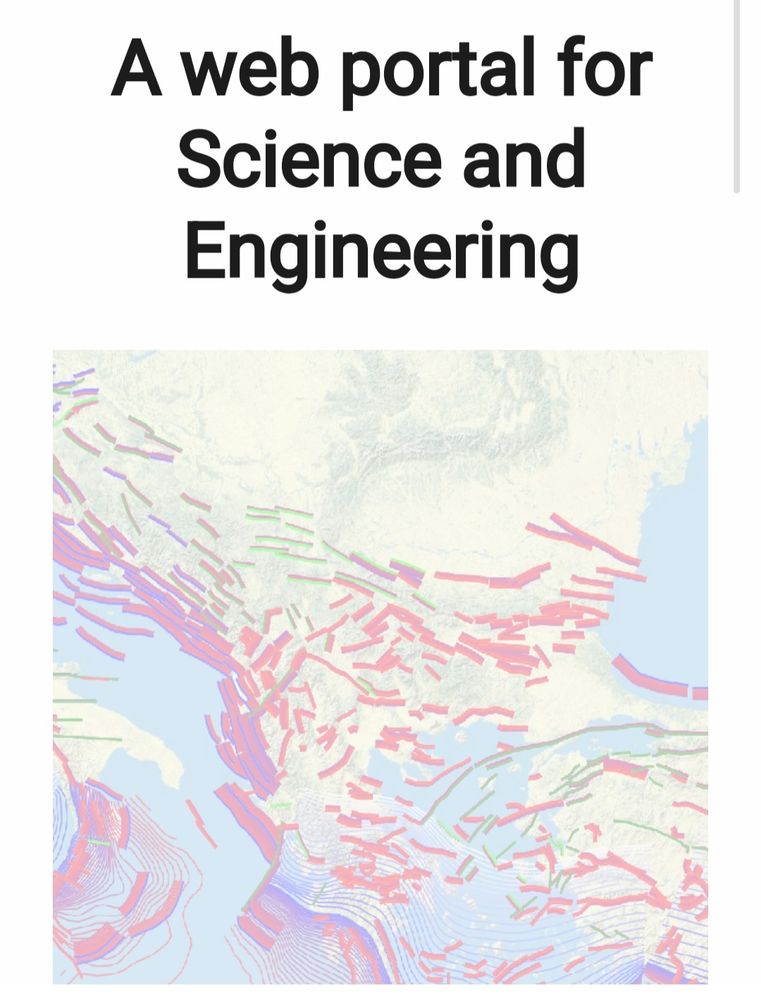
The European Databases of Seismogenic Faults (EDSF) installation operates under the EPOS TCS-Seismology work program and the EFEHR Consortium. EDSF distribute data about seismogenic faulting proposed by (or solicited to) the scientific community or stemming from project partnerships. seismofaults.eu
11.03.2025 18:05
👍 3
🔁 4
💬 0
📌 0
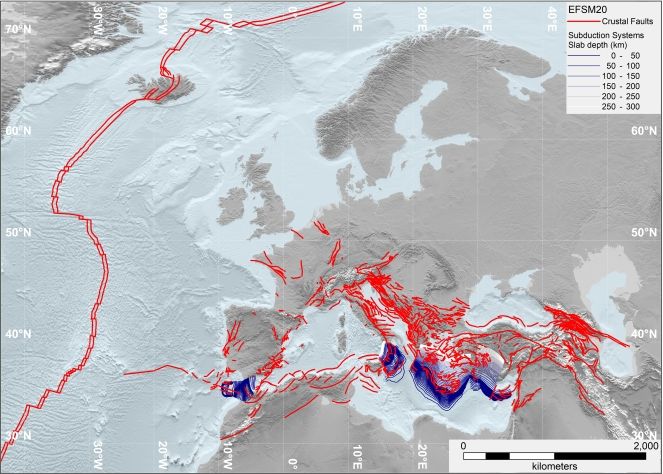
The European Fault-Source Model 2020 (EFSM20) is one of the main input datasets used for the 2020 update of the European Seismic Hazard Model (ESHM20). EFSM20 is now part of the portfolio of the EFEHR services.
More info here:
doi.org/10.13127/efs...
doi.org/10.5194/nhes...
04.03.2025 12:58
👍 12
🔁 6
💬 0
📌 0

Do you want to keep up-to-date on Italian and European seismogenic faults data? Follow us on bsky.app/profile/seis...
04.03.2025 13:22
👍 5
🔁 1
💬 0
📌 1

Top third of this image shows a cartoon of a fault rupture, labeled with "fault patch that slips before the earthquake nucleates." This is the idea behind precursors to earthquakes. The middle panel of the image shows the global stack of GPS signals from 90 earthquakes greater than or equal to M7, per Bletery and Nocquet, 2023. The lower panel shows the global stack after removal of common mode GPS noise, per Bradley ad Hubbard, 2023.
Join us for a debate via zoom: Are Large Earthquakes Preceded by Observable Slow Slip?
Tuesday, Feb 18, at 8:00 am PT (San Francisco) / 11:00 am ET (New York) / 4:00 pm GMT (London) / 5:00 pm CET (Paris)
us02web.zoom.us/meeting/regi...
31.01.2025 17:07
👍 16
🔁 7
💬 2
📌 3
Which is the northern end of the section?
07.02.2025 20:00
👍 0
🔁 0
💬 0
📌 0

Update on the seismic swarm in Greece
A look at earthquake patterns beneath the Aegean Sea
Read our new post, with updates on the seismic swarm in Greece. The seismicity seems to be migrating to the northeast, and maximum depths are shallowing. Rates of seismicity have held pretty steady since Feb 2.
earthquakeinsights.substack.com/p/update-on-...
05.02.2025 17:26
👍 31
🔁 13
💬 4
📌 2
Have an Earth science question? @natrevearthenv.bsky.social has a new "ask an expert" format!
The editorial below has more information, including a link to the form to submit your question.
14.01.2025 19:19
👍 21
🔁 9
💬 0
📌 0
This 2022 paper 😪
10.01.2025 18:24
👍 4
🔁 1
💬 0
📌 0

In case some mentors may want to read this. #Nature #PhD #scisky #student #mentor
Source:
www.researchgate.net/publication/...
25.11.2024 00:18
👍 162
🔁 61
💬 5
📌 13