HUGE thanks to the amazing team behind this report, incl. Jo Puddick, @dralanwager.bsky.social, Naman Goel, Rhydderch, Daniel Cameron, @Benjamin Roff, and @helenmargetts.bsky.social!
6/6
22.09.2025 06:25
👍 0
🔁 0
💬 1
📌 0

This matters. Without public support, the government will struggle to deliver on the AI action plan and its wider growth agenda
To build trust in AI, the government must ensure that AI systems are beneficial and safe, as well as center its messaging around AI on how it improves social outcomes
5/6
22.09.2025 06:25
👍 1
🔁 0
💬 1
📌 0

🛟 38% of UK adults cite lack of trust in AI content as the main barrier to adoption
4/6
22.09.2025 06:25
👍 0
🔁 0
💬 1
📌 0

📉 More UK adults view AI as a risk for the economy (39%) than an opportunity (20%)
3/6
22.09.2025 06:25
👍 1
🔁 0
💬 1
📌 0

New polling by TBI and @ipsosintheuk.bsky.social show that:
👫 While 25% of UK adults use generative AI weekly, nearly half have never used it
2/6
22.09.2025 06:25
👍 0
🔁 0
💬 1
📌 0

What the UK Thinks About AI: Building Public Trust to Accelerate Adoption
What the UK Thinks About AI: Building Public Trust to Accelerate Adoption
AI sits at the heart of Labour’s growth agenda. Yet UK adults view AI more as a risk than an opportunity. How can we build public trust to accelerate AI adoption?
New research from TBI & Ipsos👉 bit.ly/4ndnu3d
Data and key findings in 🧵 1/6
22.09.2025 06:25
👍 3
🔁 1
💬 2
📌 1
I'm #hiring! The Tony Blair Institute is looking for a Senior Advisor to lead our work on AI Policy and governance
Read & apply:
linkedin.com/jobs/view/4292…
For the right candidate, this is a great opportunity to help political leaders in 40+ countries navigate the AI revolution responsibly
09.09.2025 11:05
👍 0
🔁 0
💬 0
📌 0
Policymakers should build on existing AI policies and plug gaps related to:
● Mandatory safety certification pre-deployment
● Clear liability frameworks for autonomous systems
● Investment in EAI safety research
● Economic and social transition policies
Pre-print: all feedback is welcome!
4/4
04.09.2025 17:51
👍 1
🔁 0
💬 0
📌 0

With these 4 embodied AI risk categories in mind, we analyzed existing policies (in US, EU, and UK) and found critical gaps
While a good starting point, current frameworks for industrial robots and autonomous vehicles are insufficient to address the full range of risks EAI systems pose
3/4
04.09.2025 17:51
👍 1
🔁 0
💬 1
📌 0

The core problem: Alongside excitement and opportunity, Embodied AI pose severe risks
EAI inherits traditional AI risks (privacy, bias, security etc) - and pose new ones, e.g. related to physical harm, mass surveillance and displacement of manual labor
We identify 4 key EAI risk categories
2/4
04.09.2025 17:51
👍 1
🔁 0
💬 1
📌 0

🚨 NEW PAPER 🚨: Embodied AI (incl. AI-powered drones, self-driving cars and robots) is here, but policies are lagging. We analyzed the EAI risks and found significant gaps in governance
arxiv.org/pdf/2509.00117
Co-authors Jared Perlo @fbarez.bsky.social Alex Robey & @floridi.bsky.social
1\4
04.09.2025 17:51
👍 3
🔁 3
💬 1
📌 0
Succeeding in this quest for sovereignty, security & scale requires urgent policy action:
1) Create a clean, robust energy system for the AI era
2) Reform planning systems to make it easier to build
3) Use AI growth zones to overcome market failures
4) Align incentives between UK gov departments
29.07.2025 07:33
👍 0
🔁 0
💬 0
📌 0
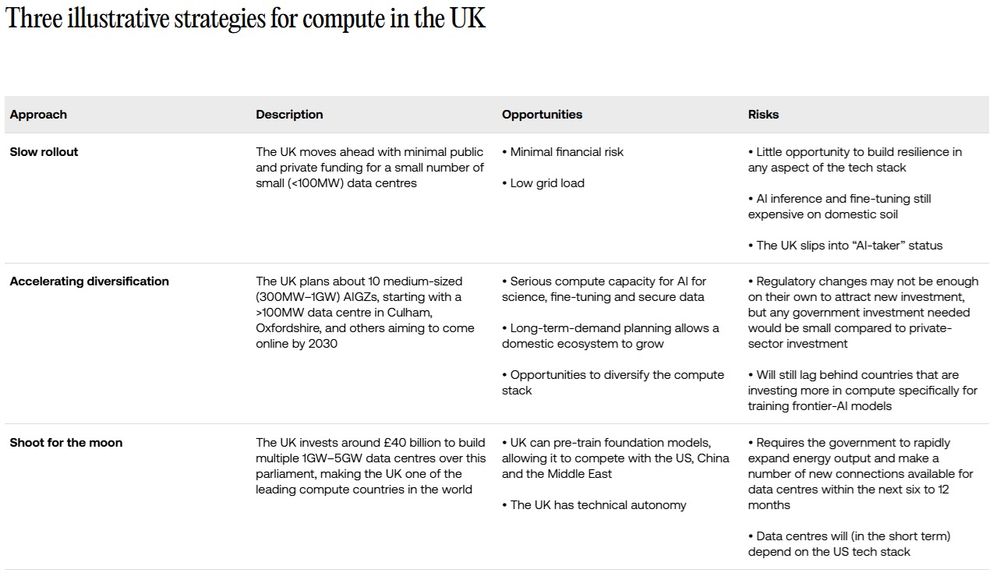
Talk about sovereign AI is often unclear what it means for data, models and compute
The UK doesn’t need to build everything, but it must build enough infrastructure to deploy AI where it matters, to ensure resilience, and to anchor a domestic ecosystem that delivers for the public and the economy
29.07.2025 07:33
👍 0
🔁 0
💬 1
📌 0

Sovereignty, Security, Scale: A UK Strategy for AI Infrastructure
Sovereignty, Security, Scale: A UK Strategy for AI Infrastructure
What should the UK's AI infrastructure strategy be?
A new report by the Tony Blair Institute argues that the UK needs to quickly build diverse and resilient AI infrastructure for safe and competitive deployment across the economy
bit.ly/3Uypoi0
Key findings 🧵
29.07.2025 07:33
👍 1
🔁 0
💬 1
📌 0
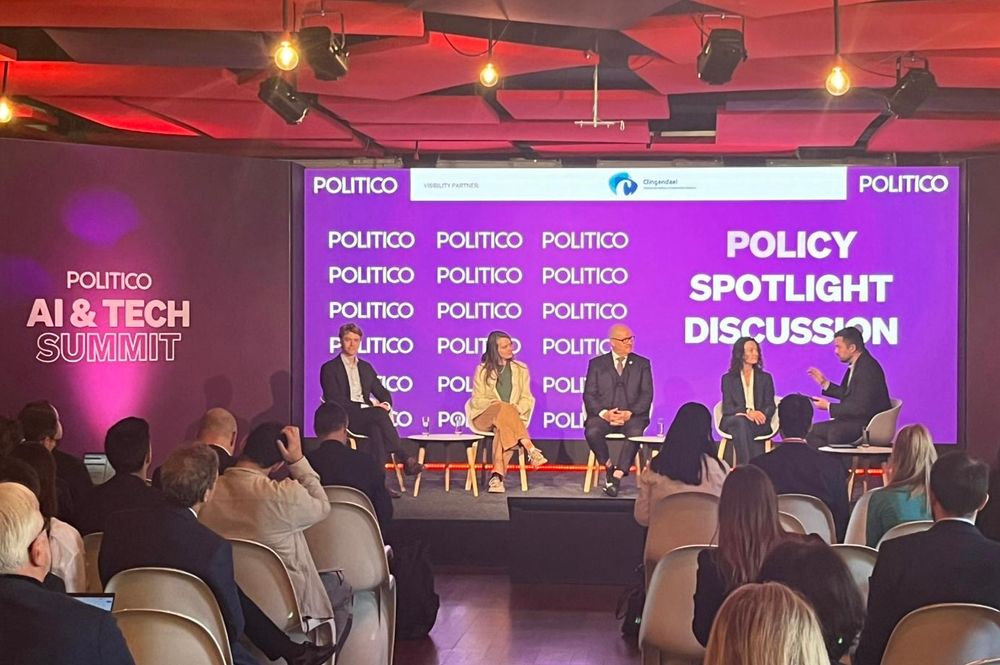
Great conversation on #AI and #sustainability at @politico.eu tech summit earlier this week
Key takes:
✅ Let’s shift from apathy to action
✅ Tech is part of green solutions
✅ European leadership is needed
Read more about Tony Blair Institute’s work on climate & energy led by Lindy Fursman in 🧵
16.05.2025 11:09
👍 2
🔁 1
💬 1
📌 0
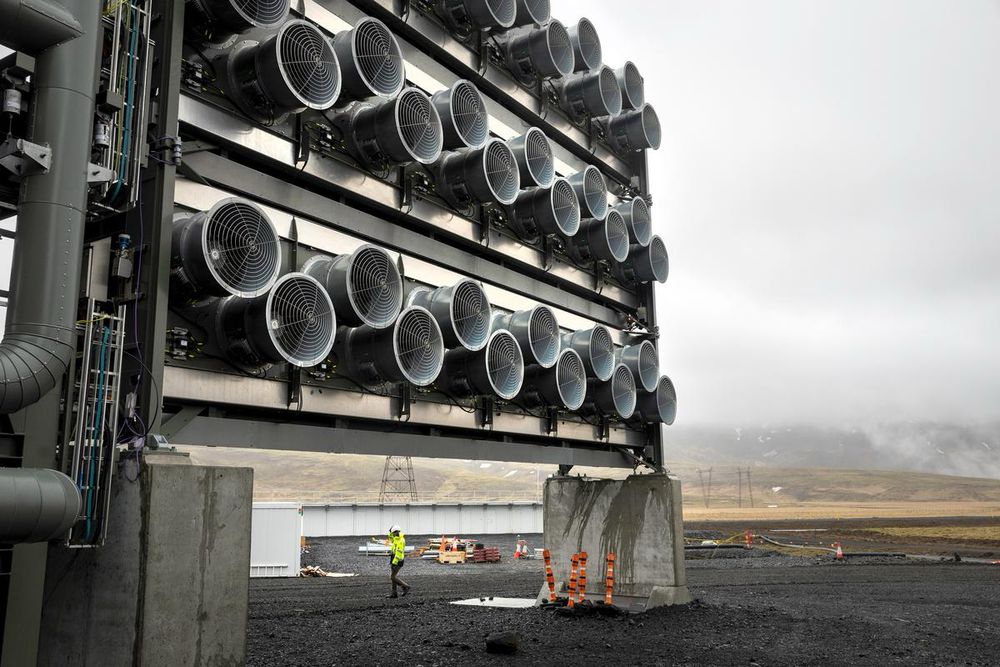
The Climate Paradox: Why We Need to Reset Action on Climate Change
The Climate Paradox: Why We Need to Reset Action on Climate Change
We live in a climate paradox: awareness of the climate crisis has never been higher, yet political will and action is in decline. How do we solve this?
The Tony Blair Institute outlines a bold yet pragmatic approach - based on innovation, adaptation and international collaboration
bit.ly/4jhJZBY
29.04.2025 09:37
👍 2
🔁 1
💬 0
📌 1

Panel 4: Using AI to Enhance Democracy is our last panel of the day and will start at 3:40pm ET. Don't miss it.
Panelists: @hahrie.bsky.social, @lukethorburn.com, Spencer Overton, and MH Tessler.
Moderator: @jakobmokander.bsky.social.
#AIDemocraticFreedoms
10.04.2025 19:27
👍 4
🔁 1
💬 0
📌 0


This Thursday 4/10 & Friday 4/11, we're hosting our symposium "AI and Democratic Freedoms." Thrilled to have @hahrie.bsky.social, @lukethorburn.com, Spencer Overton, MH Tessler & moderator @jakobmokander.bsky.social on our fourth panel. #AIDemocraticFreedoms RSVP: www.eventbrite.com/e/artificial...
07.04.2025 17:23
👍 9
🔁 3
💬 1
📌 0
18.03.2025 09:47
👍 0
🔁 0
💬 0
📌 0
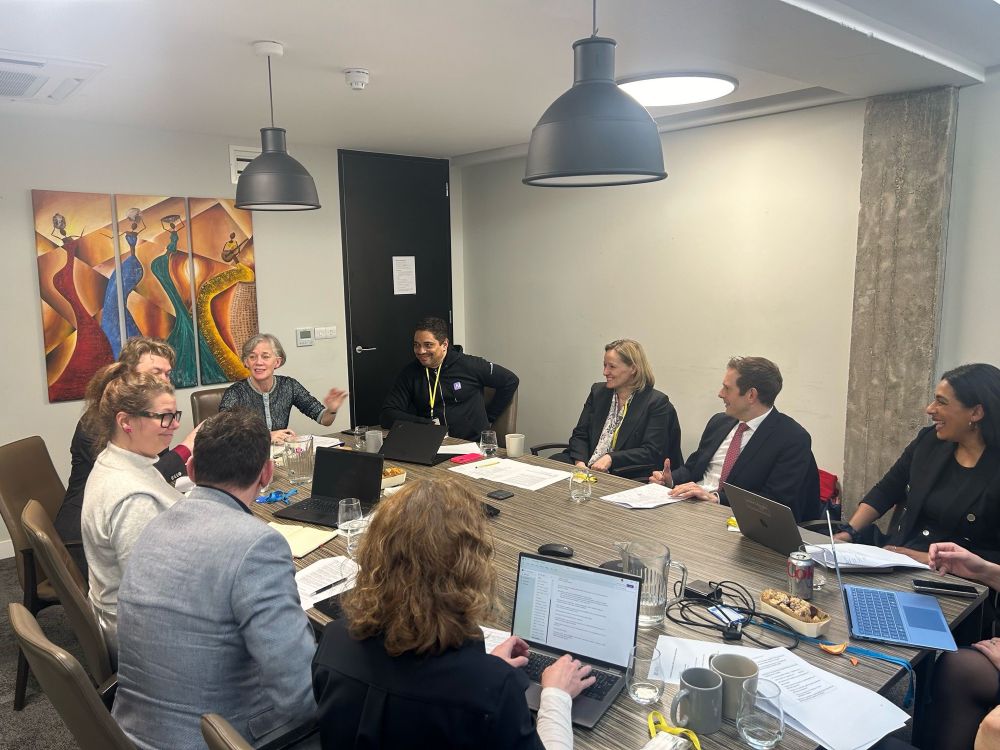
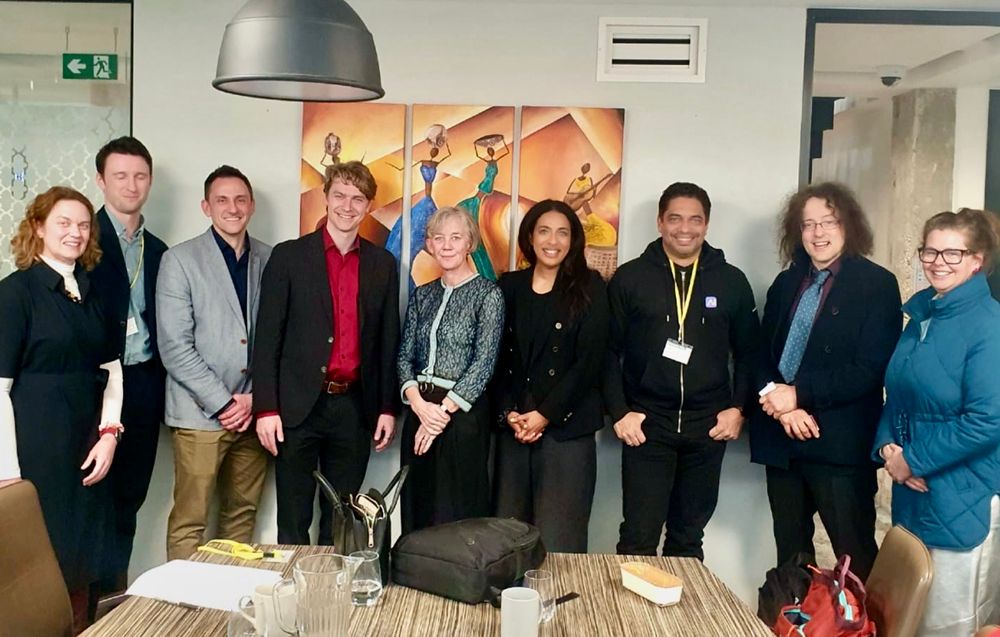
How can the UK accelerate AI adoption to boost growth and competitiveness?
Gov is preparing recs. as part of the Technology Adoption Review
Delighted to co-host this dynamic roundtable with business leaders & academic experts, chaired by Angela McLean, UK’s National Chief Scientific Advisor
18.03.2025 09:47
👍 1
🔁 0
💬 1
📌 0
Huge thanks all experts who have contributed w/ input and feedback!
@rory.bio @areeq.bsky.social @leecronin.bsky.social @erika-alden.bsky.social @econormist.bsky.social @saakohl.bsky.social @mariokrenn.bsky.social @stianwestlake.bsky.social @harrisbio.bsky.social @richardaljones.bsky.social
11/11
21.02.2025 11:40
👍 3
🔁 1
💬 0
📌 0
Second, at the heart of science is a quest to find patterns in nature and use those to improve the human condition. AI-driven science is science supercharging itself. This means that the normal limitations of – reproducibility, validity, ethics – will not be ‘solved’ by AI
10/11
21.02.2025 11:40
👍 0
🔁 0
💬 1
📌 0
Two final reflections:
First, ‘AI’ should be understood broadly. Focusing narrowly on LLM-adoption would be shortsighted. Key to success is equipping scientists with the skills and resources to continuously adapt their research methods amid rapid technological change
9/11
21.02.2025 11:40
👍 0
🔁 0
💬 1
📌 0
5) Remake the institutions of UK science
AI-driven research must be well-funded and well-integrated. Achieving this requires reforming UKRI’s AI strategy and coordinating funding efforts across the R&D ecosystem
8/11
21.02.2025 11:40
👍 0
🔁 0
💬 1
📌 0
4) Invest in AI research infrastructure
AI-driven research relies on data centres and other physical assets. The government should provide researcher with access to compute capacity and automated laboratories in AI growth zones
7/11
21.02.2025 11:40
👍 0
🔁 0
💬 1
📌 0
6) Secure UK’s AI talent pipeline
People are at the heart of thriving research ecosystems. The government should reduce visa barriers for AI researchers, build non-academic research entities, and improve cross sector mobility
6/11
21.02.2025 11:40
👍 0
🔁 0
💬 1
📌 0
2) Develop software tools for AI
Software tools are vital for operationalizing AI within research workflows. The government should incentivise tool building, create career pathways for tool builders, and link funding to tool sharing
5/11
21.02.2025 11:40
👍 0
🔁 0
💬 1
📌 0
1) Build AI-ready scientific data
AI-driven discovery depends on the accessibility of high-quality scientific data. The government should create training data sets and digitise uncollected scientific data
4/11
21.02.2025 11:40
👍 0
🔁 0
💬 1
📌 0