
🎓 𝗧𝗵𝗮𝗻𝗸𝘀 𝘁𝗼 𝗼𝘂𝗿 𝗙𝘂𝗻𝗱𝗶𝗻𝗴: PhD grant from Institut de l'Océan @sorbonne-universite.fr.
#MarineMicrobiology #CarbonCycling #ViralEcology #Oceanography #Modelling
15.02.2026 10:20
👍 0
🔁 0
💬 0
📌 0
🎓 𝗧𝗵𝗮𝗻𝗸𝘀 𝘁𝗼 𝗼𝘂𝗿 𝗙𝘂𝗻𝗱𝗶𝗻𝗴: PhD grant from Institut de l'Océan @sorbonne-universite.fr.
#MarineMicrobiology #CarbonCycling #ViralEcology #Oceanography #Modelling
👥 𝗔𝘂𝘁𝗵𝗼𝗿𝘀: @maxinepruvot.bsky.social, Bart Haegeman, @jouxf.bsky.social and @d2mory.bsky.social.
🏛️𝗜𝗻𝘀𝘁𝗶𝘁𝘂𝘁𝗶𝗼𝗻𝘀: @lomicumr7621.bsky.social , LBBM, @cnrs-insu.bsky.social, @cnrsbiologie.bsky.social, @cnrsecologie.bsky.social and @sorbonne-universite.fr.
𝗧𝗮𝗸𝗲𝗮𝘄𝗮𝘆: This work provides clarifications for interpreting and reconciling diverse estimates of viral impacts on marine carbon fluxes.
𝗞𝗲𝘆 𝗶𝗻𝘀𝗶𝗴𝗵𝘁𝘀 (3/3): 𝗩𝗶𝗿𝘂𝘀 𝗿𝗲𝗺𝗼𝘃𝗮𝗹
Comparing models with and without viruses does not reliably predict viral lysis impacts on ecosystem responses, as carbon pathways reorganize dynamically.
𝗞𝗲𝘆 𝗶𝗻𝘀𝗶𝗴𝗵𝘁𝘀 (2/3): 𝗠𝗼𝗱𝗲𝗹 𝗰𝗼𝗺𝗽𝗮𝗿𝗶𝘀𝗼𝗻
Published theoretical estimates of viral contributions to carbon cycling span nearly the full range of possible values, highlighting substantial uncertainty related to parameterization and ecological variability.
𝗞𝗲𝘆 𝗶𝗻𝘀𝗶𝗴𝗵𝘁𝘀 (1/3): 𝗖𝗼𝗻𝗰𝗲𝗽𝘁𝘂𝗮𝗹 𝗰𝗹𝗮𝗿𝗶𝗳𝗶𝗰𝗮𝘁𝗶𝗼𝗻 𝗼𝗻 𝘃𝗶𝗿𝘂𝘀 𝗹𝘆𝘀𝗶𝘀 % Virus-induced mortality rates (process-based) and virus-mediated carbon fluxes (flux-based) are often conflated in the literature and cannot be directly compared.
In this work, we integrate dynamical models, flux networks, and experimental assays (e.g., dilution assays) into a common mathematical framework.

Excited to share our grad student Maxine Pruvot’s (@maxinepruvot.bsky.social) first PhD preprint: 𝗥𝗲𝘃𝗶𝘀𝗶𝘁𝗶𝗻𝗴 𝗺𝗲𝘁𝗵𝗼𝗱𝘀 𝗳𝗼𝗿 𝗾𝘂𝗮𝗻𝘁𝗶𝗳𝘆𝗶𝗻𝗴 𝘁𝗵𝗲 𝗿𝗼𝗹𝗲 𝗼𝗳 𝘃𝗶𝗿𝗮𝗹 𝗹𝘆𝘀𝗶𝘀 𝗶𝗻 𝗺𝗮𝗿𝗶𝗻𝗲 𝗰𝗮𝗿𝗯𝗼𝗻 𝗰𝘆𝗰𝗹𝗶𝗻𝗴
🔗 Full text: www.biorxiv.org/content/10.64898/2026.02.12.705374v1
𝗧𝗮𝗸𝗲𝗮𝘄𝗮𝘆: This work provides clarifications for interpreting and reconciling diverse estimates of viral impacts on marine carbon fluxes.
𝗞𝗲𝘆 𝗶𝗻𝘀𝗶𝗴𝗵𝘁𝘀 (3/3):
𝗩𝗶𝗿𝘂𝘀 𝗿𝗲𝗺𝗼𝘃𝗮𝗹: Comparing models with and without viruses does not reliably predict viral lysis impacts on ecosystem responses, as carbon pathways reorganize dynamically.
𝗞𝗲𝘆 𝗶𝗻𝘀𝗶𝗴𝗵𝘁𝘀 (2/3):
𝗠𝗼𝗱𝗲𝗹 𝗰𝗼𝗺𝗽𝗮𝗿𝗶𝘀𝗼𝗻: Published theoretical estimates of viral contributions to carbon cycling span nearly the full range of possible values, highlighting substantial uncertainty related to parameterization and ecological variability.
𝗞𝗲𝘆 𝗶𝗻𝘀𝗶𝗴𝗵𝘁𝘀 (1/3):
𝗖𝗼𝗻𝗰𝗲𝗽𝘁𝘂𝗮𝗹 𝗰𝗹𝗮𝗿𝗶𝗳𝗶𝗰𝗮𝘁𝗶𝗼𝗻 𝗼𝗻 𝘃𝗶𝗿𝘂𝘀 𝗹𝘆𝘀𝗶𝘀 %: Virus-induced mortality rates (process-based) and virus-mediated carbon fluxes (flux-based) are often conflated in the literature and cannot be directly compared.
In this work, we integrate dynamical models, flux networks, and experimental assays (e.g., dilution assays) into a common mathematical framework.
Thanks for the great collaboration with Prof. Hiro Ogata and Dr. Hisashi Endo at the Institute of Chemical Research of @kyotouniversity.bsky.social; Prof. @joshuasweitz.bsky.social at the @umaryland.edu; and our funders, The @simonsfoundation.org and the ICM at Kyoto University 🙏
We integrated mathematical modelling with in situ metagenomics using the TARA Oceans and TARA Arctic datasets, and we recapitulated virus presence and absence in the ocean through a model describing temperature-driven cell-based interactions between viruses and phytoplankton.

Happy to share our new work on Temperature-driven biogeography of marine viruses infecting Micromonas:
academic.oup.com/ismecommun/a...
PhD opportunity in marine virus eco-evo dynamics
Joint CNRS–UBC program: @cnrsbiologie.bsky.social × @ubcoceans.bsky.social
📍 Banyuls-sur-Mer, France (LBBM UMR8176)
🗓️ Start: Oct 2025 | Duration: 3 years
🔍 Skills: Modelling, Bioinformatics, Marine Virology
🔗 Apply: emploi.cnrs.fr/Offres/Docto...
Grateful for the opportunity to work with such an amazing team, to our collaborators around the 🌍 and the Nomis foundation for supporting our work.
New insights into the diversity and biogeography of bacteria in glacier-fed streams across 11 mountain ranges, out now in @nature.com

Cold Surface Waters of the Sub-Antarctic Pacific Ocean Support High Cyanophage Abundances and Infection Levels enviromicro-journals.onlinelibrary.wiley.com/doi/10.1111/... @biologytechnion.bsky.social
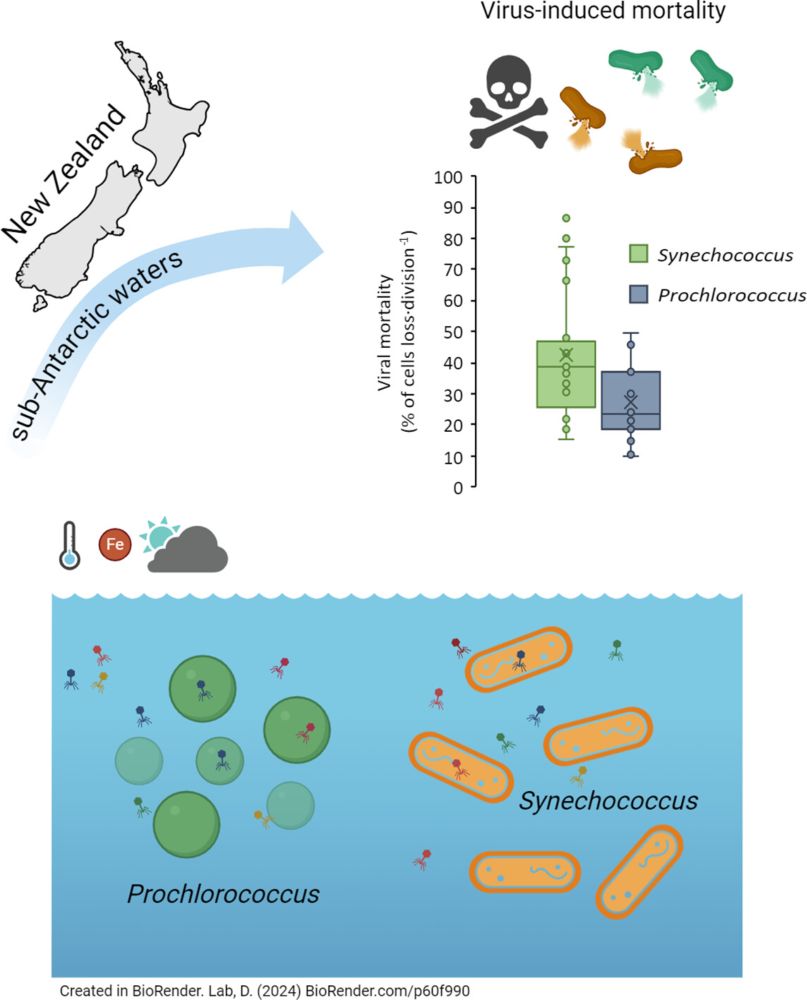
Happy to share that our work on viral infection of cyanobacteria in the Southern Ocean has been published 🦠❄️🌊
doi.org/10.1111/1462...
Thank you to all the collaborators in this project
@d2mory.bsky.social @joshuasweitz.bsky.social
@biologytechnion.bsky.social
Japan w/ Hisashi Endo and Hiroyuki Ogata at ICR Kyoto Univ, USA w/ @joshuasweitz.bsky.social at Univ. of Maryland and France w/ @cnrsbiologie.bsky.social, @sorbonne-universite.fr, @sbroscoff.bsky.social, LBBM at OOB Banyuls and Tara Oceans Foundation.
Our results highlight that temperature-driven cellular mechanisms can drive the community dynamics and biogeography of marine viruses.
This multidisciplinary study has been possible through great collaborations involving 3 continents: (5/6)

We used a mathematical model describing the temperature-driven virus-host dynamics to predict MpV-s distribution. We found that viral abilities to lyse and infect were good predictors of MpV-s presence and absence. (4/6)

By reconstructing virus phylogeny, we found that MpV-s were clustered into cryophile groups, growing mainly at low temperature below 10°C, or cryo-mesophile groups, growing from cold to more than 20°C. (3/6)

We focused on prasnoviurses infecting Micromonas (MpV), a picoeukaryote genus distributed from poles to tropics. We explored the distribution of isolated MpV-s in Tara datasets and highlighted that temperature is the main descriptor of their community composition. (2/6)

Delighted to share our new preprint on bioRxiv:
www.biorxiv.org/content/10.1...
Where we integrated viral metagenomics and mathematical modelling to explore the temperature-driven biogeography of marine giant viruses - where do they live and why? (1/6)
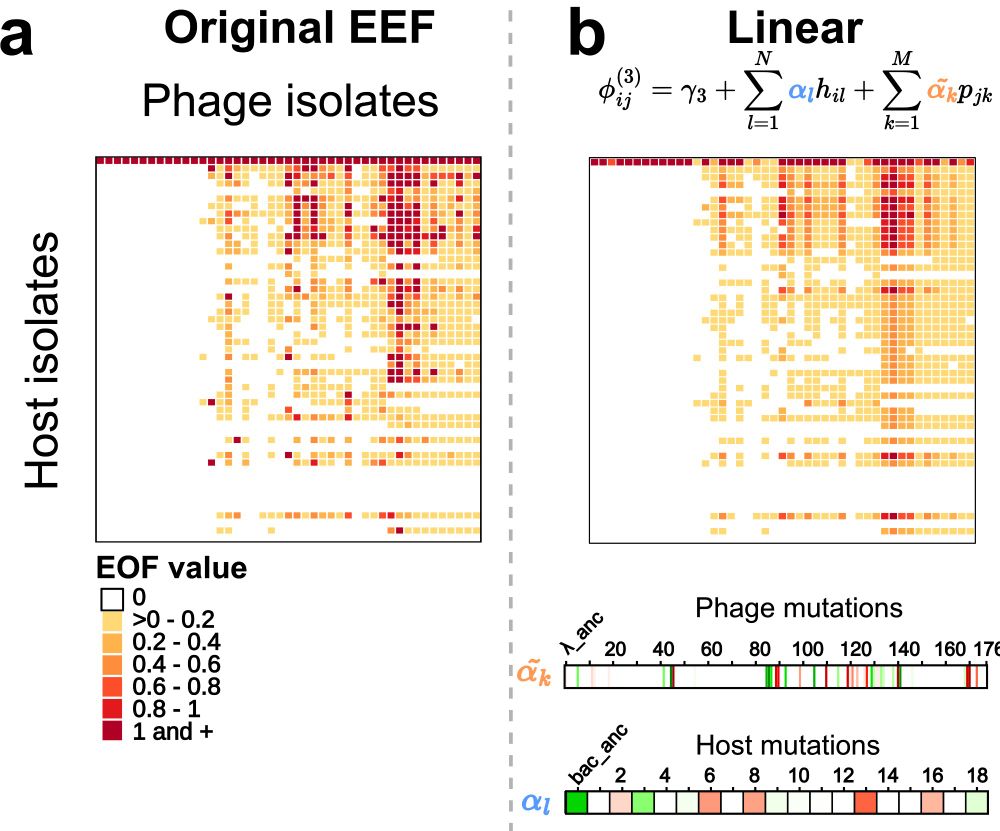
Predicted infections with phage/host mutation models
Delighted to share this paper out via Virus Evolution:
academic.oup.com/ve/advance-a...
in which we develop and assess a quantitative method to infer phage and bacterial mutations driving changes in infection phenotypes arising in coevolutionary dynamics.
a 🧵 about people (and some science)

We are delighted to announce that the registrations are now open for the 12th Aquatic Virus Workshop (AVW12), to be held in Banyuls-sur-Mer (France), May 5-9 2025. Consider to register early because we have limited space!
avw12.sciencesconf.org
avw12.sciencesconf.org/data/header/...