❗🧠 New review in IEEE RBME
How network math models are reshaping how we think about neurodegenerative disease, from brain dynamics to disease progression
"Network models of neurodegeneration: bridging neuronal dynamics and disease progression"
ieeexplore.ieee.org/document/113...
18.01.2026 18:47
👍 11
🔁 7
💬 1
📌 0
🤖 Robotic manipulation tasks grow combinatorially, but data collection still scales linearly.
Is there a better way to obtain expert datasets at scale?🤔
Excited to share our latest work, Iterative Compositional Data Generation for Robot Control.
📄 doi.org/10.48550/arXiv.2512.10891
🧵👇
19.12.2025 17:56
👍 22
🔁 5
💬 1
📌 2
Thanks for the kind words!
18.10.2025 10:28
👍 1
🔁 0
💬 0
📌 0

Honored to have been interviewed for the next edition of the Cognitive Neuroscience textbook. @wwnorton.bsky.social @ron-mangun.bsky.social @danisbassett.bsky.social
03.01.2025 01:31
👍 17
🔁 2
💬 0
📌 0

Thursday plans:
🖼️ Franco Matticchio
12.12.2024 10:18
👍 100
🔁 16
💬 0
📌 0
Led by Xiaohuan Xia in a fantastic (and super fun!) collaborative team also including @academicmatou.bsky.social, Shubhankar Patankar, and @dianatamir.bsky.social!
11.12.2024 21:58
👍 2
🔁 0
💬 0
📌 0
Looking to the future, important open questions remain. How might citation sentiment have changed over time? How might the relation between sentiment and culture be impacted by serendipity or paradigm shifts? How might other aspects of affect manifest in science communication more broadly?
11.12.2024 21:58
👍 2
🔁 0
💬 1
📌 0

Obscured Social Construction as Epistemic Harm
Click on the article title to read more.
Uncovering the social construction of science is not only a scholarly contribution but also an ethical one, as obscuring that construction is an epistemic harm. onlinelibrary.wiley.com/doi/10.1111/...
11.12.2024 21:58
👍 1
🔁 0
💬 1
📌 0
Here we uncover human subjectivities in scientific citation, demonstrating that citation sentiment in neuroscience tracks multiscale sociocultural norms of status, collaboration, discipline, and country.
11.12.2024 21:58
👍 2
🔁 0
💬 1
📌 0
Our study underscores the humanity that scholars bring to the scientific enterprise. Individually, we bring our epistemological standpoints, cognitive biases, perceptions, & values. In groups, we bring disciplinary norms of preferred practices, methods, standards, & explanations.
11.12.2024 21:58
👍 3
🔁 0
💬 1
📌 0

We find that men cite with greater sentiment---both critical & favorable---& women cite with greater sentiment bias, being more favorable to collaborators than to non-collaborators. We discuss these differences in light of prior evidence uncovering gender differences in social engagement in science.
11.12.2024 21:58
👍 1
🔁 0
💬 1
📌 0
Yet, an element that can influence all of these factors is personal identity: dimensions of identity such as gender, sex, race, ethnicity, class, and (dis)ability can determine one's placement, status, and power in social groups across scales. How might citation sentiment track identity?
11.12.2024 21:58
👍 2
🔁 0
💬 1
📌 0
Thus far, the data consistently suggest that citation sentiment can track ingroup/outgroup relations, structures of dominance, & hierarchies that are interpersonal (collaboration), prestigious (h-index, disciplinary level of explanation), and national (beliefs about power and society).
11.12.2024 21:58
👍 2
🔁 0
💬 1
📌 0

We find that citation sentiment tracks the degree to which countries accept the unequal distribution of power. Results suggest that norms of social hierarchy may influence citation sentiment, resulting in stronger criticism in high-individualism cultures that reject the uneven distribution of power.
11.12.2024 21:58
👍 1
🔁 0
💬 1
📌 0
So far, we considered a scholar's location within social structures from small collaborations to wider disciplines. But the sociocultural milieu in which each scholar exists also extends outwards to the national scale, with each country having distinct norms that can manifest in scientific practice.
11.12.2024 21:58
👍 1
🔁 0
💬 1
📌 0

Moving from dyads to groups, we consider citation sentiment across scientific disciplines. We find that drylab disciplines use more sentiment (favorable & critical), whereas wetlab disciplines cite more neutrally. These findings track the differently valued explanations that disciplines offer.
11.12.2024 21:58
👍 2
🔁 0
💬 1
📌 0

How might citation sentiment track structures of dominance? We consider the hierarchy reflected in the h-index. We find that greatest critical sentiment appears when higher h-index scholars cite lower h-index scholars, demonstrating that sentiment varies with relative status of the citer vs. citee.
11.12.2024 21:58
👍 2
🔁 0
💬 1
📌 0

How might sentiment align with ingroup/outgroup relations? We considered the ingroup/outgroup relations of collaborators vs. non-collaborators. We find that we cite ourselves most favorably, collaborators next favorably, and non-collaborators most critically.
11.12.2024 21:58
👍 2
🔁 0
💬 1
📌 0
To ensure that our assessment is computationally tractable while remaining sensitive to local sociocultural norms, we focus on a single science---neuroscience---and examine citation sentiment in >100K articles from 181 journals, 27 departments, and 23 countries and regions.
11.12.2024 21:58
👍 3
🔁 0
💬 1
📌 0

We ask not about who we cite but how we cite. Using a large language model, we evaluate citation sentiment (favorable, critical, or neutral) and how it tracks social norms of collaboration, discipline, and culture. Our study provides a paper-trail lens into the socio-cognitive processes of science.
11.12.2024 21:58
👍 3
🔁 0
💬 1
📌 0

How critically or favorably do we cite ourselves? How favorably do we cite collaborators? Do high h-index scholars cite more critically than low h-index scholars? Are some disciplines (or countries) more critical than others? Why? Check out our new manuscript: arxiv.org/abs/2411.09675
11.12.2024 21:47
👍 38
🔁 11
💬 1
📌 0
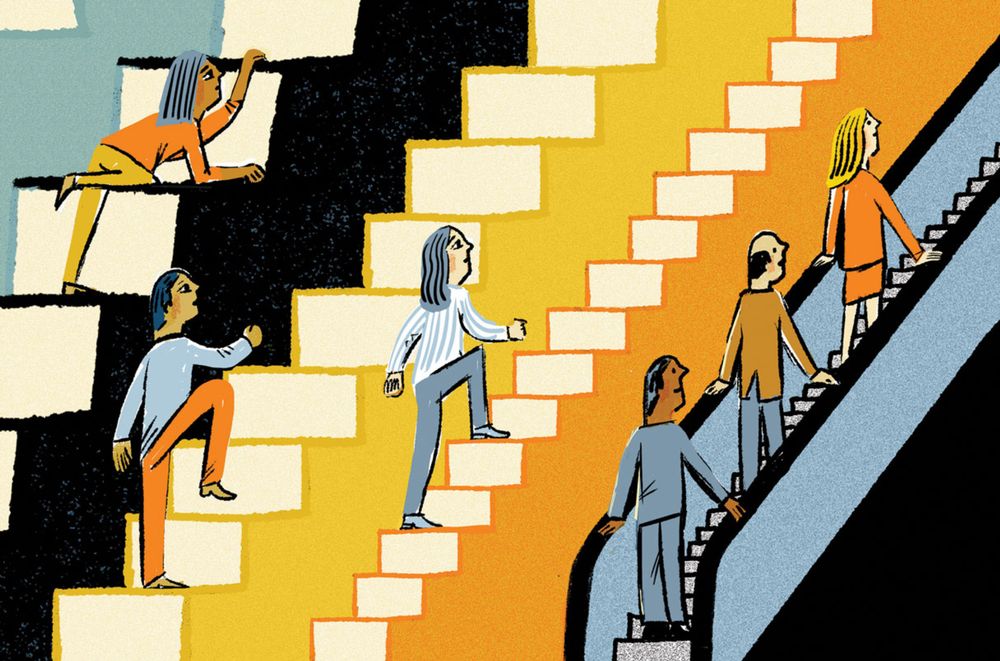
Racial bias can taint the academic tenure process—at one particular point
Black and Hispanic professors fare worse when voters include colleagues who are less familiar with their work, new study finds
"Overall, Black and Hispanic faculty received 7% more negative votes from college committees and were 44% less likely to receive unanimous “yes” votes than their white and Asian colleagues." - Kate Langin, Science
www.science.org/content/arti... #AcademicSky #PhDsky
01.12.2024 22:25
👍 194
🔁 116
💬 7
📌 21
“But when the college committees were evaluating faculty with lower h-indices, evidence of bias against Black and Hispanic scholars surfaced—especially for women. In those situations, “underrepresented minorities, particularly women of color, are held to a different standard,” Madera says.”
…
02.12.2024 00:36
👍 139
🔁 39
💬 4
📌 2
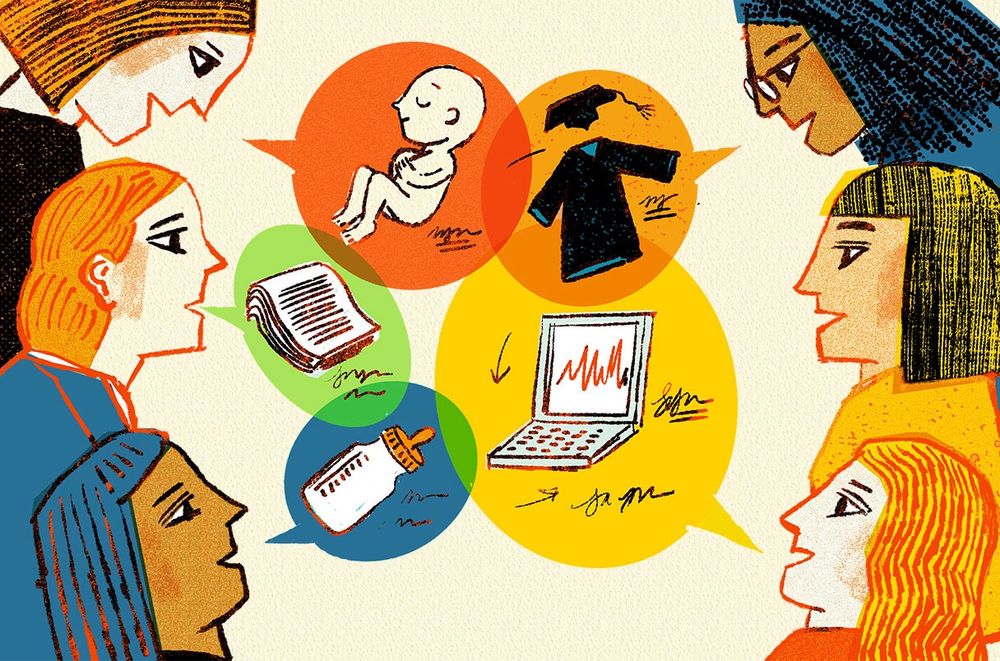
As women in academia, having children can feel impossible. Talking about it makes us feel less alone
The struggle is “balancing their careers not just with motherhood, but with what comes before: relationships and planning for a family,” these postdocs write
We had heard about the challenges posed by motherhood within academia, but what about the previous stage? @ecfreewoman.bsky.social & I wrote our story for @science.org on how the academic system makes it almost impossible for women to even plan for a family ❤️🩹: www.science.org/content/arti...
29.11.2024 06:34
👍 219
🔁 90
💬 7
📌 16
hello friends!
My publisher is looking for an illustrator for my children’s book Jacob’s Transition Goals, which is about an 8 year old transgender boy who plays for his local boys football team.
Do any of you have suggestions?
- must be trans of some variety
Reskeets appreciated
28.11.2024 17:29
👍 132
🔁 128
💬 20
📌 2