Today in Nature Communications, a team of IGI researchers from The Banfield Lab and Pam Ronald's labs uncover a new way to reduce methane emissions from rice by influencing the activity of rice paddy soil #microbes. Read more: https://ow.ly/45j150Y3WsI
26.01.2026 21:05
👍 15
🔁 7
💬 1
📌 0
🚨 New pre-print alert!
Jumbo circular extrachromosomal elements of methane-oxidizing archaea with variably extensive metabolic and defense gene repertoires
www.biorxiv.org/content/10.6...
23.01.2026 01:21
👍 13
🔁 7
💬 0
📌 0
Excited to share our discovery of archaeal circular, jumbo extrachromosomal elements (up to ~535 kb genomes). One related, 409-kb genome is integrated in CH4-eating Methanoperedens, representing the largest integrative element in Archaea so far! Curious about what they are doing? See the paper
23.01.2026 00:58
👍 18
🔁 12
💬 1
📌 1

A new preprint from The Banfield Lab looks at mobile genetic elements with single-cell precision. Read here: https://ow.ly/hFBX50Y0nQA
#microbiology
21.01.2026 16:05
👍 10
🔁 3
💬 1
📌 0

Postdoc - Microbiome - Innovative Genomics Institute
University of California, Berkeley is hiring. Apply now!
🚨 Our Lab is HIRING! If you are interested in characterizing model microbiomes using genome-resolved methods, statistical/metabolic modeling, and/or machine learning please submit an application here: aprecruit.berkeley.edu/JPF05234
#postdoc #sciencejobs #biology #microbiome
05.01.2026 18:19
👍 12
🔁 9
💬 1
📌 0

Out now in Nature Communications, from IGI's Jill Banfield (The Banfield Lab) and collaborators: Convergent evolution of viral-like Borg archaeal extrachromosomal elements and giant eukaryotic viruses
Read here: https://www.nature.com/articles/s41467-025-65646-7
17.12.2025 19:10
👍 8
🔁 4
💬 0
📌 0

Three scientists, smiling, sitting at a lab bench with tubes and lab notebooks, and other supplies in front of them.
This was a big team effort- couldn't have done it w/o help & support of co-first author Gabe; Paul, Alyssa & all previous Jensen lab Salinispora experts for inspiration.
Special thanks to then-undergrads Victoria & David: carefully culturing & sequencing hundreds of strains took massive effort! 8/8
12.12.2025 02:28
👍 0
🔁 0
💬 0
📌 0
Does deep sampling find new compounds? 💊 Yes.
Gabriel & Ebru linked many unknown gene clusters to molecules. We also identified fridamycin E & ikarugamycin for the first time in Salinispora cultures; even well-studied bacterial genera have hidden chemical potential!
12.12.2025 02:28
👍 1
🔁 0
💬 1
📌 0

Matrix of GCF distributions in S. arenicola. Columns indicate presence (blue) of 100 GCFs across 157 S. arenicola genomes (y-axis). The three matrices describe shared, global-specific, or microscale-specific GCFs. For each matrix, the columns are arranged from left to right according to GCF abundance. Annotated GCFs are indicated by compound names and highlighted according to confidence level. The first column of the y-axis is colored according to geographic origin and ordered by 99% ANI populations, which are numbered (microscale shown in bold red) and demarcated by gray horizontal lines. The second column delineates microscale (black) and global strains (white).
Where does this diversity come from? Horizontal gene transfer likely contributes.
We found 18 biosynthetic gene cluster families that were unique to a single strain. This supports the "plug-and-play" evolution of secondary metabolites, reported previously in Salinispora.
12.12.2025 02:28
👍 0
🔁 0
💬 1
📌 0

Non-metric multidimensional scaling (NMDS) plots of GCF distribution among microscale and global S. arenicola strains. Top: Each dot represents a genome colored by population. Bottom: Each
dot represents a genome colored by the location of origin
Why 2 populations in 1 spot, & globally?
We compared microscale vs. global strains. Result: Pop 1 & Pop 5 were clearly separated by their biosynthetic gene cluster profiles.
Specialized metabolism likely acts as an ecotype-defining trait, helping distinct populations coexist in the same sediment.
12.12.2025 02:28
👍 0
🔁 0
💬 1
📌 0

S. arenicola gene cluster family (GCF) network. Network shows nodes representing a BGC and each cluster of nodes a GCF. GCFs are categorized as shared (present in both data sets), global (global-specific), or microscale (microscale-specific) and color-coded by biosynthetic class. Text GCF annotations are provided for experimentally validated Salinispora products or MIBiG BGC matches.
Turns out, specialized metabolite potential plays a huge part.
From 96 "microscale" strains, we captured 67% of the entire S. arenicola global biosynthetic diversity (60 of 89 gene cluster families)!
We even found 11 GCFs that were unique to the microscale plot..
12.12.2025 02:28
👍 1
🔁 0
💬 1
📌 0

Close-up of 16 Salinispora colonies grown on agar plates. Colony morphologies range from “popcorn-like” to displaying circular concentric growth, with some showing extensive vertical growth on the agar surface. Colony pigmentation varies from pale yellow to deep orange.
The answer: Nope.
They were not clonal. They resolved into 2 distinct S. arenicola populations co-existing inches apart! (We also isolated 2 other species).
Huge shoutout to Victoria who led the isolation of these strains: check out these beautiful Salinispora colonies from each sub-quadrat 👇
12.12.2025 02:28
👍 0
🔁 0
💬 1
📌 0
Our new paper on Salinispora is out in @asm.org #AppEnvMicro! @scrippsocean.bsky.social
Ever wonder if an actinomycete living in 1m² ocean sediment is just one big clonal colony?
We sequenced 99 Salinispora strains from a single Fiji reef plot to find out. 🧵1/8 doi.org/10.1128/aem....
12.12.2025 02:28
👍 12
🔁 3
💬 1
📌 1
Taxonomic and biosynthetic diversity of the marine actinomycete Salinispora across spatial scales journals.asm.org/doi/full/10.... #jcampubs
09.12.2025 14:42
👍 3
🔁 1
💬 0
📌 0

illustration of petri dishes growing microbes
Out today in Science Magazine — First author Veronika Kivenson and PIs Jill Banfield (The Banfield Lab) and Alanna Schepartz team up to reveal a new genetic code in #archaea, with implications for #methane and #climate, and #bioengineering! Learn more: https://ow.ly/Kuem50Xurh0
08.12.2025 15:50
👍 15
🔁 6
💬 0
📌 0

Headshots of Veronika, Jill, and Alanna
Out today in Science Magazine — First author Veronika Kivenson and PIs Jill Banfield (The Banfield Lab) and Alanna Schepartz team up to reveal a new genetic code in #archaea, with implications for #methane and #climate, and #bioengineering! Learn more: https://ow.ly/Kuem50Xurh0
20.11.2025 19:20
👍 20
🔁 6
💬 0
📌 2
Most plasmids described in E. coli are small compared to the megaplasmids we identified here! Check out the preprint if you want to learn about these mysterious large elements and their potential functions 🧬. I’m very grateful to have had the opportunity to work on this in @banfieldlab.bsky.social
01.10.2025 05:10
👍 34
🔁 19
💬 2
📌 1
Megaplasmids associate with Escherichia coli and other Enterobacteriaceae https://www.biorxiv.org/content/10.1101/2025.09.30.679422v1
01.10.2025 04:17
👍 9
🔁 1
💬 0
📌 1

Multi-omics analysis reveals important role for microbial-derived metabolites from Botryllus schlosseri in metal interactions | mSystems
Given the importance of marine invertebrates and their microbial communities in marine ecosystems, we sought to characterize the largely unknown microbial associates, metal sequestration, and metabolite production of the marine colonial tunicate, Botryllus schlosseri, a model organism for cellular and developmental studies. Using an integrated multidisciplinary approach, we identified significant correlations between metals, metabolites, and bacterial taxa. B. schlosseri tissue was highly enriched in metals compared to seawater, and B. schlosseri microbiome beta-diversity was significantly different from seawater. We also introduced the concept of the pan-metabolome to classify metabolites based on their presence or absence across complex samples and found microbial metabolites in both the core and flexible metabolome. These findings offer insights into B. schlosseri’s biological and chemical interactions with microorganisms and their environment, bridging the knowledge gap of host-microbiome-environment interactions and establishing a foundation for continuing research on the ecological effects of trace metals in these biological systems.
Congrats to Dulce Guillén Matus for her newest manuscript out today! A collaborative manuscript on the microbes, metals, and metabolites of Botryllus schlosseri, a marine tunicate! doi.org/10.1128/msys...
15.09.2025 14:23
👍 7
🔁 3
💬 0
📌 0
strongest earthquake I’ve felt ever living in California, jolted me out of sleep with plenty of shaking felt on the 4th floor in Emeryville..! 4.6, epicenter in Berkeley?
22.09.2025 10:13
👍 3
🔁 0
💬 1
📌 0
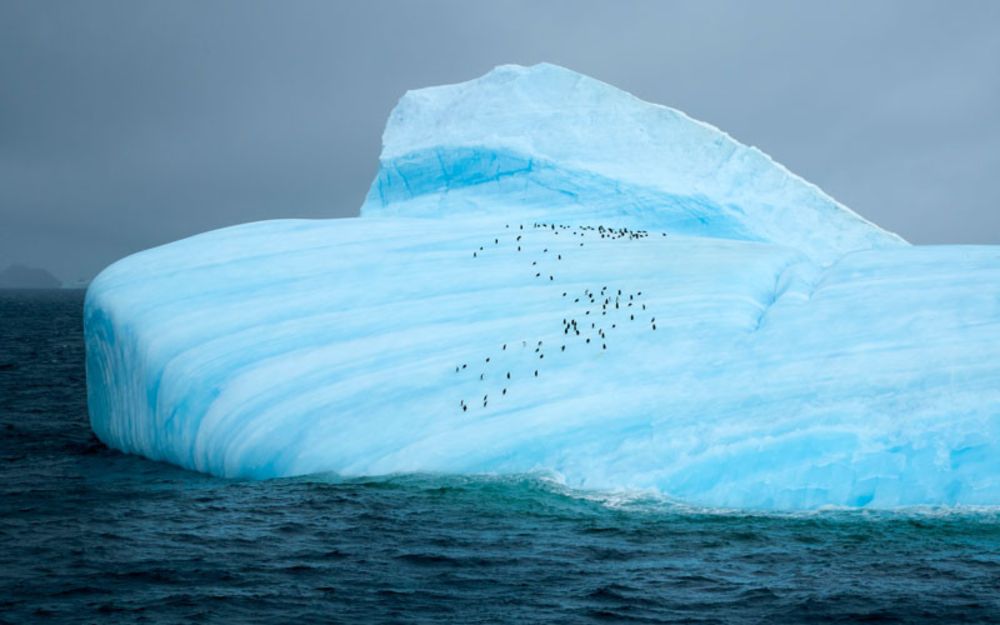
Study Reveals how Deep Ocean Currents Shape Microbial Life across South Pacific
A groundbreaking study in the journal Science, has unveiled how deep ocean currents—known as global overturning circulation—play a pivotal role in shaping the diversity and function of microbial life ...
🌊 ↪️↩️ Deep ocean currents play a pivotal role in shaping the diversity and function of microbial life across the South Pacific Ocean, according to a groundbreaking study led by @jcvi.org and Scripps Oceanography scientists. More on the study published by @science.org. ⬇️
15.07.2025 16:42
👍 38
🔁 11
💬 0
📌 0
Congrats @andrejakust.bsky.social and team!!! Capturing the complex microbiome of Cyanobacteria, allowing for ecologically-relevant studies in the lab! 🦠🔬
12.07.2025 20:36
👍 3
🔁 0
💬 0
📌 0