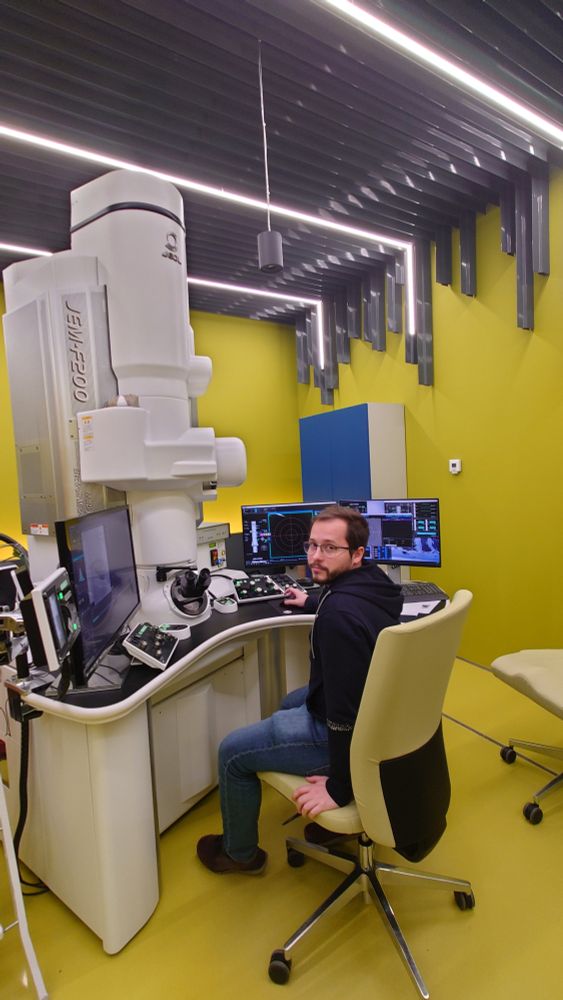
We are very excited to share a new resource from our team: spatial subcellular proteome maps in plants! We developed an MS-based method that registers localizations of about 8000 proteins in Arabidopsis roots in a single experiment.
(1/9)
www.biorxiv.org/cgi/content/...
03.03.2026 06:53
👍 111
🔁 68
💬 2
📌 1

Release SeqKit v2.13.0 (10-year-old birthday version) · shenwei356/seqkit
Changelog
SeqKit is 10 years old!
SeqKit v2.13.0 - 2026-02-28
seqkit: add support for reading and writing LZ4 compression format.
new command: seqkit sample2: improved seqkit sample by @stahiga....
Can't wait to release a 10-year-old birthday version for SeqKit!
- 10 years
- 2 papers, 3500 citations
- 20 contributors
- 40 subcommands
- 880 commits
- 500 issues
- 685.5K Bioconda total downloads
Thank you all, dear contributors and users!
I'll keep maintaining it.
github.com/shenwei356/s...
27.02.2026 13:25
👍 122
🔁 35
💬 6
📌 1

MicroSEA (Microbial Sea Eukaryotes) course is a one-week, field-based summer school to train early-career researchers in the diversity, ecology, and single-cell biology of marine protists. MicroSEA course integrates lectures, field sampling, and lab-based practicals in advanced techniques, such as flow cytometry, microscopy, culturing, and molecular analysis.
The main objectives of MicroSEA course are:
Fostering a deep understanding of marine protist diversity, ecology and biology;
Providing hands-on training in advanced single-cell methods that are not commonly available in university programs;
Building participants' confidence in designing and conducting research projects from field to data analysis;
Promoting international collaborations and peer networking among students and speakers/trainers.
The course will take place at the Station Biologique de Roscoff - SBR (France) - 7th to 12th of June, 2026 (arrival on the 6th, departure on the 13th).
20 participants will be selected, including 10 from EuroMarine member institutes.
https://opbc.sciencesconf.org/
Protist lovers: Please apply for a week of rhapsody! Learn by doing:
MicroSEA (Microbial Sea Eukaryotes) course is a one-week, field-based summer school to train early-career researchers in the diversity, ecology, and single-cell biology of marine protists. opbc.sciencesconf.org
#protistsonsky
26.02.2026 22:15
👍 46
🔁 35
💬 5
📌 6
Have a novel protist's genome or transcriptome and want to predict it's mitochondrial proteome? Look no further than CoMR, this handy bioinformatic workflow to help you: www.biorxiv.org/content/10.6... #phylogenetics
23.02.2026 17:06
👍 19
🔁 11
💬 0
📌 0

Explore how genetics, evolution and ecology intertwine at EMBO Workshop "Evolving together: From genomics to biological interactions" in #Taipei, TW, 24–27 Apr 2026.
Abstract submission/Registration by 20 Jan/28 Feb
https://meetings.embo.org/event/26-bio-interactions
#EMBOEvoGenBio #EMBOevents 🧪
20.02.2026 06:10
👍 18
🔁 12
💬 0
📌 1

Diagram illustrating early genome erosion during the transition from a free-living Sodalis bacterium to two host-associated endosymbionts inside the long-tailed mealybug. Circular genomes show intact genes in blue and pseudogenes in red, highlighting increased pseudogene accumulation in symbiotic forms. Caption asks: “What are the downstream molecular consequences of early genome erosion?”
Happy to share a preprint—the last chapter of my dissertation with @mcsymbiont.bsky.social and Co—on what happens when bacterial endosymbionts accumulate huge numbers of pseudogenes during early genome reduction.
www.biorxiv.org/content/10.6...
08.02.2026 02:08
👍 32
🔁 19
💬 3
📌 1

Spatial Proteomics Workshop for Protists
(see more in thread below)
Registration
Early Bird Monday 22nd June 2026.
Regular Monday 10th August 2026.
There will be a conference dinner on day 1. To register visit protistology.org.uk/autumn-meeti...
06.02.2026 18:11
👍 25
🔁 17
💬 1
📌 0

On the cover of New Phytologist volume 249, issue 5: Balanophora fungosa ssp. fungosa, a holoparasitic plant from Yaese in Okinawa, Japan. Image courtesy of Filip Husnik.
On the cover of our #LatestIssue: Balanophora fungosa ssp. fungosa, a holoparasitic plant from Yaese in Okinawa, Japan. Image courtesy of @filiphusnik.bsky.social.
📖 See @petrasvetlikova.bsky.social et al. nph.onlinelibrary.wiley.com/doi/10.1111/...
#LatestIssue @tugutuguk
05.02.2026 10:05
👍 18
🔁 4
💬 0
📌 0

Please join the @symbiosisalumni.bsky.social during our next Alumni Network seminar to learn about the origin and complexities of mealybug endosymbioses from @filiphusnik.bsky.social:
🗓️ February 25th
🕥 8am WET
📍on zoom (PM for link)
symbnet.bsky.social
moorefound.bsky.social
mblscience.bsky.social
05.02.2026 09:49
👍 9
🔁 4
💬 1
📌 1


Comparative Genomics of Unicellular Eukaryotes (San Feliu, Spain):
Abstract submission is open, with a short deadline! comparativegenomics2026.com
Join us as we explore the most diverse, surprising, and still largely uncharted branches of the eukaryotic tree.
02.02.2026 18:49
👍 20
🔁 12
💬 0
📌 1

Disc-shaped fossils with concentric grooves scattered through a limestone block.

Image of the apex of the Great Pyramid, taken from the base of the southeast corner. The layers of massive blocks of limestone composing the pyramid are clearly visible. The pyramid is set against a sunny blue sky.
I've seen fossils in some remarkable places, but this takes the prize: the benthic foram Nummulites in the base of the Great Pyramid of Giza. These massive blocks were quarried from the Eocene Mokkatam Formation when a relictual population of woolly mammoths still lived on Wrangel Island.
02.02.2026 17:43
👍 342
🔁 114
💬 6
📌 5

Comparison of the cytoskeletal architectures of Toxoplasma and Chromera flagellates using ExM.
Isadonna Tengganu and Ke Hu develop transfection and ExM protocols for Chromera velia, enabling direct comparisons with its parasitic apicomplexan relative, Toxoplasma gondi.
journals.biologists.com/jcs/article/...
13.01.2026 09:53
👍 37
🔁 14
💬 0
📌 2

Finally, we’ve solved a long-standing mystery: what tintinnid shells are actually made of:
A new class of biomaterial formed by remarkable structural proteins unique to tintinnids.
A major milestone after 3 years of work! Read about it in our preprint: doi.org/10.64898/202...
#ProtistsOnSky
27.12.2025 10:30
👍 95
🔁 35
💬 4
📌 3

Permanent Research Group Leader Position, Crete, Greece: Interested to assume long-term responsibilities for the Biodiversity Computing Group www.biocomp.gr I have set up in Crete? Apply now via apella.minedu.gov.gr/en/node/5998 (PDF also in English) - for questions email to stamatak@ics.forth.gr
15.12.2025 07:23
👍 20
🔁 31
💬 0
📌 0

New preprint out! Using ~75k environmental OTUs + 77 fossil calibrations, we reconstructed a Proterozoic timeline of eukaryote evolution. Our results show crown eukaryotes were already diversifying >1.6 Ga, long before the first undisputed fossils (~1.05 Ga).
🔗 DOI: www.biorxiv.org/content/10.6...
15.12.2025 08:19
👍 110
🔁 54
💬 4
📌 4

The evolutionary mysteries of a rare parasitic plant
New study maps the strange genomes of Asia-Pacific Balanophora species, giving new insights into the evolution of parasitic plants and an unconventional role of plastids.
The rare, mushroom-like Balanophora plant surprises researchers with their genetic makeup and unconventional role of plastids in biosynthesis, despite being entirely parasitic of a select few trees. New study in @newphyt.bsky.social 👇 www.oist.jp/news-center/...
12.12.2025 02:57
👍 10
🔁 7
💬 1
📌 0

Poster advertising doctoral positions in 2026 at the International Max Planck Research School for Evolutionary Biology.
Up to 10 doctoral positions at the Max Planck Institute for Evolutionary Biology now open for application!
Start date September 2026.
More info here: www.evolbio.mpg.de/imprs
10.12.2025 16:03
👍 14
🔁 22
💬 0
📌 0
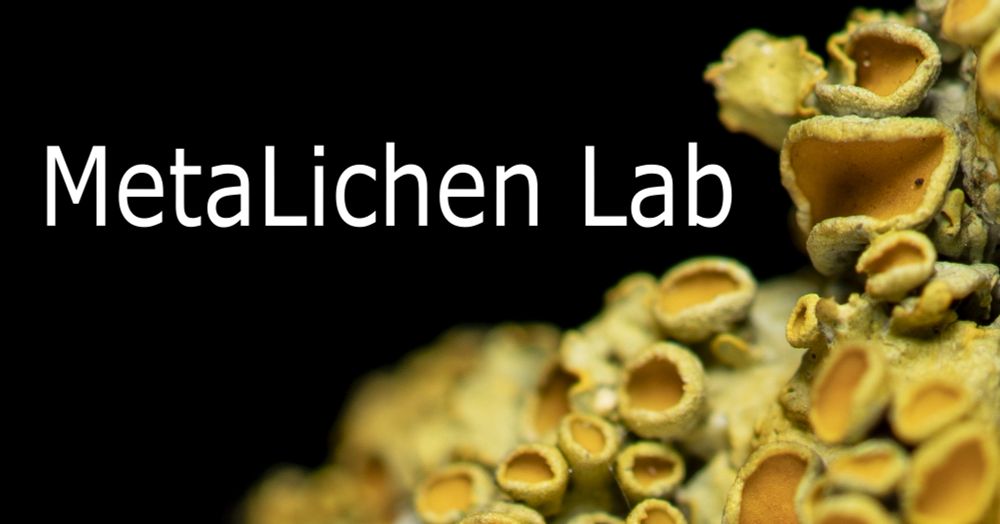
Black background with white letters 'metalichen lab'. Right and lower part of the image taken by a macro photo of a bright yellow lichen. The lichen surface has numerous cup-shaped fruiting bodies with orange inner surface
Thrilled to share that I recently got a position of an Assistant Professor/SciLifeLab Fellow at Stockholm University, where I will continue my work on #lichen symbiosis. The lab opens in April 2026, and if you are interested in joining please get in touch! #newPI
09.12.2025 14:33
👍 77
🔁 17
💬 7
📌 1

We’re excited to announce the opening of the Geneva Expansion Microscopy Facility (GenExM)!
GenExM is a full-service U-ExM platform (U-ExM, Cryo-ExM, iU-ExM), delivering nanoscale imaging.
Led by Dr. Olivier Mercey, GenExM welcomes academic & industrial collaborations.
👉 www.unige.ch/genexm/
10.12.2025 20:43
👍 142
🔁 35
💬 2
📌 0
Now officially published in Current Biology 🥳🥳 @mfseidl.bsky.social @binfutrecht.bsky.social
www.cell.com/current-biol...
09.12.2025 17:20
👍 63
🔁 37
💬 3
📌 0
Those interested in performing maximum likelihood phylogenomic analysis on data sets made up of eukaryotic nuclear genes using site heterogeneous mixture models like C60, I suggest you use the ELM model in IQ-TREE instead of the LG model /1
09.12.2025 18:30
👍 16
🔁 12
💬 1
📌 1
New #microbiome paper from our lab @ioes-ju.bsky.social! Unexpected host associations for Bartonellaceae - a bacterial family primarily known as mammalian pathogens. Striking #symbiont evolutionary trajectories, exemplified by a highly reduced, 158kb genome with no nutrient biosynthetic capacity!
05.12.2025 21:49
👍 7
🔁 4
💬 1
📌 1
One more week to apply to this PhD position on working out an endosymbiosis relationship in a protist. Please share widely to prospective PhD student #protistsonsky
05.12.2025 08:48
👍 27
🔁 18
💬 0
📌 0
Wow! Radler et al. doi.org/10.1101/2025... These are #asgardarchaea with what? Pseudopodia? Should we call them archaepodia analogously to archaellum? Mindblowing anyway!
03.12.2025 08:08
👍 21
🔁 8
💬 1
📌 0
CryoET of microbes inside an animal organ? Yes it’s possible! Check out our new preprint showing how we did it! What an amazing collaboration with amazing scientists who made this possible!
01.12.2025 04:35
👍 123
🔁 35
💬 2
📌 4

Sampled Balanophora populations from Taiwan and Japan.
Balanophora evolution, metabolic retention in reduced plastids, and obligate agamospermy
Svetlikova et al. @petrasvetlikova.bsky.social @tugutuguk @filiphusnik.bsky.social
nph.onlinelibrary.wiley.com/share/EINFCW...
27.11.2025 18:09
👍 15
🔁 6
💬 1
📌 0
Daily reminder that you are a better writer and researcher than any generative AI platform around. Your skills are worthy and it takes far more time to clean-up and fact-check the mess some chatbot spits out than to just do it yourself 😘
17.11.2025 22:22
👍 36
🔁 12
💬 0
📌 0