Next one in a storm of preprints from our lab's amazing scientists.. Recent-ex-postdoc, #newPI @cathyhernandez.bsky.social studied thermal ecology of marine bacteria isolated near New Haven. Turns out, response of this bacterium to temperatures is shaped by prophages!
#phagesky #microsky
21.02.2026 17:39
👍 47
🔁 16
💬 0
📌 0
Moving forward, I'm excited to keep exploring questions about host-prophage-environment interactions in non-model systems in my new lab @sc.edu. If you are (or know of) a trainee interested in this area, please reach out!
20.02.2026 19:13
👍 6
🔁 1
💬 0
📌 0
Overall, we found that variation in the thermal ecology of our environmental isolates was explained by variation in prophage infection, and that evolutionary rescue at high temperature occurred through modifications to prophage dynamics.
20.02.2026 19:13
👍 4
🔁 0
💬 1
📌 0

A figure depicting (a) methods for generating high temperature mutants (HTMs), (b) thermal performance of HTMs relative to the WT strain, (c) spontaneously produced phage titers, (d) mutations found in HTMs
Finally, we hypothesized that this prophage-mediated constraint would impact host adaptation to high temperature. When we selected for mutants with an expanded upper thermal limit, we found that all had reduced prophage activity (and an intergenic prophage mutation was partly responsible!)
20.02.2026 19:13
👍 1
🔁 0
💬 1
📌 0

A figure depicting (a) comparison of the prophage integration site in two bacterial genomes, as well as the genome of an uninfected strain, (b) spontaneous phage titers in these strains, (c) thermal performance curves for bacterial populations of these strains, (d) relative reduction in performance due to phage infection
To then understand the causal impacts of this phage on host thermal performance, we infected a susceptible conspecific strain and found that performance was reduced across all temperatures. Performance in the novel lysogen was then indistinguishable from the naturally infected strain!
20.02.2026 19:13
👍 1
🔁 0
💬 1
📌 0
There are many follow up questions to explore about the effects of temperature on the underlying parameters that give rise to these dynamics, but quantification of decay rates suggested that phage production may only occur early at lower temperature, but throughout incubation at higher temperature.
20.02.2026 19:13
👍 1
🔁 0
💬 1
📌 0

A figure showing (a) bacterial population growth curves across temperature, (b) a thermal performance curve derived from area under the growth curves in panel a, (c) culture-based population dynamics of host and phage at two temperatures, (d) the PFU:CFU ratio across time and temperatures from panel c
We then characterized the effects of temperature on bacterial population dynamics, finding that increased temperatures led to reduced yield and population crashes. Unexpectedly, phage population dynamics revealed that this phage was active across our tested thermal range.
20.02.2026 19:13
👍 1
🔁 0
💬 1
📌 0

A paneled figure showing (a) a dilution series of spontaneously produced phage plaques, (b) a TEM image of a non-tailed phage, (c) a viral phylogenetic tree, (d) comparison of genes across phages, (e) IMEX-like feature of a novel phage
To explore this, we first isolated a marine bacterium carrying a highly active non-tailed prophage related to the model lipid-containing phage PM2. We speculate that our phage may rely on host enzymes for integration and excision (an "IMEX"), distinct from lambda-like prophages.
20.02.2026 19:13
👍 1
🔁 0
💬 1
📌 0
Interspecific interactions can influence how organisms respond to environmental factors like temperature, and given the temperature-dependence of several prophage systems, we wondered how these viruses could impact host thermal responses.
20.02.2026 19:13
👍 1
🔁 0
💬 1
📌 0
Excited to share a preprint of work from my postdoc with @paulturnerlab.bsky.social exploring how prophages can impact host thermal ecology and evolution. www.biorxiv.org/content/10.6...
20.02.2026 19:13
👍 34
🔁 9
💬 1
📌 3
Congrats to @noahhoupt.bsky.social for this massive effort (1000 generation!) evolution experiment demonstrating the importance of organism-derived environmental modifications in shaping adaptive evolution. A great example of how bacterial evolution only makes sense in the light of phage :)
23.01.2026 19:27
👍 15
🔁 5
💬 0
📌 0

Isolation, engineering and ecology of temperate phages from the human gut - Nature
Human host-associated cellular products may act as induction agents for bacteriophages.
Very excited to share the latest work from our lab, which was published today in Nature!
nature.com/articles/s41...
PhD graduate and now post-doc Sofia Dahlman, along with co-senior author Sam Forster from The Hudson and other researchers from our lab and others.
15.10.2025 21:40
👍 186
🔁 75
💬 7
📌 3
Is a healthy microbiome one that is rich in phages? 🦠 Excited to share our paper out in Lancet Microbe with @bkoskella.bsky.social & @dholtappels.bsky.social where we test whether virome diversity can be used a broad signature of microbiome health 📈
10.10.2025 13:12
👍 63
🔁 26
💬 2
📌 1
Thanks Mike 😊😊
09.10.2025 13:49
👍 1
🔁 0
💬 0
📌 0
Thanks Noah 😭😭
09.10.2025 13:49
👍 1
🔁 0
💬 0
📌 0
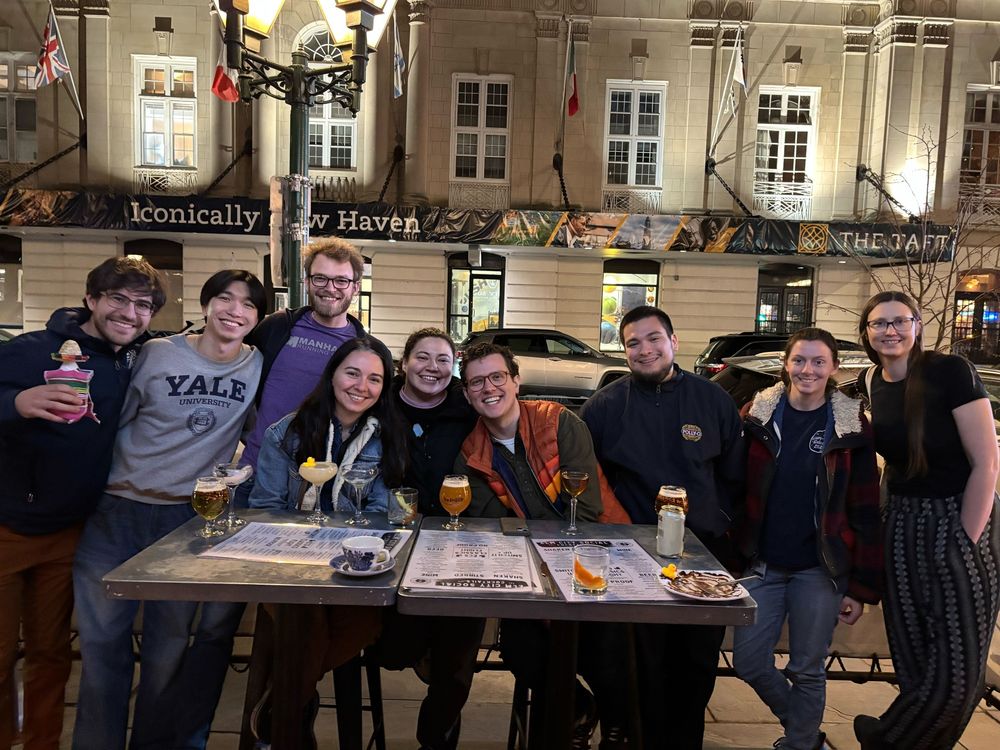
A group of people celebrating with drinks outside of a bar in New Haven, Connecticut.
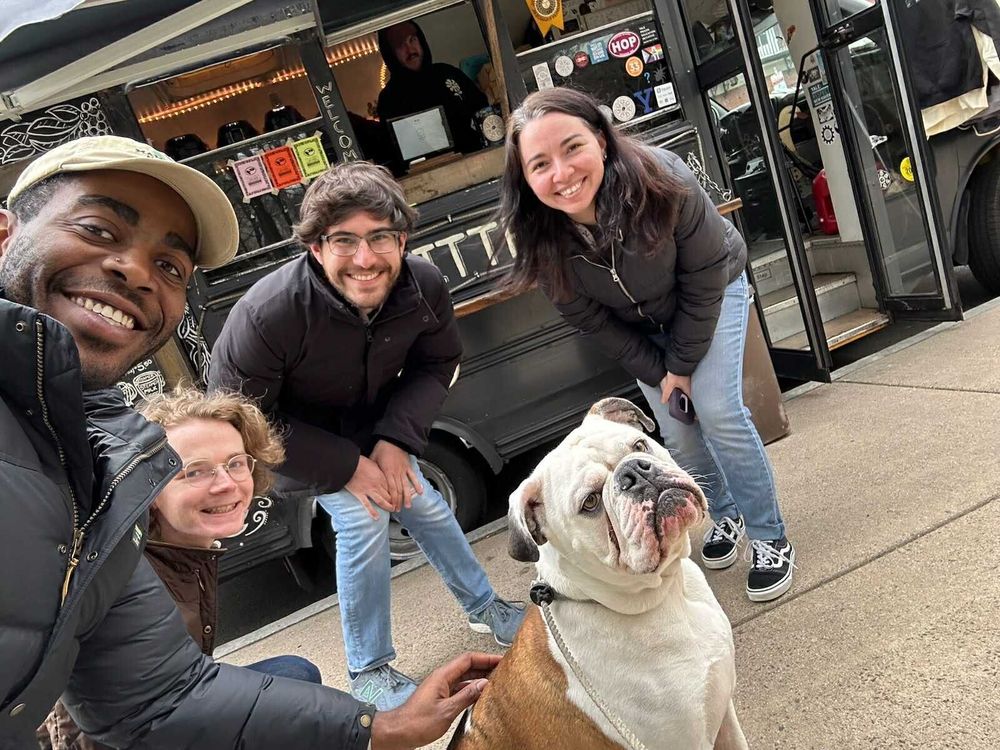
A group of people with the Yale mascot Handsome Dan in front of a coffee truck.
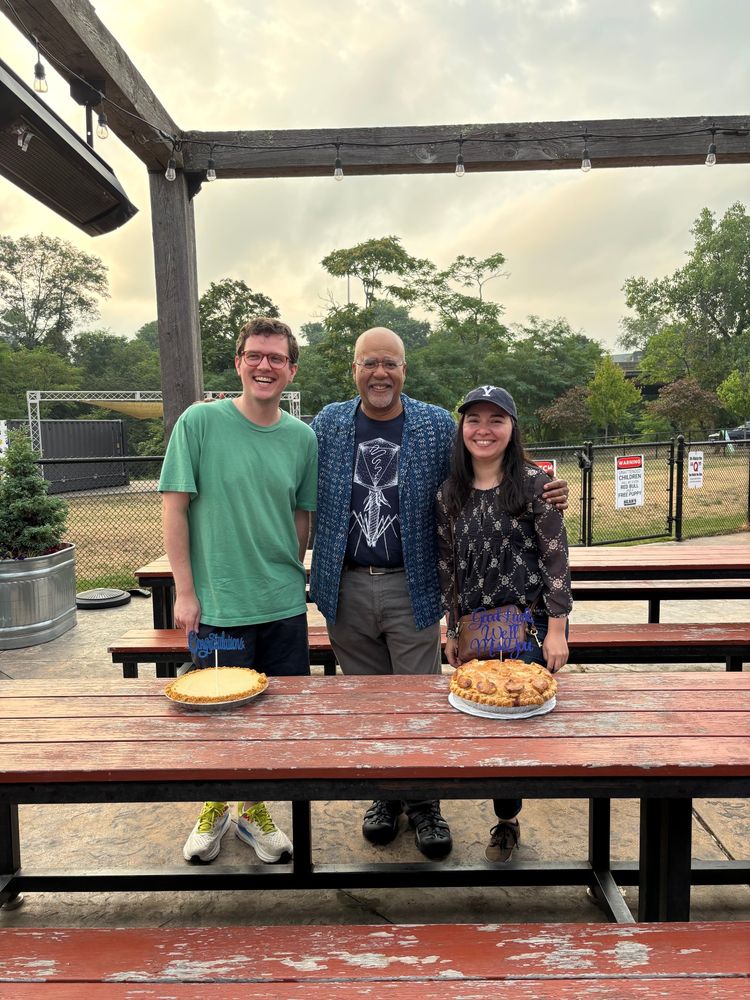
A photo of a professor and two trainees standing behind a table of two pies at a going away celebration.
So many people to thank, but I am particularly grateful to my mentors @bkoskella.bsky.social and @paulturnerlab.bsky.social for their support over many years. I am so so sad to be leaving the wonderfully supportive Turner lab, but excited to start a new chapter.
08.10.2025 16:34
👍 8
🔁 0
💬 0
📌 0
Study - Department of Biological Sciences | University of South Carolina
I am recruiting graduate students (MS and/or PhD) for the upcoming fall semester (more info here: tinyurl.com/35p6hfx7), and will soon be hiring a research associate/technician (details TBD).
08.10.2025 16:34
👍 7
🔁 5
💬 1
📌 1
We will be studying the effects of environmental factors on non-model marine phage-host interactions, with a particular interest in the causes and consequences of context-dependent prophage dynamics. If you are interested in tackling these questions, please reach out!
08.10.2025 16:34
👍 4
🔁 0
💬 1
📌 0

A graphic advertising phage ecology and evolution research at the University of South Carolina, showing a central image of a tide pool flanked by a photo of an agar plate containing diverse microbes and a TEM image of a virus particle.
Very happy to share that I will be starting as an Assistant Professor in the department of Biological Sciences at the University of South Carolina in January! My group will be working on environmental phage ecology and evolution, and I am recruiting for the upcoming year (more info below).
08.10.2025 16:34
👍 79
🔁 28
💬 6
📌 2
The social lives of viruses | Asher Leeks | TEDxNewEngland
YouTube video by TEDx Talks
I gave a talk last year at TEDxNewEngland aimed at introducing the idea of viral sociality to a general audience, including implications for evolution & virology. Video now available online below.
#socialviruses #evosky #virosky 🧪
07.10.2025 22:38
👍 43
🔁 17
💬 0
📌 1

A call for caution in the biological interpretation of viral auxiliary metabolic genes - Nature Microbiology
This Perspective discusses virus-encoded auxiliary metabolic genes and provides a framework for the biological interpretation of these genes.
New paper alert! We suggest caution in the analyses of viral auxiliary metabolic genes and propose a new overarching term - 'auxiliary viral genes' (AVGs) to describe different types of such genes. @simrouxvirus.bsky.social #phagesky #Microsky www.nature.com/articles/s41...
27.08.2025 12:24
👍 74
🔁 37
💬 2
📌 2

STEPS To It
Announcing a new program, called STEPS, to simulate the dynamics of evolving microbial populations.
Excited to share new #program, STEPS, which can simulate #dynamics of the E. coli Long-Term Evolution Experiment (#LTEE) or other microbes in serial transfer regime.
telliamedrevisited.wordpress.com/2025/08/12/s...
STEPS developed by @devinmlake.bsky.social, Zachary Matson, Minako Izutsu, and me.
12.08.2025 15:53
👍 182
🔁 65
💬 4
📌 7
We (with Clement Coclet, not on Bsky) had the chance to work on a broad "state of viromics" review. We tried to use this to give an overview of how the field changed over the last ~ 15 years, and also what we think are some of the major remaining challenges. Full-text access at -> rdcu.be/excHt
22.07.2025 15:06
👍 84
🔁 41
💬 2
📌 2
For #ASMicrobe folks - looking forward to a busy phage day on Sunday!
20.06.2025 19:06
👍 14
🔁 7
💬 1
📌 0
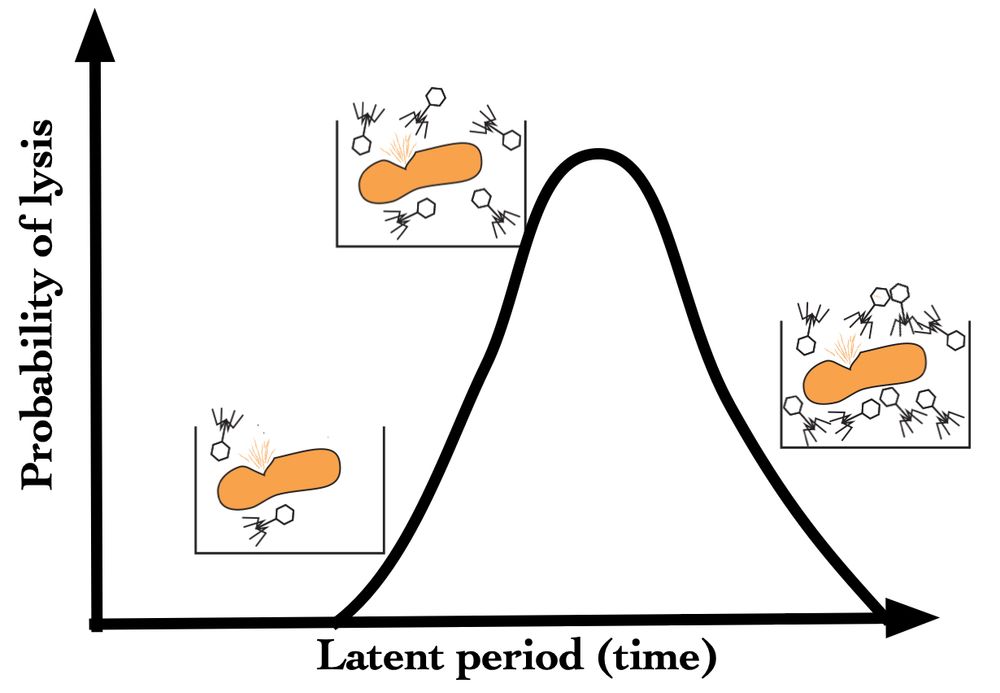
Schematic of probability distribution of the latent period along with single-cell examples of bursts that increase in magnitude as the latent period increases. Full details in the paper.
New on #biorXiv: 'Inferring single-cell heterogeneity of bacteriophage life-history traits from population-scale dynamics'. A theory-experiment collaboration, led by @mariandm.bsky.social + Ran Tahan w/the Lindell group at Technion (and yes, I am excited).
a 🧵
www.biorxiv.org/contenat/10....
26.03.2025 14:29
👍 24
🔁 13
💬 2
📌 2