

Pesticide residues found to be the second strongest driver of soil biodiversity (after soil properties) across European ecosystems! 🌐🌏🪱🦠🍄 rdcu.be/e1cOL
28.01.2026 20:19
👍 19
🔁 9
💬 0
📌 0
Pesticide residues found to be the second strongest driver of soil biodiversity (after soil properties) across European ecosystems! 🌐🌏🪱🦠🍄 rdcu.be/e1cOL


Cladonia stellaris in the snow ❄️
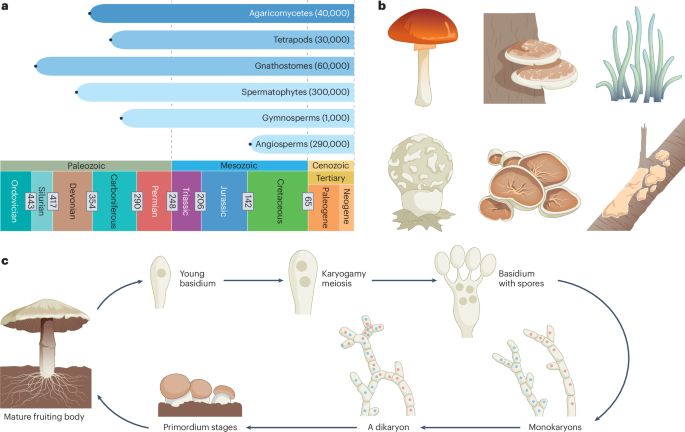
New online! The biodiversity, genomics, ecology and evolution of mushroom-forming fungi
We studied vegetation recovery and peat depth in temperate fens drained for forestry and rewetted up to 38 years ago. Peat layers increased over time, vegetation became more similar to near-natural fens, especially in the first 10 years, but never fully reached near-natural quality 🌿
Preprint available :)
Small-scale fen restoration brings back key species and ecosystem functions 🌿
Small-scale fen restoration brings back key species and ecosystem functions https://www.biorxiv.org/content/10.64898/2026.01.01.697300v1
I think those are the Gemmules, a strategy to survive winter


Did you know there are freshwater sponges in Germany?
Spongilla lancustris is a demosponge growing in shallow, clear and clean ponds, lakes etc. it becomes dormant in winter and can survive dry periods!
seen today in a dry pond in northern bavaria :)
How to measure seed longevity in storage when comparing accessions or species? We looked in detail at the most widely used measure (p50) and found out that it is... suboptimal at best. We highlight alternatives. @gfoesoc.bsky.social @unimarburg.bsky.social
Yes you should!


Restored open pit coal mining site near Leipzig, quite interesting pioneer habitat :)

Hedlundia pulchra

Karpatiosorbus franconica

Karpatiosorbus franconica
Some white beams endemic to franconia, northern bavaria :)
Karpatiosorbus franconica and Hedlundia pulchra

❄️
Happy to finally share this important article on barriers in ecology led by @canobarbacil.bsky.social in the journal Frontiers in Ecology & the Environment. The idea for this paper originated at the nice #ANdiNA workshop in Spain a couple of years ago.

New study led by @lsachsenmaier.bsky.social @agwirthweigelt.bsky.social shows: forest stands made up of tree species with different water-use strategies (not just many species) grow better in drought years. #iDivResearch #Biodiversity
www.idiv.de/diverse-fore...
true. the windows.
frankfurt?
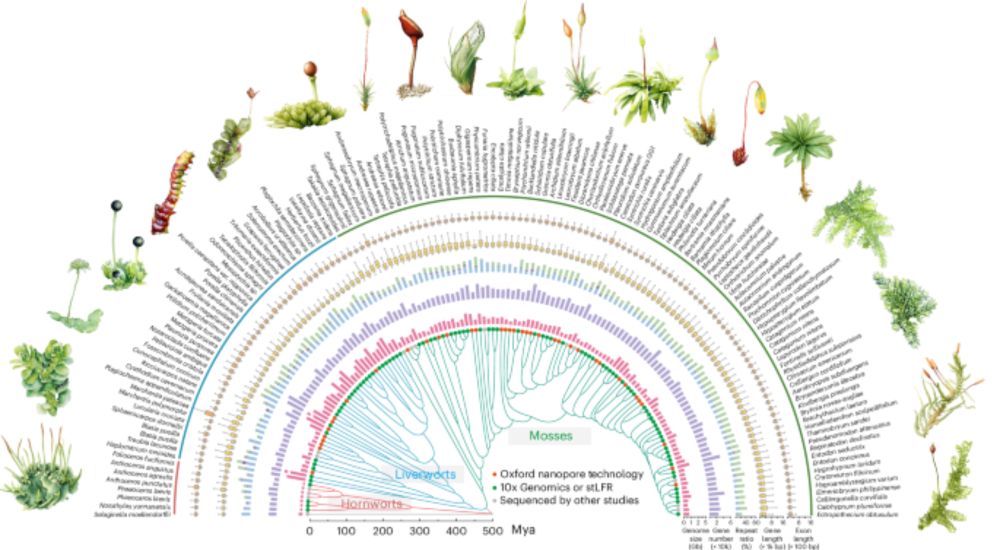
📢 New publication ' #Bryophytes hold a larger gene family space than vascular plants' by Shanshan Dong et al. in @natgenet.nature.com 🧬🧪
doi.org/10.1038/s415...
#evolution #pangenome
Its Sphagnum capillifolium :) on a very sun exposed forest path

🍁🍂


some fancy Ascophyllum🌿

Illustration of a branch of Betula glandulosa (Resin birch). Illustration by Alberto S. Ballesteros (@asbillustration.bsky.social).
🌲 Boreal-tundra species drive Arctic plant borealization 🌲
Our new study in #EcologyLetters quantifies tundra plant borealization, assesses its main drivers and identifies the species & traits contributing to borealization.
doi.org/10.1111/ele....
🧵 (1/6) 🌐🧪🌱🌍


Sphagnum fallax in a mesotrophic sloping fen in central Germany 🌿


Its sometimes a narrow line between a "garden" and a protected boulder field with glacial relict species ;)
where did you get those purrr ones from 😍

Sphagnum girgensohnii in an alder carr in southern finland :)


A collapsing Palsa in northern Finland; seen this week.
Palsas are peat-covered hills, often a few meters high, that contains a core of permafrost. They are only found in areas of discontinuous permafrost 🧊,
They will be likely gone soon due to climate change 🌿
nordia.journal.fi/article/view...


Botrychium boreale in coastal dune vegetation, subarctic norway 🌿🌊

Tundra office 🌿🍁

Have a nice weekend!
Sphagnum cuspidatum 🌿