New shark safety measure: bite-resistant wetsuits can reduce injuries
New shark safety measure: bite-resistant wetsuits can reduce injuries
Australian shark experts have tested four bite-resistant materials to assess their ability to reduce injuries and bloo
Australian shark experts have tested four bite-resistant materials to assess their ability to reduce injuries and blood loss.
www.scimex.org/newsfeed/new...
The findings were published #OpenAccess in @wildliferesearchj.bsky.social.
#WildlifeResearch @flindersuniversity.bsky.social
1/4
13.10.2025 23:29
👍 6
🔁 3
💬 1
📌 0

A surfer wearing a wetsuit riding a wave. A caption tells us: "While internal and crushing injuries may still occur, bite-resistant wetsuits can now be added to the ‘toolkit’ of measures available to reduce shark-bite risk and resulting injuries, say researchers from Flinders University’s Southern Shark Ecology Group." The photo is credited as being by Aflo Images.
The researchers from @flindersuniversity.bsky.social's Southern Shark Ecology Group say that while internal and crushing injuries may still occur, bite-resistant wetsuits can now be added to the ‘toolkit’ of measures available to reduce shark-bite risk and resulting injuries.
#WildlifeResearch
2/4
13.10.2025 23:29
👍 1
🔁 1
💬 1
📌 0

A white shark bites an orange piece of material. The photo is courtesy of Flinders University. The caption invites us to read the open access article in Wildlife Research titled 'Effectiveness of bite-resistant materials to reduce injuries from white shark (Carcharodon carcharias) and tiger shark (Galeocerdo cuvier) bites'.
Effectiveness of bite-resistant materials to reduce injuries from white shark and tiger shark bites
Thomas Clarke, Paul Butcher, Marcel Green, James Whitelaw, Lauren Meyer & Charlie Huveneers
#OpenAccess in @wildliferesearchj.bsky.social:
www.publish.csiro.au/WR/WR25019
#WildlifeResearch
4/4
13.10.2025 23:29
👍 1
🔁 1
💬 0
📌 0

A shark gently glides through blue ocean. The photo is credited as being by Elianne Dipp, Pexels. A quote over the image by Professor Huveneers of Flinders University reads: “Our findings will allow for informed decisions to be made about the use of bite-resistant wetsuit materials for occupational activities, as well as enabling the public to make appropriate decisions about the suitability of using these products.”
“Our findings will allow for informed decisions to be made about the use of bite-resistant wetsuit materials for occupational activities, as well as enabling the public to make appropriate decisions about the suitability of using these products," said co-author @charlie-huveneers.bsky.social.
3/4
13.10.2025 23:29
👍 1
🔁 1
💬 1
📌 0


My first-first author paper is out! We found that overall healing in sharks was comparable between sutured and non-sutured incisions. But sutured incisions had significantly more bacteria present. www.publish.csiro.au/wr/pdf/WR25009 Forever thankful to Jordan Matley & @charlie-huveneers.bsky.social
13.08.2025 07:36
👍 11
🔁 5
💬 0
📌 0
‼️ New important shark paper 🦈
We demonstrate that all critical life stages (resting, feeding, being cleaned, mating & giving birth) can occur in the small Fakarava channel & we define it as a “super habitat”
www.sciencedirect.com/science/arti... @dr-yannis.bsky.social @charlie-huveneers.bsky.social
22.08.2025 16:56
👍 12
🔁 5
💬 0
📌 0

New paper introducing the term of SUPER HABITAT for sharks in which all critical activities (resting, feeding, mating & giving birth) occurs.
🦈🌴❤️🍽️ 👶
Access the paper here:
www.sciencedirect.com/science/arti...
@dr-yannis.bsky.social @charlie-huveneers.bsky.social
23.08.2025 18:51
👍 23
🔁 12
💬 1
📌 2


48 hours, 8 sharks, 3 researchers and a WHOLE LOT OF DATA! 🦈 🩻 Another busy and successful trip to @ansto.bsky.social synchrotron!
With @weisbeckerbblab.bsky.social for an exciting new project with @charlie-huveneers.bsky.social @meyer-sci.bsky.social & our other fabulous collaborators… 🦈🦈🦈
22.09.2025 00:16
👍 11
🔁 1
💬 0
📌 1


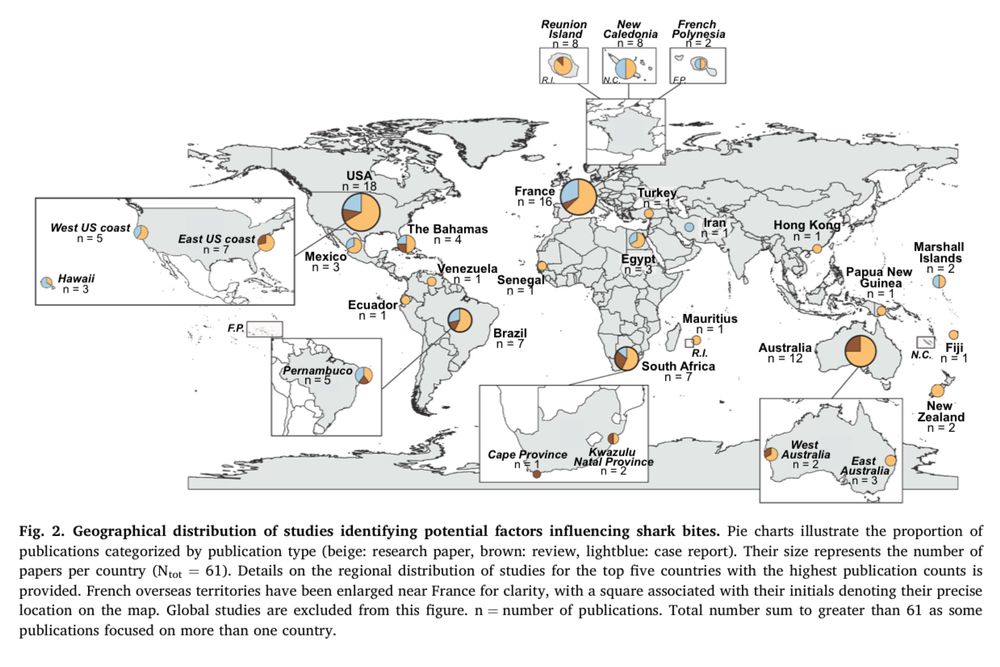
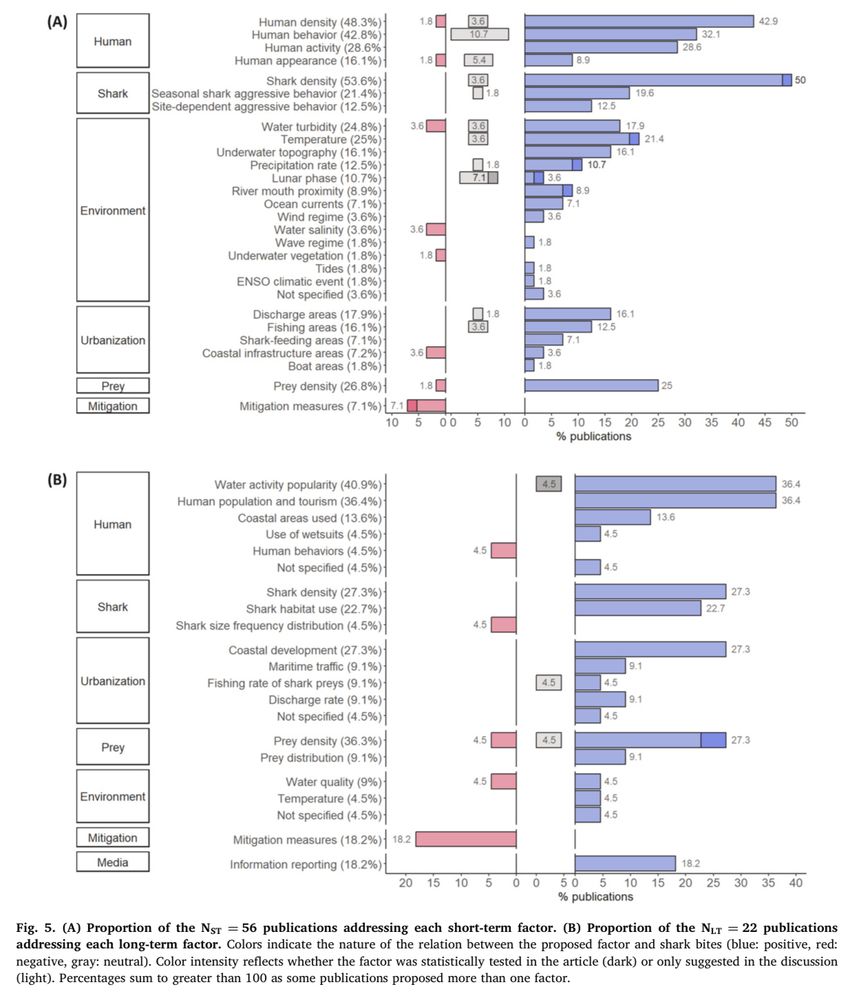
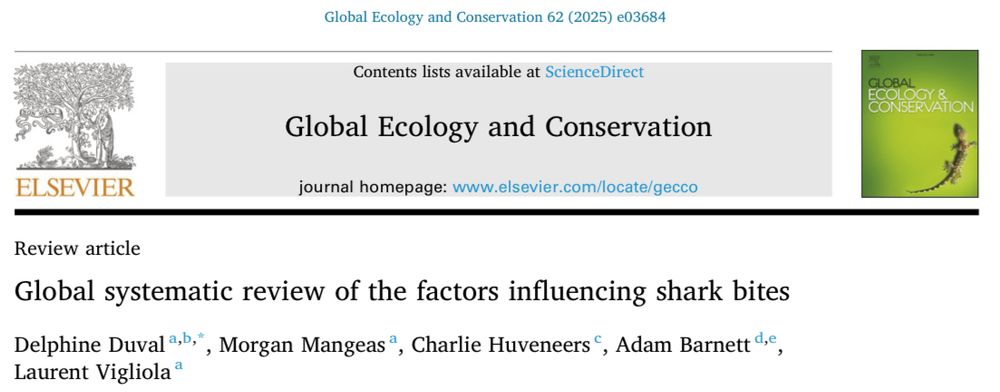
New study assessing what factors might be influencing trends and occurrences of shark bites
Is it really more swimmers/surfers? Population of dangerous sharks recovering?
Led by Delphine Duval @ird-fr.bsky.social
@flindersuniversity.bsky.social
doi.org/10.1016/j.ge...
12.07.2025 01:57
👍 3
🔁 0
💬 0
📌 0


Well done to all @flindersuniversity.bsky.social Southern Shark Ecology Group members for their presentations and posters at this year OCS conference and congrats to Lilly Cowell for winning best student poster award, and @chlo-ro.bsky.social and Sergio Madrigal Mora for their travel awards!
30.06.2025 22:09
👍 4
🔁 0
💬 0
📌 0

Join us Sunday for talks about sharks, whales, and the Coorong victorharbor-events.bookable.net.au#!/event-deta... @flindersuniversity.bsky.social
22.06.2025 22:48
👍 1
🔁 0
💬 0
📌 0

Jaws corner in Zanzibar’s Stone Town named by the locals for watching shark movies and socialising at that spot.
09.06.2025 03:56
👍 3
🔁 0
💬 0
📌 0
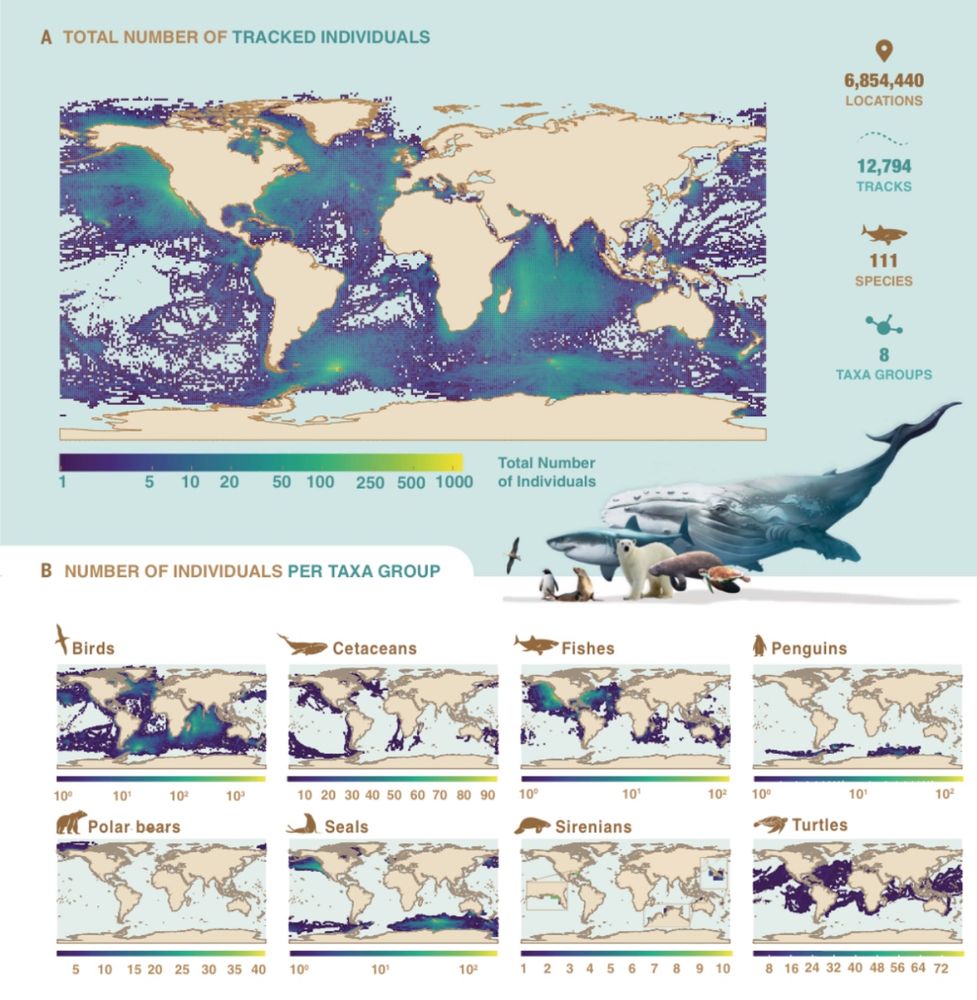
New Science paper: 15,845 tracked individuals across 121 species to identify spatial conservation targets www.science.org/doi/10.1126/...
led by @anammsequeira.bsky.social
09.06.2025 03:49
👍 17
🔁 10
💬 0
📌 0
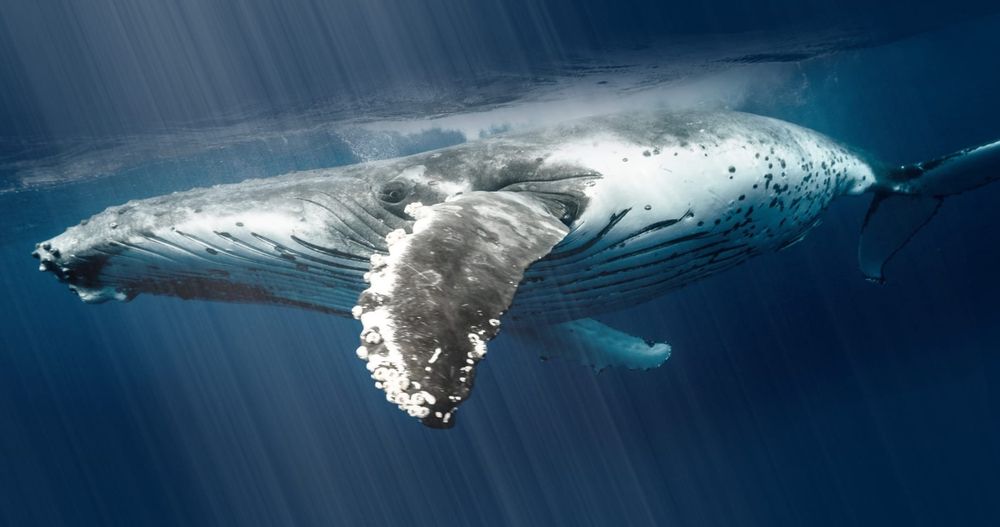
MegaMove uncovers where protection is needed for marine megafauna
A new Science paper maps global hotspots for marine megafauna & finds that planned increased protection will be insufficient to cover most areas
📢A MegaMove milestone has just been published in @ScienceMagazine!
With ~380 collaborators from 50 countries, we mapped the movements of 12k+ marine megafauna to identify key habitats 🌊🐋🦈
@pewenvironment.bsky.social @uwaoceans.bsky.social
www.sequeiralab.com/news/megamov...
06.06.2025 01:40
👍 30
🔁 16
💬 1
📌 0

IMOS is helping scientists track yellowtail kingfish across state borders, highlighting the need for more connected fisheries management.
Learn more 🔗 bit.ly/3Fsgn69
#NCRISImpact
22.05.2025 23:12
👍 6
🔁 2
💬 0
📌 0
Seasonal changes in the habitat suitability of immature white sharks (Carcharodon carcharias) driven by ocean warming
Seasonal changes in the habitat suitability of immature white sharks (Carcharodon carcharias) driven by ocean warming " By 2080, equatorial bioregions may become unsuitable year-round, while some poleward regions will likely increase in suitability by 27–38% "
academic.oup.com/icesjms/arti...
27.05.2025 20:16
👍 16
🔁 5
💬 0
📌 0


Our Special Issue on fish telemetry is finally published in Journal of Fish Biology @thefsbi.bsky.social
including 28 papers on freshwater & marine fish movement & behaviour.
Thank all authors and guest editors Taryn Murray, Robert Lennox & Kim Birnie-Gauvin
onlinelibrary.wiley.com/toc/10958649...
29.05.2025 07:31
👍 20
🔁 12
💬 0
📌 1

Over 35% of shark and ray species are threatened with extinction. 🦈🌍
Next week join us at #UNOC3 as the Global Coalition to Halt Shark & Ray Extinction will be unveiled!
Learn more about this joint effort to keep these iconic marine animals thriving: www.haltsharkrayextinction.org
06.06.2025 13:56
👍 26
🔁 7
💬 0
📌 0

Come and join three amazing speakers including two @flindersuniversity.bsky.social PhD students @chlo-ro.bsky.social & Emma Kerr
30.05.2025 08:24
👍 2
🔁 1
💬 0
📌 0

Congrats #TomClarke for your PhD paper being one of the 2024 top viewed article in #AquaticConservation #Wiley
17.04.2025 01:15
👍 2
🔁 0
💬 0
📌 0
The awesome thing about this study is it shows we can use old, preserved shark jaws to do ecological studies!
30.03.2025 22:51
👍 5
🔁 2
💬 0
📌 0