
Behold Schrödinger’s abstract! Simultaneously limitless yet capped: "While there is not a word limitation for this section, this summary should not exceed 300 words"
04.03.2026 22:30
👍 1
🔁 0
💬 0
📌 0
Behold Schrödinger’s abstract! Simultaneously limitless yet capped: "While there is not a word limitation for this section, this summary should not exceed 300 words"
Officially adopting this as our lab motto (with neutral pronouns and "human" in place of "man").

A note at the start of today’s stats class.
’Tis the season* to remind beginners that using #R instead of #RStudio is like trying to type with mittens on. *assuming that you are in the northern hemisphere and far enough from the equator.

First of its kind paper using angler app data + machine learning to id angler characteristics most likely to lead to #AIS spread: frequent trips to diverse locations regardless of day or weather and high catches/trip. First 50 downloads free via DM or this link: www.tandfonline.com/eprint/6X9U7...
Generating keywords is a professional pet peeve. I don't know the biz from the publishing/databasing side of things, but keywords seem vestigial given that everything is now digitized and (machine) searchable. If required, then I try to avoid what's already in the title and abstract.
"This is a fun paper and nice demonstration of how machine learning can be used to evaluate segmentation" Nice note from our handling editor letting us know that "Characterizing highly mobile anglers for preventing the spread of aquatic invasive species" is accepted in Human Dimensions of Wildlife.
Stats reminder: comparing means to medians is _usually_ apples to oranges when data are skewed. jse.amstat.org/v13n2/vonhip...

Happy to share our cornerstone book on disciplinary and interdisciplinary approaches for recreational fisheries management with a specific focus on understanding recreational fishers
link.springer.com/book/10.1007/9…
@icmcsic.bsky.social @imares-group.bsky.social @csic.es @csicdivulga.bsky.social
Rec fishing platforms aren’t just passive data sources - they’re powerful tools for engagement, education, and behaviour change. Our Digital Data Mining chapter explores how these data can reshape fisheries research & outreach. link.springer.com/chapter/10.1... #recreationalfisheries #citizenscience
The Digital Data Mining chapter is a personal favourite - couldn't have done it without you and the rest of the author team!
Also a great way to study the action of protrusible jaws and the inner workings of black bass digestive tracts!


First we catch the fish, then we fry them - Venturelli lab serving up fresh, local, wild caught fish at the @ballstate.bsky.social #homecoming. It’s a tough job, but someone’s gotta do it.
Sorry, @mimusselman.bsky.social. Join our group exploring ways to use new sources of digital data in fisheries science instead? Looking forward to your @ballstate.bsky.social Biology seminar regardless!

Never stop sampling. These students are learning to measure river flow and discharge in limnology @ballstate.bsky.social


This semester’s R Boot Camp in @ballstate.bsky.social biology’s stats class kicked off outside due to a fire drill. Students in the course use R to explore key concepts, run common stats (e.g., t-test, ANOVA regression), and be competitive for jobs after graduating.
Do you mean their whiskers/bristles? I believe that it's to taste and feel food in murky water and muck. The bristles are covered in sensory cells. Fish whiskers have evolved independently in numerous families (e.g., fw catfish, marine catfish, sturgeon).
This looks like really good #insect #cosplay
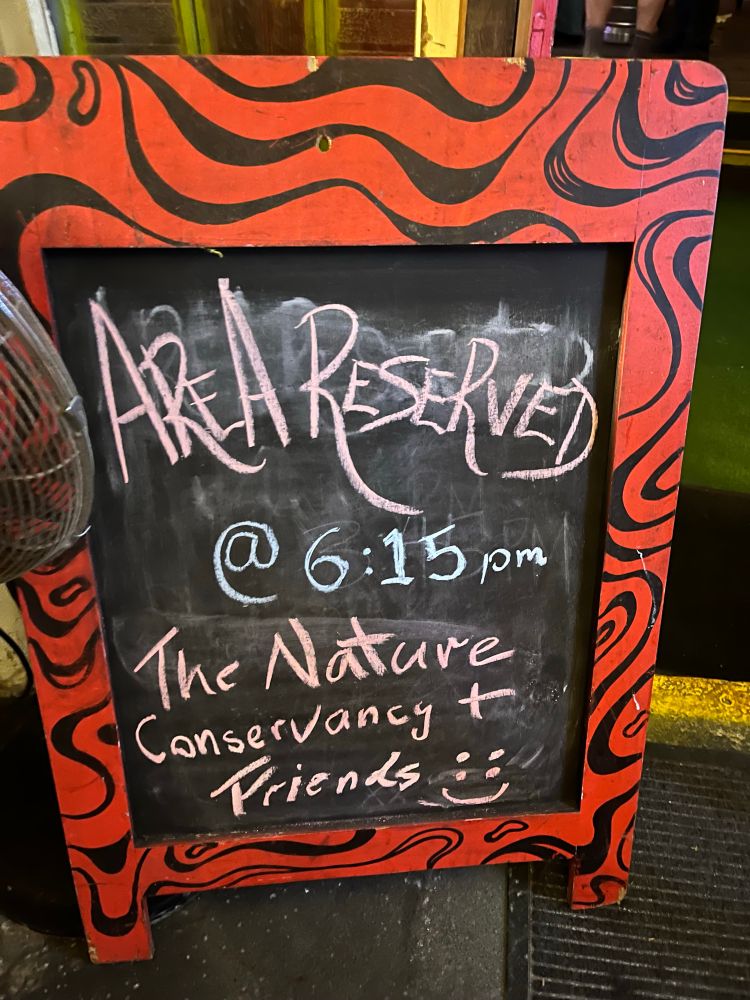
Got invited to this. Walked in not knowing anyone. Walked out with new friends and a few stories. Thanks, @nature.org and @iccb2025.bsky.social!
You can't make this up: a researcher friend just had a paper rejected because the result was statistically non-significant. The editor said to try out different stats to get the p-value <0.05. That's NOT how science works. Non-significance is a legit result that is worth being communicated.
If Hell were real, one of the layers would be “conference app”.
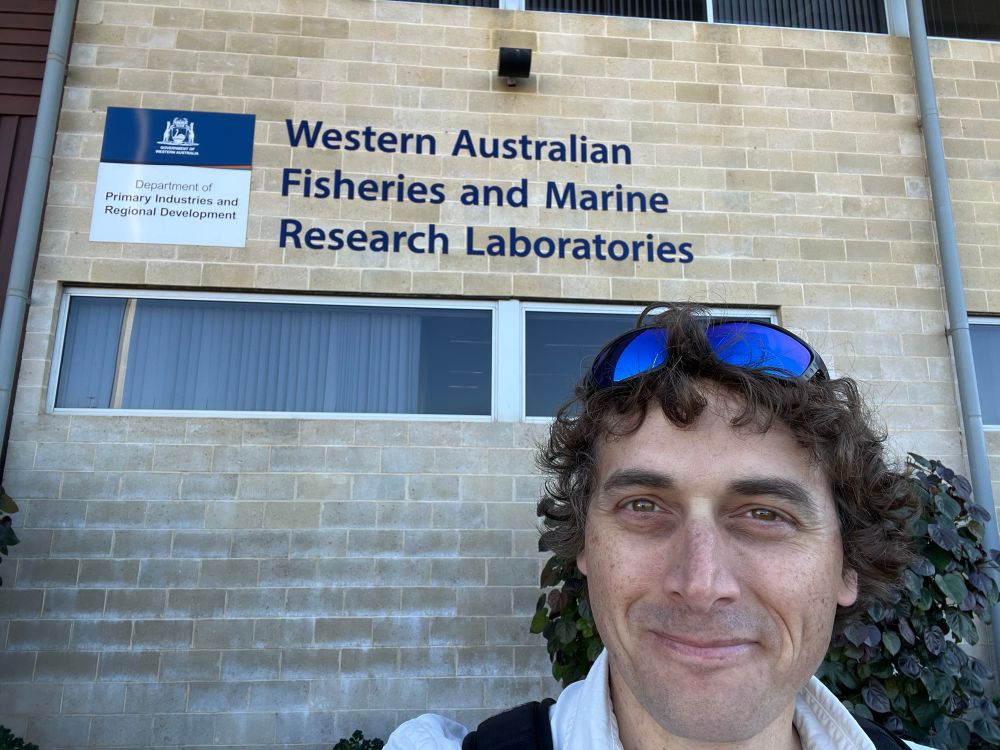
Had a great time in Perth talking fishing apps, survey science with Karina Ryan et al., (DPIRD), and NGO RecFishWest. Sample frames, trust, and the spectrum of engagement. Next up: Western Australia holiday, then Brisbane to prep for an eval of behaviour change efforts on app data quality.
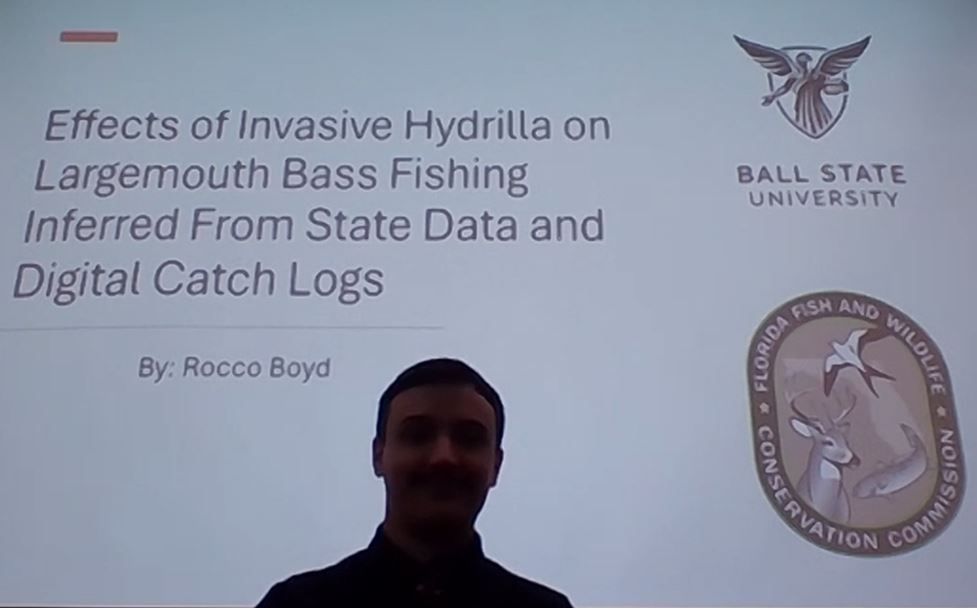
Hire new MSc Rocco Boyd (stat & GIS whiz)! App data suggest invasive #Hydrilla isn’t v. good for #Florida #largemouth bass fishing. H doesn't attract more anglers or make larger bass - native veg is better. H mats do get fished for slightly larger bass, but not enough to justify limiting H control.
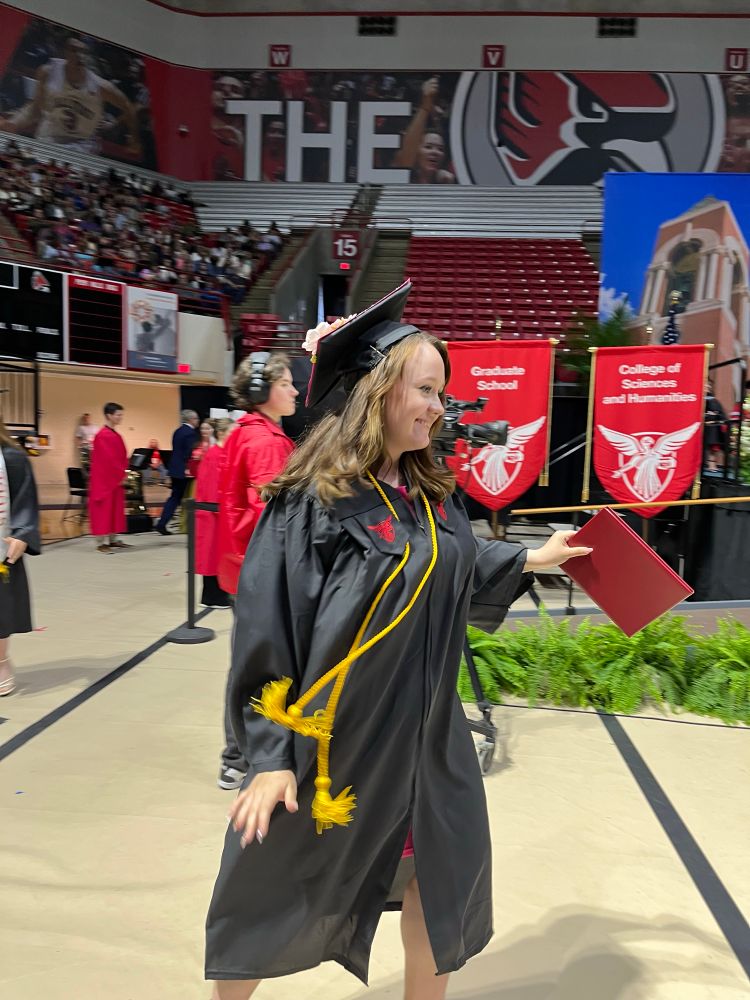
Onward & upward (bc #wefly)! @mackensieshears.bsky.social started in ed, switched to aquatics & fisheries, & was an asset to the lab for 20 mo - helping w main projects, side projects, teaching, service, & snacks. Thx for everything, best of luck, you’re missed, & come back any time!
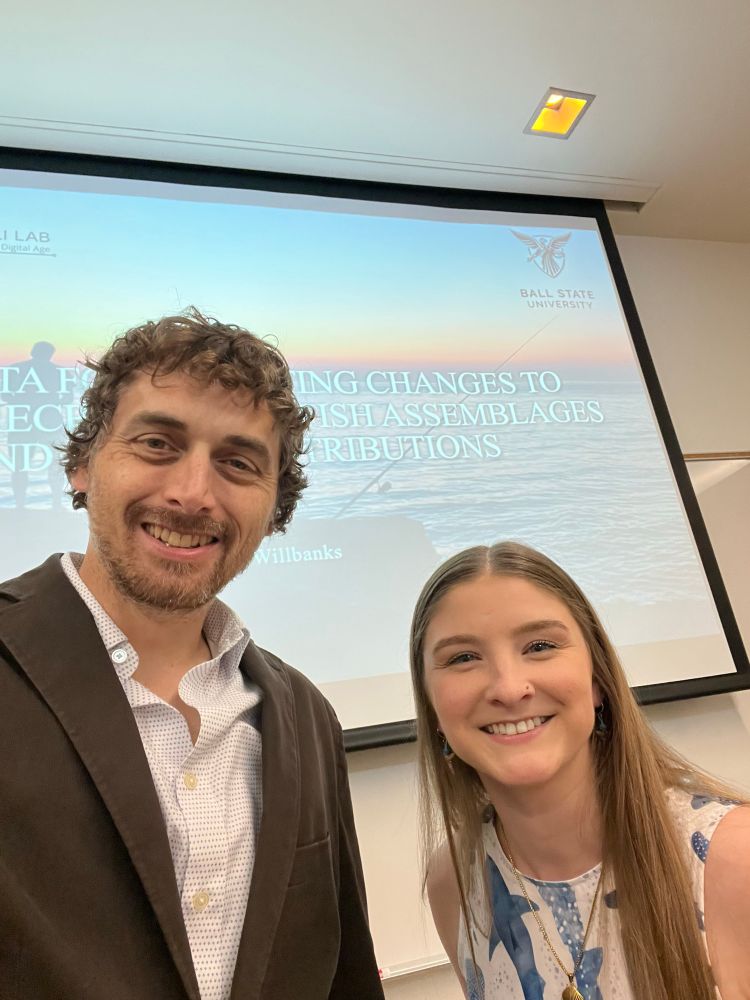
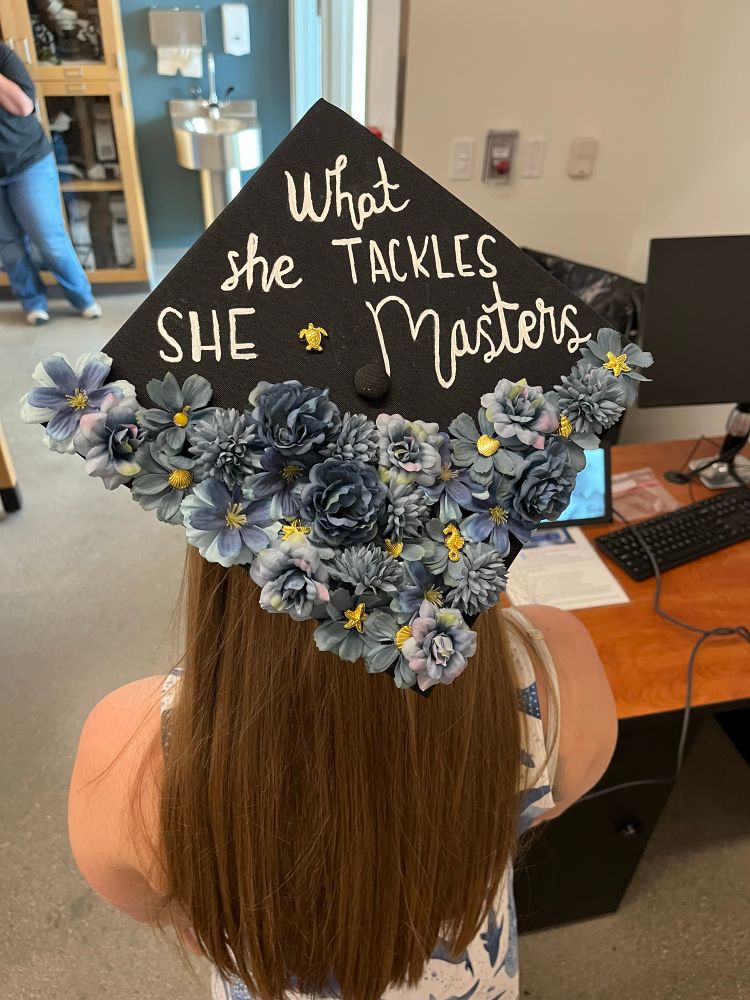
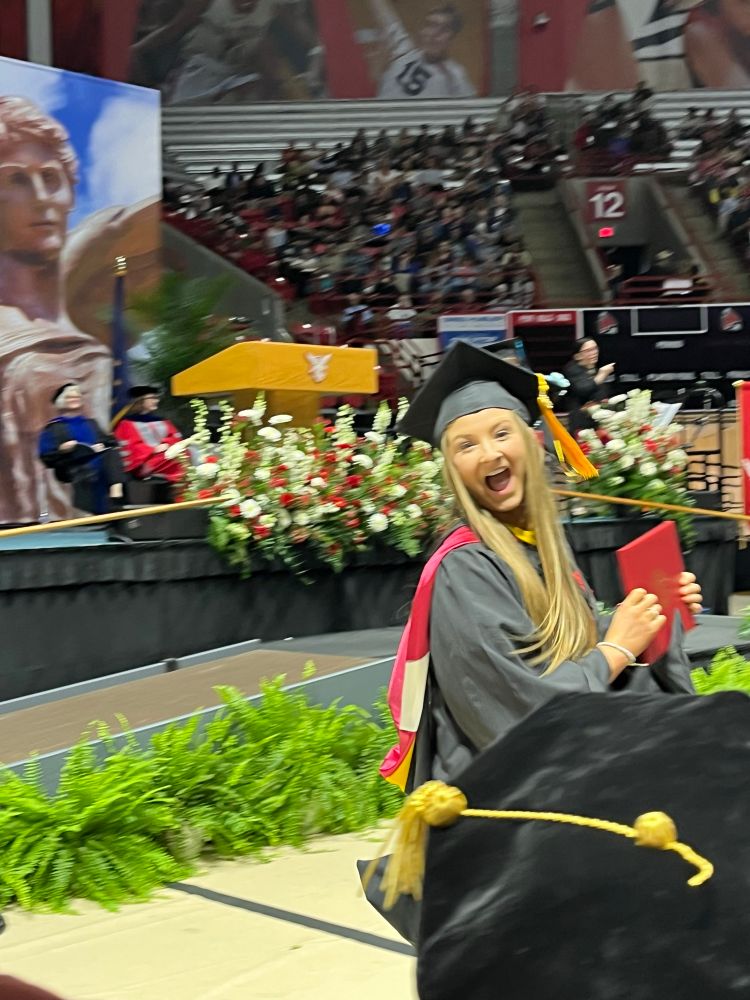
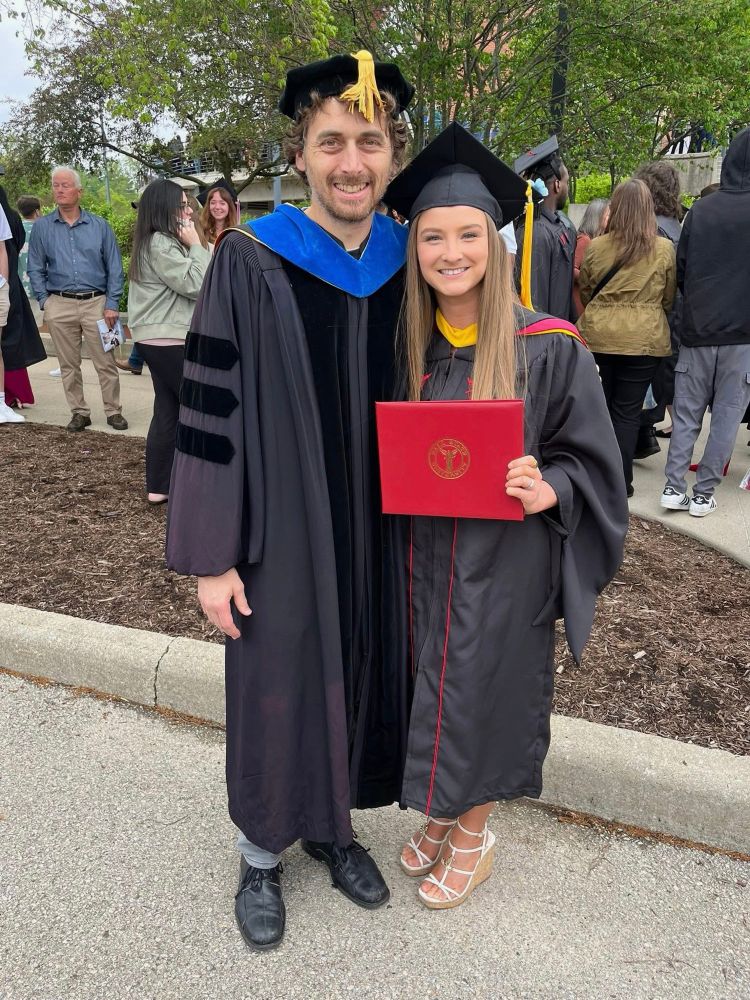
Very proud of Paton Willbanks for successfully defending her thesis on methods for using app data to monitor for changes in marine fish assemblage and species distributions. Except that we now have a Paton-sized hole in the lab. Saying bye to great students is one of the hardest parts of this job.
If making Outlook add #UTF-8 to the start of every downloaded filename is someone's idea of psychological warfare, it’s totally working. 😱
I'm a Ball State University professor. My team explores the ways in which we can use big data from online activity, apps, social media, and connected devices to help recreational fisheries and the environment. Research topics include invasive species, climate change, and fish contamination.
EVERY day is #EarthDay
🤯 Great minds 🤔
You’re always welcome!