I've not been here for a while and discover that I can only access private messages by verifying my age. Why can I look at everything else here but not my own messages?
24.02.2026 13:00
👍 0
🔁 0
💬 0
📌 0
I've not been here for a while and discover that I can only access private messages by verifying my age. Why can I look at everything else here but not my own messages?

The view from Hunter-Weston Hill inland towards Achi Baba, Helles, #Gallipoli.

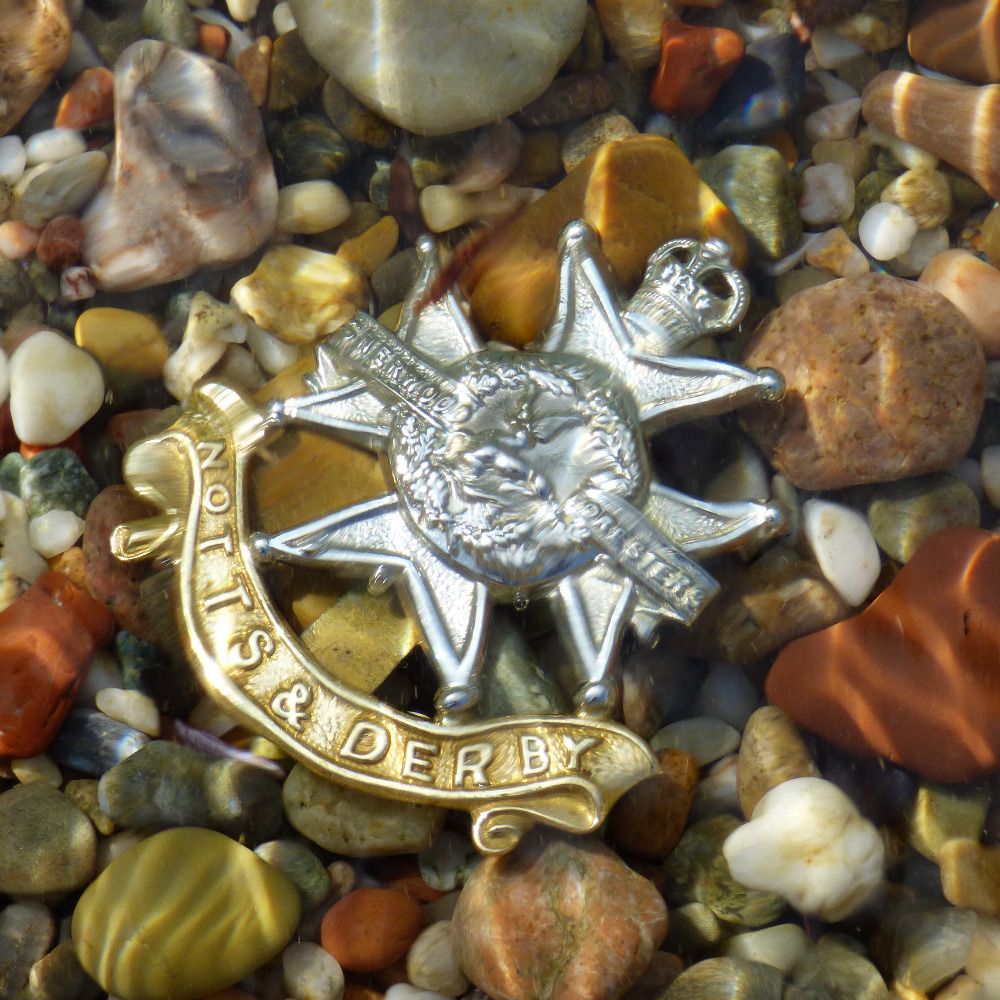
A Lancashire Fusiliers cap badge on W Beach, Lancashire Landing, Cape Helles, #Gallipoli.
(N.B. It was photographed there, not found there, as someone once accused me of faking. We don't keep in touch.)

"Heldenmütige Verteidigung der Dardanellen," the Heroic Defence of the Dardanelles.

Ian Hamilton blamed Frederick Stopford for the failure at #Suvla, #Gallipoli. Stopford had been the Lieutenant of the Tower of London, a sinecure post offered to the old and unfit for anything else.
Hamilton is pictured here at the end of his tenure as Lieutenant of the Tower of London.

No-one seems to know the origin of the saying that "journalism is the first rough draft of history" but journalists have certainly helped frame our understanding of our past.
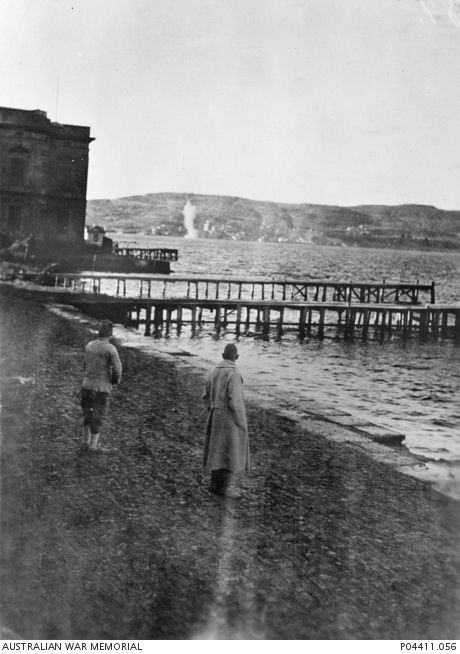
American journalists George Schreiner & Raymond Swing witnessed the Anglo-French naval attempt to force the #Dardanelles on 18th March 1915.
I'll discuss their take on the campaign in my talk to @gallipoliassoc.bsky.social on 25th March.
Image: "Shells bursting at Kilitbahir." AWM P04411.056.

Some men wanted Charles Bean sent home during his time in Egypt. But what he did at Gallipoli turned that around.
How and why I'll discuss in my talk to the @gallipoliassoc.bsky.social on 25th March: Gallipoli Through Journalists' Eyes.
Image: 'Sydney Mail' (New South Wales), 21st October 1914.
Oh yes, he will be featured.
Absolutely fuck this racist shit too.
I hope the reporter has been referred to the Serious Cliché Squad.

When Ellis Ashmead-Bartlett met the British Prime Minister to discuss #Gallipoli he gave an account, "which was not altogether agreeable."
That's British official-speak for disaster. I'll be covering this in my talk to @gallipoliassoc.bsky.social on 25th March.

Not sure but I think there's a good case for Hugh Fearnley Whittingstall being one.

One book I've looked at while researching my talk on #Gallipoli and journalists is Dr. John Bourne's "Who's Who In World War One."
This on John Masefield: "He had no qualifications and so looked for employment in an occupation where qualifications were not required, journalism."

The earliest reference I can find to the use of the expression "No Man's Land" was the name given to a place of execution in 'The Ipswich Journal' on 24th July 1790.
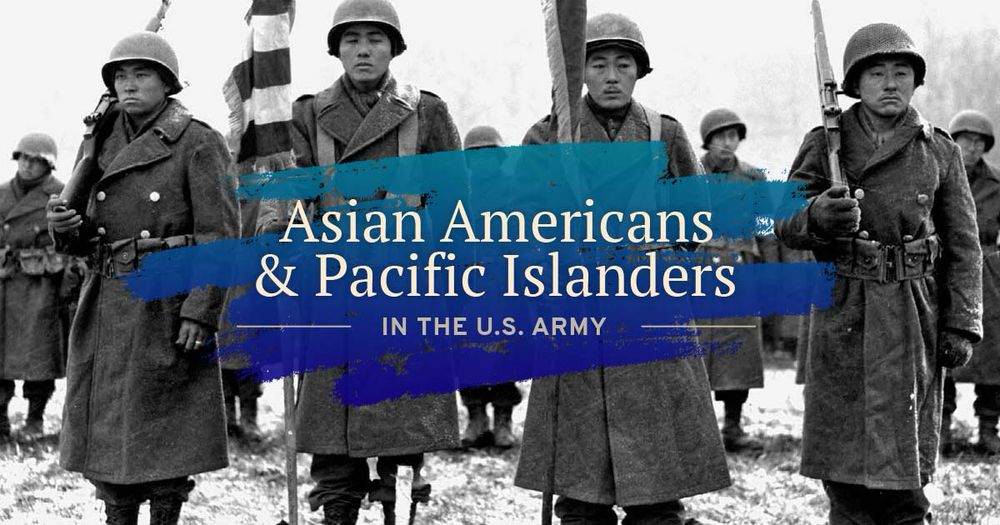
The Army just deleted without explanation its page about the 442nd “GO FOR BROKE” infantry regiment—the Japanese American WW2 unit that is the most decorated in US military history.
Archive is here:
web.archive.org/web/20250304...
Page was here:
www.army.mil/asianpacific...
Disgusting.

My talk to @gallipoliassoc.bsky.social on 25th March will cover the Army's attitude towards war correspondents.
Kitchener wanted none anywhere near the war zone but later appointed Col Ernest Swinton (right) as an "Eye Witness" on the Western Front. Did his writings tell us anything?

"We have a certain number of ships which we can spare for these operations, ships which we could lose without jeopardising our naval superiority. This — coupled with the fact that the enemy are not a brainy folk — makes the #Dardanelles effort possible."
Fred T. Jane, 13th March 1915.

"I was filled with a great contempt for everything and everybody civil, more especially for politicians and war correspondents and war correspondents in khaki. The only men who counted were the men who took the trenches or died in taking them."
Edmund Candler, Mesopotamia, 13th March 1916.

Ellis Ashmead-Bartlett and Henry Nevinson, the two most prominent British war correspondents at #Gallipoli, both wrote books about the campaign. One mentioned the other; the other didn't reciprocate.
Learn more in my talk to @gallipoliassoc.bsky.social on 25th March.

🗺️ Ottoman Map of the Hijaz Railway, 1901 #OldMap #Map #Railway

Dipping into the vaults again this time its the denouement of the Battle of Waterloo. What a battle: so much slaughter in just one small area. What a place to visit. Relive the horror with us one more time. Please share! Thanks chums! open.spotify.com/episode/5osr...

#WW2 Chasselay, France, June 20th, 1940. A Panzer IV is opening fire. The target: a group of POW. They are Tirailleurs Senegalais, African Colonial Infantry in the French Army.
This is the most documented massacre made by the German Army during the Battle of France.
A thread 🧵

Royal Navy light cruiser HMS Naiad photographed in 1940. Image copyright Imperial War Museum: A 447. Description: a side view of a large two-funnelled warship, bows to the left, with smaller craft around it and land visible in the background.

Survivors of the sinking of HMS Naiad on board HMS Jervis in the eastern Mediterranean, March 1943. Imperial War Museum image: A 8388. Description: a group of men on the deck of a ship, dressed in a variety of clothing and some with blankets wrapped around them, looking cheerfully into the camera, some giving thumbs-up gestures.
11 Mar 1942 // Light cruiser HMS Naiad was torpedoed by German submarine U.565 south of Crete and sank with the loss of 82 of her crew. (Imperial War Museum images: HMS Naiad photographed in 1940, A 447; and some of Naiad's survivors on the deck of HMS Jervis, A 8388) #RoyalNavy #WW2 #NavalHistory

I accompanied my father-in-law to Normandy in 2014 for the 70th anniversary D-Day commemorations. This Maple Leaf lapel badge was one of many handed out by some Canadian officials who helped make sure we were able to attend one event at that time. Thank you, #Canada.

My talk to @gallipoliassoc.bsky.social on 25th March will cover depictions of Turks prior to the Great War.
Robert Gibbs' famous painting of the 'Thin Red Line' at Balaklava is a good example. But there are no Turks shown... Exactly.
Alfred Gardiner on Lord Northcliffe:
"Does the temper of the moment demand the immolation of France, then he is the fiercest of Francophobes... Does the mood change and Germany become the object of national suspicion, then who [is] so ready to throw faggots on the flame."

The two most prominent British war correspondents at #Gallipoli were Ellis Ashmead-Bartlett and Henry Nevinson. But only one of their books was cited as a source in the official British history of the campaign.
Find out why in my talk for the @gallipoliassoc.bsky.social on 25th March.

I'm giving a talk, "Gallipoli Through Journalists' Eyes," for the @gallipoliassoc.bsky.social on 25th March.
It'll be prefaced with evidence of some attitudes towards the Turks. This from an English businessman, John Gadsby, who called in at Çanakkale in the 1840s.
