
Hoy #25N, la Comisión de Igualdad de la AEET recuerda en el #BlogAEET a las mujeres que dejaron la vida por la ciencia.
blogaeet.org/2025/11/25/2...
25.11.2025 08:12
👍 24
🔁 21
💬 1
📌 1
Hoy #25N, la Comisión de Igualdad de la AEET recuerda en el #BlogAEET a las mujeres que dejaron la vida por la ciencia.
blogaeet.org/2025/11/25/2...
Naixement d'eruga de Charaxes jasius. 30 minuts comprimits a menys de 2
as a girl with a PhD in natural language processing and machine learning it's actually offensive to me when you say "we don't know how LLMs work so they might be conscious"
I didn't spend 10 years in mines of academia to be told ignorance is morally equal knowledge.
We know exactly how LLMs work.

Thrilled that our paper “The division of food space among mammalian species on biomes” has been selected as October’s Editor’s Choice in @ecography.bsky.social ! 📰✨👇 sl1nk.com/AG7BC
Huge thanks to Rafa Barrientos for the pic (I mean, Rafa is the photographer, not the stunning monkey 🐒)
Thrilled to welcome @paleobicha.bsky.social to the ZNS @unihalle.bsky.social! Excited for our collaboration 🦋🏝

Excited to announce that I’m joining the Halle (Saale) ZNS-@unihalle.bsky.social, where I’ll be working on butterfly ecology and evolution with the brilliant @robertorozzi.bsky.social, thanks to a @fundacionareces.bsky.social fellowship!
Already covered in gifts on my first day 🎁🦋

The division of food space among mammalian species on biomes vist.ly/4746f #Macroecology #Specialista #Diet

Peng et al. - Descending from trees: a Cretaceous winged ice-crawler illuminates the ecological shift and origin of Grylloblattidae
doi.org/10.1098/rspb...
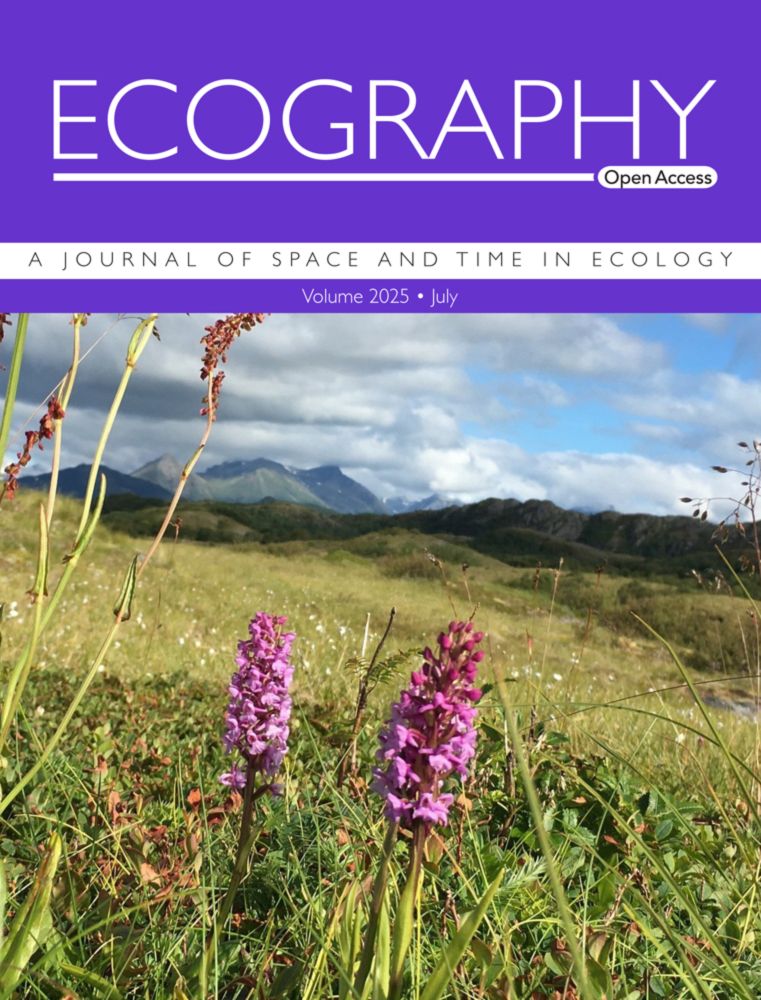
Read the full paper here, open access:
🔗 doi.org/10.1002/ecog...
By Sara Gamboa, Sofía Galván, @marsobral.bsky.social
@hdezfdez.bsky.social & @saravarela.bsky.social
📊 Over 3600 mammal species
🌍 10 global biomes
🍽️ A global buffet.
#Macroecology #FunctionalEcology #Mammals #TrophicEcology
If we care about conserving function, not just species, we need to know:
📌Who’s irreplaceable?
⛓️Who’s holding the structure together?
🧩And what happens when environments shift faster than species can move?
This is what functional ecology must answer.
In the end, our study shows this:
Species don’t just divide the world by where they live.
They divide it by what they eat, and how they access that food over time and space.
Ecological roles aren’t just about traits.
They’re about context.
Extreme generalists, species found in more than 4 biomes, often had narrower, carnivorous or insectivorous diets
It's not broad omnivory. It’s mobile predation.
A different kind of generalism. 🕷️🐭

Our results show that many specialists are vulnerable, but also somewhat replaceable.
Meanwhile, moderate generalists are the real keystones.
They fill the space, link ecosystems, and stabilize food webs.
They’re not flashy, but they hold the fort.
🧩 Functional redundancy matters.
If many species do similar things, ecosystems are buffered. If one is lost, another can take its place.
That redundancy is a kind of ecological insurance.
🛟🛠️
In productive biomes like rainforests, there’s space for everyone. Specialists and generalists alike, all coexisting in dense, redundant networks.
But in harsher biomes, the story changes.
Specialists shrink. Generalists step in.
And trophic diversity becomes fragile.
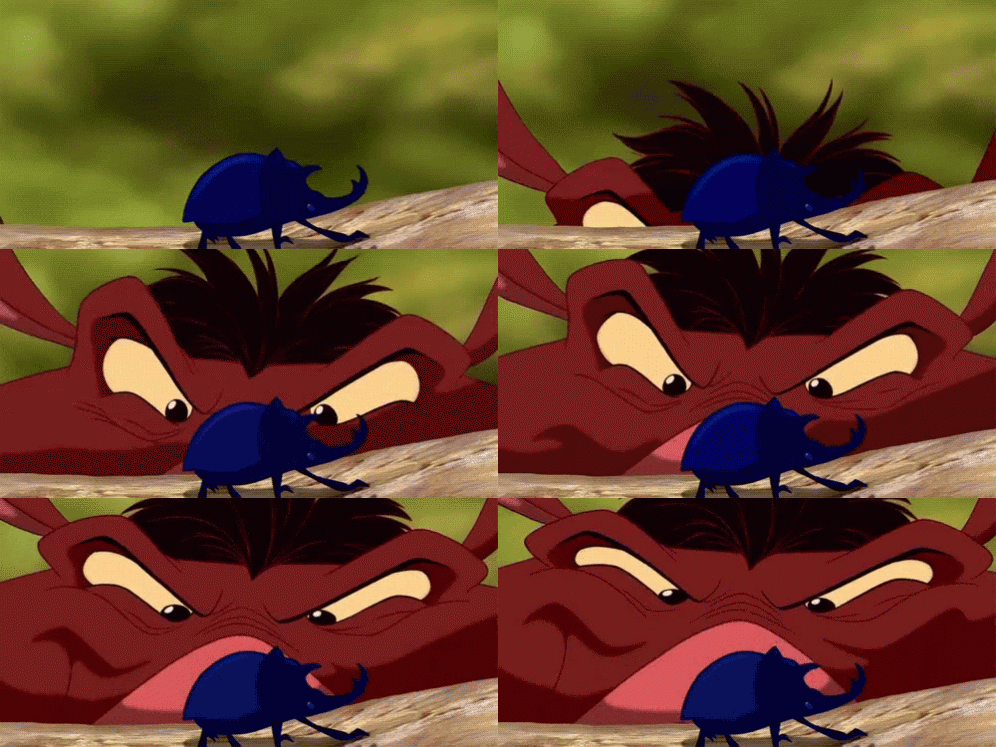
Specialists?
They often occupy dietary roles already covered by generalists.
Yes, a few have truly unique diets—ecological “weirdos” with no substitutes.
But most specialists are nested within generalist space.
Their diets are rarer, but not necessarily novel.
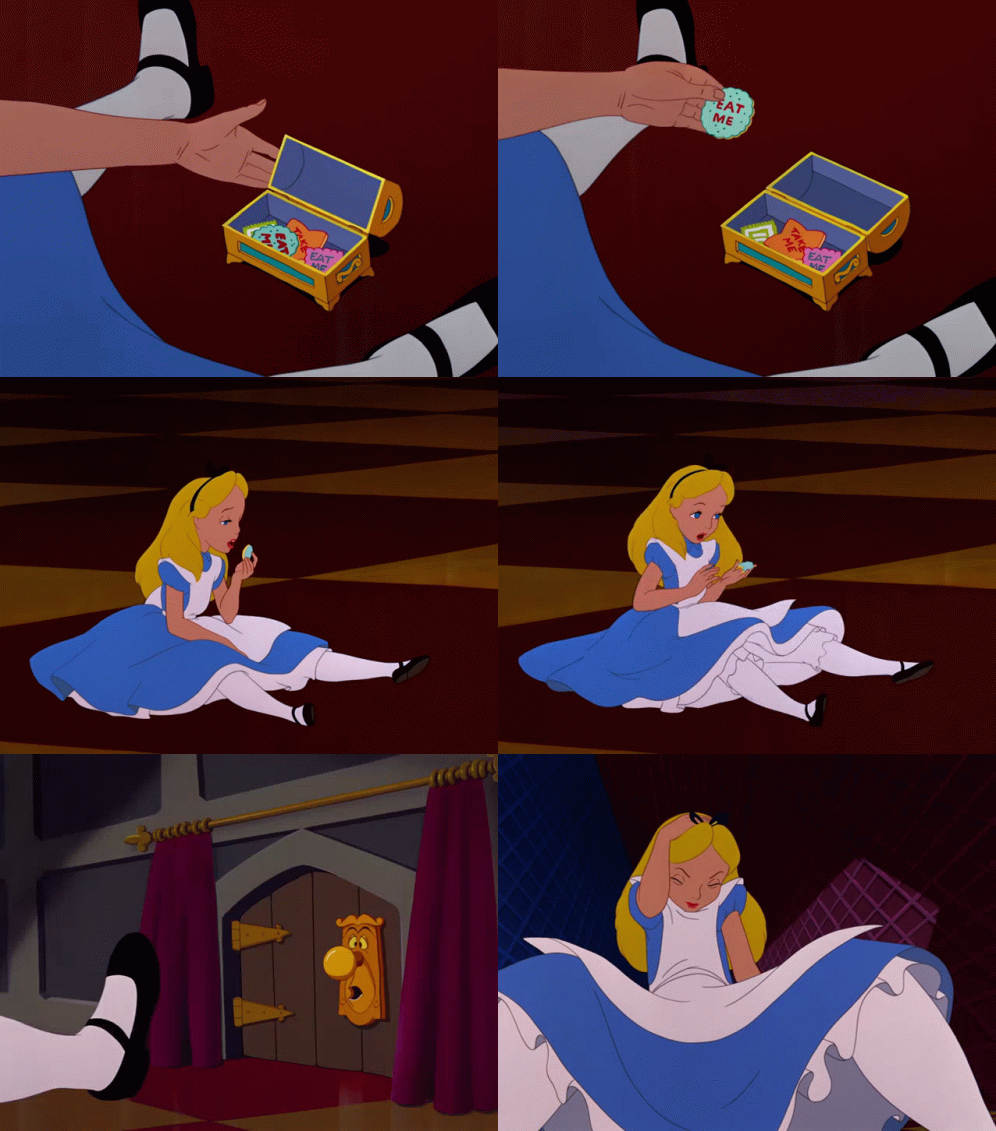
The answer: generalists dominate.
Especially moderate generalists.
They take up most of the trophic space in every biome, even in extreme environments like tundra or taiga. ❄️
They're the flexible backbone of global mammal communities.

We built a multivariate map of diet space—what we call the “trophic niche”—for all these species.
Then we projected it across ten global biomes:
from lush tropical forests to frozen tundra.
How full is the dietary space in each biome?
And who’s filling it?
A biome specialist must find everything it needs in one type of ecosystem.
Rain or drought. Summer or winter☀️🌩️❄️.
If resources run out, there’s nowhere else to go.
Generalists, by contrast, can follow the seasons or shift habitats.
More options, more resilience. 🌍
So we grouped mammals based on biome specialization:
🔴 Specialists – live in only one biome
🟡 Moderate generalists – live in 2–4 biomes
🔵 Extreme generalists – 5 or more
This isn’t about dietary generalism.
A species can have a narrow diet and still thrive in many environments
Because eating fruit in a rainforest🌿🌺 is not the same as eating fruit in a desert 🌵, especially when your environment only offers food part of the year 🥝🍇.
We looked at ~3,600 terrestrial mammals 🐒🦫🦒.
And we didn’t classify them by what they eat.
We first asked: how many biomes does each species live in?
In our new paper, we asked:
Who eats what — and where — across the world’s biomes?
How does being a specialist or a generalist affect that?
And what that means for biodiversity?
🔍🦓🌍
nsojournals.onlinelibrary.wiley.com/doi/10.1002/...
ince then, macroecology has mapped thousands of global patterns:
🌿 species richness
🐋 body size
🌡️ climate tolerance
But one question has remained surprisingly underexplored:
How do mammals divide up the global buffet?

🌍 What structures life on Earth?
In the 1980s, Brown and Maurer laid the foundations of macroecology with a simple, powerful idea:
space, time… and FOOD.
Where food is, how it's distributed, and who gets access to it.
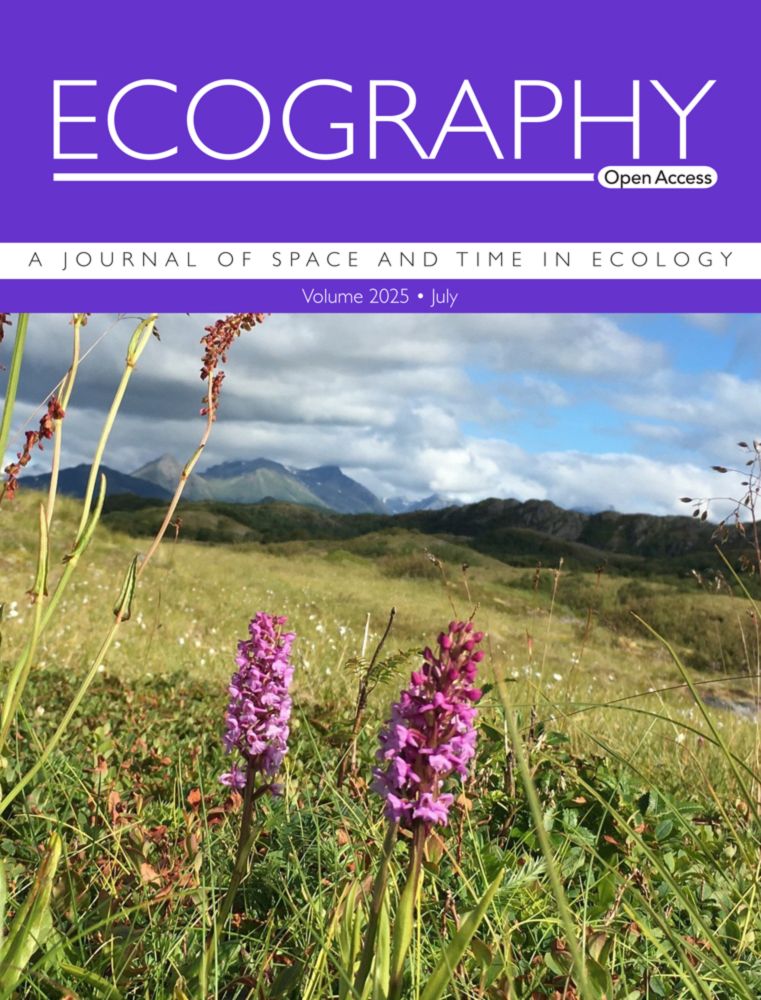
The division of food space among mammalian species on biomes
nsojournals.onlinelibrary.wiley.com/doi/10.1002/...
by @paleobicha.bsky.social et al.

As always, super inspiring talk of @paleobicha.bsky.social at @sibecol-aeet-25.bsky.social
#SIBECOLAEET2025

"Our field kits are better equiped for snake bites than for #menstruation". Very impacting presentation from @paleobicha.bsky.social explaining how we overlook menstruation in field work campaings. #SIBECOLAEET2025 @eco-aeet.bsky.social www.revistaecosistemas.net/index.php/ec...
Congrats to Sofia and all co-authors from the MAPAS Lab! Sara Varela @paleobicha.bsky.social Adriana Oliver and Filippo Rotatori
Congrats to Sofia and all co-authors from the MAPAS Lab! Sara Varela @paleobicha.bsky.social Adriana Oliver and Filippo Rotatori
