
Thank you Alex, very kind of you indeed
16.11.2025 15:17
👍 1
🔁 0
💬 1
📌 0
Thank you Alex, very kind of you indeed
RIP Stan Fischer, a wonderful mentor, thinker, leader. Incorruptible, wise, and influential until the end. Unforgettable to all who had the honour of interacting with him.
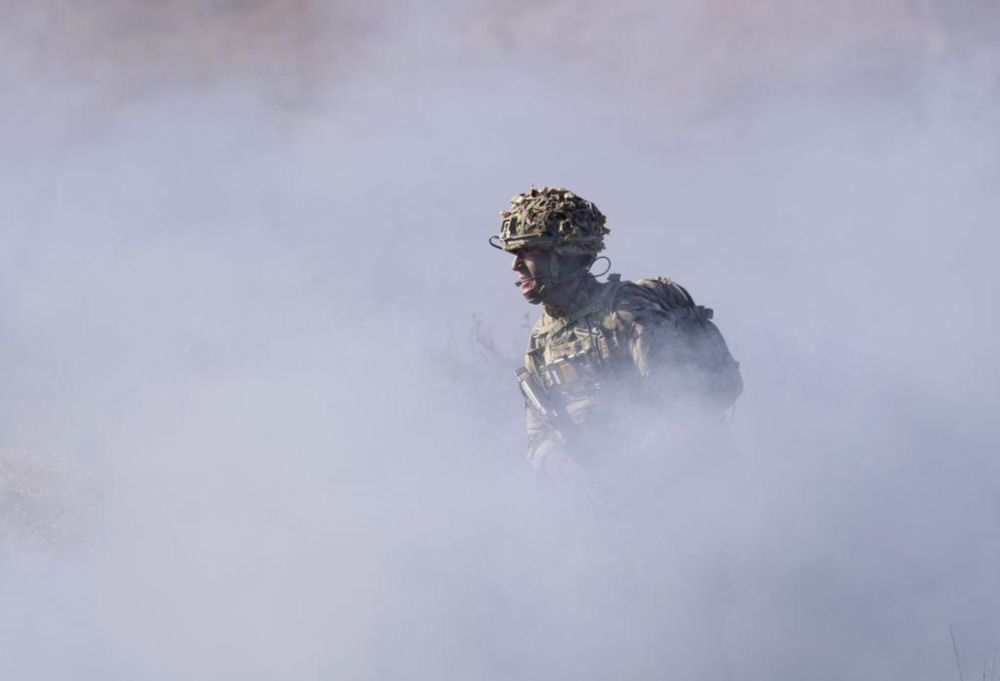
Yesterday, we published a short paper with a Q&A on the EDM, inspired by questions and objections such as yours. You can find it here. Comments very welcome. www.bruegel.org/analysis/pro...
Of course, agreeing to the EDM will require political will. This is one reason we are trying to make it attractive in ways that go beyond just creating a defence industry single market (for example, via its capacity to fund common defence assets without raising national debts).
Sorry I initially missed this exchange, Lucas (and Guntram). Our response is that in order to overcome procurement nationalism -- and create a single market -- we need a legal commitment device. Creating this within the EU requires unanimity. So we need an intergovernmental treaty, the EDM.

In this excellent Comment in Nature, @patrickbolton.bsky.social, O. Edenhofer, A. Kleinnijenhuis, J. Rockström & @jzettelmeyer.bsky.social argue that it's in HICs' interest that they provide 0.3% of GDP in grants, conditional on decarbonization in the Global South.
www.nature.com/articles/d41...
I completely agree that we need to massively ramp our defence spending- and that is indeed the intention of the incoming government. Furthermore, we should use part of that money to fund common European procurements, along with our EU allies and the UK and Norway
(9/9). The inconsistency between the proposal and EU fiscal rules cannot be addressed just by invoking an escape clause. Addressing it will require more fundamental changes, such as increase in the 60% of GDP debt reference value, and/or a less generous parametrisation of the new debt brake.
(8/9). Running 94 or even 114 percent of GDP in debt in perpetuity is nothing that would cause the Bund to lose its safe asset status. But it cannot be reconciled with the EU’s requirement that debt of all members fall to less than 60% of GDP.
(7/9). Now x is expected to be perhaps 2% of GDP (3% in military spending minus 1% financed inside the debt brake). This means that steady state debt would be 2.35/0.025 = 94% of GDP. And if military spending ends up at 3.5% of GDP, steady state debt would land at 114% of GDP
(6/9). In the current debt brake, x = 0. With g approximately 2.5%, this implied that debt was converging to a ridiculously low 14% of GDP.
(5/9). However, for plausible growth rates, the steady state debt level is much higher both than the old steady state level and than current debt. It is approximately given by the formula: d=(x+0.35)/g, where x is military expenditure financed outside the debt brake and g is the nominal growth rate.
(4/9). On (1): the amended rule inherits a key property of the old rule: debt must converge to a fixed ratio. This is because although some spending could now be financed outside the debt brake, all interest payments must be financed inside the debt brake. So, debt cannot explode.
(3/9). Specifically, the note answers two questions. (1) will the amendment lead to debt rising to unsustainably high levels? (2) is the proposal consistent with the EU fiscal rules? The answers are no and no.
(2/9). Many in Germany worry that the amendment is designed in a way that will raise not just infrastructure and defence spending but all sorts of spending. I agree with that concern. But the point of my note is different: I explain the consequences of the amendment for the level of debt in Germany.
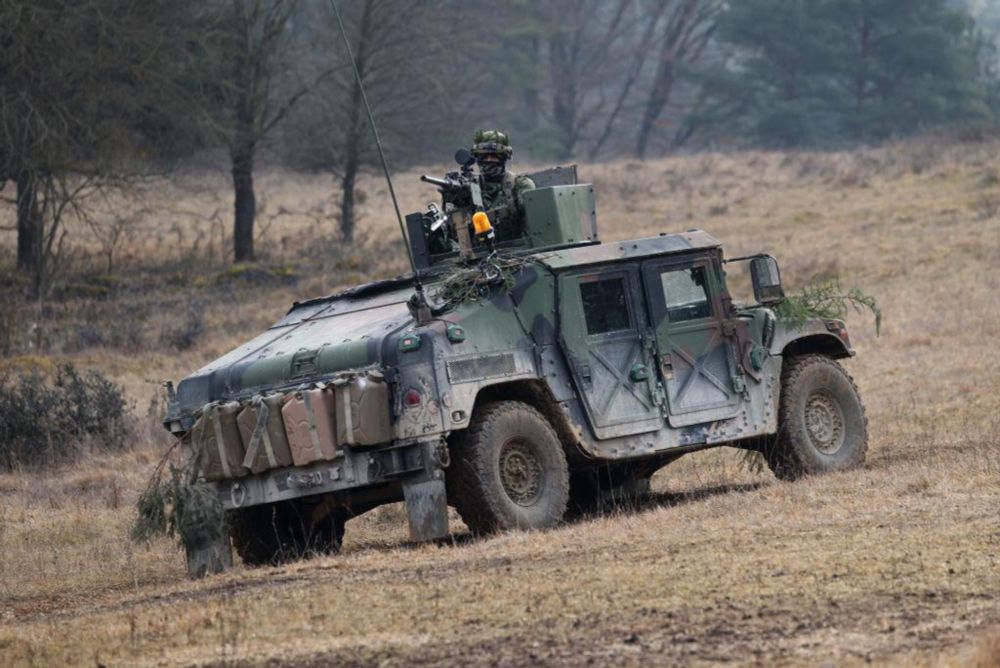
I published a short note on the implications of a proposed constitutional amendment in Germany, which includes an 11% of GDP fund for infrastructure and permission to fund most military spending outside the debt brake’s maximum deficit of 0.35% of GDP (Thread, 1/9): www.bruegel.org/analysis/can...
(11/11). Conclusion: by offering coordination of state aid as a substitute for common funding, the Commission is giving up the fight for an EU-wide investment and industrial policy too easily.
(10/11). And even if it did, this would not solve the problem that state aid for creates for the single market. Even a German industrial policy that operates in line with agreed EU-wide priorities Commission would still only finance German firms.
(9/11). Seeking stronger coordination and governance over member state's industrial policies makes a lot of sense. But it is unclear if the mechanism could exercise sufficient control, or offer sufficient financial incentives, to actually achieve the desired alignment.
(8/11). To deal with the second problem, the Commission proposes a new coordination process, the ‘Competitiveness Coordination Tool, in which the Commission and member states would seek to align national industrial policies in “specific sectors” with the European optimum.
(7/11). In addition, the attempt to implement Draghi without (much) extra money at the EU level will likely run into two problems. First, the EU will likely not close its investment gaps. Second, industrial policy at the member state level may not be good for the EU as a whole.
(6/11). On the downside, the Commission’s proposal inherits some of the unanswered questions that can be asked of the Draghi report – particularly how to avoid the unintended consequences of expansive industrial policy.
(5/11). On the upside, it is good that the Commission is promising to push the aspects of Draghi’s proposals that do not cost much money: regulatory streamlining and single market reforms, including capital markets union.
(4/11). So, where is the public money for Draghi’s investment and industrial policy supposed to come from? The implicit assumption is that it will come from member states — via a loosening of the application of state aid rules (“a flexible and supportive state aid framework”).
(3/11). The Commission is taking Draghi seriously. The Competitiveness Compass is an attempt to achieve “maximum Draghi” subject to two constraints: (1) staying within WTO rules; (2) the assumption that not much extra money will be forthcoming at the EU level. Draghi on a shoestring.
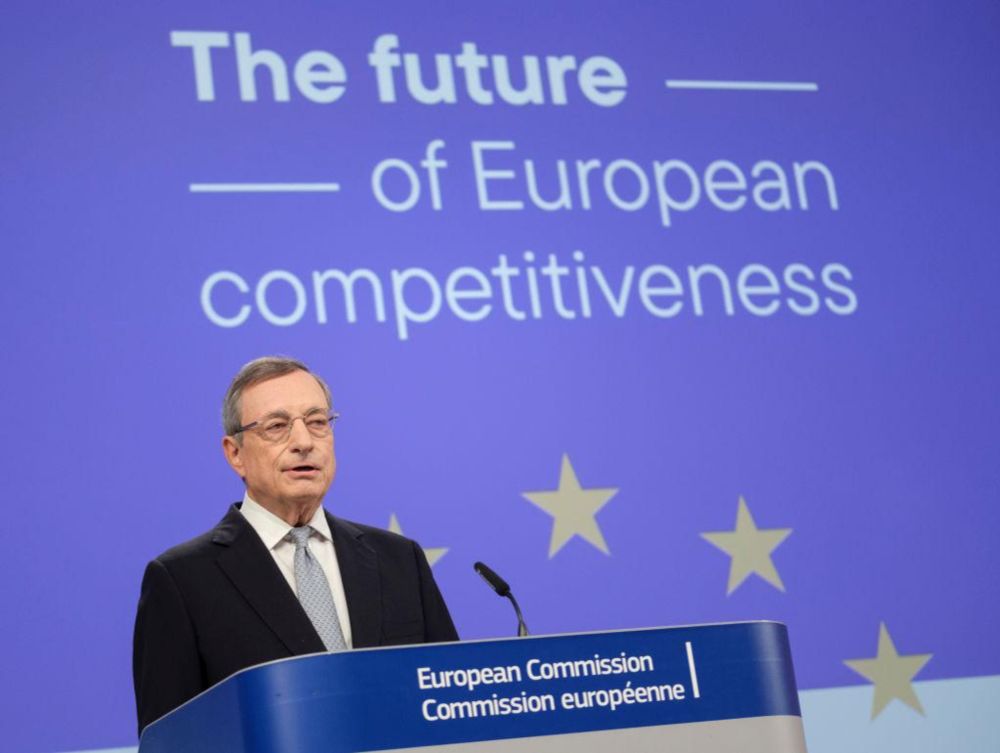
(2/11)… and a shorter analysis focused on the Commissions economic manifesto, the “Competitiveness Compass” (www.bruegel.org/analysis/dra...). The rest of this thread summarises the latter.
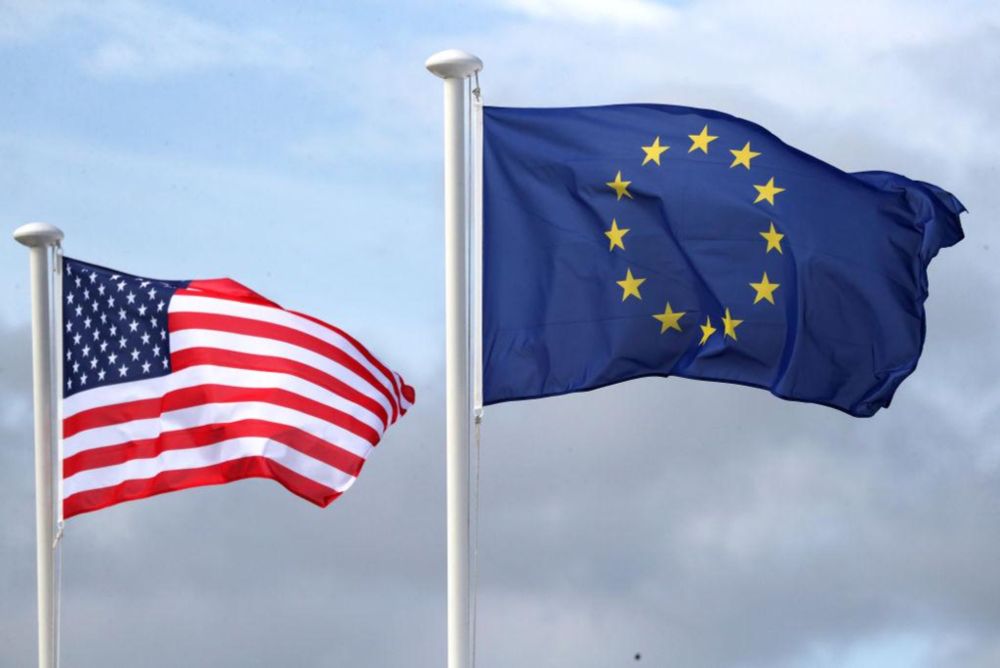
Thread (1/11). In the last few days, Bruegel published has two pieces on the new European Commission’s policy platform: a policy brief explaining the Commission’s ideas on growth and security and asking whether they make sense in the new Trump world ...(www.bruegel.org/policy-brief...)
Can I ask anyone that is following me: are you still posting on X? If not, why not; and if yes, why yes? Thanks!!
As such, paying for decarbonisation of the Global South is in the self interest of even a small coalition of advanced countries and the EU. This COP must deliver an agreement on a meaningful new goal for North-South climate finance.

The intuition, based on our June 2024 Bruegel Policy brief (www.bruegel.org/policy-brief...) is clear: economic losses arising from carbon emissions are especially high in advanced countries.