Resist and Unsubscribe
Are you ready to resist and unsubscribe? www.resistandunsubscribe.com
Reply with a video, or call us at 855-51-PIVOT telling us what you decided to unsubscribe from!
30.01.2026 14:47
👍 103
🔁 54
💬 23
📌 31

Just months after the August earthquake killing thousands in #Afghanistan, the country is faced with a 2nd devastating quake. Our new report on the response to the first event questions how the country could respond to another. Read the full report here -
humanitarianoutcomes.org/Afghanistan_...
05.11.2025 19:41
👍 4
🔁 1
💬 0
📌 0

Data Rescue Projects receives support from the John D. and Catherine T. MacArthur Foundation to support data rescue efforts
FOR IMMEDIATE RELEASE Since launching in February 2025, the Data Rescue Project has grown substantially. At this point, the DRP has enabled the rescue of more than 1,000 datasets from US Federal…
The John D. and Catherine T. MacArthur Foundation has generously awarded us funding to secure our own storage. This critical processing space will be instrumental in ensuring that large datasets can be temporarily stored, curated, and described.
Thank you, MacArthur Foundation, for your support!
04.11.2025 17:20
👍 74
🔁 20
💬 0
📌 8
Detentions/arrests of aid workers have become more common than kidnappings. I’m not convinced that humanitarian security management, crisis response mechanisms, and insurance carriers are prepared for the reality where the perpetrator is the state.
30.10.2025 17:08
👍 2
🔁 0
💬 0
📌 0
The first World Humanitarian Day was marked in 2009, a year when 113 aid workers died in attacks. Last year the toll was 383, and 2025 may break the record again. With states now the majority perpetrators, it’s hard not to see these numbers as a bellwether for the state of IHL and the global order.
19.08.2025 14:55
👍 2
🔁 0
💬 0
📌 0
Air drops will bring more chaos, danger and indignity. Let the aid in overland, to be distributed safely by experienced humanitarian providers. Enforce the laws of war.
26.07.2025 13:52
👍 13
🔁 8
💬 0
📌 1
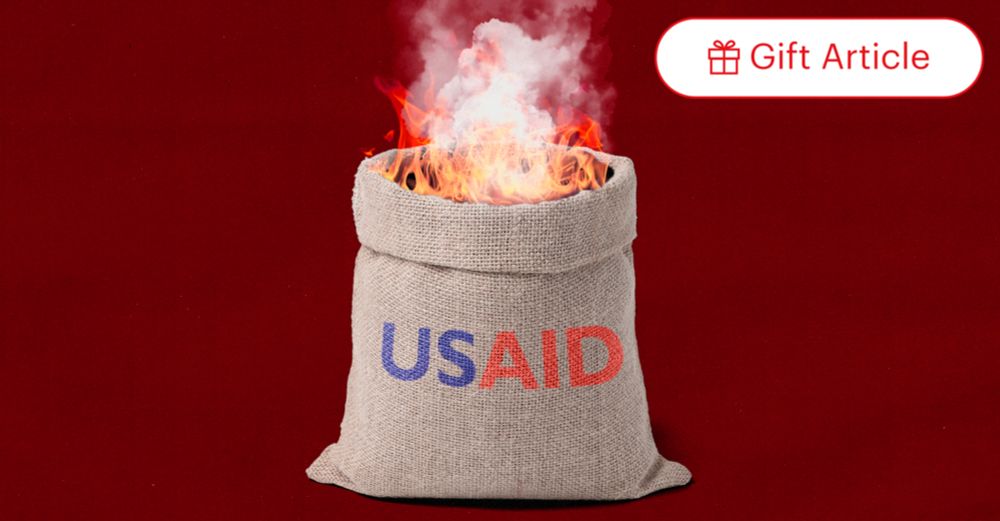
The Trump Administration Is About to Incinerate 500 Tons of Emergency Food
Federal workers warned for months that the high-energy biscuits would go to waste.
"Five months into its unprecedented dismantling of foreign-aid programs, the Trump administration has given the order to incinerate food instead of sending it to people who need it"
@hana-kiros.bsky.social, on spending $130,000 to burn food worth $800,000
www.theatlantic.com/health/archi...
15.07.2025 05:31
👍 4482
🔁 3210
💬 361
📌 623

The data streams that underpin humanitarian response are about to collapse
Famine warning, needs assessments, health data: Humanitarian action will be groping in the dark if vital data sources are allowed to crumble.
We may never know the true impact of the US foreign aid cuts, since losing the funding also means losing the ability to measure. Some colleagues and I wrote about the threat to humanitarian data. @newhumanitarian.bsky.social
10.03.2025 12:53
👍 13
🔁 7
💬 0
📌 0
Whatever humanitarian system emerges from the one that is currently collapsing will need to be built and maintained by nation-state funding, with larger economies footing most of the bill, as is logical and appropriate. 6/6
03.03.2025 17:57
👍 4
🔁 1
💬 1
📌 0
Insurance, whether risk-pooling, catastrophe bonds, or sovereign risk transfer schemes, needs governments to act as premium payers, reinsurers, or backstop funders. The reality is that most humanitarian crises—especially conflicts—are not insurable through standard private-sector risk models. 5/6
03.03.2025 17:57
👍 3
🔁 0
💬 1
📌 0
But what about innovative financing mechanisms? These are promising and important, but at their core, they all reduce to insurance models. The insurance schemes needed at this scale ultimately still rely on state participation:... 4/6
03.03.2025 17:55
👍 0
🔁 0
💬 1
📌 0
Philanthropy is also not the answer. Bill Gates has said that while philanthropies can innovate and take risks, they cannot replace central role of the state in meeting human needs. It is states that have the mandate and the compelling interest in human welfare and a stable global system. 3/6
03.03.2025 17:54
👍 0
🔁 0
💬 1
📌 0
The private sector can't replace the role of states in humanitarian aid. Corporates can and do contribute, their capacity is constrained by market logic: their obligation is to shareholders, so could never prioritize unprofitable interventions, such as aid to conflict zones or protracted crises. 2/6
03.03.2025 17:53
👍 0
🔁 0
💬 2
📌 0
Yes, the humanitarian sector was dependent on the US and is in crisis now owing to this single point of failure. But it is unavoidable that the nation representing >25% of the global economy should provide at least that share of relief aid. Global emergency response requires state contributions. 1/6
03.03.2025 17:52
👍 5
🔁 1
💬 1
📌 1

There are now 204 local and national humanitarian NGOs reporting program reductions. This is 79% of all survey respondents from 36 countries.
03.03.2025 15:43
👍 2
🔁 4
💬 0
📌 0
Other donor governments will not be able to fill the USAID hole, but should coordinate and collectively triage where to allocate additional emergency funding. The strategy must consider security resourcing for the remaining (mainly local) aid actors.
02.03.2025 01:18
👍 2
🔁 0
💬 0
📌 0
This will be happening in many places. Unpaid vendors, desperate communities cutoff from aid, and no budget for security will drive more security incidents-until there are no more aid operations remaining to attack.
02.03.2025 01:08
👍 8
🔁 4
💬 1
📌 0
These reports continue to come in from L/NNGOs. Many of them won't survive. The defunding crisis may ultimately give birth to a more localized humanitarian system, as some optimistically posit, but right now it sure feels like the opposite: local response capacities are the first to be obliterated.
25.02.2025 17:59
👍 2
🔁 0
💬 0
📌 0

USAID Lifesaving Aid Remains Halted Despite Rubio’s Promise
A new directive puts further exemptions on hold. Aid workers also say the U.S. government has made it impossible to pay partners around the world.
Top USAID officials are trying to create a false narrative that life-saving aid has continued despite Trump’s blanket halt to foreign aid. Our @nytimes.com reporting shows the exact opposite. USAID even issued an internal email to stop applications for waivers: www.nytimes.com/2025/02/12/u...
14.02.2025 15:22
👍 1326
🔁 607
💬 31
📌 26
One local NGO survey respondent in Mali reports the compelled "cessation of protection services: 26,207 people including 7,913 adult women, 4,412 adult men + 13,882 children."
14.02.2025 20:20
👍 2
🔁 1
💬 0
📌 0
In addition to the numbers, we are gathering statements from these local NGOs. One from Haiti that supported victims of armed gangs in an IDP camp: "We were forced to stop all ongoing activities with the children. The women and children were displaced to makeshift camps in Port-au-Prince."
12.02.2025 18:04
👍 0
🔁 0
💬 0
📌 0
Protection of civilians in armed conflict
YouTube video by Humanitarian Outcomes
When @abbystoddard.bsky.social briefed the SC in November, the # of aid worker fatalities in 2024 had reached 282. In the current defunding crisis, she expects violent incidents may rise initially and then fall, as many programs stop completely and there are fewer people delivering aid.
10.02.2025 13:55
👍 5
🔁 5
💬 1
📌 0

With crucial datasets now going dark, it is important that the Aid Worker Security Database, and all others that can, #keepcounting
10.02.2025 14:27
👍 1
🔁 1
💬 0
📌 0

Trump Administration Live Updates: Judge Pauses Job Cuts at USAID
It pays to push back in the courts. NGO boards, take note.
07.02.2025 23:14
👍 0
🔁 0
💬 0
📌 0
Important piece by @sara-pantuliano.bsky.social. The lynchpin of the humanitarian system has been removed, and it is collapsing. But if other governments' humanitarian arms can be mobilized, it can be built back better. We must not "wait and see" for too long.
06.02.2025 14:37
👍 5
🔁 3
💬 0
📌 0
Much foreign aid, especially humanitarian relief, has long had Republican support as well. Real pushback should be possible.
04.02.2025 18:40
👍 1
🔁 0
💬 0
📌 0
Senator Brian Schatz is correct -
"If you want to change an agency, introduce a bill and pass a law. You cannot wave away an agency that you don't like or that you disagree with by executive order, or by literally storming into the building and taking over the servers." #USAID
03.02.2025 22:30
👍 538
🔁 195
💬 21
📌 12