Overall, we believe that our study provides key biological insights into in vivo immunotherapy responses and can help redefine strategies for harnessing TCEs in solid tumor treatment.
08.12.2025 15:06
👍 1
🔁 0
💬 0
📌 0

Specifically, TCEs recruit clonally diverse CD8+ TILs into the TME. During TCE monotherapy, these cells are dysfunctionally activated, leading to incomplete tumor control. In contrast, in combo therapy, newly-recruited CD8+ TILs acquire full effector functions and effectively control tumor growth.
08.12.2025 15:06
👍 0
🔁 0
💬 1
📌 0

Using multimodal single-cell genomics (RNA and TCR), we profiled TILs across four treatment arms – TCE and IL2 monotherapy, combination therapy, and controls – and developed a model for effective TCE-mediated anti-tumor responses.
08.12.2025 15:06
👍 1
🔁 0
💬 1
📌 0

However, in vivo, durable tumor growth control was only achieved after combination therapy with TCEs and IL-2. This variability in treatment response in vivo provided us with a controlled system to understand what happens when TCEs do and do not work.
08.12.2025 15:06
👍 0
🔁 0
💬 1
📌 0

We wanted to address both of these problems. First, we made diabody TCEs that target the known melanoma and small cell lung cancer tumor antigens, TRP2 and DLL3. Our TCEs are exquisitely sensitive in vitro, capable of inducing activation in contexts of extremely low target antigen expression.
08.12.2025 15:06
👍 1
🔁 0
💬 1
📌 0
Problem #2: Data on how TCEs *actually* work is limited. Do TCEs reinvigorate pre-existing exhausted TILs? Or do TCEs drive the recruitment of new TILs? Perhaps some combination of both? Answering these questions will help inform both ongoing and future TCE clinical trials.
08.12.2025 15:06
👍 0
🔁 0
💬 1
📌 0
Problem #1: TCEs work well in some contexts (e.g., B cell malignancies) but not so great on solid tumors. One major reason for this is that tumor-specific antigens can be expressed at very low levels, and TCEs have not been optimally engineered to circumvent this issue.
08.12.2025 15:06
👍 0
🔁 0
💬 1
📌 0
Context: Bispecific T cell engagers (TCEs) are engineered antibodies that simultaneously recognize tumors and T cells, leading to TIL stimulation and (ideally) tumor killing. As TCEs continue to gain traction in the drug development space, two key problems must be addressed.
08.12.2025 15:06
👍 0
🔁 0
💬 1
📌 0
Excited to present our newest pre-print, “Bispecific T cell engagers control solid tumors through clonal replacement and IL2-driven effector differentiation of CD8 T cells.”
www.biorxiv.org/content/10.6...
Fantastic collaboration b/n the Satpathy, Sage, and Garcia labs at Stanford
08.12.2025 15:06
👍 3
🔁 2
💬 1
📌 0

🚨Excited for the 2nd MRS Early Career Research Virtual Meeting on Nov 18-19, 2025!
Trainees & Junior Faculty (within 3 years of starting your lab), share your work!
Abstract Deadline: Sept 12, 2025. Submit here: bit.ly/47KLyp2
❗Free registration for MRS Members! #MRS #Research #EarlyCareer
25.08.2025 22:00
👍 13
🔁 9
💬 0
📌 1
🚨🚨 We're hiring! 🚨🚨
The Single-cell Analytics Innovation Lab (SAIL) at @mskcancercenter.bsky.social is looking for a Junior Technician to join our wet lab team!
You'll work with spatial genomics and single-cell technologies, helping us push the boundaries of cutting-edge analysis in cancer research.
23.06.2025 20:27
👍 11
🔁 8
💬 1
📌 0
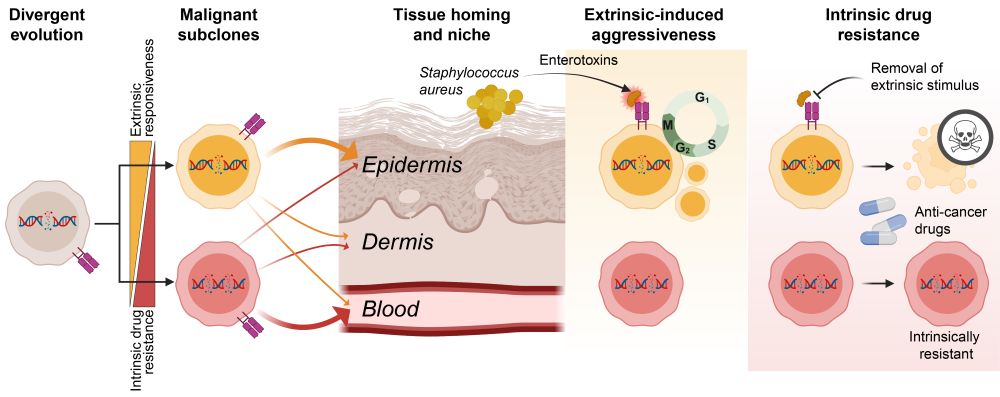
Schematic figure showing divergent evolution of malignant subclones and how they migrate to different tissue compartments (blood vs skin), respond differently to extrinsic stimuli such as Staphylococcus aureus enterotoxins, and how subclones differ in their intrinsic resistance to anti-cancer drugs.
❗How can a cancer exploit its environment and still resist treatment?
✅The answer: co-existing malignant subclones.
Let me walk you through our latest study investigating how divergent evolution drives adaptability, aggressiveness, and drug resistance of T cell cancer. 1/🧵
doi.org/10.1158/2159...
19.06.2025 11:29
👍 22
🔁 9
💬 2
📌 2
Genomics fellows - ever wondered what to do with histopathology (e.g. H&E slides)? 🔬➕🧬🟰🤩 I am super excited to have contributed with @evachrenkova.bsky.social to this amazing effort of @andre-rendeiro.com & @yimin-zheng.bsky.social for multimodal data integration: LazySlide!🧵👇
02.06.2025 09:02
👍 15
🔁 4
💬 0
📌 0
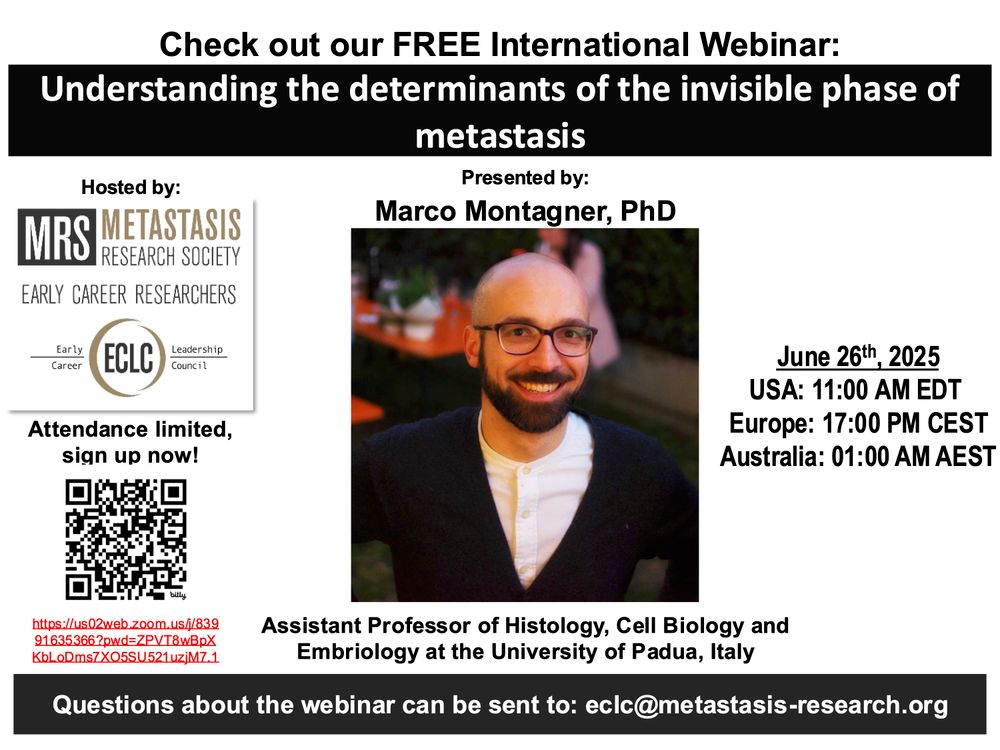
Register for our next ECLC webinar by Marco Montagner, PhD on Understanding the determinants of the invisible phase of metastasis - June 26th, 2025 - USA: 11:00 AM EDT | Europe: 17:00 PM CEST | Australia: 01:00 AM AEST - tinyurl.com/ujer8yw8
03.06.2025 13:17
👍 3
🔁 4
💬 0
📌 0
Synthetic biology could enable new types of programmable therapeutics. Our new preprint introduces synthetic protein circuits that selectively trigger cell death in Ras-mutant cancer cells, with interesting advantages compared to existing approaches.
www.biorxiv.org/content/10.1...
03.06.2025 00:11
👍 64
🔁 17
💬 3
📌 1
Senator Durbin noted that some (I believe Republican Senators) had indicated the US had been doing more than its share of biomedical research and it was time for other countries take a turn.
I felt I had to interrupt to respond...
23.05.2025 20:53
👍 360
🔁 106
💬 20
📌 14
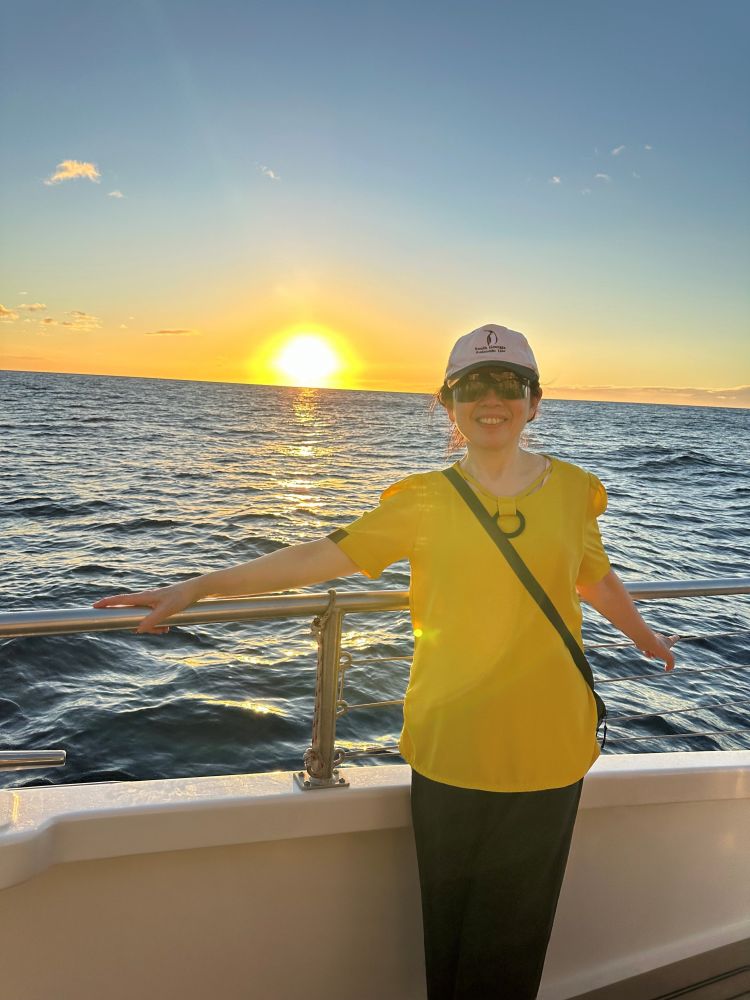
Meet the MRS presidents! Dr. Dihua Yu is the Hubert L. & Olive Stringer Chair of Molecular and Cellular Oncology @mdanderson.bsky.social and served as the Metastasis Research Society’s president from 2018-2020.
We interviewed Dr Yu about her research and involvement with the society 🧵…
20.05.2025 15:40
👍 4
🔁 3
💬 1
📌 0
Congratulations to the brilliant Boire and Pe’er labs plus all authors for this seminal study of the unique tumor immunology of the leptomeninges! ✨
14.05.2025 17:12
👍 6
🔁 1
💬 0
📌 0
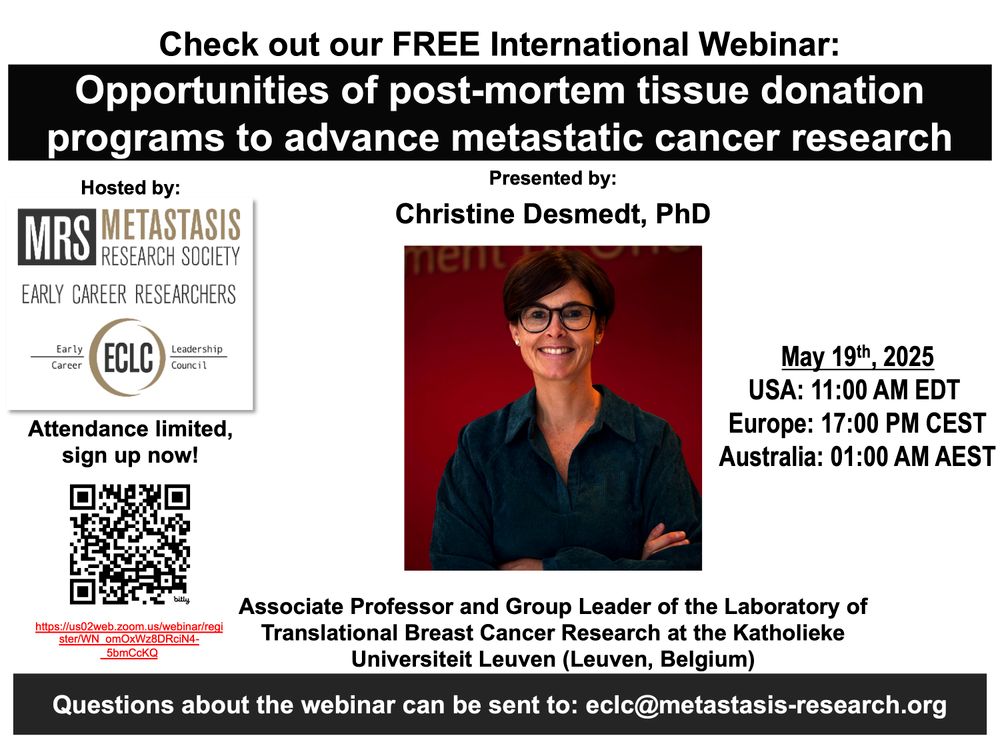
Don't miss the next ECLC webinar by Christine Desmedt, PhD on Opportunities of post-mortem tissue donation programs to advance metastatic cancer research - May 19th, 2025 - USA: 11:00 AM EDT | Europe: 17:00 PM CEST | Australia: 01:00 AM AEST - Register here lnkd.in/gfJKJ_RT...
12.05.2025 13:25
👍 1
🔁 2
💬 0
📌 0
Don't miss the next ECLC webinar by Christine Desmedt, PhD on Opportunities of post-mortem tissue donation programs to advance metastatic cancer research - May 19th, 2025 - USA: 11:00 AM EDT | Europe: 17:00 PM CEST | Australia: 01:00 AM AEST - Register here us02web.zoom.us/webinar/regi...
02.05.2025 18:41
👍 8
🔁 7
💬 0
📌 0

Composite image:
Background photo: greyscale image of cells containing lipid droplets
Top shows Cancer Cell logo and paper title: "Stromal lipid species dictate melanoma metastasis and tropism"
Image shows graphical abstract comparing the young and aged tumour microenvironment, with abundant lipids from young adipocytes changing the metabolism of melanoma cells to lead to increased lung tropism, while the few lipids from aged adipocytes alter metabolism of melanoma cells biasing towards liver tropism.
Bottom: quote from Amaya Viros, "targeting lipid availability in the melanoma tumour microenvironment limits metastatic spread to the brain, lung and liver."
New publication in @cp-cancercell.bsky.social from our Skin Cancer and Ageing group led by Dr Amaya Viros, with first author Shilpa Gurung explains the question of age-related #metastasis in #melanoma
For a full-write up & link to #CancerCell paper here:
www.cruk.manchester.ac.uk/news/institu...
01.05.2025 13:53
👍 7
🔁 4
💬 1
📌 0

Thank you AACR25 for inviting me to give a plenary talk this morning! An absolute honor!
29.04.2025 15:24
👍 8
🔁 2
💬 0
📌 0
Multi-cellular phenotypic dynamics during the progression of breast tumors https://www.biorxiv.org/content/10.1101/2025.04.16.649085v1
29.04.2025 14:38
👍 2
🔁 1
💬 0
📌 0

Flyer for the 2025 Next Generation Faculty Symposium (including QR code in top right corner). This symposium highlights the work of exceptional early-career scientists in the broad field of quantitative biological and biomedical sciences, with a track record of excellence in research, leadership, mentorship, and community engagement. These early career scientists are preparing to launch a faculty search. Applications are due May 30th, 2025.
Hello Community!
Are you a postdoc/grad student preparing to launch a faculty search? Do you have a track record of excellence in research, leadership, mentorship & community engagement? Apply to the 2025 Next Generation Faculty Symposium: www.berkeleystanfordnextgensymposium.com! Pls repost! (1/3)
21.04.2025 19:21
👍 92
🔁 84
💬 2
📌 4
Immune Niche Formation in Engineered Mouse Models Reveals Mechanisms of Tumor Dormancy https://www.biorxiv.org/content/10.1101/2025.04.16.649000v1
18.04.2025 23:47
👍 3
🔁 2
💬 0
📌 0
Catch the @metastasisresearch.bsky.social webinar with Dr. Casanova-Acebes — in ~1hr!!
08.04.2025 12:49
👍 1
🔁 0
💬 0
📌 0
check out Daphne's (@dasuperville.bsky.social) updated DECIPHER-seq package for compatibility with Seurat v5 -- extremely useful for analyzing multi-sample sc omics datasets
07.04.2025 19:49
👍 2
🔁 0
💬 0
📌 0