This is wonderful work, and it is so great that inat have released it with such a permissive license. We have big plans for this data at TNC!
26.02.2025 09:36
👍 1
🔁 0
💬 0
📌 0
This is wonderful work, and it is so great that inat have released it with such a permissive license. We have big plans for this data at TNC!
I agree, but that does not mean we cannot try identify the range of natural communities that would occur in the absence of industrial human influence. Because 'natural' can encompass a range of states does not imply we should do away with the notion in restoration.
This also shows why things like spectral resolution, atmospheric correction and SNR are very important for hyperspectral data. The subtle signal of the phenomena we are looking for can easily be obscured
I was told exactly this by one of the best scientists in the field. The signal we are interested in is often found in small differences that are lost if you do PCA before analyses
I have seen early versions of this. It is way more than your average sci-comm film. It is an audiovisual masterpiece by some of the most talented nature filmmakers in the world
The film is a celebration of local biodiversity, NASA’s role in conservation, and the potential of next-generation remote sensing to change how we measure and monitor ecosystems around the world. If that is not enough to motivate you, apparently, there will be free snacks 🍩
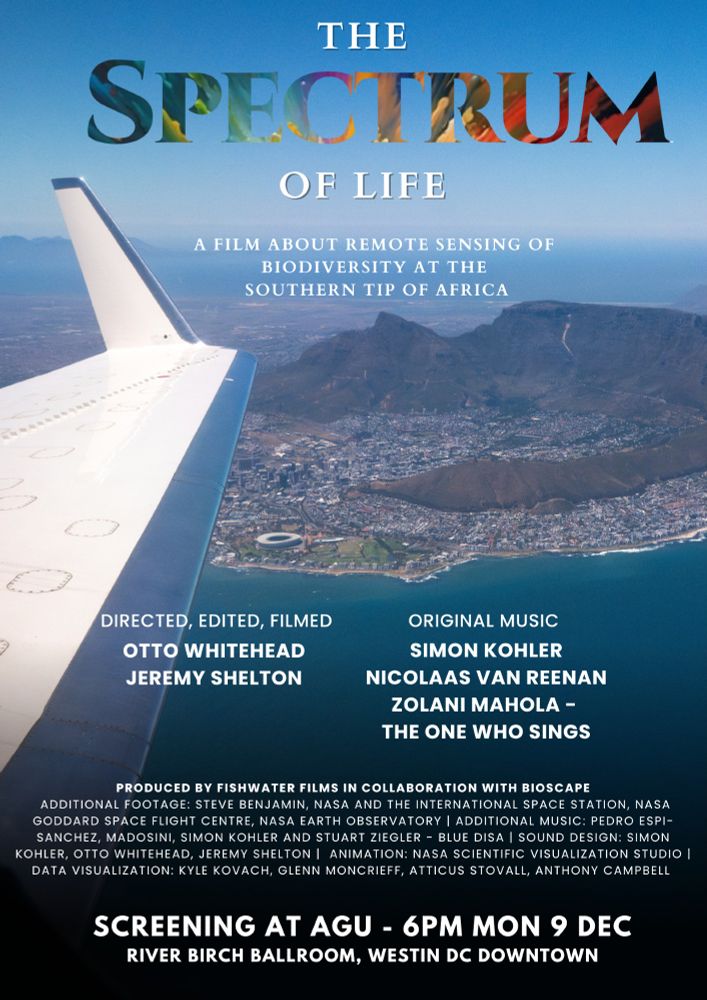
If you are at #AGU24 next week, do yourself a favour and come to the film premiere of 'The Spectrum of Life' - a short documentary about NASA’s first biodiversity airborne campaign in South Africa, BioSCape agu.confex.com/agu/agu24/me... at 6pm on 9 Dec, River Birch Ballroom, The Westin DC Downtown
Cool paper. Congrats!
How do we address this imbalance? If we ignore it, I fear we will face a reckoning in open science
At the same time, companies, funders, and the media are venerating AI as our saviour, pouring money and resources into R&D. AI researchers are paid about 10X what the technicians who actually collect 'training data' are, despite these skills being incredibly rare and valuable.
I think a similar power imbalance between ML/AI researchers and foundational environmental science exists. Those who maintain weather stations for the public good or taxonomists who ID species are chronically underfunded and a dying breed. Without them, there is no AI to solve our problems
The hatred and vitriol directed at AI here seems to come most strongly from journalists, musicians etc - who feel their work is being exploited. It probably doesn't help that these creators are receiving little compensation for their work. What does this signal for AI in environmental science? 🧵
It is a pain that there is not yet a native bookmarking feature in bsky. This is a great intermediate solution. I now have a bookmarks feed in my homepage.
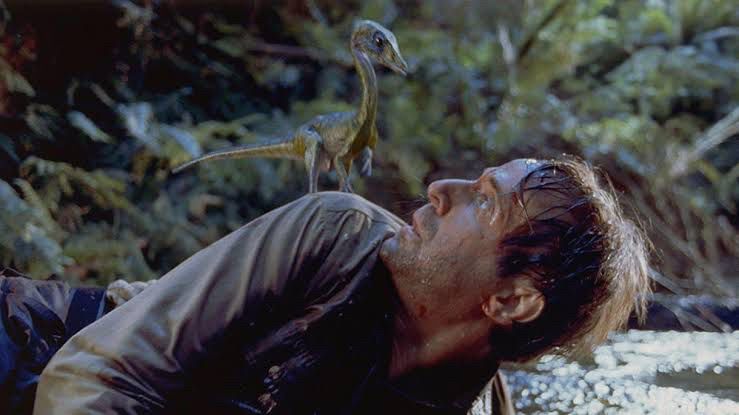
The small cute Dinos are the ones I would be worried about. We have not been very successful at controlling small mammal invasions
📌
I'm looking for Masters students to join my lab in Fall 2025! Work could focus on either field-based studies of plant community ecology and trait-based ecology and/or computational work (on any taxa with data) focusing on questions in community ecology or macroecology.
A favourite story of mine: revealing the spatial legacy of Apartheid using historical aerial photos
gmoncrieff.github.io/posts/wiped-...

Focussing on outcomes is not enough. We need to think about impact
www.sciencedirect.com/science/arti...
really enjoyed reading this. well done!
