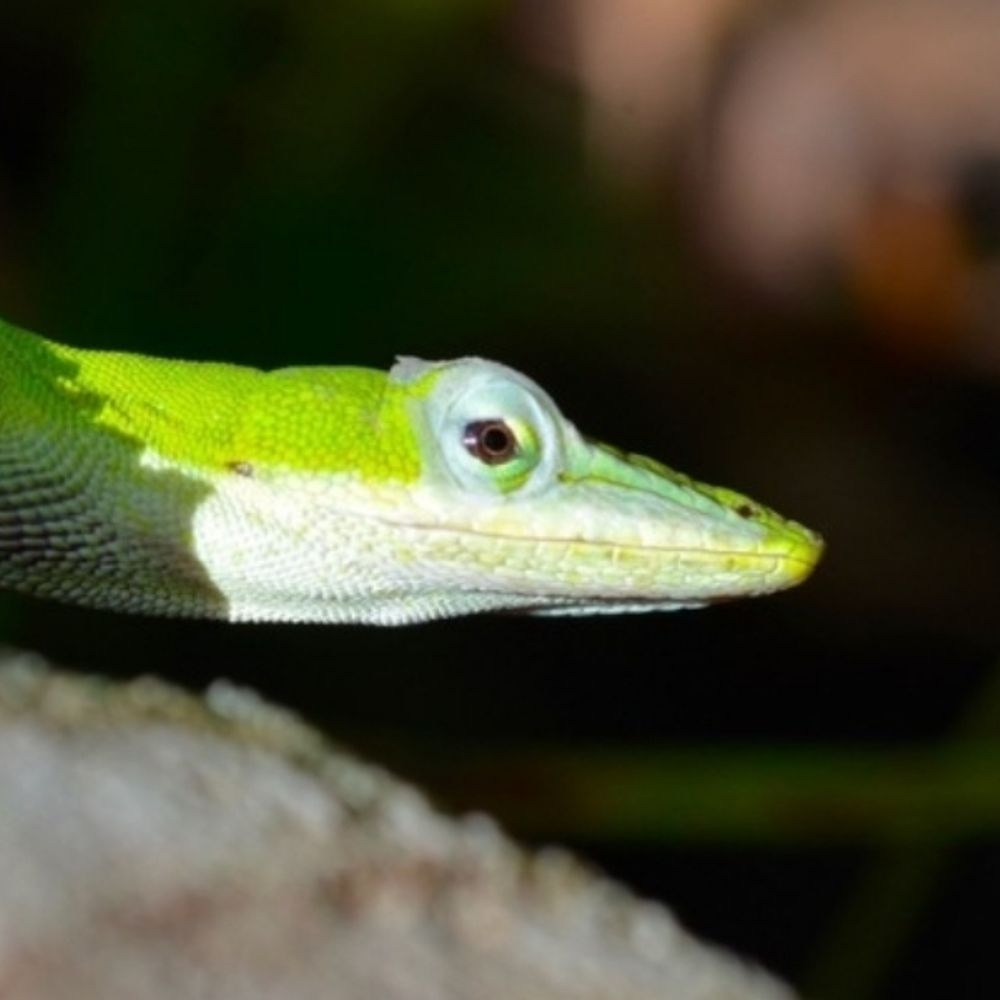
Non-native species can be a hell of a nuisance.
Pines in Chile? Even after removal, the damage is done.
I wrote a short blogpost - with well-deserved swear words - about our new paper in Journal of Vegetation Science 👇
the3dlab.org/2026/01/24/a...
24.01.2026 20:45
👍 6
🔁 1
💬 1
📌 0
Proof that ML is hard, and always, always wrong in one way or another.
Usually, in fact always, in a way you least expect/don’t know about until far too late.
23.12.2025 03:15
👍 8
🔁 1
💬 1
📌 0
This is how scientific discourse should operate. A respectful + insightful comment by Tomas Uxa on the limits of ML from @jlembrechts.bsky.social's high-impact paper, yet still celebrating it. In return, Jonas applauds Tomas for his detective work. Well done, Tomas and Jonas! A model for us all.
24.12.2025 15:31
👍 13
🔁 4
💬 0
📌 0

Don’t mess with physics
Gather ‘round, my friends, because this one is important! A few years ago, we released our Global maps of soil temperature – a project that brought climate data much closer to the conditions …
Did we rewrite the laws of physics - or did our ML model predict things that are physically impossible?
Tomas Uxa just published a Commentary on our 'Global maps of soil temp', arguing the latter
I break down the what, the how, and the what next here 👇
the3dlab.org/2025/12/22/d...
22.12.2025 11:29
👍 15
🔁 5
💬 1
📌 3
Thanks @jlembrechts.bsky.social for this blog post about our new Oikos paper! Love your blog. :-)
12.11.2025 10:56
👍 6
🔁 3
💬 0
📌 0
That would be quite impressive for sure :)!
Luckily it's just the Norwegian institute of that same name!
12.11.2025 08:18
👍 0
🔁 0
💬 0
📌 0

**Help!**
Are you working with environmental or biodiversity data and willing to help us out?
We have a questionnaire for you -->
the3dlab.org/2025/11/11/s...
11.11.2025 20:46
👍 5
🔁 3
💬 1
📌 0

How to not be swamped by your microclimate data
Microclimate data are finally finding their way more routineously into ecological models – and rightly so. Hooray for that! The growing availability of in-situ measurements is helping us brid…
How to not be swamped by your microclimate data?
The rise of microclimate data may have opened Pandora’s box. Gone are the days of simple bioclimatic variables — now heads spin trying to summarize these timeseries.
A much-needed paper by @krystofchytry.bsky.social:
🔗 the3dlab.org/2025/11/11/h...
11.11.2025 09:19
👍 17
🔁 7
💬 0
📌 2

A tale of homogenisation
I’ve always been intrigued by ecological scaling – it’s literally in my title: Assistant Professor in Ecological Scaling. One of the main reasons we care so much about scaling is that ecologi…
Little brain-teaser:
Would you expect non-native plant species to make mountain floras more diverse (more heterogeneous) or less so (more homogenised)?
Find the answer in my latest blog, where I dive into a new global paper from the Mountain Invasion Research Network:
the3dlab.org/2025/10/22/a...
24.10.2025 07:50
👍 6
🔁 0
💬 0
📌 0

A tale of homogenisation
I’ve always been intrigued by ecological scaling – it’s literally in my title: Assistant Professor in Ecological Scaling. One of the main reasons we care so much about scaling is that ecologi…
New paper from the MIREN network!
We tested how homogenisation (ecosystems becoming more alike through invasions) changes with scale.
Global = clear pattern
Local = not so simple
Read more: the3dlab.org/2025/10/22/a...
Paper, led by @mbuhaly.bsky.social: onlinelibrary.wiley.com/doi/10.1111/...
22.10.2025 19:33
👍 18
🔁 7
💬 2
📌 1
It definitely does, although we looked at plants in our study, so wouldn't dare to generalize that broadly :)
03.10.2025 11:13
👍 0
🔁 0
💬 0
📌 0

Mapping the past to predict the future
Long-term followers of this blog know I’ve always been fascinated by species distribution changes. We’ve tracked non-native species moving into mountains and cities, studied how mountain plants tra…
So here’s a question for you: would species that have historically experienced strong climate fluctuations not be better equipped to handle contemporary climate change than those from stable climates?
Our new paper, led by Yuheng Chen, suggests they are!
🔗 the3dlab.org/2025/09/30/m...
30.09.2025 11:34
👍 6
🔁 3
💬 1
📌 0

How to set up your own microclimate network
Back in 2021, we had an important thought: maybe we should start treating microclimate the same way we treat macroclimate. Weather and climate are monitored by national governments through organize…
New for all microclimate enthusiasts!
A step-by-step workflow to build your own sensor network - with awesome R code for site selection + tips on engagement, fieldwork & outreach.
Led with @thenaturedave.bsky.social and @rebeccasenior.bsky.social
🔗 the3dlab.org/2025/08/16/h...
16.08.2025 11:23
👍 26
🔁 12
💬 2
📌 0

Monocultures
Our EcoFracNet biodiversity monitoring project is gathering momentum. Over the past months, we’ve been roaming the Netherlands, clipboards in hand, from endless heathlands to city parks, to record …
Seen loads of monocultures on our #EcoFracNet trips across the Netherlands - but not all are the same. One even hosted a rare, shiny green surprise! 🐸💚
Where in our flat little country do you think the highest plant diversity hides? Suggestions welcome!
👉 the3dlab.org/2025/08/11/monocultures/
11.08.2025 20:00
👍 1
🔁 0
💬 0
📌 0

Soil microbes care little about your climate gradients
We had a hunch: the biogeography of soil microbial communities was going to be messy. Even less than plants or animals, microbes aren’t paying attention to the broad-brush macroclimatic gradients t…
We suspected it: soil microbes don’t care much about our neat climate gradients. 🌱🦠
Across 7 Chinese mountains, their biogeography is messy - but not without patterns.
I unpack it here 👉 the3dlab.org/2025/08/05/s...
Paper by Kunwei Wang et al. in GEB 👉 authorservices.wiley.com/api/pdf/full...
05.08.2025 05:30
👍 4
🔁 2
💬 0
📌 0
“Most biodiversity studies still rely on coarse, long-term averages or climate station data far away from where organisms actually live. But extreme events are short-lived and highly local – meaning we need fine-scale data in both space and time to catch them”
20.07.2025 05:41
👍 8
🔁 3
💬 0
📌 0

Extremes
I’ve just returned from a field visit to northern Sweden – above the Arctic Circle. It was close to thirty degrees Celsius this week. We nearly got burned off the mountain. This kind of heat …
Climate change hits fast and erratic - through extremes, not slow trends. In our new TREE paper (led by @lysoifer.bsky.social), we discuss what's needed for us to deal with the resulting unpredictable range shifts.
Summary: the3dlab.org/2025/07/20/e...
Paper: sciencedirect.com/science/arti...
20.07.2025 04:51
👍 16
🔁 7
💬 0
📌 1

A forest, a heatland/raised bog, a farm, two school yards and the university campus, our own data collecting for #EcoFracNet has been very successful so far!
Now looking forward to the data from all over the world to come in - everyone still welcome to join!
the3dlab.org/2025/02/10/m...
12.07.2025 11:15
👍 4
🔁 0
💬 0
📌 0

MEB mailing list sign-up
SERVICE MESSAGE: The MEB-network (www.meb-network.com) is cleaning out its mailing list! If you did not receive todays' email but would want to receive cool microclimate updates, please sign up here!
docs.google.com/forms/d/e/1F...
11.07.2025 08:40
👍 1
🔁 1
💬 0
📌 0

Join EcoFracNet – we’ve got sensors!
Whether you’re already knee-deep in site planning for EcoFracNet or MicroFracnet, or just hearing about it for the first time, we’ve got some exciting news to share—and maybe even a little in…
Thinking of joining EcoFracNet or MicroFracNet? Now’s a great time - we can finally offer you free second-hand TOMST TMS4 sensors to support your fieldwork!
🛰️ Limited sensors available, so act fast.
📍 Details + how to join:
the3dlab.org/2025/07/04/j...
@willpearse.bsky.social
04.07.2025 20:20
👍 2
🔁 2
💬 0
📌 1
Mountain Invasion Research Network | Miren
The aim of MIREN is to understand the effects of global change on species’ distributions and biodiversity in mountainous areas. We have expanded our initial focus on non-native plant invasions to cons...
Since my PhD in 2013, we’ve worked closely together on MIREN (mountaininvasions.org), MEB (meb-network.com) & GUBIC (cubes-labs.com/gubic).
The Europe–Chile comparison has been instrumental in understanding plant invasions, biodiversity change & the roles of disturbance and microclimate.
30.06.2025 09:01
👍 3
🔁 3
💬 0
📌 0
The Belgian king - and our @uantwerpen.be rector - visited Chile!
As the universities' longest collaboration with Chile, we (and especially @anibalpauchard.bsky.social got to highlight our long-standing collaboration with @iebchile.bsky.social on (micro)climate, invasive species, and biodiversity!
30.06.2025 08:58
👍 2
🔁 1
💬 1
📌 0

Boots in the bog
Far in the north of the Netherlands, on the border of Friesland and Drenthe, lies an endless sea of moor-grass, heather, and rushes – spread out across one of the last active raised bogs in t…
Bog appreciation post!
We have started an #EcoFracNet site in the Fochteloerveen, one of the Netherlands' last remaining active raised bogs and a landscape that truly absorbs you.
Throwback photo shoot from end of April, when summer was still far away :
the3dlab.org/2025/06/28/b...
28.06.2025 04:42
👍 3
🔁 0
💬 0
📌 0
Are you an ecologist interested in spatial scaling? Of course you are, we all are! So join this new fractal network! I can say, with absolutely no bias or impartiality at all, that it's amazing!
21.06.2025 08:59
👍 4
🔁 2
💬 1
📌 0