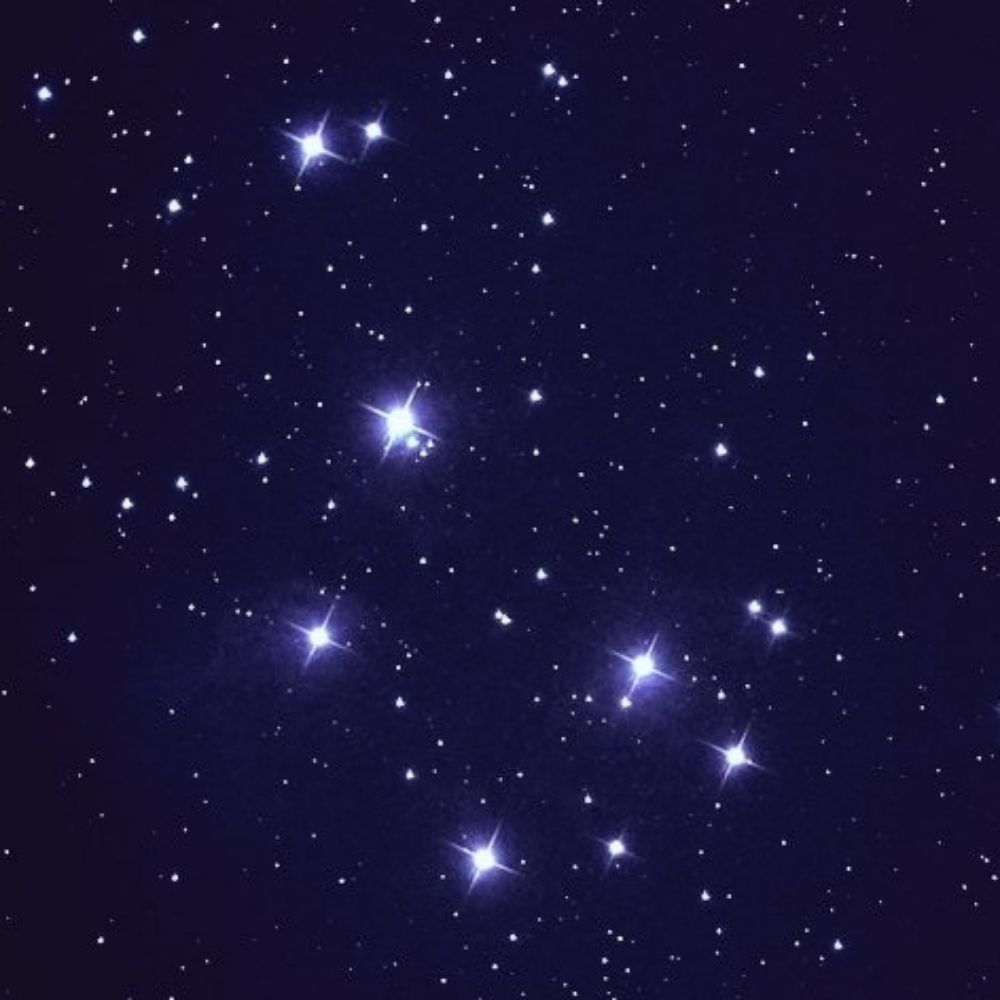
Orion isn’t just a few stars in a row, it’s a whole landscape in space. This 212-hour exposure reveals glowing nebulae, arcing filaments like Barnard’s Loop, and stars like Betelgeuse and Rigel. The belt? Still there, if you can find it.
Image credit: Stanislav Volskiy
🔭 #Astronomy #Space #NASA
08.04.2025 12:04
👍 72
🔁 12
💬 1
📌 0

Perseverance taking a selfie with Ingenuity. Using its WATSON camera. The image, stitched from 62 photos, shows the helicopter about 13 feet away. Perseverance’s mission includes astrobiology and preparing for human exploration.
Credit: #NASA, #JPLCaltech, MSSS
🔭 #Space #Mars #Astronomy
29.03.2025 10:13
👍 25
🔁 2
💬 0
📌 0
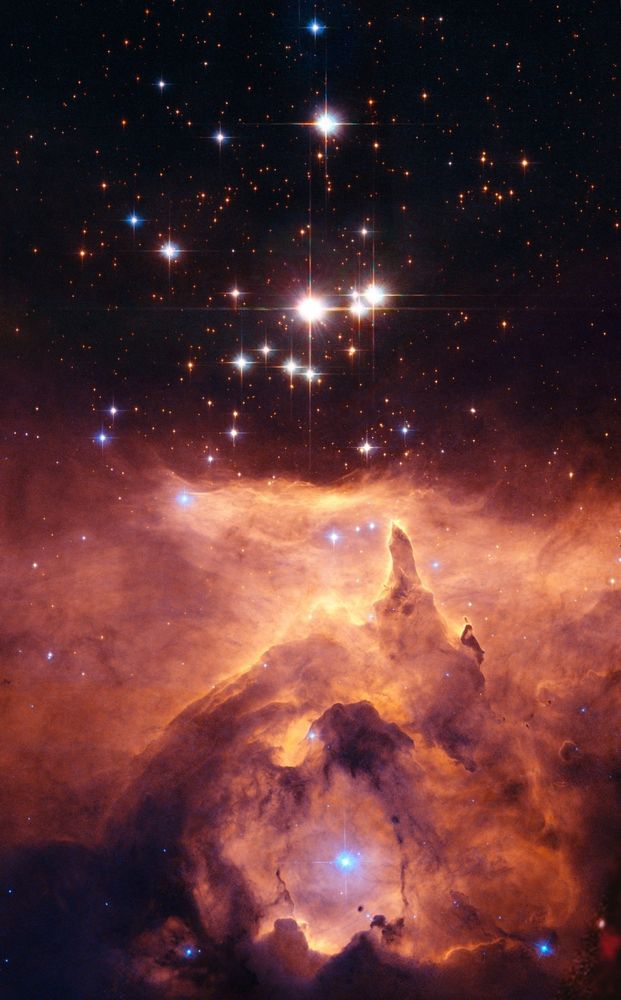
Cathedral to stars. Pismis 24-1 was thought to exceed 200 solar masses, but Hubble revealed it's three stars. Even so, each nears 100 solar masses, still among the heaviest known. Below, new stars form in NGC 6357's glowing cocoon.
Credit: #NASA, #ESA, Jesús Maíz Apellániz
🔭 #Astronomy #Space
28.03.2025 13:40
👍 123
🔁 14
💬 1
📌 1

The Pacman Nebula isn't devouring stars, it’s making them. In NGC 281, young, massive stars carve out dusty columns while their radiation sculpts Bok globules. If they last, these dark knots could birth new stars.
Image credit: Juan Montilla
🔭 #Astronomy #Space
27.03.2025 14:16
👍 40
🔁 4
💬 3
📌 0
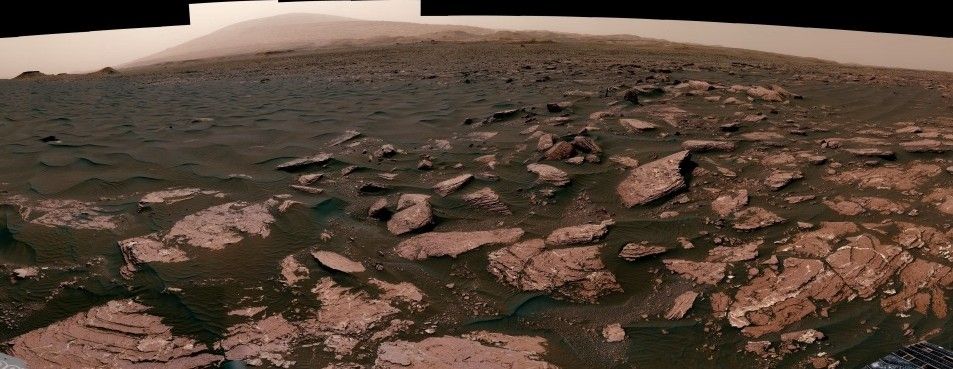
This was once a beach on ancient Mars. Curiosity captured this panorama at Ogunquit Beach, Gale Crater. Evidence suggests the area was once underwater or at a lake’s edge. The light bedrock likely formed from settled sediment.
Credit: #NASA, JPL-Caltech, MSSS, #CuriosityRover
🔭 🧪 #Space #Astronomy
25.03.2025 12:27
👍 14
🔁 4
💬 1
📌 0

M100, a grand design spiral galaxy in Coma Berenices, shines 56 million light-years away. Home to 100 billion stars, it's a key Virgo Cluster member. Variable stars here helped us measure the Universe’s size and age.
Image Credit: Drew Evans
🔭 #Space #Astronomy #NASA
24.03.2025 11:24
👍 31
🔁 3
💬 2
📌 0
Saturn's rings are exactly aligned with Earth today, making them "vanish" because they are so thin.
Unfortunately the planet is currently hidden in the glare of the Sun, but Alan Friedman compiled a great image sequence of a similar vanishing in 2009. 🧪🔭
avertedimagination.com/img_pages/6_...
23.03.2025 19:19
👍 263
🔁 58
💬 9
📌 3

CG4, a ruptured cometary globule in Puppis, looks like it’s reaching for a distant galaxy - but it’s just a visual coincidence. These dusty clouds often form stars, though why this one burst open remains unknown.
Credit: CTIO, NOIRLab, DOE, NSF, AURA
🔭 #Astronomy #Space #NASA
23.03.2025 13:35
👍 46
🔁 9
💬 0
📌 0

The Leo Trio - NGC 3628, M66, and M65 - rises in early evening skies around the March equinox. Though all spirals, they each look different due to orientation. This stunning 1° view spans 500,000+ light-years, captured from Qatar.
Image credit: Rabeea Alkuwari
🔭 #Astronomy #Space #NASA
22.03.2025 10:27
👍 36
🔁 6
💬 6
📌 0
Comet C/2024 G3 (ATLAS) spotted in full glory by #SolarOrbiter.
The #comet was observed with the SoloHI instrument from the U.S. Naval Research Laboratory.
The encounter happened on 14-25 January, while Solar Orbiter was heading toward #Venus and the comet coincidentally swung by the #Sun.
🔭 🧪
21.03.2025 14:00
👍 232
🔁 79
💬 8
📌 7

Just in from Hubble yesterday. A spiral galaxy, NGC 4900, shining in Virgo alongside a bright foreground star. The galaxy is 45 million lya - while the star is only 7,109. The data used here spans over 20 years.
Credit: #ESA / #Hubble & #NASA, S. J. Smartt, C. Kilpatrick
🔭 #Astronomy #Space
21.03.2025 11:47
👍 39
🔁 5
💬 0
📌 0

On March 14, during a lunar eclipse seen from Earth, the Blue Ghost lander on the Moon caught a solar eclipse instead. It recorded a stunning "diamond ring" as the Sun peeked out from behind Earth’s silhouette over Mare Crisium.
Image credit: #FireflyAerospace
🔭 #NASA #Astronomy #Space
20.03.2025 12:52
👍 32
🔁 5
💬 0
📌 0

Thor’s Helmet (NGC 2359) is a 30 light-year-wide bubble sculpted by a powerful Wolf-Rayet star near its center. This pre-supernova giant blasts stellar winds through the nebula, which lies 15,000 light-years away in Canis Major.
Image credit: Brian Hopkins
🔭 #NASA #Astronomy #Space
19.03.2025 14:58
👍 146
🔁 14
💬 4
📌 2

The Dolphin Head Nebula (Sh2-308) is a faint bubble of ionized gas around a dying Wolf-Rayet star, 5,200 light-years away in Canis Major. This deep image was captured by pointing a camera at the sky for 23 hours over several nights.
Credit: IG @EkantV (link below)
🔭 #Space #Astronomy
18.03.2025 11:55
👍 134
🔁 15
💬 9
📌 2

This glowing green nebula, RCW 120, looks like the cosmos is celebrating St. Patrick’s Day. Carved by massive O-type stars, these infrared bubbles are common across the Milky Way, shining bright in regions of hot gas and dust.
Credit: #NASA, JPL-Caltech
🔭 #Astronomy #StPatricksDay #Space #Celtic
17.03.2025 12:38
👍 60
🔁 13
💬 0
📌 0
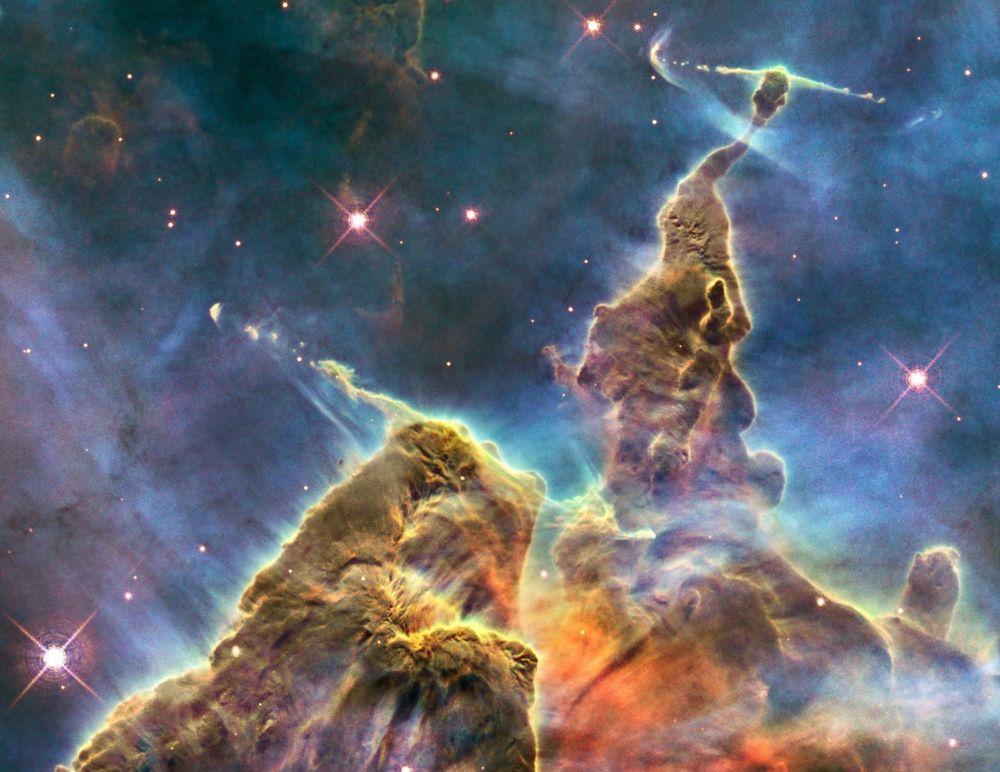
Mystic Mountain in the Carina Nebula. Pillars of gas and dust shaped by radiation and winds from nearby young stars. Located about 7,500 light years away, captured by Hubble in visible light.
Credit: #NASA, #ESA, STScl, M. Livio
🔭 #Space #Astronomy
16.03.2025 12:56
👍 39
🔁 5
💬 0
📌 0

Light took 3 different paths, so we are looking at one supernova at three different points in time.
Galaxy cluster G165.
Imagine if it were reverse, being able to look at earth at three different points in time. Mind continues to be blown.
Credit: #NASA, #ESA, CSA, STScI
🔭 #Space #Astronomy
15.03.2025 18:04
👍 33
🔁 7
💬 0
📌 0

244 years ago, Uranus was discovered. The first planet found with the use of a telescope. Discovered by William Herschel however the name was suggested by Johann Bode.
So you have Johann to thank for all the inuendoes.
Credit: #NASA, JPL-Caltech
🔭 #Space #Astronomy #Uranus
14.03.2025 12:58
👍 32
🔁 5
💬 0
📌 1
Just in! 📸 The first images from yesterday’s #HeraMission flyby of Mars and its moon Deimos. 👇 www.esa.int/Space_Safety...
13.03.2025 12:24
👍 951
🔁 212
💬 15
📌 23
Looking forward to seeing it. Best of luck! And speedy recovery.
13.03.2025 13:08
👍 2
🔁 0
💬 1
📌 0
I haven't seen the moon in 3 months more or less nevermind this magnificent sight!
Winter isn't cold here, but the clouds really do dominate the sky.
13.03.2025 12:36
👍 1
🔁 0
💬 0
📌 0

The explosion is long over, but its effects remain. In Vela, a supernova that occurred 11,000 years ago still sends shockwaves through space, visible in glowing filaments. At the center, a pulsar spins over 10 times a second.
Credit: CTIO, NOIRLab, DOE, NSF, AURA
🔭 #Astronomy #Space #NASA
13.03.2025 12:34
👍 39
🔁 8
💬 0
📌 0
#Mars spotted by our #HeraMission, as the mission draws closer for a flyby of the planet later today.
🔭
12.03.2025 09:44
👍 57
🔁 6
💬 0
📌 0

One of the sky’s most iconic sights, the Horsehead Nebula in Orion. A dusty shape in a glowing sea of hydrogen, 1,500 light-years away. Young stars forming, gas streams dancing. Snapped from Chilescope. Pure cosmic class.
Image credit: Alex Lin (Chilescope)
🔭 #Space #Astronomy #NASA
12.03.2025 11:50
👍 50
🔁 11
💬 2
📌 0
Right that's it, pizza for dinner tomorrow.
10.03.2025 21:37
👍 1
🔁 0
💬 0
📌 0
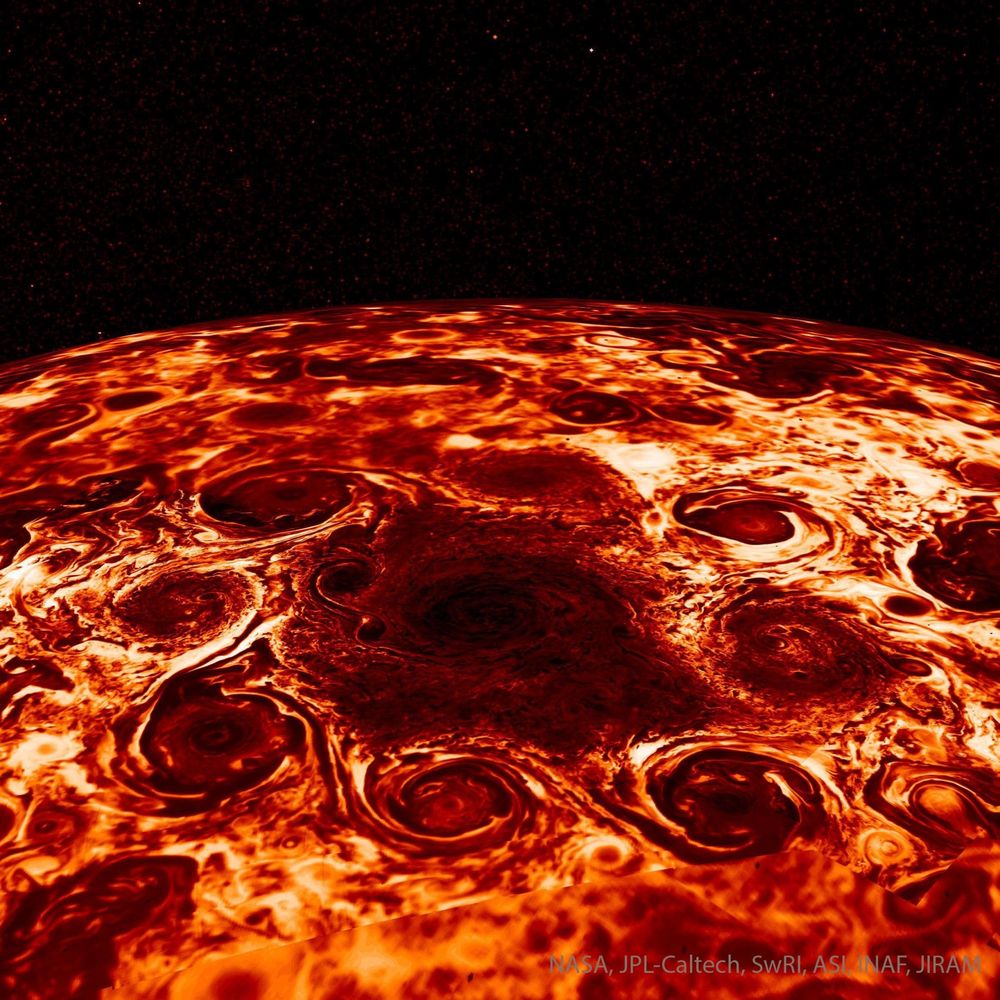
Jupiter’s north pole hosts eight cyclones circling a central one, each thousands of kilometers wide. Captured by NASA’s Juno in 2018, this polar pattern remains a mystery—unlike Saturn, which has just one cyclone per pole.
Credit: #NASA, JPL-Caltech, SwRI, ASI, INAF, JIRAM
🔭 #Astronomy #Space
10.03.2025 13:31
👍 100
🔁 16
💬 2
📌 2

Tonight’s moon at 84%. Hope you enjoy! #moon #astronomy #astrophotography
10.03.2025 04:03
👍 148
🔁 11
💬 4
📌 0

Abell 7 is a faint planetary nebula 1,800 light-years away in Lepus. Around 8 light-years wide, it’s the glowing remains of a dying star—20,000 years old, with a central white dwarf aged 10 billion.
Image Credit: Vikas Chander
🔭 #Space #Astronomy #NASA
09.03.2025 12:07
👍 62
🔁 6
💬 0
📌 1