

Cover of new book.
28.07.2025 16:27
👍 65
🔁 10
💬 7
📌 1
Cover of new book.

𝗖𝗼𝗻𝘀𝗰𝗶𝗼𝘂𝘀 𝗮𝗿𝘁𝗶𝗳𝗶𝗰𝗶𝗮𝗹 𝗶𝗻𝘁𝗲𝗹𝗹𝗶𝗴𝗲𝗻𝗰𝗲 𝗮𝗻𝗱 𝗯𝗶𝗼𝗹𝗼𝗴𝗶𝗰𝗮𝗹 𝗻𝗮𝘁𝘂𝗿𝗮𝗹𝗶𝘀𝗺
Is consciousness tied to biological brains?
Neuro&Philo Salon present+discussion with @anilseth.bsky.social of his BBS target paper!
October 23, noon USA eastern
#neuroskyence
Register: umd.zoom.us/meeting/regi...
doi.org/10.1017/S014...
And we are lucky to have you B!

Our entry (with @ericman.bsky.social ) for the Open Encyclopedia of Cognitive Science, “The Language of Thought Hypothesis”, is now out.
doi.org/10.21428/e27...
🤘🏻
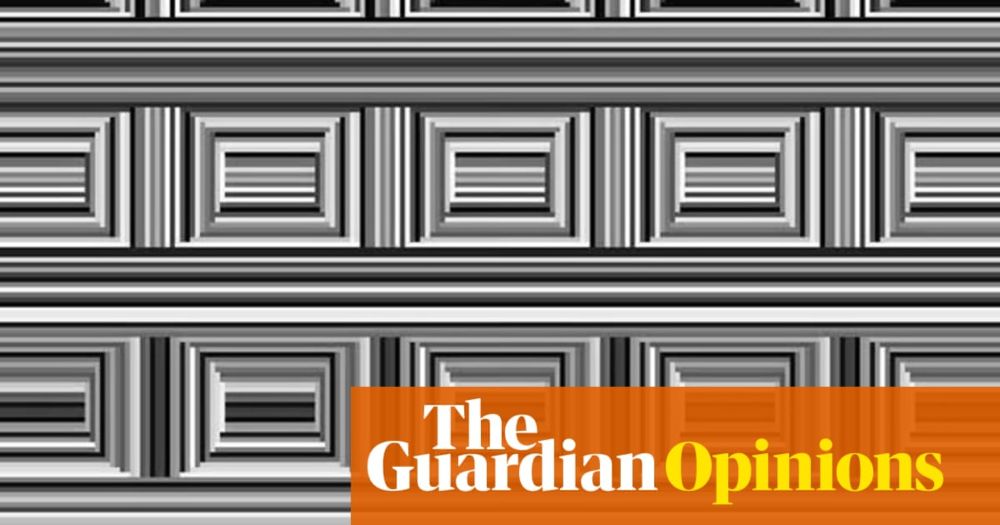
Do you see circles or rectangles? How culturally dependent is perceptual experience? Inspired by two recent studies, I wrote this for today's @theguardian.com: www.theguardian.com/commentisfre...
This time, for real, I will try to be more active here than on the other site. 🤪
Breaking news! Two more articles for our special issue of Philosophical Psychology. First: Marco Facchin argues that my version of mental fictionalism entails the existence of extended mental states: doi.org/10.1080/0951... @journalphp.bsky.social @marcofacchin.bsky.social 1/2
What are the best, or classic, works on whatever you consider higher cognition/thinking? 👀

I wrote a piece for the Cambridge Core Blog about the Elements in Philosophy of Mind series I edit. www.cambridge.org/core/blog/20...
In philosophy, if you think the answer's obvious, then you haven't understood the question.
Philosophy is the art of thinking about things we don't know how to think about.

the whole symposium about my work with Luis Favela on the concept of neural representation is now online at Mind & Language.
And what do you think about them?
I checked out the Brain-Mind one (the natural philosophy one it seems interesting, but it's not available on LibGen), and, tbh, I found it lacking.
You mean the trilogy about brain to mind, mind to society, and natural philosophy? 🤔
Paper about all the things with Taraneh Wilkinson officially out now and open access. “Affordances, phenomenology, pragmatism and the myth of the given” in Phenomenology and the Cognitive Sciences.
link.springer.com/article/10.1...
Thank you!
In my case, luckily, the craving is gone. And I hope it keeps that way.
It has been over a week since I quit smoking, and it has been suspiciously easy. 👀
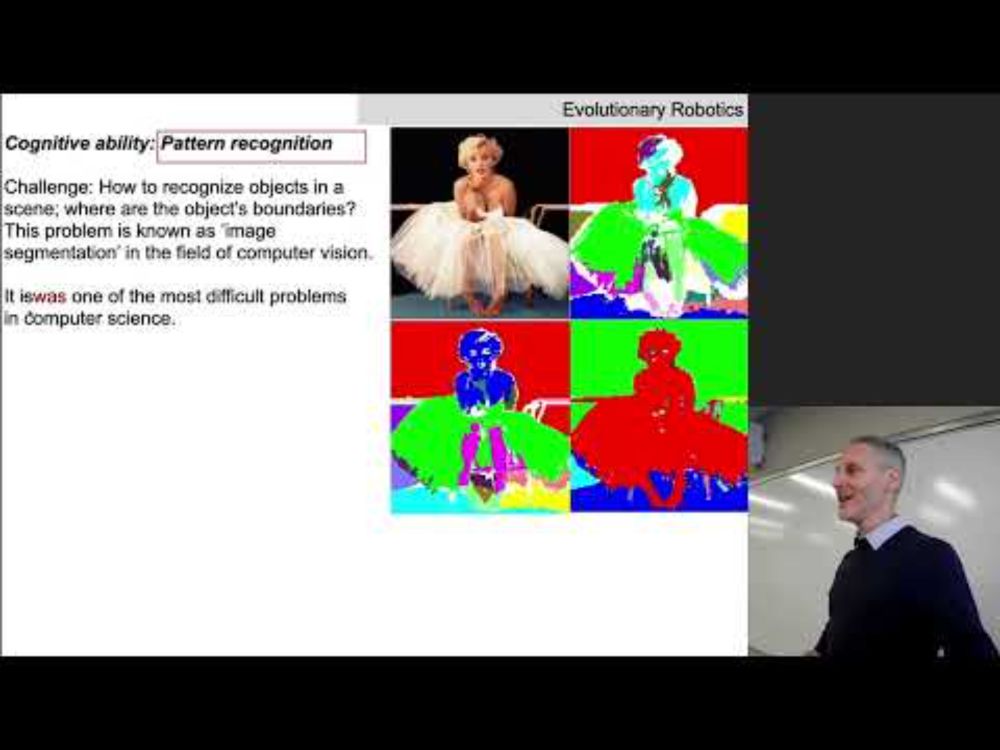
Lecture 4 of evolutionary robotics course: Embodied cognition.
youtu.be/qBqlQsq1mXQ
🫡
Any suggestion or tip? 😅
It's a fact, I will be working on inner speech! 🤓

A particularly sultry black-and-white image of Paul and Patricia Churchland
My partner's visual cortex and my visual cortex stimulated as a result of photons reflecting off of you across the bar, causing us to have pleasure sensations 420 and 69. Now our prefrontal cortices are directing our mouths to ask if we can buy you a drink
Oh, I see. Thanks for the clarification!
Indeed. Even tho I'm not sure if it's the easiest option, but I do think that it's more viable to make some progress in that subject. 😅
Sorry, I'm not familiar with the expression. What do you mean? 😅
Plot twist: I ended up in Philosophy of mind and cogsci. 😂
In my case I was interested in how the mind works and all that, but everything and everyone was about clinical psychology.
I was *so* lucky that I met a teacher that invited me to a research group, and from that point onward I had the space and the encouragement to go after what was my interest!
Something that can be seen as curious.
In the clinical psychology the most popular kind of therapies between the students are the psychodynamical, humanistic, and neobehaviorist ones.
And between those interested on mind, cognition etc. Freud, Skinner and Vygotsky still are the go-to names.
At my Uni, for example, those that are interested in cognition per se, tend to come from philosophy, psychiatry, biology.