

Unenthusiastic 226lb natural vegan bodybuilder lol
23.11.2024 19:40
👍 5
🔁 0
💬 0
📌 0
Unenthusiastic 226lb natural vegan bodybuilder lol
In n Out gave me a tummy ache. Just wanted everyone to know.
INZO 🥲
Reintroduction thread:
Name: Vaughn
Pronouns: he/him
Location: AZ
Interests: Competitive Bodybuilding, Self Awareness and Existence, Creating Music, Fortnite, Physiology
Vocation: Retail Manager, Online Personal Trainer and Nutrition Counselor, Competitive Bodybuilder
Me 🥺

😔

youtu.be/BHoSyenR0no?... #posthardcore #emo #metalcore #dancegavindance
Killing it dude!!

Average natural vegan bodybuilding enthusiast #bodybuilding
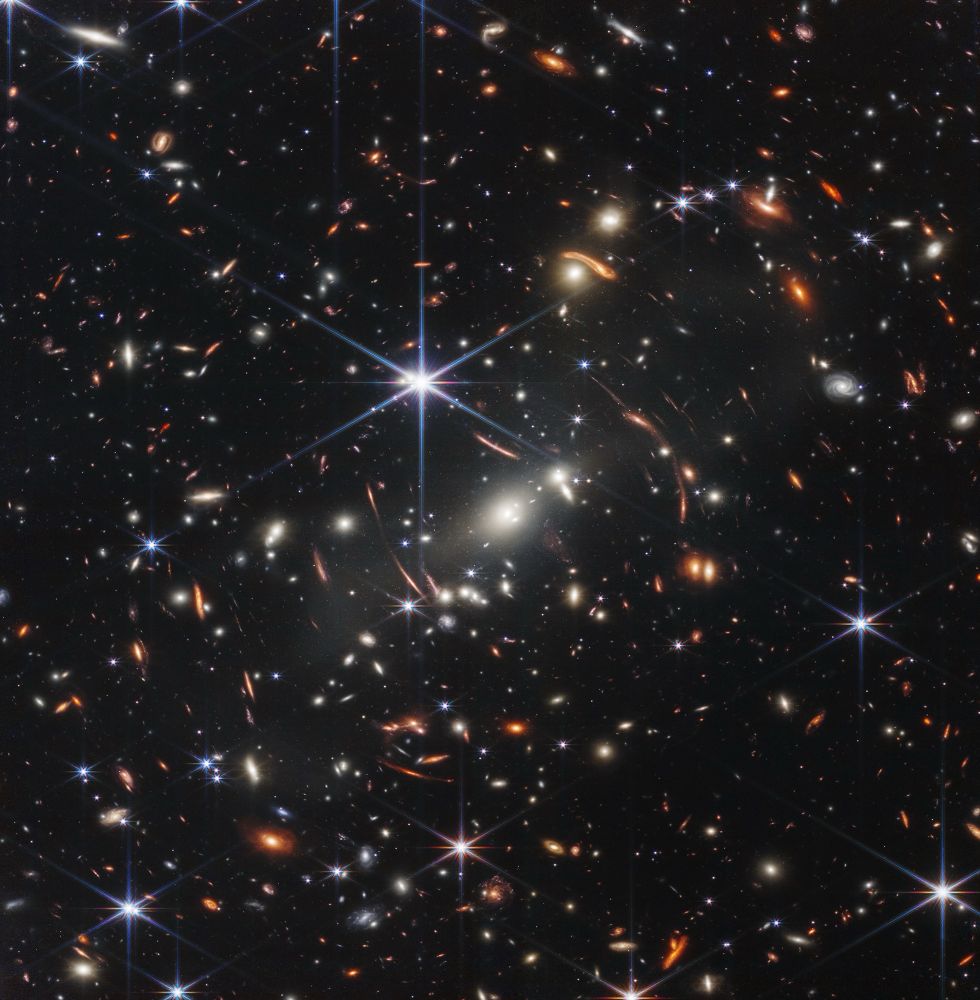
The background of space is black. Thousands of galaxies appear all across the view. Their shapes and colors vary. Some are various shades of orange, others are white. Most stars appear blue, and are sometimes as large as more distant galaxies that appear next to them. A very bright star is just above and left of center. It has eight bright blue, long diffraction spikes. Between 4 o’clock and 6 o’clock in its spikes are several very bright galaxies. A group of three are in the middle, and two are closer to 4 o’clock. These galaxies are part of the galaxy cluster SMACS 0723, and they are warping the appearances of galaxies seen around them. Long orange arcs appear at left and right toward the center.
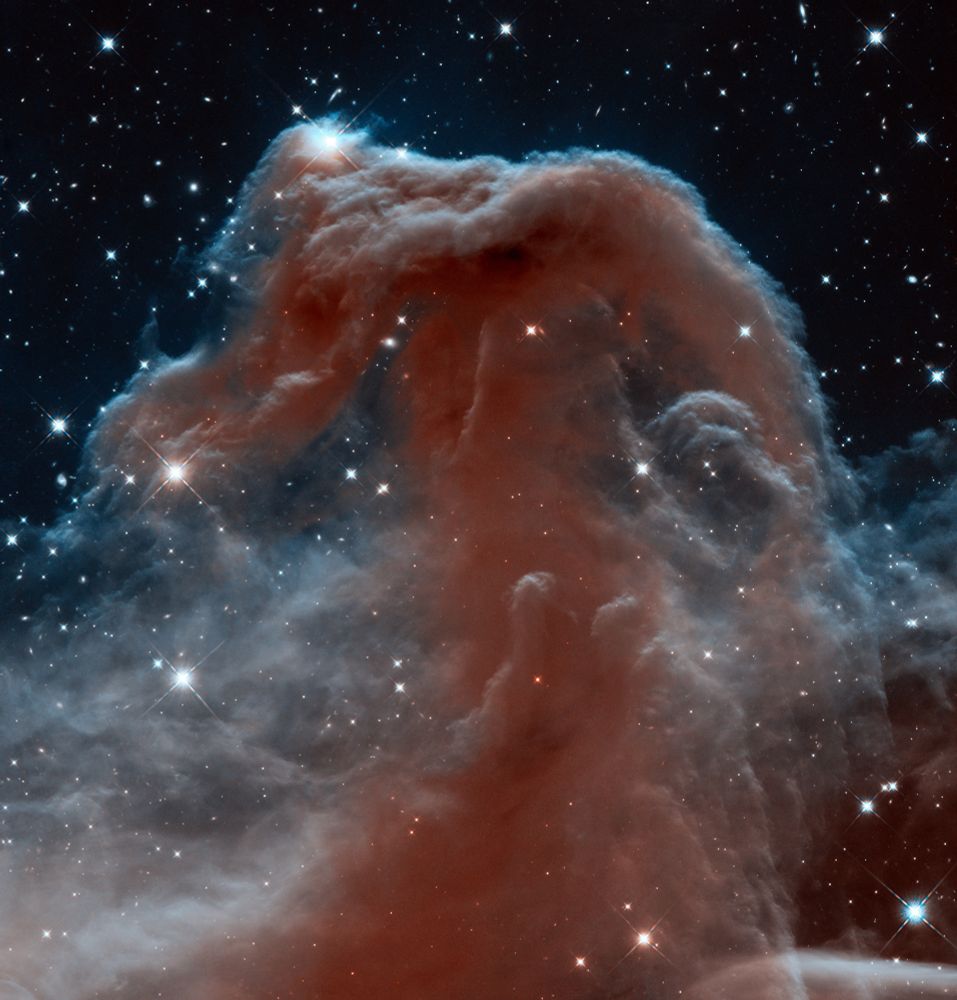
A massive cloud of gas and dust is seen in dark, dusty red, with its outer portions a translucent, ethereal gray. Several stars and distant galaxies are scattered throughout the image.
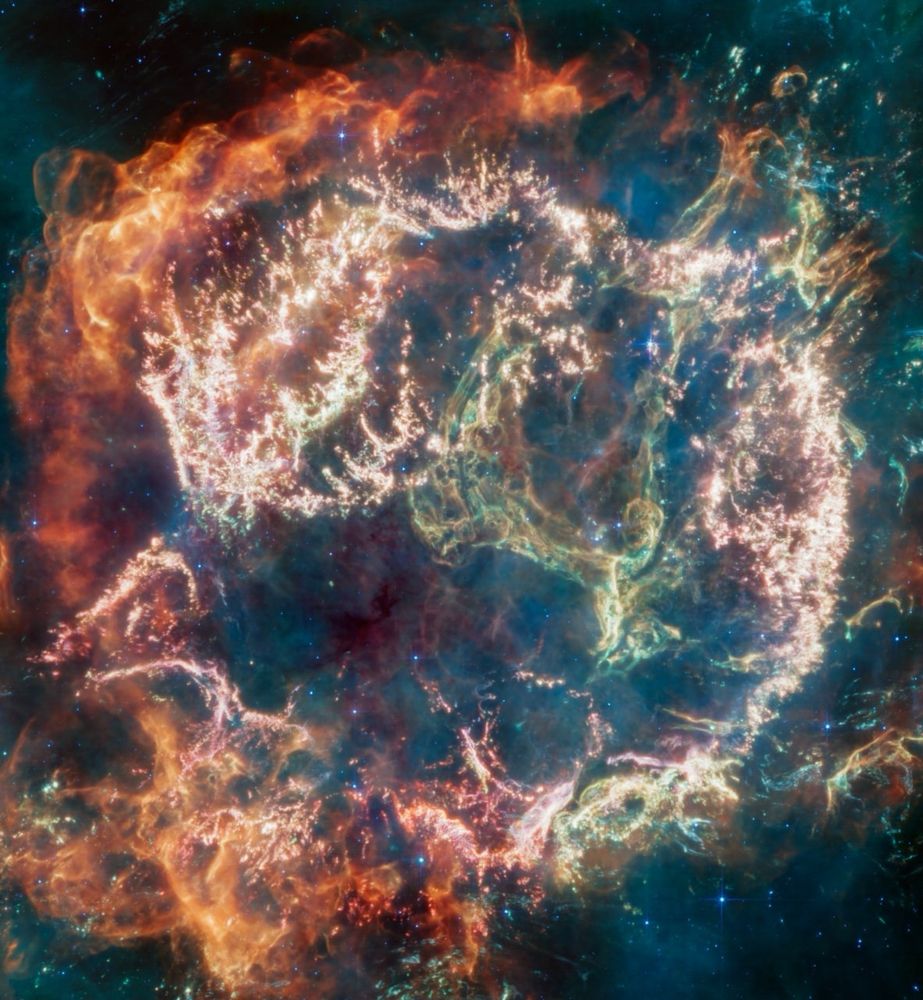
A circular-shaped nebula with a complex structure. On the circle’s exterior, particularly on the left side of the image, are curtains of material glowing orange like fire. Interior to this outer shell is a ring of mottled filaments in bright pink, studded with clumps and knots. A greenish loop extends from the upper right of the ring into the central cavity. Translucent wisps of blue, green, and red appear throughout the image.
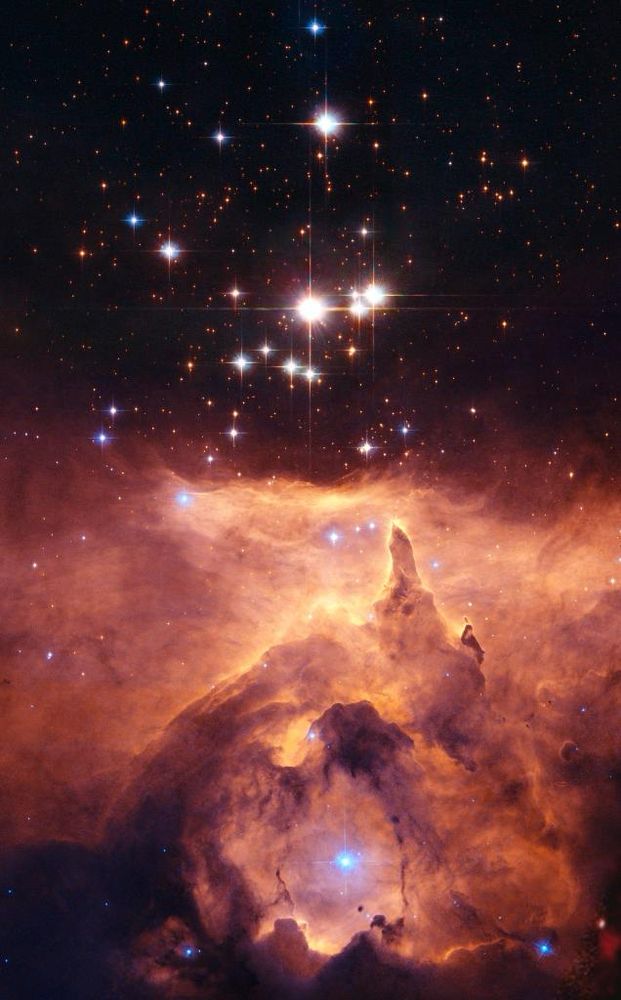
The star cluster Pismis 24 lies within the much larger emission nebula called NGC 6357, located about 8,000 light-years from Earth. The cluster is seen here above a small portion of the nebula. The gas below the stars glows through ionization caused by intense ultraviolet radiation from the massive young stars within the cluster. The strong radiation and stellar winds from from these blazing, blue-white stars also pushes the nebular material outward, creating one of many low-density bubbles within NGC 6357.
once again thinking about the fact that this is all just OUT THERE and we can only see it through the eyes of telescopes