
I used to have beavers nearly literally in front of my door. It was pretty cool, as this are highly fascinating animals, sometimes they were just a few meters as from me.
27.02.2026 21:47
👍 1
🔁 0
💬 0
📌 0
I used to have beavers nearly literally in front of my door. It was pretty cool, as this are highly fascinating animals, sometimes they were just a few meters as from me.


Just discovered some recent beaver activity and several beaver dams. There are only very few and very fresh bite marks, and a few very old ones, so I suppose this was a rather recently repopulated habitat.

Erschienen ist unser Buch beim Sequoia Verlag, wo man das Buch (unter anderem) direkt beziehen kann: www.sequoia-verlag.de/shop/buecher...

Wir haben das Buch im Stil eines Naturführers aufgebaut, da dies uns erlaubt hat eine sehr große Anzahl von Arten behandeln zu können, und gleichzeitig noch für die einzelnen Spezies möglichst viel Informationen präsentieren zu können.


Wir sind buchstäblich umgeben von Exoten, manche sind spektakulär, andere unauffällig, viele erscheinen uns schon so vertraut dass wir sie gar nicht mehr als nicht-heimische Arten ansehen. Aber alle haben ihre Geschichten, die vielfach auch mit menschlicher Kulturgeschichte zusammen hängen.

Wir haben dabei das mit Abstand umfangreichste Buch über Neozoen, Neophyten und Neomyzeten in Deutschland zusammen getragen das es zur Zeit gibt, mit über 200 besprochenen Arten. Dabei haben wir uns sehr bemüht möglichst viele der besonders interessanten Arten aufzunehmen.

Für alle die vielleicht noch für Weihnachten etwas Besonderes zum Verschenken oder auch für den eigenen Wunschzettel suchen, kürzlich erschien von mir und Tobias Möser "Unsere Exoten Pflanzen, Pilze und Tiere als Neubürger in Deutschland", 398 Seiten über heimische Neobiota youtu.be/Iq67Vpjkc_g?...
Was wenige engagierte Leute in einer BUND-Ortsgruppe alles erreichen können.
Anekdote: Von der wiedergekommen Sibirischen Iris traut man sich gar nicht, sie auf die Beweidung zurückzuführen. Dabei ist es typisches, giftiges Weideunkraut. Aufzeichnung in Kürze hier:
www.youtube.com/@naturnahewe...
Ja, extrem tolle Entdeckung! Wobei ich es hier umso spannender finde, dass wir ja selbst in Mitteleuropa und in Deutschland noch in den letzten Jahren neue entdeckte Arten von Wirbeltieren zu vermelden hatten Nebenbei, falls Du mal Zeit hast wäre es super wenn Du in deinen Messenger schauen könntest
Die Geschichte des in nordjapanischen Gewässern entdeckten Beratdius minimus ist auch wirklich faszinierend, ich habe mal vor einigen Jahren darüber auf meinem Blog geschrieben: bestiarium.kryptozoologie.net/artikel/bera...
Faszinierende Art von der ich noch niemals gehört habe! Vielen Dank @thoerren.bsky.social
...so it wasn't one beaver. There were at least two, an adult and at least one juvenile. Those beavers are very used to be around people and I can often watch them from a heavily frequented path along the river.

Sadly you can't see the beaver which is right at the moment sitting and eating in the grass in front of me.
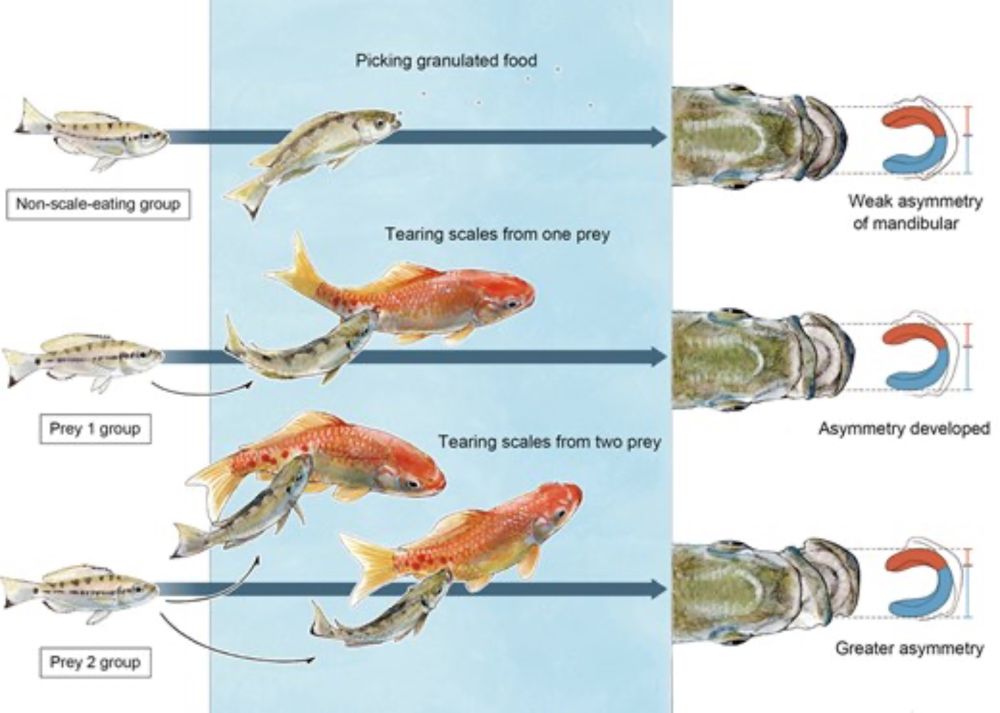
🔬 Phenotypic plasticity drives the development of laterality in the scale-eating cichlid fish 𝑃𝑒𝑟𝑖𝑠𝑠𝑜𝑑𝑢𝑠 𝑚𝑖𝑐𝑟𝑜𝑙𝑒𝑝𝑖𝑠.🐟🧪
🔒 academic.oup.com/evolut/advan...
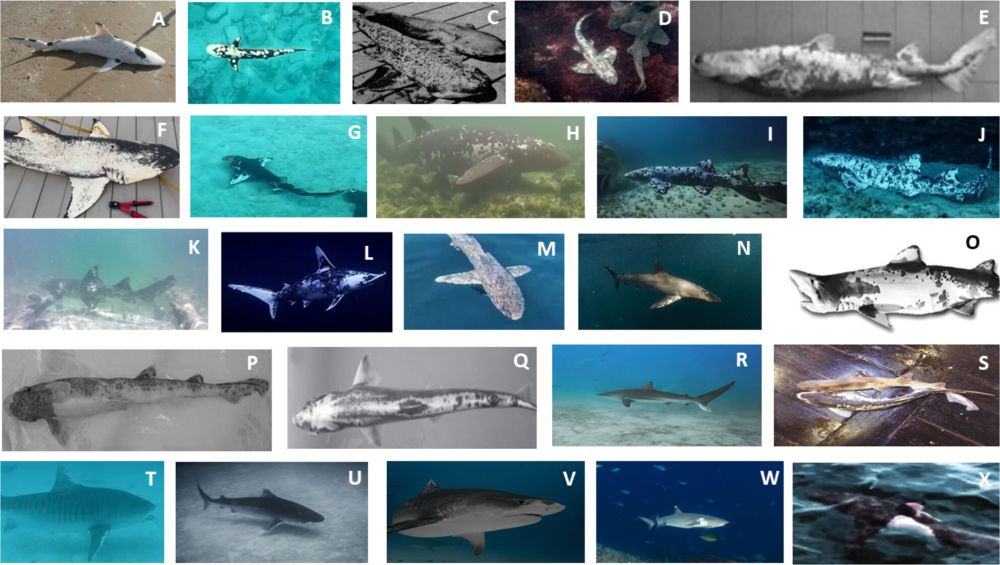
The Phenomenon of Piebaldism in Sharks: A Review of Global Sightings and Patterns.🐟🧪
onlinelibrary.wiley.com/doi/10.1002/...
I really love ulus, I always have a look for them in ethnology museums. By far the biggest and most diverse collection I have ever seen was in the National Museum of Denmark in Copenhagen. It's likely one of the biggest collections of Inuit artifacts in the world.
Btw, the one on the original photo is from the Landesmuseum Konstanz and the most famous one of its kind. There are however some other ones on the Pfahlbau-Museum in Unteruhldingen.
Dieser Kommentar wäre jetzt wirklich nicht nötig gewesen. Ich habe einen Fehler gemacht für den ich mich auch gleich entschuldigt habe. Da jetzt gleich zu Beleidigen ist echt nicht angezeigt.
Sorry, that was really a mistake by me, I somehow forgot that this was neolithic. I am very well aware of ulus and have a very big interest in them, including their history. I even made one myself.


Risso's Dolphins from Berry Head this afternoon.
May seems to be a good month to see them as they are probably coming in close to shore to feed on adult Cuttlefish which have come into the shallows to lay eggs and die at this time of year.
I find it always so frustrating how people find ignorance totally understandable or are sometimes even proud about it.
Oh yes, this is every time so incredibly annoying.
Yes, but of course they only survived due to the nature of the used materials. Wooden artifacts from that age hardly ever survived.
It's not unlikely that they had comparably much free time to make stuff like that. We can be also pretty sure they built some sort of shelters, perhaps tents from wood and hides. We just have no remains of them. But caves as shelters were of course a comparably rare thing to find.
Similar to dog breeds with "long" heads. They aren't really longer, but just very narrow compared to other dogs.
Perhaps, perhaps not. But keep in mind that a huge amount of human crafts were made in rather bad light conditions, in buildings with bad light and without electricity and during times of the year with little sunlight.
Kepp in mind that the original sculpture had probably longer legs that are lost now. And of course this figure is just tiny, only a few centimeters.
Yes it is.
In Dänemark habe ich Kühe auch direkt durchs flache Wasser am Meer laufen sehen.
