
You can find links to all our papers, along with easy to read summaries (we hope!), on our website here: thereecelab.com/publications
15.08.2025 13:14
👍 2
🔁 0
💬 0
📌 0
You can find links to all our papers, along with easy to read summaries (we hope!), on our website here: thereecelab.com/publications

🚨NEW PAPER🚨 We've already shown mosquito infections vary by time-of-day, here we test whether infection of mice FROM mosquitoes vary in a rhythmic manner. We test this in untreated & drug treated mice as some fitness consequences are only apparent in stressful environments doi.org/10.1186/s130...
Don't miss @reecelab.bsky.social interesting talk on why malaria parasites are crazy sticklers to routines and schedules.


Stunning day in #Edinburgh to attend the Tam Dalyell Prize Lecture by Drs Petra Schneider and Aidan O'Donnell of the @reecelab.bsky.social! They have been awarded the prize for their wonderful science communication; travelling around Scotland teaching children about mosquitoes! #scicomm

🦟 Preprint Alert 🚨 Catherine Oke et al show the nutritional status of mosquitoes influences the time of day that they seek a human to bite. Poorly-fed mosquitoes are active in the early evening when the humans they bite are unlikely to be protected by bed nets. Read here: doi.org/10.1101/2025...
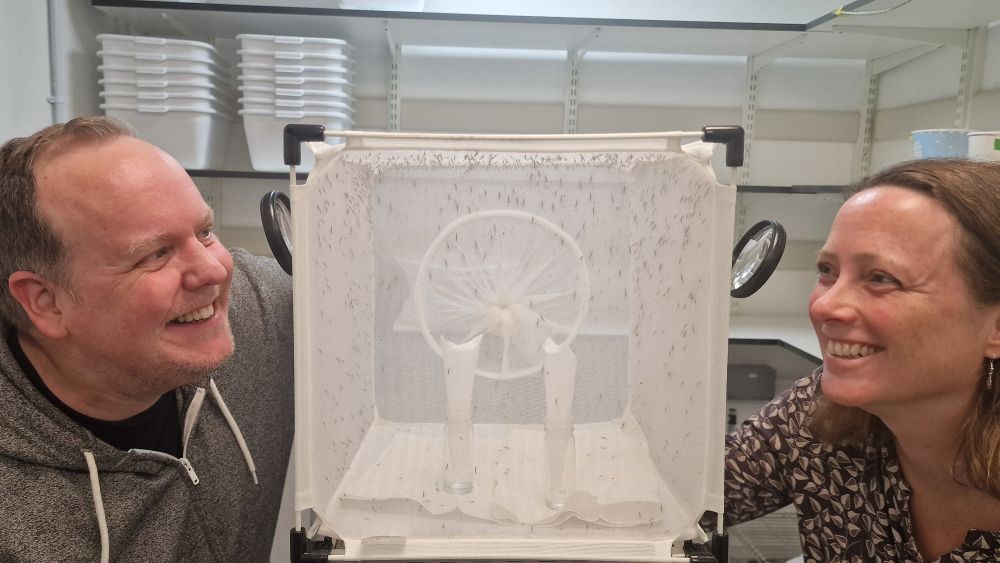
🦟 Exciting news 🦟
@thetoiletduck.bsky.social and Petra Schneider from the @reecelab.bsky.social win prestigious Tam Dalyell prize for Excellence in Engaging the Public with Science for their work in bringing mosquitos to schools!
edinburgh-infectious-diseases.ed.ac.uk/researchers-...

Petra and Aidan are giving a public lecture on April 6th (THIS SUNDAY) at the Science Festival all about their public engagement program for which they won the Tam Dalyell prize for Excellence in Engaging the Public with Science :) www.edinburghscience.co.uk/event/tam-da...
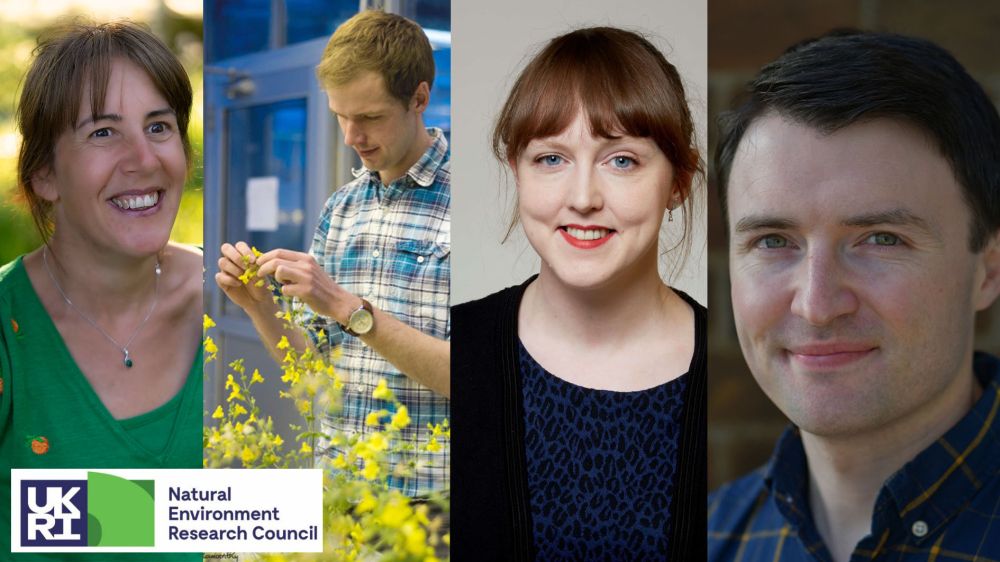
🌳 Researchers receive NERC grants pioneering environmental research 🐝
@reecelab.bsky.social @susanjohnston.bsky.social @sandyheth.bsky.social #AlexTwyford
edinburgh-infectious-diseases.ed.ac.uk/news-and-eve...
"in of" love that for me. This was like my 3rd edit too haha.

Think you have rhythms in your infection data? Where do you start? What even is a circadian rhythm? Does it matter when you take your samples? What is love? (baby don't hurt me)
Well the guest editors are here to help, we wrote a Hitchhikers Guide to Investigating Rhythms doi.org/10.1098/rstb...

We also collaborated on a paper with @samrund.bsky.social
using the malaria mosquito (Anopheles stephensi) where we show that the timing of activity is set to dawn and not dusk and some cool interactions with temperature. Circadian science rules! Mosquitoes are cool! doi.org/10.1098/rstb...

We contributed a paper where we investigate plasticity in the rhythmic replication of malaria parasites and the consequences on fitness. We put mice & malaria parasites in some FUNKY non-24 hour lighting conditions & show they can match short day+night cycles but not long. doi.org/10.1098/rstb...

Ever thought about biological rhythms in of infection and immunity? We & many others do & have contributed to an entire themed issue of Philosophical Transactions B all about them. Sarah & Aidan are very proud to be guest editors & contributors to this one royalsocietypublishing.org/toc/rstb/202...


Our visiting PhD student found a "happy" parasite. Though i think it's completely fed up with us!

Packing primary school resource boxes for our "Reece Lab on Tour" teacher training in the Aberdeen Science Centre next week (with SSERC).

Congratulations to our newest Doctor... Dr Catherine Oke!!

We have a new paper investigating how mosquito nutrition affects malaria development.
Our findings suggest malaria parasites may actively adjust oocyst growth rate to best exploit nutritional resources.
doi.org/10.3389/fmal...