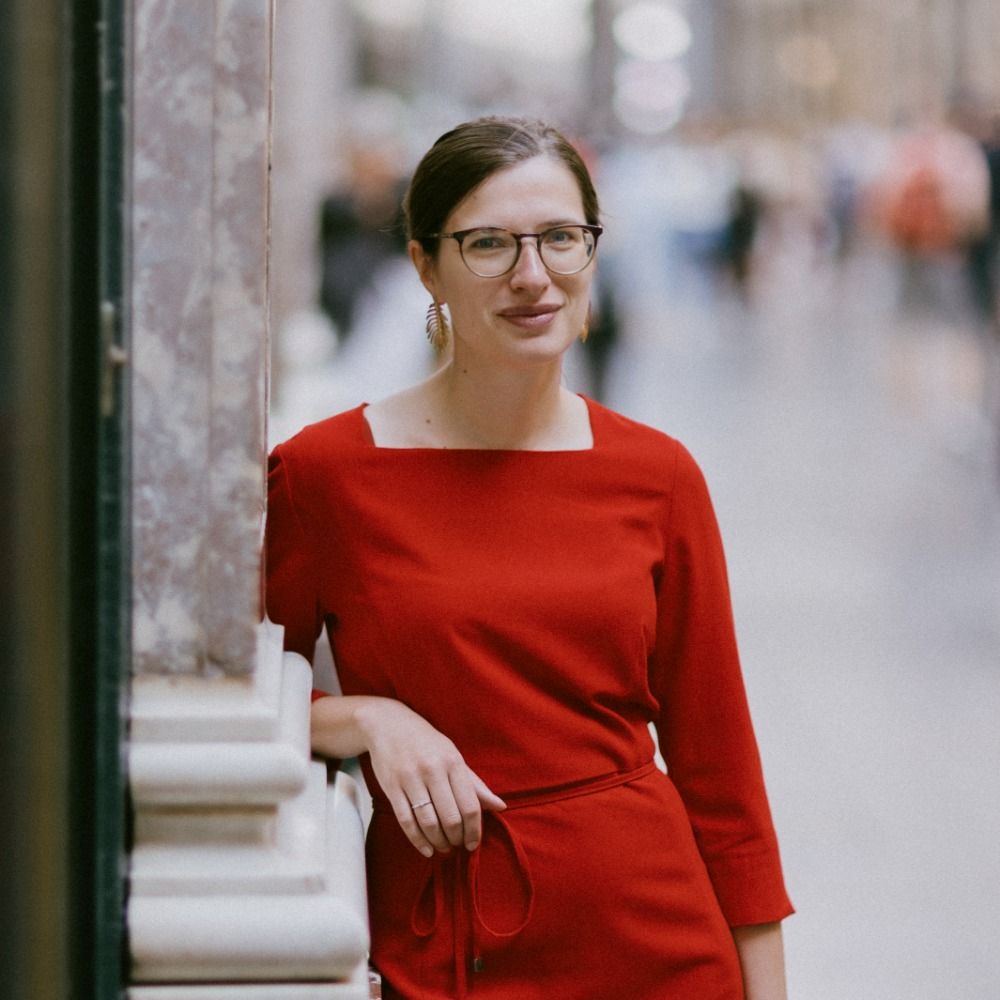
Ik kijk heel erg uit naar deze lezing van @tomwgvdmeer.bsky.social ! Ben je op 26 maart in Leuven of in de buurt, schrijf dan zeker in! 👇
06.03.2026 10:30
👍 7
🔁 3
💬 0
📌 0
Ik kijk heel erg uit naar deze lezing van @tomwgvdmeer.bsky.social ! Ben je op 26 maart in Leuven of in de buurt, schrijf dan zeker in! 👇
❗️Hoog bezoek in Leuven deze maand! Interesse in Nederlandse politiek en verkiezingen? Zeer zeer welkom! 🗳
These studies don't deal with the actual offer of jobs necessarily, but do point to rather low switches to permanent positions (10-20%)
And my colleagues at KU Leuven also collaborated on a couple of studies (ppw.kuleuven.be/en/research/...) and (zenodo.org/records/7188...)

Here's some interesting data from Switzerland (in French): www.bfs.admin.ch/asset/en/245...
Sounds interesting (and depressing) enough :-) Student-staff ratios are also on the rise, which is another indicator (the OECD has some data on this)
Dropout rates, I am really wondering how many postdocs secure a permanent position eventually, or an indication of number of job openings vs people eligible in academia (ie on the job market)
Do you already have a working version? 🧐
There's always a winner at euromillions too 🥵
One of the last permanent posts I applied for had about 250 candidates for one position, and I most positions I know of always had over 60 candidates (and those were for posts where knowledge of Dutch was a requirement)... It's like playing the lottery tbh
I know so many immensely talented people who are just not going to get jobs in academia. The number of post-docs and job openings is so much lower than just a few years ago. The conditions are brutal.

The sun has arrived on campus 🌻
@vd-researchgroup.bsky.social @kuleuvenuniversity.bsky.social
Just finalised my registration for @ces-europe.bsky.social and @epssnet.bsky.social annual meetings. Much looking forward to an Irish week and supporting the inauguration of an ambitious new European Political Science community!

Political Trust Network: Call for papers (Barcelona, October 2026)
The young and fast growing academic 'Political Trust Network' organizes yearly workshops, where scholars of trust can meet up, present papers, and exchange ideas. These workshop have been brilliant, socially and professionally!
Eindelijk...
Data source: "The Ghent Study" on adolescents and their parents during the 2018 local elections.
Thanks to the @m2p-antwerp.bsky.social for the warm welcome!
@vd-researchgroup.bsky.social

❓To what extent is political trust socialised vs evaluative? Today I presented new research with @lindestals.bsky.social at the Belgian State of the Federation Conference.
Two key findings:
👪 Trusting parents have trusting children
📰 Adolescents are (almost) as evaluative as their parents.
Zo leuk! En boeiend eerste stuk :-)
Workshop: Support for democracy and its institutions
On 11-12 June, the annual Dutch-Flemish Political Science Conference takes place in Ghent. We organize an panel on support for democracy and its institutions. Submit your paper proposal before March 15th!
politicologenetmaal.eu/workshops-20...
As a post hoc test, I asked #chatgpt to reject the proposal and provide arguments why. It gave the same reviewer points, sometimes even verbatim. Aka, I strongly suspect that the review was at least partially written by #AI...
Oh and everything @andreasdeblock.bsky.social said (/end) bsky.app/profile/andr...
At any rate: the current system sucks up too much time of everyone and leads to structural inequalities, biases towards richer and better networked institutions, and individuals with the time available as per funder logics. This doesn't advance science (10/)
As soo many people are applying - why don't we organize lotteries, or just ensure more institutional funding for individual professors? These might be equally fair and waste less resources (9/)
Don't set one deadline per year for a given call but on a quarterly basis, for instance. I have regularly had to work during holidays and sick leaves, just because I would otherwise have missed the one deadline. I know many people who did too. This is fucked up! (8/)
Make research calls phased: why not a two- or even three-step phase? With only the best each time moving forward (7/)
What could we do better? (without assuming that more money will become available for research) (6/)
Further, my current postdoctoral mandate ends in less than two years, and while I've been more and more actively applying for jobs and new projects, I'm competing with literally hundreds of candidates per project/post... So this is one more opportunity that didn't materialise (5/)
For me personally, that meant working during my maternity leave too, because the deadline was right after I came back from my leave. (4/)
Horizon Europe consortia take a lot of time to build - and is an "in-crowd" business too. We got the draft program months before it was officially published, allowing us to take a head start. It took months and months of work to write... (3/)
The rejection letter itself – did they even read the proposal? The evaluators used a lot of generic sentence formulations that could have been said about any research project... I don't recognize the proposal we've written in it. In Academia, rejection is the norm, and rightfully so, but this? (2/)