Cheers to @saana-i.bsky.social @azwhlab.bsky.social and Patrick Miller for all their hard work!
23.02.2026 20:58
👍 0
🔁 0
💬 0
📌 0
Cheers to @saana-i.bsky.social @azwhlab.bsky.social and Patrick Miller for all their hard work!
Here, we use a combined tag and drone photogrammetry dataset to successfully validate the use of dominant stroke cycle frequency to predict individual body size in sperm whales, and provide simple equations for converting dominant frequency to body length, volume and mass.
However, it is less clear whether this relationship is strong enough to be used to predict individual length from tag data within a single species, and opportunities for direct cross-validation are rare.

Dominant stroke frequency (how frequently the animals beat their tails during steady swimming) can be calculated from tag accelerometry data and is known to scale with body size across species.

We can measure the size of a whale using drones, but many tag records come from days when conditions aren’t good to fly a drone, teams that don’t have them, or simply from before drone photogrammetry was available. Some tags may also stay on long enough for the tagged animal to grow appreciably.
Body size is a fundamental feature of an individual animal’s physiological and life history state. For example, in marine mammals body size predicts life history state, fecundity, metabolic rate, heat flux, and diving capacity.

New publication!
@marinemammalogy.bsky.social
doi.org/10.1111/mms....

Very happy to see our opinion article out in @cp-trendsecolevo.bsky.social today. 🥳 We ask whether sexual signals can influence the evolutionary trajectory of naturally selected adaptations, such as protective colouration, for better or for worse 🧐 1/n
doi.org/10.1016/j.tr...
Also to @lrendell.bsky.social and Roxanne Beltran @ucsantacruz.bsky.social for a really fun and productive discussion of this work as part of my PhD viva.
Huge thanks to my coauthors Prof. Patrick Miller & @saana-i.bsky.social at @seamammalresearch.bsky.social & Drs. Monica Silva and Rui Prieto at @azwhlab.bsky.social @okeanos-uac.bsky.social. Thanks also to Dr. Lyn Irvine for sharing data & @kztwyman.bsky.social for draft feedback.
Additional simultaneous tag and drone data will help maximise methods predictive power and allow it to be extended to additional species. Fortunately, these are exactly the data expected to result naturally from the current trend towards using drones for tag deployment.

In so doing, our method quantifies how density- and morphometry-based proxies of body condition are linked via true underlying lipid store. This allows us to estimate sperm whales fat stores from tags or drone data alone, helping us to track whales’ health accurately with minimal disturbance.

In our paper, we present a new method which combines simultaneous observations of body volume (from drones) and composition (from tag-based densitometry) to calculate absolute, whole body body lipid store in free-ranging sperm whales.

New paper out today in @ecol-evol.bsky.social
doi.org/10.1002/ece3....
The total size of the body’s fat stores is a crucial factor in understanding animal health, life history and conservation biology, but no established method exists to measure it in large marine animals without capturing them.

Happy to share that our paper ‘a formal theory of group-level adaptation for obligate eusociality’ (with @andygardner.bsky.social) is now out in @jevbio.bsky.social advances.
doi.org/10.1093/jeb/...
#OpenAccess #Eusociality #GroupAdaptation #FormalDarwinism
Impressive work by Cam Nemeth (not on BlueSky). We hypothesized that the significant lift force produced by the humpback whale’s large pectoral flippers result in them being the only species executing tight, high-speed, sustained turns characteristic of bubble-net feeding doi.org/10.1242/jeb....

It's official! I'm now the newest postgraduate research fellow at the marine mammal research program at the University of Hawaii at Mānoa. Bio and blog post with more details here:
www.mmrphawaii.org/alec-burslem
www.mmrphawaii.org/post/shippin...
Now all typeset and pretty! A little summary:

Dr Alec Burslem in front of his talk title slide about estimating body composition and condition in sperm whales
Alec Burslem @alecburslem.bsky.social presented his new non invasive method for measuring body composition in sperm whales - low impact and generalisable 👏👏👏 @seamammalresearch.bsky.social #ECSconference2025 🐋🦑🧪
Had a great time this week presenting at the Scottish oceans institute seminar series, giving an overview of my PhD work on sperm whale behavior and physiology. Recording here: universityofstandrews907-my.sharepoint.com/:v:/g/person... @seamammalresearch.bsky.social @uniofstandrews.bsky.social


A wee bit of r&r with @kztwyman.bsky.social in the high Atlas


That's me officially all done on my PhD! I'm now full time on the 3S4 project, investigating the drivers of fine scale baseline behavior and sonar response of killer whales in the Norwegian Arctic. Stay tuned!
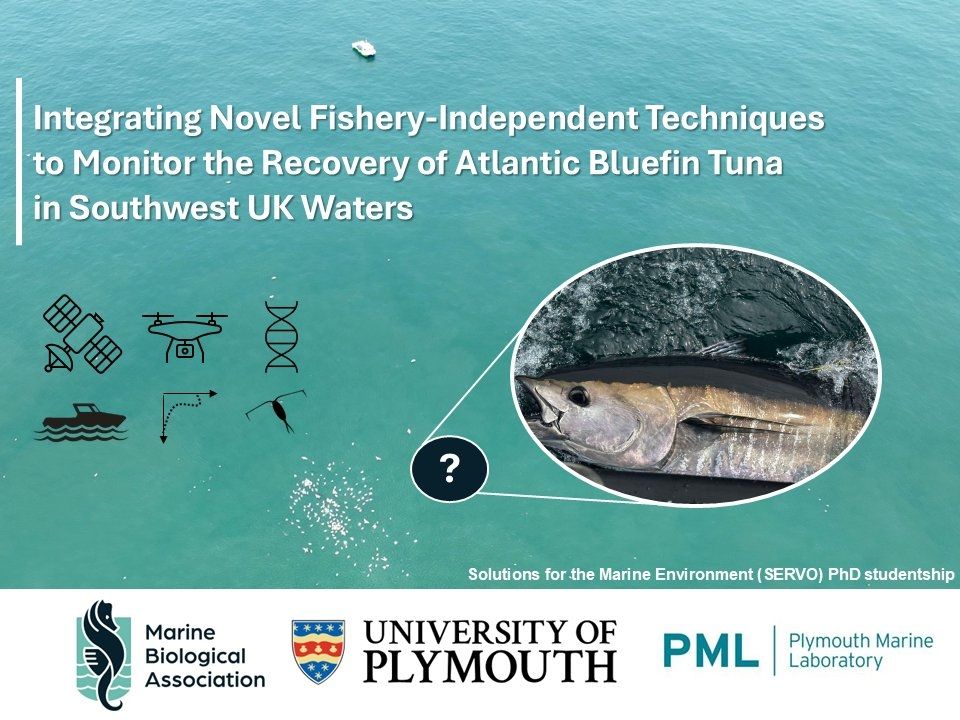
📢 Exciting #PhD alert! Study Atlantic bluefin #tuna in Southwest UK waters using #drones, remote sensing, #ocean profiling & eDNA while working with #anglers🐟 www.plymouth.ac.uk/study/resear... Supervised by @lilianlieber.bsky.social @marinemicrobes.bsky.social @peterimiller.bsky.social & me!
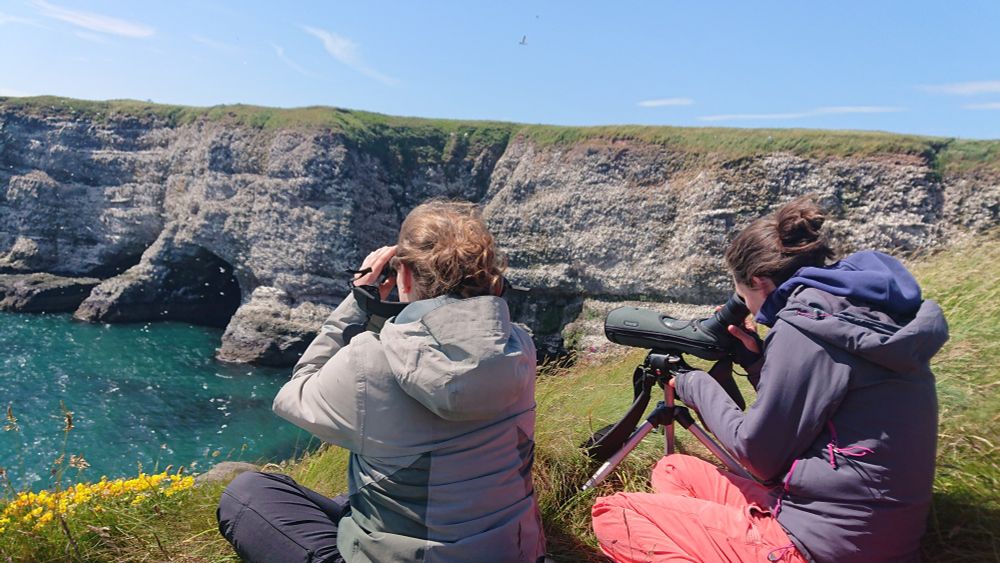
Two fieldworkers sit on a clifftop amongst the grass and wildflowers watching seabirds with a telescope and binoculars. The sun is shining, the sky is blue, the sea is shimmering turquoise, and all is good!
JOB VACANCIES!
We're seeking 3 Conservation Scientists to join our friendly team of #seabirders at the RSPB. We're an inclusive team where everyone is welcome.
DEADLINE: Friday 3rd January.
#conservationjobs #ornithology #seabirds #science
Details: app.vacancy-filler.co.uk/salescrm/Car...
Hey Emma, would you mind adding me too?
Hi everyone! Good to see lots of familiar faces here.
For everyone else:
Research profile: research-portal.st-andrews.ac.uk/en/persons/a...
PhD abstract: doi.org/10.17630/sta...
If that seems like your kind of thing, consider giving me a follow

