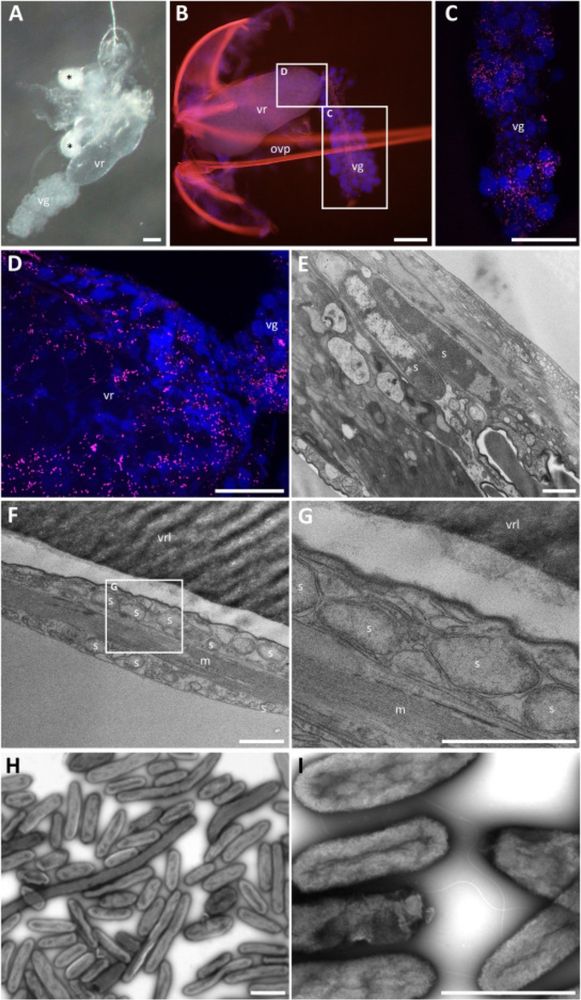
How specific are heritable symbioses?
And what can we learn from swapping obligate symbionts across host species?
We address this in our latest, led by @inespons.bsky.social & in our collaboration w/ @microbiome.bsky.social 🦠🪲 Out today in @natcomms.nature.com!
1/n
www.nature.com/articles/s41...
16.02.2026 07:24
👍 114
🔁 70
💬 3
📌 3

The visualization of two bacterial genomes, of 50 and 52kb, representing independent instances of extreme genomic reduction in ancient heritable endosymbionts of planthoppers.
Our new paper in @natcomms.nature.com is now online-early!
We describe independent evolution of bacterial genomes of only ~50–52 kb — the smallest known outside cellular organelles — revealing striking convergence toward minimal gene sets.
🔗 doi.org/10.1038/s414...
11.02.2026 11:15
👍 79
🔁 29
💬 5
📌 6

16 shots of the two to three nymphs I was photographing, showing the process of how they discard their nymph stage shells. The shell initially cracks along a dorsal seam and the newly formed cicada pushes up through this crack, emerging at a 90° angle from the tree. From here they carefully invert themselves, a position in which they remain for a few minutes while their blood begins to flow around their new appendages. After a while their legs begin to twitch, and then using core strength that would put any human to shame they perform a full body curl, latch onto their old shell with their clawed feet and carefully pull out their abdomen. Now fully free of their former self they begin pumping blood into their wings, which quickly unfurl and flatten. Once everything has been inflated to the correct size they rest a bit more before beginning the arduous climb to a higher vantage point. At some point in the night they achieve flight for the first time in their life. Now active in the branches of the trees they emerged under they only have a short adult lifespan in which to reproduce and begin the whole cycle anew.
Thursday night I was lucky enough to tick off another photography milestone - documenting the moment when a cicada nymph molts its skin to reveal the adult within. For these smaller species the change is quick, they can anchor on a tree, molt and then go forth in 30 minutes #BugSky
06.12.2025 13:05
👍 21
🔁 5
💬 2
📌 1
New #microbiome paper from our lab @ioes-ju.bsky.social! Unexpected host associations for Bartonellaceae - a bacterial family primarily known as mammalian pathogens. Striking #symbiont evolutionary trajectories, exemplified by a highly reduced, 158kb genome with no nutrient biosynthetic capacity!
05.12.2025 21:49
👍 7
🔁 4
💬 1
📌 1

Based on feedback from applicants, reviewers and broader research community, the ERC Scientific Council decided to make changes in the 2026–27 calls for proposal for research funding.
More details from the ERC President 👉 europa.eu/!hP3WWF
What’s your take on this? Tell us! 👇
15.09.2025 09:48
👍 43
🔁 26
💬 13
📌 9

The cellular mechanics of symbiosis: sensing friend from foe
🚨 Save the date! Thrilled to be co-organizing the next iteration of the @embl.org Symposium on the Cellular Mechanics of Symbiosis (📅 March 17-20), w/ @floravincent.bsky.social, @hassansalem.bsky.social & Tom Richards.
www.embl.org/about/info/c...
#EESSymbiosis #Symbiosis #SymbioSky #MicroSky 🦠
08.09.2025 10:24
👍 55
🔁 26
💬 1
📌 1
Last Wednesday, my first Ph.D. Student, Junchen Deng, defended his thesis! So proud!
Check some of the underlying papers - on planthopper phylogenomics doi.org/10.1111/syen..., origins of Auchenorrhynchan symbionts doi.org/10.1093/gbe/..., and planthopper symbiont evolution doi.org/10.1101/2025... !
05.09.2025 17:06
👍 6
🔁 1
💬 0
📌 0

The newly assembled planthopper-Bartonellaceae genomes range in size from <2 Mb to 158 kb. The one most reduced lacks any essential amino acid biosynthesis genes, contrasting with all other insect-associated bacteria with ultra-reduced genomes, or other genes with obvious importance to hosts! 2/2
28.08.2025 06:25
👍 3
🔁 1
💬 0
📌 0
New preprint from our lab! We show that #Bartonellaceae bacteria, mostly known as mammalian #pathogens, also colonizes #planthoppers. The planthopper #symbionts typically resemble related ant symbionts in nutritional functions, but show a much greater breadth of #genome sizes and functions. 1/2
28.08.2025 06:25
👍 20
🔁 3
💬 1
📌 0
Redirecting
Reference: Płoszka Z., Nowak K.H., Tischer M., Michalik A., Kolasa M.R., Łukasik P. (2025): Dissecting multitrophic interactions: The relationships among Entomophthora, their dipteran hosts, and associated bacteria. J Invertebrate Pathology 213: 108425 doi.org/10.1016/j.ji...
Congrats all!
25.08.2025 04:53
👍 1
🔁 1
💬 0
📌 0

Highlights:
• Molecular records for Entomophthora’s new host clades from an unexplored bioregion - Greenland
• Confirmed high host-specificity of the pathogens;
• Provided the first records of bacteria seemingly associating with pathogen-killed flies;
• Validated multi-target sequencing approach
25.08.2025 04:53
👍 1
🔁 1
💬 1
📌 0

A new paper by our team @ioes-ju.bsky.social just published in J Invert Pathol @jinvertpathol.bsky.social!
In Diptera-#Entomophthora system, we show how simultaneously #sequencing #insect, #fungal #pathogen, and bacterial marker genes can aid biodiversity and biological interaction discovery.
25.08.2025 04:53
👍 8
🔁 4
💬 2
📌 0

ecoevojobs.net 2025-26
The 2025-26 Eco-Evo job list is out. Good luck to those applying!
docs.google.com/spreadsheets...
19.08.2025 07:18
👍 208
🔁 215
💬 5
📌 3
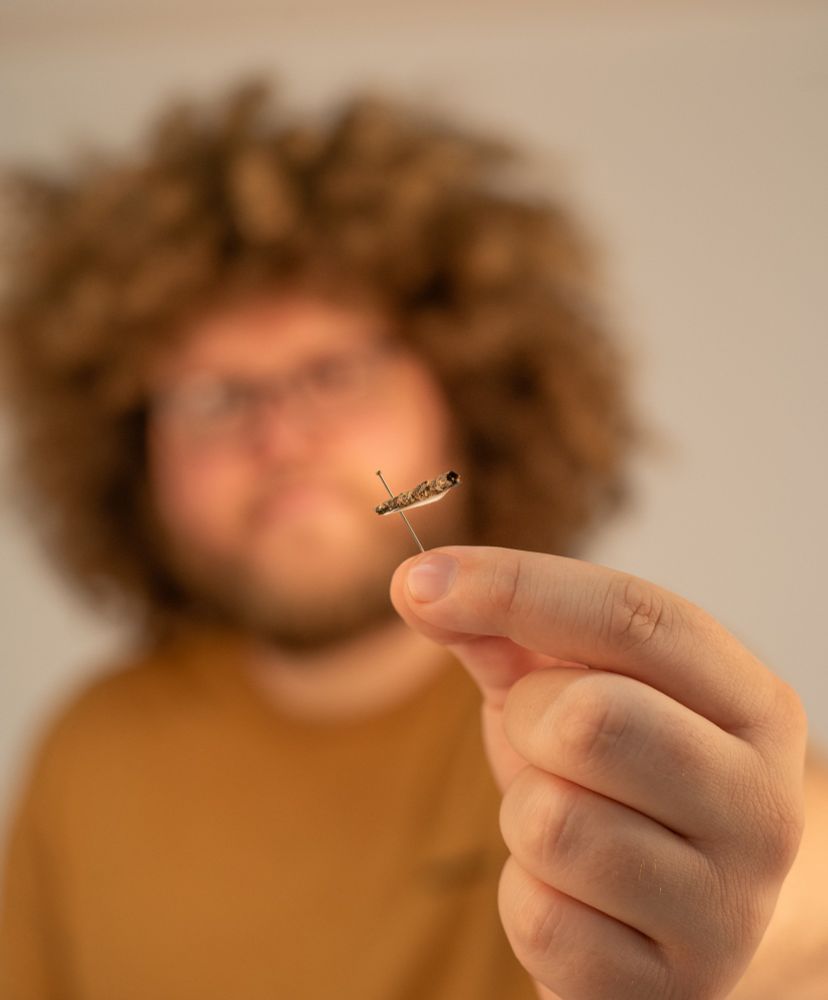
Lead author Auke-Florian Hiemstra holds the oldest known caddisfly casing containing microplastic, dating to 1971. Photo: Liselotte Rambonnet.
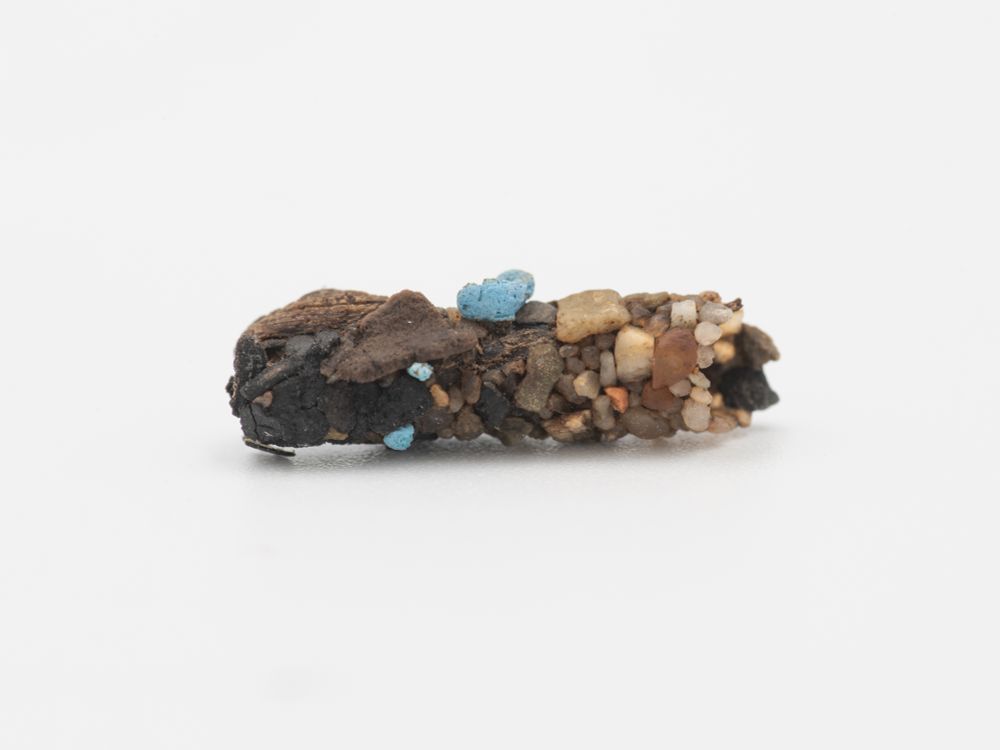
A caddisfly casing with pieces of blue microplastic, dating 1986. Photo: Auke-Florian Hiemstra
NEW PAPER, JUST OUT! 👀
Insects from the '70s and '80s were already collecting microplastic, decades before the term microplastic even existed. 🤯
A thread on the surprising history of this pollutant and the incredible insect larvae that helped us uncover it. 🐛
Let's dive in! 🧵👇 1/x
09.04.2025 10:06
👍 1507
🔁 701
💬 33
📌 120
New preprint by our team @ioes-ju.bsky.social! Using custom multi-target amplicon sequencing on diverse pathogen-killed dipterans from Greenland, we find multiple #Entomophthora genotypes with notable host specificity, and reconstruct bacterial communities associated with the killed insects.
26.03.2025 03:58
👍 4
🔁 0
💬 0
📌 1
Thank you, @einsteinberlin.bsky.social, for recognizing the importance of raising concerns about scientific papers. Often, science sleuths face professional, personal, and legal threats.
Awards like these are vital to acknowledging the significance of our work.
15.03.2025 14:58
👍 402
🔁 46
💬 22
📌 3
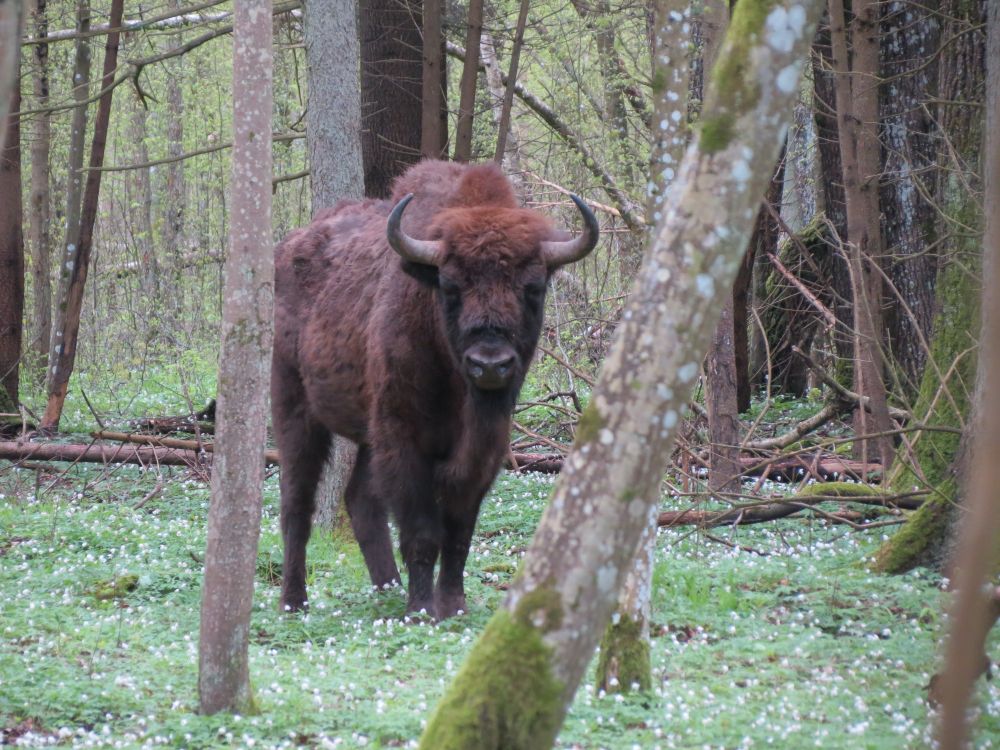
Bison in Bialowieza Forest (c) R Broughton

Poland-Belarus border fence, wiki commons: https://commons.wikimedia.org/wiki/File:Poland_Belarus_border_barrier_2023.jpg
Our new #OpenAccess paper
How can long-term #ecology studies survive & resist political & social change, authoritarianism, war, but also embrace positive change?
The Białowieża Forest as an example of the resilience of long-term studies in a changing world:
www.sciencedirect.com/science/arti... 1/
01.03.2025 13:22
👍 87
🔁 40
💬 2
📌 1
Beautiful work!
26.02.2025 22:11
👍 1
🔁 0
💬 0
📌 0
Dark Taxonomy: From unknown to ready for biomonitoring in 5 steps. By describing 120 species, most species of fungus gnats routinely caught in Malaise traps in Singapore now have names. Bees, butterflies and birds, make room for your new friends. Read here: onlinelibrary.wiley.com/doi/10.1111/...
21.02.2025 16:24
👍 61
🔁 22
💬 1
📌 1
From across the Atlantic, it's hard to even imagine what is going on, and the impacts. And utterly impossible to find any logic ot it... Take care, Matt.
19.02.2025 18:51
👍 0
🔁 0
💬 0
📌 0
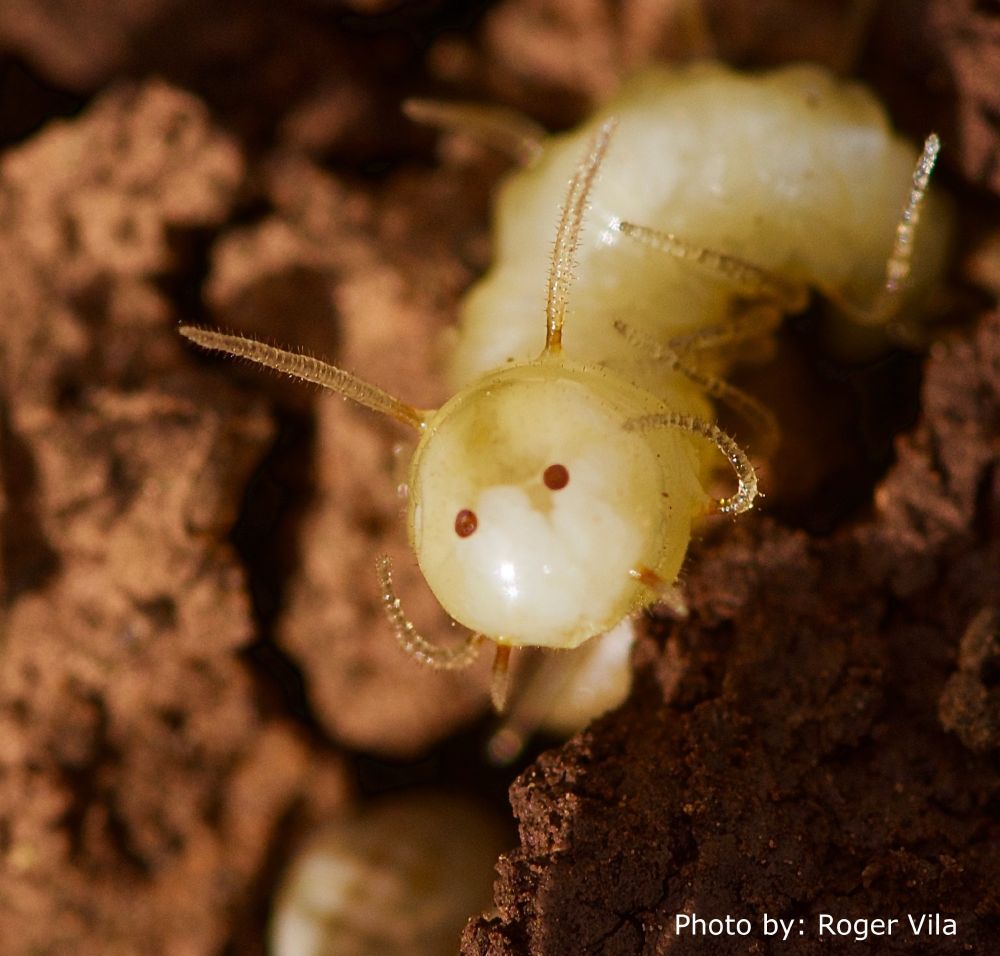
It’s not the head, it’s the butt!
Meet a completely unknown organism: a blow fly (Calliphoridae) that evolved social integration in termite nests using a false termite head in the posterior part of the body.
@CurrentBiology www.cell.com/current-biol...
10.02.2025 16:28
👍 251
🔁 75
💬 5
📌 6

A clam with a spring attached to the shell. The spring has a magnet placed above a sensor.
Hardly new info, but BSky should know:
Warsaw's water quality is monitored by eight clams with magnets attached to their shells. If contamination in the water causes the clams to close, the magnets trigger an alarm and shut off the city's water supply.
Thank you, little guardian molluscs.
🧪🌏🚰
07.02.2025 12:39
👍 6844
🔁 1850
💬 96
📌 237
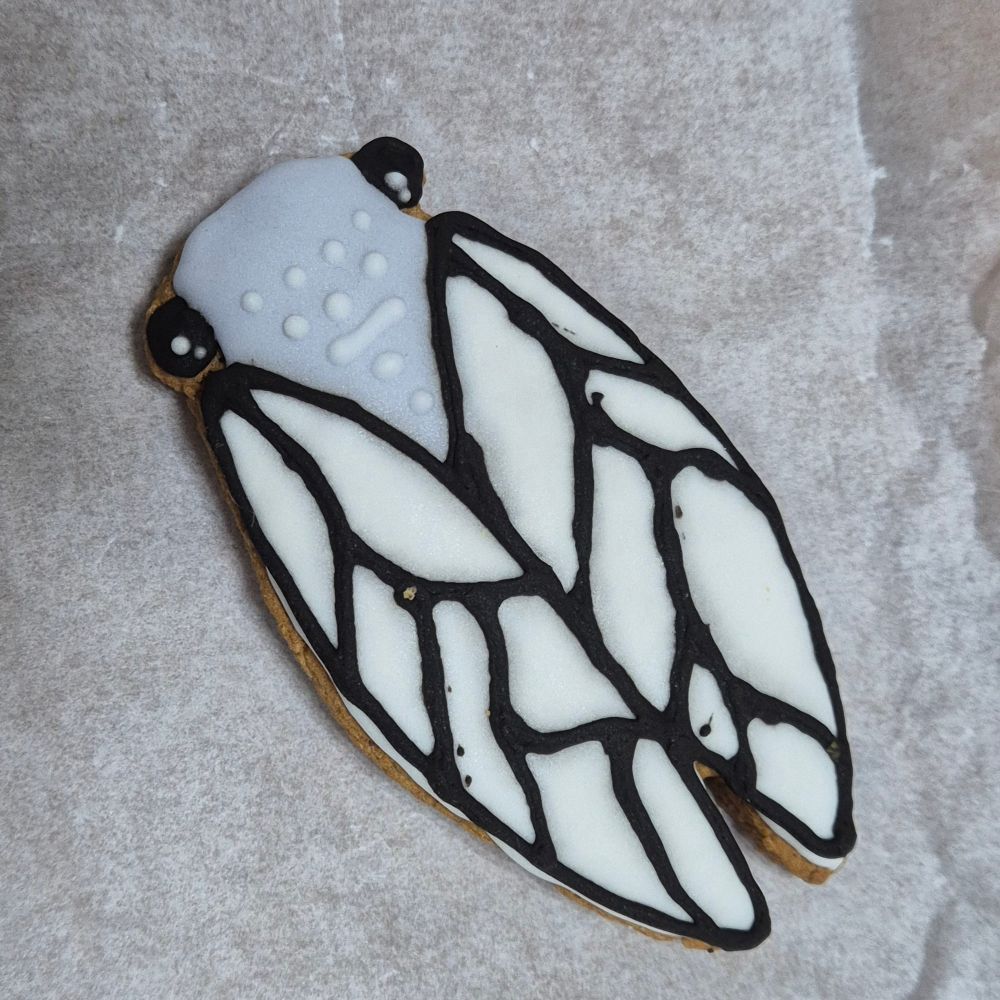
A #gingerbread Christmas #cicada - a sure sign that the much-needed vacation is just around the corner!
20.12.2024 03:12
👍 3
🔁 0
💬 0
📌 0
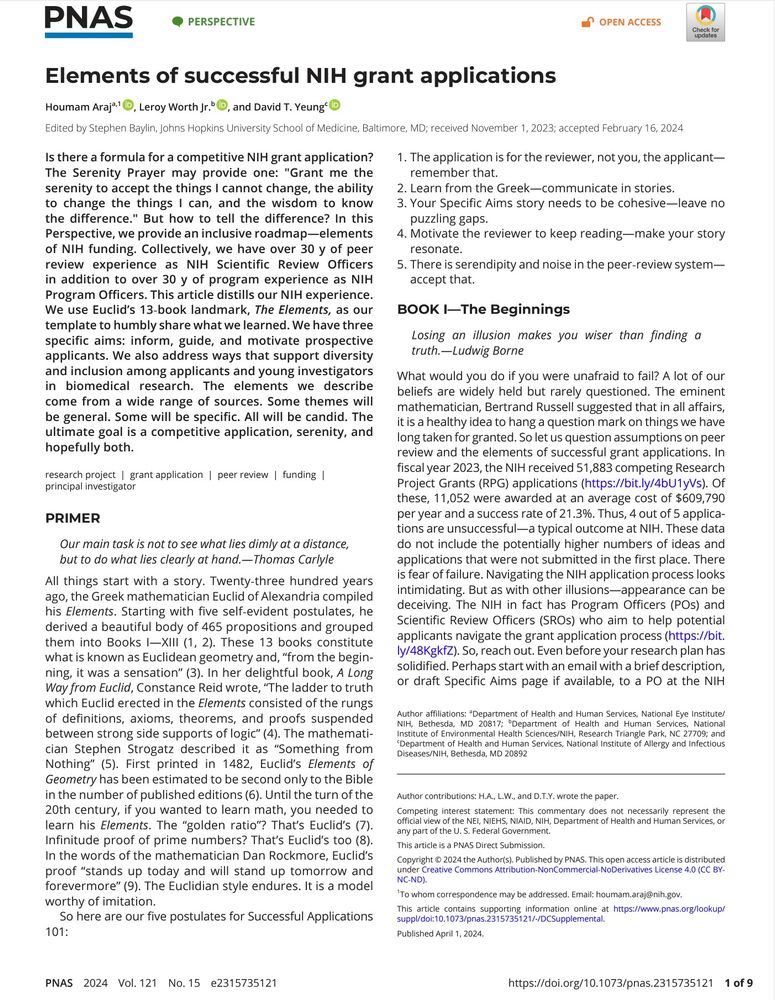
https://www.pnas.org/doi/epub/10.1073/pnas.2315735121
How to write a grant?
1. The application is for the reviewer, not you, the applicant.
2. Communicate in stories.
3. Make your story cohesive—leave no puzzling gaps.
4. Make your story resonate to keep the reviewer reading.
5. Accept chance and noise in peer-review.
www.pnas.org/doi/epub/10....
24.11.2024 15:38
👍 296
🔁 95
💬 3
📌 9

Microscopy image of a piece of the cortex of rhesus macaque. Markers shown are dapi (blue), pyramidal neurons in yellow (smi32), calreticulin (pink), and neun (purple).
A forest of neurons inside your head, happy #FluorescenceFriday! 🔬🧪🧠
22.11.2024 19:21
👍 178
🔁 27
💬 3
📌 3