📢🎉The UK Anti-SLAPP Coalition, @sarahkunz.bsky.social and I coordinated a letter signed by 103 academics calling for universal anti-SLAPP provisions in the next King's Speech to protect academic freedoms. More info below:
04.03.2026 09:31
👍 5
🔁 2
💬 0
📌 0

The decline of child stunting in 122 countries: a systematic review of child growth studies since the 19th century
Introduction Child stunting, a measure of malnutrition, is a major global health challenge affecting 148.1 million children in 2022. Global stunting rates have declined from 47.2% in 1985 to 22.3% in ...
Eradicating child stunting was a central feature of the modern health transition. A new paper reviews 923 child growth studies in 122 countries 1814-2016 to show massive decline in child stunting in the 20th century even in hi income countries & surprising heterogeneity in the regional trajectories.
20.02.2026 22:09
👍 28
🔁 11
💬 1
📌 0
Problem about the loneliness epidemic is, it's everywhere except in representative survey data. Let's look at where the claim comes from. 1/
17.02.2026 07:13
👍 596
🔁 226
💬 21
📌 35


📢 In this Social Forces article, I introduce occupational elitism as a novel measure of social closure: the share of upper-class background workers within an occupation.
Its consequences for earnings stratification can be examined using a social closure theory lens.
🔓 doi.org/10.1093/sf/s...
19.02.2026 22:13
👍 70
🔁 20
💬 3
📌 2
Excited to share a new #OA study with @dariatisch.bsky.social and @schechtlm.bsky.social🎉We show that while most people prefer equal inheritance, wealthy individuals are more willing to support unequal transfers when they help preserve wealth across generations ➡️ academic.oup.com/sf/advance-a...
17.02.2026 14:41
👍 49
🔁 22
💬 0
📌 1

What Corporations Say to Get Their Policy Way
Industries' Narrative Playbook to Fight Regulations
Our latest piece in Commercially Determined breaks down 10 common tropes used by industry to sway policy. www.commerciallydetermined.com/p/narrative-.... Curious which you hear most in your policy space.
03.02.2026 20:42
👍 3
🔁 6
💬 4
📌 0
❤️
30.01.2026 19:57
👍 28069
🔁 9224
💬 362
📌 760

The paper on the class politics of Reform UK, which I've been working on with @aaronreeves.bsky.social for the last year and a half, is now available as a pre-print on SSRN. These are our main findings. Any feedback is more than welcome.
papers.ssrn.com/sol3/papers....
28.01.2026 17:01
👍 13
🔁 6
💬 1
📌 0
A typically great post, but one with particular resonance right now.
28.01.2026 15:56
👍 4
🔁 0
💬 0
📌 0
This is a great opportunity to do truly world-leading research!
21.01.2026 15:35
👍 3
🔁 0
💬 0
📌 0
about the book? sure, i can do my best to answer
21.01.2026 10:07
👍 0
🔁 0
💬 2
📌 0
Lots to like, although I wonder whether 'variable geometry' does run the risk of accentuating the kind of cross-cutting conflicts that have pulled the middle powers in different directions over the last few decades.
21.01.2026 10:07
👍 3
🔁 0
💬 1
📌 0

7 year after becoming Professor… it’s my inaugural lecture!
Improving the life chances of disadvantaged young people: how do we break down barriers to opportunity?
Thursday 12 March, 5.15pm
Room G06, Roberts Building
Torrington Place, London WC1E 7JE
Book your place here:
bit.ly/life_chances
19.01.2026 20:29
👍 21
🔁 4
💬 0
📌 0

Who's Afraid of the Minimum Wage? Measuring the Impacts on Independent Businesses Using Matched
U.S. Tax Returns* Nirupama L Rao, Max Risch
The Quarterly Journal of Economics, Volume 141, Issue 1, February 2026, Pages 373-427, https://doi.org/10.1093/qje/qjaf053
Published: 10 December 2025
Article history V
PDF
• Split View
66 Cite P Permissions
< Share V
Abstract
A common concern surrounding minimum wage policies is their impact on independent businesses, which are often feared to be less able to bear or pass on cost increases. We examine how these typically small and medium-size firms accommodate minimum wage increases along product and labor market margins using a matched owner-firm-worker panel data set drawn from the universe of U.S. tax records over a 10-year period, and using state minimum wage changes as identifying variation. We find that on average, firms in highly exposed industries do not substantially reduce employment-they do not lay off workers but moderately reduce part-time hiring. Instead, these firms are able to fully finance the new labor costs with new revenues, leaving average owner profits unchanged.
Higher wage floors, however, forestall entry, particularly for less productive firms, reducing the number of independent firms operating in these industries by roughly 2%. Yet these industries do not shrink; instead, incumbent responses and strong positive selection among entrants reshape industries that rely heavily on low-wage workers, yielding fewer but more productive firms after the cost shock.
We also take a worker-level perspective to examine how potentially vulnerable individuals are affected by minimum wage increases. Using panels of low-earning and young workers, we find that their average earnings rise substantially with the minimum wage, while they are no less likely to be employed. Worker transitions indicate that minimum wage increases boost retention and that worker reallocation from independent firms toward corporations buffers dis…
New QJE for the minimum wage literature uses IRS data to study effects on small and medium size businesses. The effects seem…very good
academic.oup.com/qje/article/...
17.01.2026 01:53
👍 95
🔁 33
💬 4
📌 4
Looks like a fascinating new paper on cultural tastes, likes, and elite distinction
16.01.2026 22:09
👍 4
🔁 2
💬 1
📌 0

The Mental Load Quiz
Made with Tally, the simplest way to create forms.
How do you measure the domestic mental load? 🧐
And how does your experience stack up against our research of 3,000 US parents?
I created a quiz using the same approach we use in peer-reviewed sociological research so you can find out!
Hope this sparks some conversations 💡
tally.so/r/447Xxk
15.01.2026 06:08
👍 39
🔁 17
💬 3
📌 2
Perspectives on Place: what the English think about their local area
What do people in England think about their local area? In this short report I take a look at surveys we conducted with @yougov.co.uk in 2022, 2024 and 2025 to gain some insights...
Some key findings...
13.01.2026 09:21
👍 119
🔁 65
💬 3
📌 13

E-mail Addresses That Would Be Really Annoying to Give Out Over the Phone
by Michael Ward
MikeUnderscore2004@yahoo.com
MikeAtYahooDotCom@hotmail.com
Mike_WardAllOneWord@yahoo.com
AAAAAThatsSixAs@yahoo.com
One1TheFirstJustTheNumberTheSecondSpelledOut@hotmail.com
pound for pound this might be the funniest thing ever written
31.12.2025 18:15
👍 5001
🔁 1442
💬 56
📌 83
More concretely, she tracks how Chinese Canadians became less likely to support the Conservative party after Covid. This was not true of others who are racialized within Asian panethnic identity.
10.12.2025 07:29
👍 2
🔁 0
💬 0
📌 0

Podcast: Lewis Goodall, Dan Hind and James Butler · On Politics: The Bust-up at the BBC
This, from @piercepenniless.bsky.social, @dannyhinduk.bsky.social and @lewisgoodall.com is very good indeed.
01.12.2025 11:51
👍 27
🔁 10
💬 0
📌 0

It's official: 400 redundancies and a campus closure. At-risk staff will get a letter next week. Absolutely no serious consideration of any of the union's counterproposals.
Please share widely.
02.12.2025 16:52
👍 87
🔁 97
💬 6
📌 32
About a year ago, I remember talking with @kittyjstewart.bsky.social and @ruthpatrick0.bsky.social about the child poverty strategy. Back then, I was more optimistic that parental employment could play a role in reducing child poverty. Over the coming months they convinced me I was wrong.
28.11.2025 16:06
👍 11
🔁 3
💬 0
📌 0
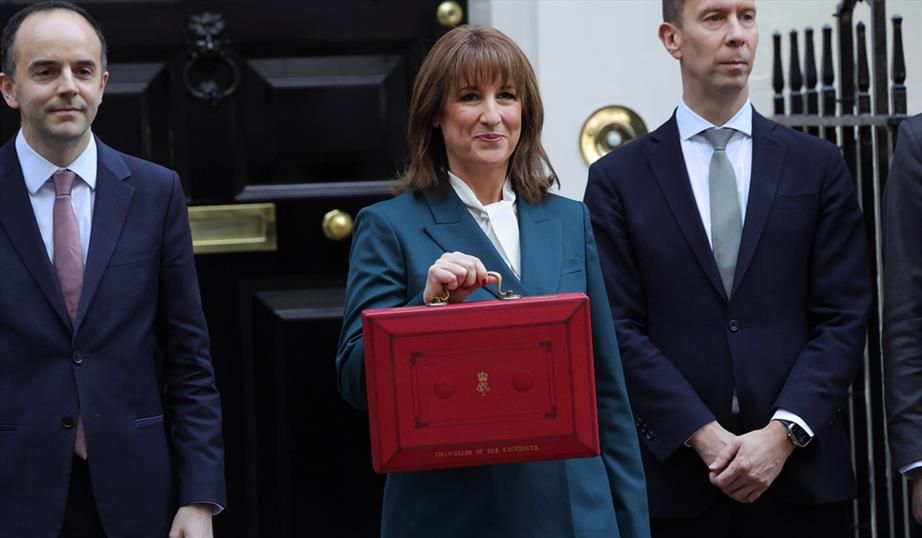
At last: a budget that ends the two-child limit
The government should be applauded for scrapping the cruel policy, but tackling poverty requires more
Let’s hope the scrapping of the two-child benefit cap is a watershed moment, spurring on sustained, ambitious action to end the scourge of child poverty, writes @ruthpatrick0.bsky.social.
27.11.2025 17:46
👍 29
🔁 9
💬 1
📌 0
Vol. 2 No. 3 (2025)
| Journal of Critical Public Health
Our first Special Issue is out now! It's on Reproductive Vulnerabilities: A Critical Perspective - Guest editors: Laura Sochas, Kaveri Qureshi, and Philip Kreager
journalhosting.ucalgary.ca/index.php/jc...
27.11.2025 18:10
👍 12
🔁 7
💬 1
📌 2
We found that if you talk about scrapping the 2 child limit right (emphasising poverty's role in poor life chances) it's not even unpopular!
26.11.2025 14:19
👍 6
🔁 1
💬 1
📌 0
Scrapping the two-child limit will be transformational for children.
This is a much-needed fresh start in our country’s efforts to eradicate child poverty and while there is more to do it gives us strong foundations to build on.
1/2
26.11.2025 13:36
👍 34
🔁 18
💬 1
📌 1