📣 Paper alert!
I am delighted that our paper exploring the impact of Neanderthal-derived variants on the activity of a disease-associated craniofacial enhancer has been published in Development today!
journals.biologists.com/dev/article/...
10.11.2025 11:11
👍 123
🔁 49
💬 7
📌 6
Huge thanks to my supervisors @r-rahbari.bsky.social & @hilarycmartin.bsky.social, our collaborators, and most importantly, the @genomicsengland.bsky.social participants for making this research possible! ✨✨
28.10.2025 11:04
👍 1
🔁 1
💬 1
📌 1

Origins of germline mutations and bioinformatic ascertainment of parental postzygotic mutations
A. Classification of germline mutations according to mutation timing. Postzygotic mutations (PZMs, rows 1–3, bottom to top) can affect both somatic and germline lineages if they occur before segregation of somatic and germline fates (i.e., early PZMs), or be restricted to the germline tissue if they arise in germline progenitors (i.e., germline-confined PZMs). For both categories, the earlier a mutation occurs, the larger the fraction of future gametes that will carry it. In contrast, de novo mutations (DNMs, top row) arise later in life during gametogenesis and affect only a subset of germline progenitors or single gametes. Gametes are represented with sperm cells, however, germline mutations can arise in both the male and female germline. B. Approximate proportions of somatic and germline cells carrying each type of mutation, with the right-hand scale indicating the likelihood of transmission to offspring. C. Overview of this study: analysis of trio WGS data for Mendelian inconsistencies supported by ≥1 ALT read, yielding 1,015 candidate early PZMs (cPZMs) in parents.
We developed a pipeline to detect these early mosaic mutations in @genomicsengland.bsky.social family trio genomes 👨💻🔍👪. They’re rare, but may help to explain otherwise unsolved rare disease cases and refine recurrence risk for families 🧬✨.
28.10.2025 11:04
👍 1
🔁 0
💬 1
📌 0

Landscape of parental postzygotic mutations in >11,000 rare disease trios
Postzygotic mutations (PZMs) arising post-fertilisation, prior to primordial germ cell specification, may be subsequently inherited by both somatic and germ cells, causing somatic mosaicism in the par...
New preprint from another part of my PhD! 📝👇
Some mutations arise after fertilisation 🧬, so early they can appear in both a parent’s body and their germ cells.
By analysing family trio genomes 👪, we built one of the largest catalogues of these “hidden” inherited variants yet.
tinyurl.com/mvns2ytv
28.10.2025 11:04
👍 12
🔁 10
💬 1
📌 0
This package is a game changer for population genetics. You can do pretty much all of the “usual” analyses, in R, and at a super fast speed 😍😍😍
So thanks mainly Evie and Andrea for creating this for all of us!
20.06.2025 12:56
👍 11
🔁 3
💬 0
📌 0
Delighted that the 'flagship' manuscript on our @genesandhealth.bsky.social 44k exomes (British Pakistanis & Bangladeshis) is now preprinted. Great academic-industry collaboration. Lots of new associations (mostly additive, a few recessive) and new insights into homoz knockouts & drug discovery.
12.06.2025 19:14
👍 44
🔁 14
💬 2
📌 1
Check out the new pre-print from Luci! 👇🏾 Super cool work highlighting the discovery of a blood biomarker of IBD! 👀🧬🔬
05.06.2025 08:07
👍 2
🔁 0
💬 0
📌 0
All the nitty gritty details in the paper! Many thanks to everyone who was part of this journey, including all of the participants of the 100,000 Genomes project @genomicsengland.bsky.social
16.05.2025 17:47
👍 2
🔁 0
💬 0
📌 0
We report DNM rate and spectra differences between genetically inferred ancestral populations 🗺️🧬 and an association between smoking behaviour 🚬 and DNM rate.
16.05.2025 17:43
👍 2
🔁 0
💬 1
📌 0
An awesome collaboration between the @hilarycmartin.bsky.social @r-rahbari.bsky.social & @aylwyn-scally.bsky.social groups
16.05.2025 17:40
👍 3
🔁 0
💬 1
📌 0

Illustration depicting the ways in which fungi can exchange genetic material with each other. Starship mediated HGT is confirmed experimentally in this preprint.
We did it! We caught Starship #transposons moving between #fungal species in the lab, including between species separated by ~100my. We think Starships are a mediator of HGT in fungi, akin to conjugative elements in bacteria. Check out the preprint. www.biorxiv.org/content/10.1...
07.03.2025 06:18
👍 254
🔁 137
💬 3
📌 10

Thrilled to share new work led by @jieyang437.bsky.social in the lab published today in @Nature. We find that Aspirin prevents metastasis by releasing T cells from immune suppression by platelet TXA2. @Cambridge_Uni @CRUKCamCentre rdcu.be/eci1U
05.03.2025 18:56
👍 105
🔁 46
💬 2
📌 2
Comparative analysis of human and mouse ovaries across age https://www.biorxiv.org/content/10.1101/2025.02.27.640481v1
03.03.2025 20:34
👍 2
🔁 1
💬 0
📌 0
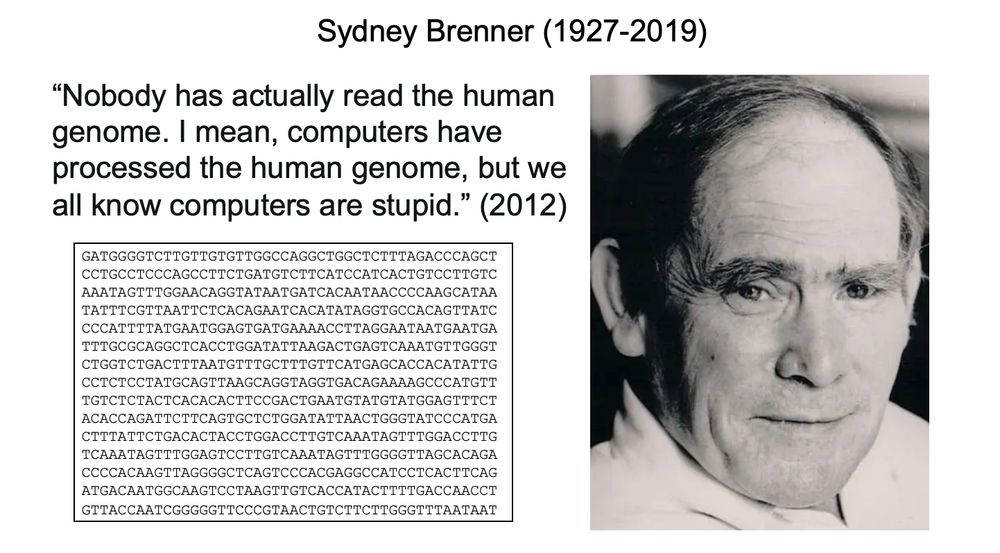
I want to tell you a story about computers, creativity and art. (1/N) 🧵
Sydney Brenner once said in 2012 that “nobody has actually read the human genome. I mean, computers have processed the human genome, but we all know computers are stupid.”
(Summary of a talk I gave at the Sanger last week)
03.03.2025 02:55
👍 43
🔁 10
💬 1
📌 1

Pubmed
02.03.2025 13:10
👍 148
🔁 19
💬 3
📌 3

Contralateral cancers are an enigma: the unaffected organ is perfectly matched on exposures across life, yet despite this at older ages the risk of cancer in that organ is not much higher than a randomly selected organ from the same population. What can be happening? youtu.be/7rbsGpz9-XE
28.02.2025 20:20
👍 14
🔁 5
💬 2
📌 0
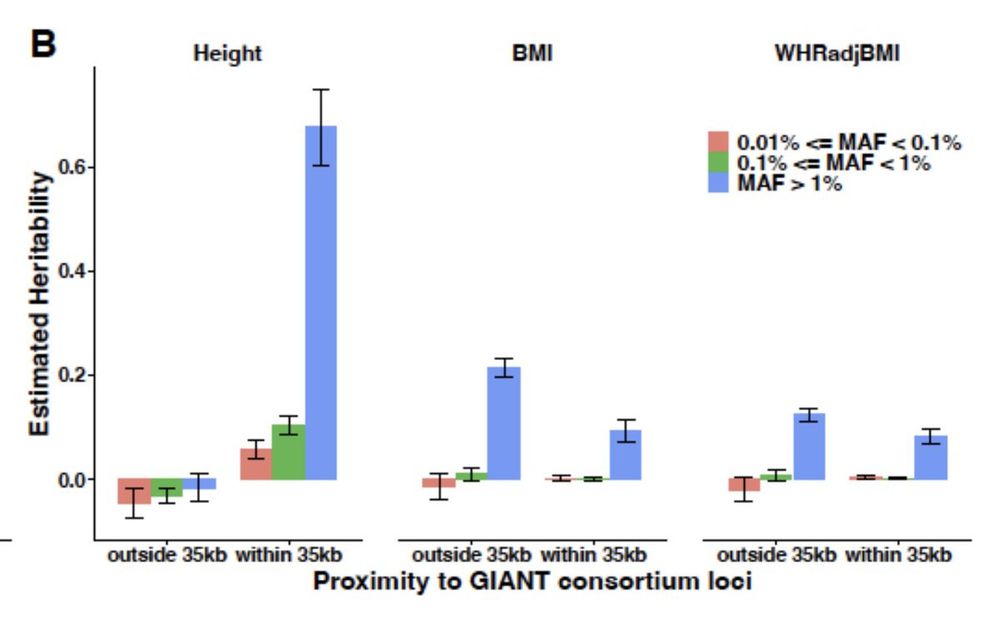
We finally have some well-powered whole-genome heritability estimates, including a quasi-behavioral trait (BMI). For height, ~89% of the heritability estimated to reside in common variants. For BMI and WHR, ~100% estimated in common variants.
www.biorxiv.org/content/10.1...
26.02.2025 18:25
👍 42
🔁 17
💬 1
📌 1

Should biology put complexity first?
The dictum “Everything should be made as simple as possible, but no simpler” poses
a problem for biology. How simply can it be told without doing damage to its complex
nature? The answer might be foun...
Quantitative genetics is poorly understood by many biologists, and that's surely a failure in how it is taught. But teaching biology as 'fundamentally complex' seems like one of the least promising educational ideas since those 1970s schools that made lessons optional.
www.cell.com/cell-systems...
22.02.2025 12:38
👍 19
🔁 9
💬 2
📌 3
Assistant/Associate Professor in Computational Biology - Job Opportunities - University of Cambridge
Assistant/Associate Professor in Computational Biology in the Department of Applied Mathematics and Theoretical Physics at the University of Cambridge.
We are excited to announce a new faculty position here in Cambridge, for researchers in computational and/or theoretical biology, based jointly in Genetics and Mathematics. Come and join us! Happy to answer questions about research, teaching and working here. www.jobs.cam.ac.uk/job/50414/
21.02.2025 15:07
👍 311
🔁 238
💬 5
📌 5

Our thymus, a critical source and trainer of T cells, involutes with aging. 2 new studies find a growth factor (FGF21) that delays involution (in mouse models) and may be a way to rejuvenate our immune system and promote healthy aging in the future.
19.02.2025 14:53
👍 194
🔁 38
💬 12
📌 0