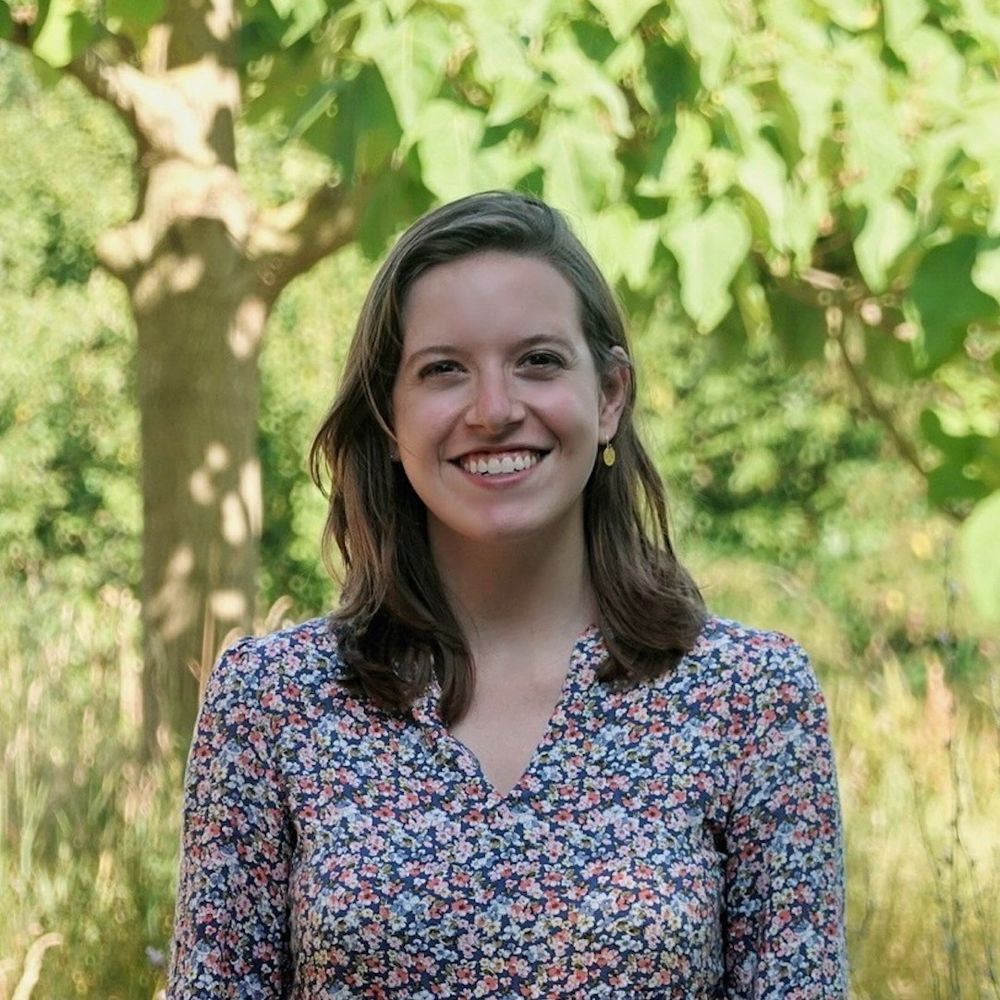

What happens when we tell each other stories? New research from myself, @kurtjgray.bsky.social, and practitioners at Narrative 4!
Full report: hubs.li/Q044v_6_0
24.02.2026 20:24
👍 2
🔁 0
💬 0
📌 0
What happens when we tell each other stories? New research from myself, @kurtjgray.bsky.social, and practitioners at Narrative 4!
Full report: hubs.li/Q044v_6_0

Cover page of a journal article titled "The Psychology of Victimhood in the Law"
⚖️ New paper in Policy Insights from the Behavioral and Brain Sciences!
Legal decisions hinge on who counts as a victim — but our judgments are biased & hard to change. We propose solutions: victim impact statements, funding restorative justice, & acknowledgments for exonerees.

Great review from @emilykubin.bsky.social and @vaparker.bsky.social on the challenges of researching what effectively reduces polarization - including knowing if and when reducing polarization should be something we want to do.
www.researchgate.net/profile/Emil...
After describing these challenges, we then call on researchers (and other stakeholders) to attempt to address some of these barriers and provide concrete examples for how we as a field can better connect our research to practice.

We introduce a novel framework called the SCOPE Barriers Framework. This framework considers statistical, methodological, (inter)disciplinary, WEIRD sampling, practical, and ethical barriers that challenge scholars in assessing their interventions in the real world.

🚨 New Pre-Print🚨
Very excited to share new work w/ Victoria Parker. Here we think about big questions regarding the limitations and barriers affective polarization interventions face in being translated from research to practice
www.researchgate.net/publication/...

This piece is in reference to our recent publication: journals.sagepub.com/doi/full/10....

Check out our recent Character and Context piece explaining how reframing political ideas (including facts!) to be more self disclosing can bridge political divides.
spsp.org/news/charact...
Check out this great new piece (so excited to see it out!!). Analysis of German political manifestos shows an increase in victimhood narratives over time (especially by more extreme parties on the left and right).
Yess! So excited to see this out. Can’t wait to cite!
We hope this project points to the merits of academic-practitioner collaboration and will encourage others to connect science to practice as well.
Finally thank you to my co-authors @Narrative 4
(Lee Keylock and Evan Barker) and
@kurtjgray.bsky.social

Taken together this work provides further evidence for the power of narratives in building empathy and connection, while also healing political divides (see also: pnas.org/doi/10.1073/...)

Further, the program also led students to report lower affective polarization for those who disagree with them on political issues.


Using experimental methods, we find this intervention promoted empathy, civic outcomes, and many other pro-social outcomes (e.g., respect for others, perspective taking) among those in the intervention (vs. control).
The intervention taught students skills in story sharing including perspective taking, active listening, and how to share a compelling story. This intervention culminated in a story exchange between students.
This collaboration tested the efficacy of a 10-session narrative intervention developed by practitioners at Narrative 4 among 380 high school students in 5 schools in Kentucky USA.
Academics and practitioners rarely work together, but would both benefit from collaboration. Practitioners benefit via statistical testing of their interventions. Academics benefit via connecting research to practice.

Thrilled to share our new report stemming from a collaboration between academics and practitioners!
Here we show the benefits of a narrative intervention in American high schools for promoting empathy, pro-sociality and reducing affective polarization!
osf.io/preprints/ps...

A must read for those concerned about the polarization of truth and the rise of AI. AI can give us the "facts" we want to hear, and make it seem highly credible.
www.nytimes.com/2025/11/04/b...

Is social media dying? How much has Twitter changed as it became X? Which party now dominates the conversation?
Using nationally representative ANES data from 2020 & 2024, I map how the U.S. social media landscape has transformed.
Here are the key take-aways 🧵
arxiv.org/abs/2510.25417

Can media stories about immigrant success shift public opinion? Unan shows German coverage of BioNTech’s Turkish-German founders boosted support for easing immigration, evidence that positive exposure can reshape perceptions. #Immigration
Read more:
link.springer.com/article/10.1...

Many of these ideas originated with my previous research exploring the role of perceived harm and truth in shaping people's willingness to silence others
onlinelibrary.wiley.com/doi/pdf/10.1...
Importantly, when we (endorse) censoring opponents it drives further political division--creating a feedback loop of increasing polarization and willingness to silence opponents.
Social media and polarization feed off one another, and through a variety of processes, drive epistemic polarization. This disagreement over truth fosters peoples' beliefs that their opponents' ideas are harmful and untrue--driving willingness to censor.

Using knowledge from political psychology and communications research I develop the Social Media- Polarization-Censorship (SPC) Framework which explains how social media and polarization interact to drive political censorship

🎈Thrilled to share my first ever solo author work🎈
In this chapter I uncover the relationship between social media, political polarization, and their downstream effects on political censorship.
osf.io/preprints/os...
Congrats Mikey! This sounds super interesting.. looking forward to reading it!

Landing page for our article "Fighting fire with fire: Prebunking with the use of a plausible meta-conspiracy framing" published in the British Journal of Psychology
🚨New open access paper out in BJP special issue "Psychological Understanding of Misinformation and Disinformation in the Face of Environmental Crises"!
“Fighting fire with fire: Prebunking with the use of a plausible meta-conspiracy framing” 🧵👇 1/12
📖 doi.org/10.1111/bjop...

We're pleased to kick off the 2025 BPS Social Psychology Section Conference with a welcoming speech by our chair @swedishprotests.bsky.social and organisers @shelleymckeown.bsky.social & @nascherme.bsky.social
It was a long road with this piece but I am so happy to finally see it published! Thankful for the team effort from my co-first author @versteegenluca.bsky.social and the amazing @kurtjgray.bsky.social