YUP
09.02.2026 01:46
👍 1
🔁 0
💬 0
📌 0

@laurenwhitenack
PhD candidate studying mountain chickadee breeding ecology | University of Nevada, Reno she/her/hers laurenwhitenack.com Photos my own unless otherwise noted. Local activism to make birding accessible and welcoming to all people 💜
YUP
I think my worldview can be summarized by the following three points:
____ people are people too, and should be treated as such ❤️
Earth is our only home and is worth saving 🌍
Diversity is essential for a healthy ecosystem/society 🌈
It’s really that simple.
Today, in my town of Reno, NV, students from nearly all high schools and even some of the middle schools participated in a walkout to protest ICE. I’m so proud of them ❤️ We should listen to them - they read the history books most recently so they know what’s at stake.
😂
Everywhere I look I see women leaving academia for one reason or another, and many of these reasons are less relevant to male counterparts. Obstacles like longer review times are certainly not helping, especially in a career where success and progress are measured in publications!

Mountain bluebird (Siala currucoides) perching on a Russian olive tree. A beautiful end to the year. I hope all your birdy dreams come true in 2026! #birds

I am looking for a postdoc to work in our long-term system of food-caching mountain chickadees in the Sierra Nevada mountains. The expected start is April 2026. Please see details here: chickadeecognition.com/positions
If interested and qualified, please contact me directly (email on the website).
Awww how beautiful! Amazing shot. I would love to see them. Thank you so much!!
They can be difficult to see! I’ve only seen them a couple of times. Very sneaky little guys.
Thank you Mark! One of my favorites for sure!

A brownish bird with a streaked belly, reddish tail, and dark mask over eye perches on a small branch of a guanabana fruit tree.
Streaked Flycatchers (Myiodynastes maculatus) are large flycatchers native to Central and S. America. On first glance they appear rather drab, but they have beautiful cinnamon tails and stunning facial markings. While they mostly eat insects, they are also known to eat fruit and even small lizards 🪶
Birding is for everyone! 🏳️🌈🏳️⚧️ We had such an incredible time representing the Northwest Nevada Bird Alliance (formerly Lahontan Audubon Society) at Reno's Pride celebration this year! Huge shout out to our incredibly talented artist Lauren Estrada for creating our banner!
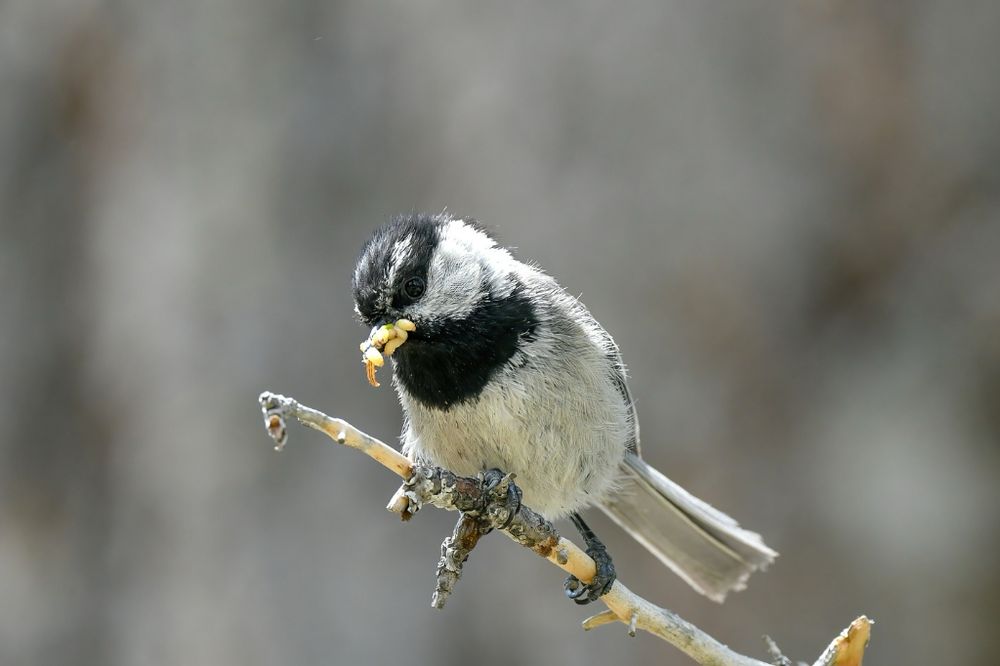
Do you like baby birds? Fun photos and stories about chickadees in my latest guest post at Wing Beat, the blog of the @amornith.bsky.social. This post accompanies our recent paper on postnatal dispersal and recruitment in mountain chickadees 🪶
americanornithology.org/hatch-early-...

A small owl perched on a broken tree limb glaring down with bright yellow eyes.
An intense look from a very tiny northern pygmy-owl (Glaucidium gnoma). These owls weigh less than an American robin (~70g)! They are unusual among the owls because they are diurnal, meaning they hunt and are most active during the daytime. They prey mainly on small songbirds and mammals. #birds

Two reddish-brown ducks wading in deep mud, using their bills to sift food items out of the muck.

Two reddish-brown ducks wading in deep mud, using their bills to sift food items out of the muck.

Two reddish-brown ducks wading in deep mud, using their bills to sift food items out of the muck.
Cinnamon teal (Spatula cyanoptera) males shoveling around in the mud at a wetland in Reno, NV. Many ducks' bills contain small comb-like structures called lamellae, allowing them to sift out mud or non-food particles and eat the larger invertebrate food items such as crustaceans or molluscs.
Still one of my favorite photos I've ever taken - it's not a close-up, not in flight, and a 300mm lens had to do. I biked to the Old Bynum bridge with my camera in my backpack to be eye-level with this guy. 🪶

A bright yellow warbler peaks out from beneath the leaves of a tree branch.
A bright male prothonotary warbler (Protonotaria citrea) peaking out at the end of a branch in Chatham, NC. This species is one of only 2 warbler (Parulidae) species that nest in tree cavities (the other is Lucy's warbler). They primarily use holes excavated by downy woodpeckers! #birds #photography
So cute! I love this!

A bright red bird with a black stripe through the eye and dark brown wings sitting on a fence.
Vermilion flycatcher (Pyrocephalus rubinus) from the Las Vegas area. One of the most stunning and brightly-colored of the New World flycatchers (Tyrannidae), this species is found from the southern United States down to Argentina. In Vegas, the males stand out like a ruby in the desert landscape 🪶

This infographic describes the main results from a survey of members of 14 scientific societies. There is a pie chart showing that both academic (58%) and non-academic (42%) responded to the survey. It lists statistics: 85% of respondents reported uncertainty about the future; 71% reported federal training programs were "very" or "extremely important"; 83% reported negative impacts or irreparable harm on their field of science. There is a word cloud summarizing open-ended responses with the largest words "student research fund federal grant". Eight major themes in the responses are listed: disruption of research with societal important; concerns of closure of the USGS Bird Banding Lab; Early Career Bottleneck; Restricted Freedoms including travel and speech; Decline in Government Efficiency and Expertise; Concerns about Biased/Removed Data and Data Gaps; Concerns about the Ability to Meet Legal Mandates; and From Positive Impact to Irreparable Harm. There are icons for each participating society and a QR code for website and data availability.
Today 14 scientific societies in #ecology #evolution and #marineScience are publishing the results of a survey that finds negative impacts of federal policies on food security, flood mitigation, infectious disease preparedness, and wildlife conservation: 🧪👩🔬 www.firsthandaccounts.org/impacts/2025...

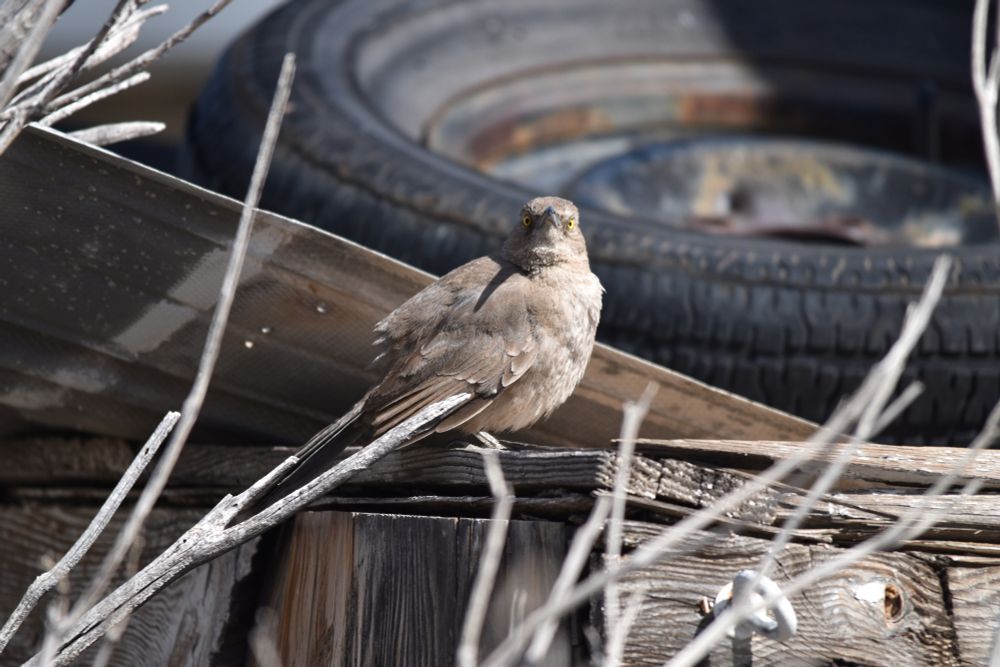
Have you ever been judged this harshly by a bird? Curve-billed thrasher (Toxostoma curvirostre) from southern Nevada. Rare to the area but a couple individuals are regularly spotted. The thrasher diversity in the North American Southwest is incredible. #birds

Nice blog by @laurenwhitenack.bsky.social about her recent paper on phenological flexibility in mountain chickadees.
communities.springernature.com/posts/mounta...
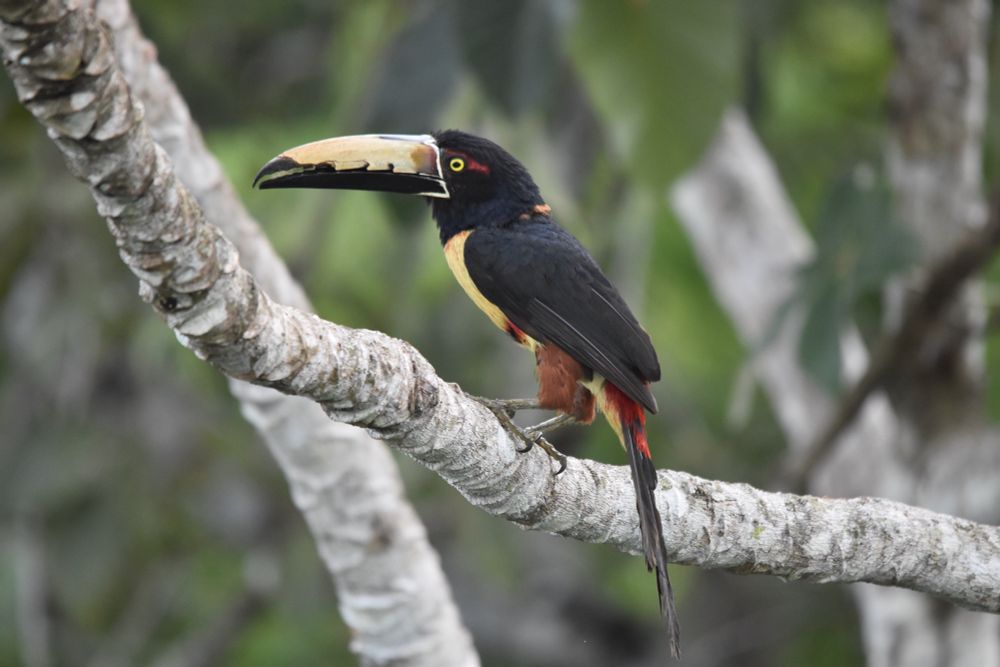
The collared aracari (Pteroglossus torquatus) is a small toucan from Central and South America. Like other species of toucans, collared aracaris nest in tree cavities excavated by large woodpeckers. They eat fruit and insects, but are also known to eat the eggs and young from other birds’ nests. 🪶
We’re deeply disappointed negotiations for a global plastics treaty have ended without a final agreement.
Over the past 3 years, the momentum has been undeniable. The world now understands, plastic is a full lifecycle problem that demands systemic solutions, & that its health impacts are profound.
Ohio recently passed SB1 (www.legislature.ohio.gov/legislation/...) which allows for these bans. All places of higher learning should be on high alert. McCarthyism has returned in perhaps an even more dangerous form. PLEASE SPREAD WIDELY. #dei #americanacademia #fascism #ohiosb1 #diversity

🚨 DEI BANS - Sent to me by a colleague in Ohio at an orientation. As a graduate TA, it’s that time of year where I’m participating in and facilitating orientations for various university courses and initiatives. DEI hasn’t been banned at my institution yet but this NEEDS to be a wake up call. SPREAD

Small bird with yellow belly, dark grey head, and back and white eyebrow perched on a branch. The bird has a distinct slender decurved bill.
Bananaquit (Coereba flaveola) from the Darién province of #panama. A unique species from the neotropical tanager family (Thraupidae), this bird has a sharp, decurved bill adapted for drinking nectar from flowers. #birds 🌺

Amazing: Birds may have a previously unrecognized ability to switch sexes. #ornithology
Thank you so much!! 😊🙏
