Belmont Igneul's Avatar

Belmont Igneul

@beetleigneul

Idiot writer, Bug Enjoyer, Women Fearer

9
Followers
11
Following
1
Posts
21.11.2024
Joined
Posts Following

Latest posts by Belmont Igneul @beetleigneul

Post image

I love him thank you.
@artistncs.bsky.social

19.03.2025 20:53 πŸ‘ 5 πŸ” 1 πŸ’¬ 1 πŸ“Œ 0

People are starting to get their Gloose plushies, and a majority of the pictures are hands gripping Gloose really hard

19.03.2025 20:15 πŸ‘ 601 πŸ” 31 πŸ’¬ 23 πŸ“Œ 0
Post image

I'm the strongest! :3

07.03.2025 13:16 πŸ‘ 12773 πŸ” 1054 πŸ’¬ 173 πŸ“Œ 37
Post image
10.02.2025 06:22 πŸ‘ 160 πŸ” 7 πŸ’¬ 2 πŸ“Œ 0

I showed my family and friends a minigame I've been working on for DR and they all described it as "a cry for help because your game is not out"

09.02.2025 13:15 πŸ‘ 32688 πŸ” 2693 πŸ’¬ 222 πŸ“Œ 87

Sinister planning

10.02.2025 11:22 πŸ‘ 2 πŸ” 0 πŸ’¬ 0 πŸ“Œ 0
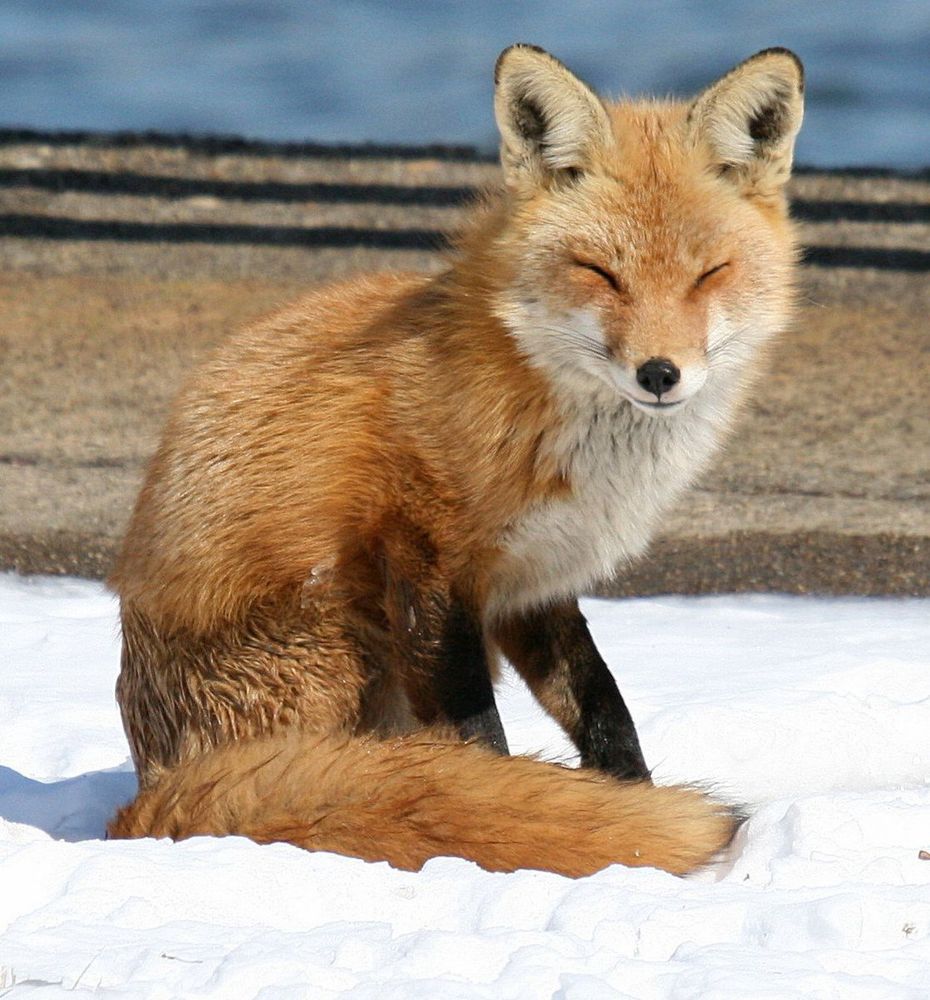
Post image

I greatly enjoy when foxes make this face

10.02.2025 01:14 πŸ‘ 10334 πŸ” 615 πŸ’¬ 100 πŸ“Œ 19
Post image
21.11.2024 00:06 πŸ‘ 5434 πŸ” 1668 πŸ’¬ 36 πŸ“Œ 32
Three bright stars with diffraction spikes shine near the center-right of the image, illuminating nearby clouds that glow in pale blue. The clouds darken at the edges of the image, and are dotted with smaller stars, some also with diffraction spikes.

Three bright stars with diffraction spikes shine near the center-right of the image, illuminating nearby clouds that glow in pale blue. The clouds darken at the edges of the image, and are dotted with smaller stars, some also with diffraction spikes.

Clouds of gas and dust with many stars. The clouds form a flat, blue background toward the bottom, and become thicker and smokier toward the top. Stars on one side light the nebula. A thick arc of gas and dust reaches around from the bottom-right corner of the image toward the top-left corner. It begins as a dark and obscuring cloud at bottom right and gradually becomes brightly lit by many stars at the upper left. Other large, foreground stars lie between the nebula and the viewer.

Clouds of gas and dust with many stars. The clouds form a flat, blue background toward the bottom, and become thicker and smokier toward the top. Stars on one side light the nebula. A thick arc of gas and dust reaches around from the bottom-right corner of the image toward the top-left corner. It begins as a dark and obscuring cloud at bottom right and gradually becomes brightly lit by many stars at the upper left. Other large, foreground stars lie between the nebula and the viewer.

A portion of the young star-forming region Serpens Nebula. It’s filled with wispy orange and red layers of gas and dust, and within that orange dust, there are several small red plumes of gas that extend from the top left to the bottom right, at the same angle. There are wispy blue filaments of glass in the bottom right corner of the image. Small points of light are sprinkled across the field, brightest sources in the field have extensive eight-pointed diffraction spikes that are characteristic of the Webb Telescope.

A portion of the young star-forming region Serpens Nebula. It’s filled with wispy orange and red layers of gas and dust, and within that orange dust, there are several small red plumes of gas that extend from the top left to the bottom right, at the same angle. There are wispy blue filaments of glass in the bottom right corner of the image. Small points of light are sprinkled across the field, brightest sources in the field have extensive eight-pointed diffraction spikes that are characteristic of the Webb Telescope.

Hundreds of stars and galaxies in varying shapes, sizes and colors on a black background. Two of the largest, most prominent stars can be found in the top left quadrant and near the bottom right edge, respectively. They are tinged with blue and have an eight-point diffraction spike pattern. Near the center of this image is the ZS7 system, made up of a merger between two galaxies and their black holes. The ZS7 system is not easily seen by the naked eye in this image, as it looks like very small red dots.

Hundreds of stars and galaxies in varying shapes, sizes and colors on a black background. Two of the largest, most prominent stars can be found in the top left quadrant and near the bottom right edge, respectively. They are tinged with blue and have an eight-point diffraction spike pattern. Near the center of this image is the ZS7 system, made up of a merger between two galaxies and their black holes. The ZS7 system is not easily seen by the naked eye in this image, as it looks like very small red dots.

isn’t it crazy that this stuff is just out there?

21.11.2024 01:15 πŸ‘ 5739 πŸ” 467 πŸ’¬ 133 πŸ“Œ 20
Post image

The Shark Nebula 🦈

πŸ“· Stephen Kennedy

20.11.2024 15:47 πŸ‘ 6094 πŸ” 362 πŸ’¬ 59 πŸ“Œ 20
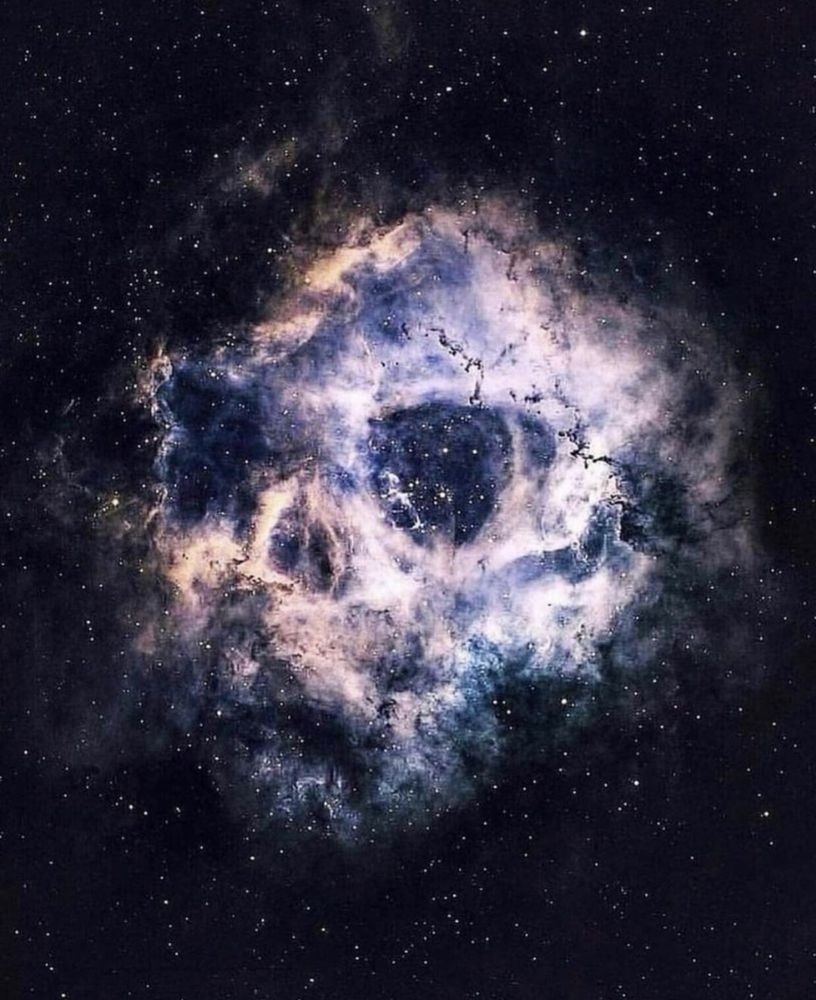
Post image

The skull nebula
Image credit:- NASA Hubble

20.11.2024 07:06 πŸ‘ 18006 πŸ” 1118 πŸ’¬ 237 πŸ“Œ 110
Post image

The Antennae Galaxies - Hubble

20.11.2024 06:16 πŸ‘ 24541 πŸ” 988 πŸ’¬ 133 πŸ“Œ 58