


How it started (maybe let's call these things Little Red Dots???) // How it's going (xkcd #3212) 🔭🧪
26.02.2026 14:44
👍 8
🔁 1
💬 0
📌 0
How it started (maybe let's call these things Little Red Dots???) // How it's going (xkcd #3212) 🔭🧪

Everywhere JWST looked, the telescope found at least one specimen of what are now commonly called Little Red Dots. The dots were everywhere, until they were nowhere; about 1.5 billion years after the big bang, they mostly disappear. Take a deep dive into this mystery
there are LRDs at low-redshift, certainly at z~2 and even down to z~0!

The images show examples of Little Red Dots observed by JWST, highlighting their compact structure and distinctive red colours in the early Universe. Image Credit: © NASA/CSA/ESA, P. A. Oesch & M. Xiao (University of Geneva), J. Matthee (ISTA), G. Brammer (Niels Bohr Institute)
This week, we are hosting ISSI International Team 659, “Little Red Dots, Big Open Questions”, led by Mengyuan Xiao & Rohan Naidu @rpnaidu.bsky.social.
The team brings together observers and theorists to study one of the James Webb Space Telescope’s most intriguing discoveries: Little Red Dots. 🔴🔭
These folks should be commended for disclosing!
This is extremely cool work about the most puzzling question in astrophysics 👀

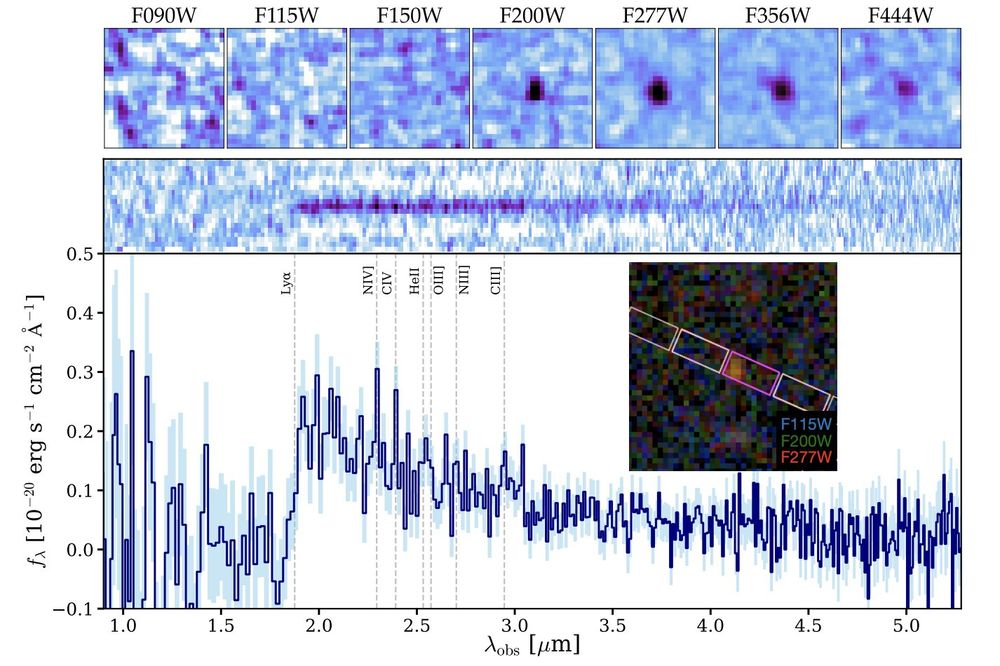
Paper day!! Little Red Dots (LRDs) are seen everywhere by JWST, but even after 3 years of relentless effort we are still debating what these things actually are. We decompose LRDs to show LRD - Host Galaxy = Black Hole Star (BH*)! 🧵
arxiv.org/abs/2601.20929
🔭 🧪

I'm sad to report that Rainer (Rai) Weiss passed away yesterday at age 92. Rai developed the design for LIGO, he and Kip got it funded, trained countless researchers, and received the 2017 Nobel Prize. Rai always had time for students and treated us as equals. May his memory be a blessing
Discovery and preliminary characterization of the new interstellar object 3I/ATLAS!
arxiv.org/abs/2507.02757

Spectacular images show off the Sculptor Galaxy like never before. 🤩🔭
www.iflscience.com/feast-your-e...

The paper: ui.adsabs.harvard.edu/abs/2024ApJ....
A nice article covering the excitement around LRDs: www.quantamagazine.org/the-beautifu...

Exactly two years ago -- the moment of submission of the "Little Red Dot" paper! @jorryt.bsky.social and I managed to find something red to wear for the occasion. Fueled by coffee/hot chocolate and photographed by Pascal Oesch!
My Canadian university, Queen's, is offering TWENTY 4-year funded PhDs (40k CAD/yr) for a student of ANY citizenship who has been accepted at a top 100 US university but have had offer rescinded OR are reconsidering offer due to US policy.
Details found here👇
www.queensu.ca/grad-postdoc...
Thanks for maintaining this! I'm an astronomer and would love to join this feed. rohannaidu.github.io
i am a postdoc and would love to share and discuss latest research on this feed rohannaidu.github.io
yes
@bot.astronomy.blue signup
While it is too luminous by pre-JWST standards, it aligns well with the new models of galaxy formation inspired by JWST observations
We found the most distant confirmed galaxy
(some Sergej Boebka vibes 😅)
arxiv.org/abs/2505.11263

A plot showing absolute magnitude (y axis; a measure of luminosity) versus spectroscopic redshift (x axis; a measure of distance). Several galaxies are shown on the plot, with the galaxy from this paper the farthest to the right (highest redshift). There are also images of 4 galaxies on the plot.
A new record holder for the earliest-known / most distant galaxy, from @rpnaidu.bsky.social! It’s at redshift 14.4, or 280 million years after the Big Bang. It’s also remarkably bright & compact. The abundance of these galaxies is 100x higher than pre-JWST expectations 🧪
arxiv.org/abs/2505.11263
On Friday, my son stayed home from school because he had a sore throat and wasn’t feeling well. He went with my husband to his office for the morning while I handled our daughter. When he came back at lunch, he was not interested in eating, saying his throat hurt too much. 1/n

Grateful that our recent paper was covered in the cosmic superstar amongst astronomy publications -- @astrobites.bsky.social! Thanks to Ansh Gupta for the thoughtful summary!
astrobites.org/2025/04/22/s...

Screenshot of the "What is JWST observing now?" webpage that tracks the NASA observatory's current targets. https://webbtelescope.org/science/the-observatory/what-is-webb-observing-now
That feeling of anticipation/excitement/x-mas morning hits at 110% every single time! The most sublime instrument fashioned by humankind, for these few hours, is working hard on our behest! @jwstfeed.bsky.social @jwstobserver.bsky.social
Looking forward! And totally understand!
Ooh! Are you accepting nominations? :) ui.adsabs.harvard.edu/abs/2025arXi...
We'll know the fate of our Pop III candidate (and learn a lot about ultra-faint galaxies!) this summer thanks to our recently approved DDT program. Stay tuned!
www.stsci.edu/jwst-program...
My favorite quote from the article, courtesy Tim Beers, alluding to the Milky Way's own ultra-faint satellites that seem quite primordial themselves: “I find it exciting that you can draw a straight line from what we see around the Milky Way to this proposed birthplace.”

Great article on our Pop III paper, co-led with @sfseiji.bsky.social. Thanks for capturing the excitement so well @danclery.bsky.social!
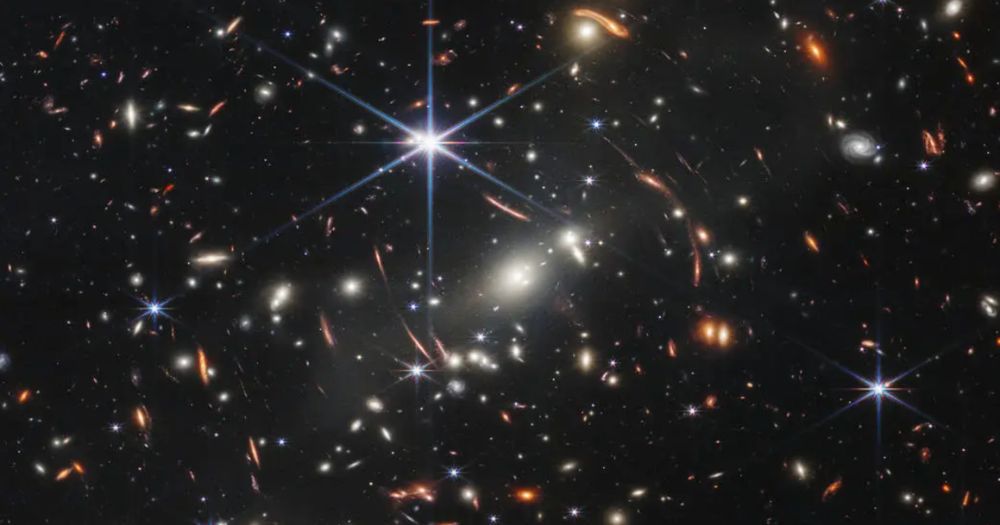
🚀 New research from #KavliAstro: Researchers at the Kavli Institute for Astrophysics and Space Research at MIT have proposed a way to solve two cosmic mysteries with a single underlying explanation. 🔭
#JWST #DarkEnergy #Astrophysics
www.kavlifoundation.org/news/a-cosmi...
It was an absolute joy working with @sfseiji.bsky.social on this grand adventure that began at this year's Hubble Symposium, with John Chisholm and @dyonysos.bsky.social -- the fearless leaders of GLIMPSE, and with our team mates who put countless hours into making these data science-ready!