Good point! But having just fought for 20 minutes with Microsoft Copilot to help set up a simple sharepoint page and add some documentation to it... I think there's quite a lot of friction left in current implementations ;)
27.02.2026 10:40
👍 1
🔁 0
💬 1
📌 0

What if you find out your own brother is a thief? We asked how people respond when a close other commits a moral transgression. -> It gets people to feel both as the victim + as the perpetrator & changes what punishment they seek. journals.sagepub.com/doi/10.1177/...
#socialpsyc #PsychSciSky
30.01.2026 07:57
👍 16
🔁 10
💬 1
📌 0

How we built CoPE
We just published the methodology behind CoPE. This is the model that powers Zentropi, and we think the approach might be useful for others working on policy-steerable classification systems.
We had ...
We just published the methodology behind CoPE, our 9B parameter model that matches GPT-4o at content classification at 1% the size! The model is already open source, but now we're sharing our training technique. blog.zentropi.ai/how-we-built... 🧵 1/6
15.01.2026 18:51
👍 87
🔁 24
💬 2
📌 4

WARN-D machine learning competition is live » Eiko Fried
If you share one single thing of our team in 2026—on social media or per email with your colleagues—please let it be this machine learning competition. It was half a decade of work to get here, especi...
After 5 years of data collection, our WARN-D machine learning competition to forecast depression onset is now LIVE! We hope many of you will participate—we have incredibly rich data.
If you share a single thing of my lab this year, please make it this competition.
eiko-fried.com/warn-d-machi...
07.01.2026 19:39
👍 187
🔁 159
💬 5
📌 5

Social media was supposed to expand political participation.
But often, women politicians face hate, threats, and abuse just for showing up.
After analysing 110,000+ Facebook & YouTube comments during elections in #SriLanka, we found disproportionate amounts of hate towards women.👇
07.01.2026 10:17
👍 8
🔁 4
💬 1
📌 0
Wow, Stackoverflow is cooked.
04.01.2026 04:51
👍 37
🔁 12
💬 6
📌 9
Absolutely love this paper! Genius design and super insightful! Must read for anyone interested in the study of online political discussions.
11.12.2025 09:29
👍 1
🔁 0
💬 0
📌 1

screenshot of my post
Big new blogpost!
My guide to data visualization, which includes a very long table of contents, tons of charts, and more.
--> Why data visualization matters and how to make charts more effective, clear, transparent, and sometimes, beautiful.
www.scientificdiscovery.dev/p/salonis-gu...
09.12.2025 20:28
👍 799
🔁 316
💬 22
📌 50

I think the point Saloni makes is about striking the correct balance. I quite like the one she presents after those earlier two, especially with the change of the Y axis..
10.12.2025 10:28
👍 3
🔁 0
💬 1
📌 0

the background depicts the proposed amendment, the foreground reads "Open Letter: The Amendment to Article 12, paragraph 5 GDPR in the Omnibus Proposal Undermines Evidence-Based Policymaking"
We've published an Open Letter urging EU policymakers to reject the Digital Omnibus' proposed Amendment to Article 12(5) GDPR, which would undermine citizens' data access rights & the researchers who depend on them for #DataDonation research.
Read & sign: shorturl.at/e1mr4 - your signature matters.
25.11.2025 11:00
👍 8
🔁 5
💬 0
📌 4

Why Commercial Tools Can Scrape Social Media But Researchers Can't | TechPolicy.Press
Brandon Silverman explains how researchers face barriers to social media data under the DSA, while corporations can buy full access.
Despite new EU transparency laws, researchers are still blocked from vital social media data, while corporations buy the same information freely, argues Brandon Silverman. The result: a two-tier system that shields platforms from scrutiny and weakens democratic oversight.
11.11.2025 14:31
👍 49
🔁 23
💬 2
📌 5
OSF
Happy to share our new preprint “Content-based detection of misinformation expands its scope across politicians and platforms.” We analyzed misinformation at the text level in posts by German politicians on Facebook, Instagram, X, and TikTok.
osf.io/preprints/so... 🧵1/8
03.11.2025 10:12
👍 11
🔁 4
💬 1
📌 1

NoteTracker Dashboard
App for Discovering and Analyzing X Posts with Community Notes
You can now search our database of 1.7 million Community Notes on X. The database contains every Community Note that has ever been produced, even those that are not yet publicly available. notetracker.socialmediadata.org
01.11.2025 11:04
👍 51
🔁 26
💬 2
📌 0
New hobby:
Remaking article abstracts as movie trailers to expose hype and fearmongering.
20.10.2025 10:22
👍 109
🔁 24
💬 7
📌 6

#DataMethods #OpenScience
#GESISMethodsHub: An open portal for computational social science research—find tools, tutorials, and code, directly usable in your browser. Methods Hub makes it easy to learn, apply, and reproduce computational methods in the Social Sciences.
methodshub.gesis.org/
15.10.2025 08:00
👍 29
🔁 19
💬 1
📌 1


🚨✨ Publication alert: How do people in 6 countries (🇬🇧 🇺🇸 🇫🇷 🇦🇷 🇩🇰 🇯🇵 ) use AI 🤖 and think about it in the context of information, news, and institutions?
Our new @reutersinstitute.bsky.social survey research (n ≈ 12,000) with @richardfletcher.bsky.social & @rasmuskleis.bsky.social explores this.
07.10.2025 07:00
👍 25
🔁 12
💬 1
📌 2

Very excited to announce the next term of the TADA speaker series!
This term revolves around the validity of LLM generated data in the Social Sciences. We have a set of four great speakers to enlighten us on different aspects of this issue.
If you'd like to join, sign up here: TADA.cool
01.10.2025 12:58
👍 9
🔁 5
💬 1
📌 1
Great to see this out! With @bsky.charispapaevangelou.eu we analyse the DSA “Statement of Reasons” database, the EU-mandated archive of moderation decisions by online platforms. We examine what kind of platform observability the database affords & find large regional and cross-platform differences.
18.09.2025 19:16
👍 18
🔁 4
💬 1
📌 0

Summary of design and results from our three studies. (A: Design) Each study used a similar experimental design, measuring both positive and negative demand in an online experiment, with three commonly-used task types (dictator game, vignette, intervention). Our experiments had ns ≈ 250 per cell. (B: Results) Observed demand effects were statistically indistinguishable from zero. The plot shows means and 95% confidence intervals for standardized mean differences derived from frequentist analyses of each experiment and an inverse variance-weighted fixed-effect estimator pooling all experiments (solid bars). Prior measurements of experimenter demand from a previous dictator game experiment (de Quidt et al., 2018; standardized mean difference from regression coefficient) and a meta-analysis primarily including small-sample, in-person studies (Coles et al., 2025; Hedge’s g statistic) are also shown for comparison (striped bars). The main text includes Bayesian analyses that quantify our uncertainty.
We often hear from reviewers: "what about demand effects?" So we developed a method to eliminate them. Something weird happened during testing: We couldn’t detect demand effects in the first place! (1/8)
15.09.2025 17:18
👍 86
🔁 40
💬 3
📌 6

ggplot2 4.0.0
A new major version of ggplot2 has been released on CRAN. Find out what is new here.
I am beyond excited to announce that ggplot2 4.0.0 has just landed on CRAN.
It's not every day we have a new major #ggplot2 release but it is a fitting 18 year birthday present for the package.
Get an overview of the release in this blog post and be on the lookout for more in-depth posts #rstats
11.09.2025 11:20
👍 850
🔁 281
💬 9
📌 51
Looking for help from #psychology and #survey folks who study #politics and use Prolific to collect data
What is the maximum for # of GOP participants one can plausibly get? According to the prescreen there's 10-12k GOP/leaners, but of course what's realistic for uptake is much lower.
Thank you!
08.09.2025 08:09
👍 0
🔁 1
💬 0
📌 0
Excited to share my newest quarto revealjs plugin: imagemover
Easily reposition and resize images directly in your quarto revealjs slides for a much smoother slidecrafting experience
github.com/EmilHvitfeld...
#quarto
13.08.2025 19:20
👍 205
🔁 50
💬 6
📌 10
Very cool! Thanks for the update :) I'll check it out!
31.07.2025 11:25
👍 0
🔁 0
💬 0
📌 0
🚨 Big News for European Political Science 🚨
We’re thrilled to announce the launch of the European Political Science Society (EPSS): a new, member-led, not-for-profit association built to support our scholarly community.
🔗 epssnet.org
Here’s a thread with everything you need to know.
🧵
26.06.2025 17:07
👍 375
🔁 210
💬 4
📌 58

I took a closer look at the program #EPSA2024 and found some interesting trends – there seem to be more US based scholars than last year 🇺🇸
@epsanet.bsky.social
A thread on this year's authors and affiliations 🧵
26.06.2025 09:38
👍 69
🔁 23
💬 2
📌 0
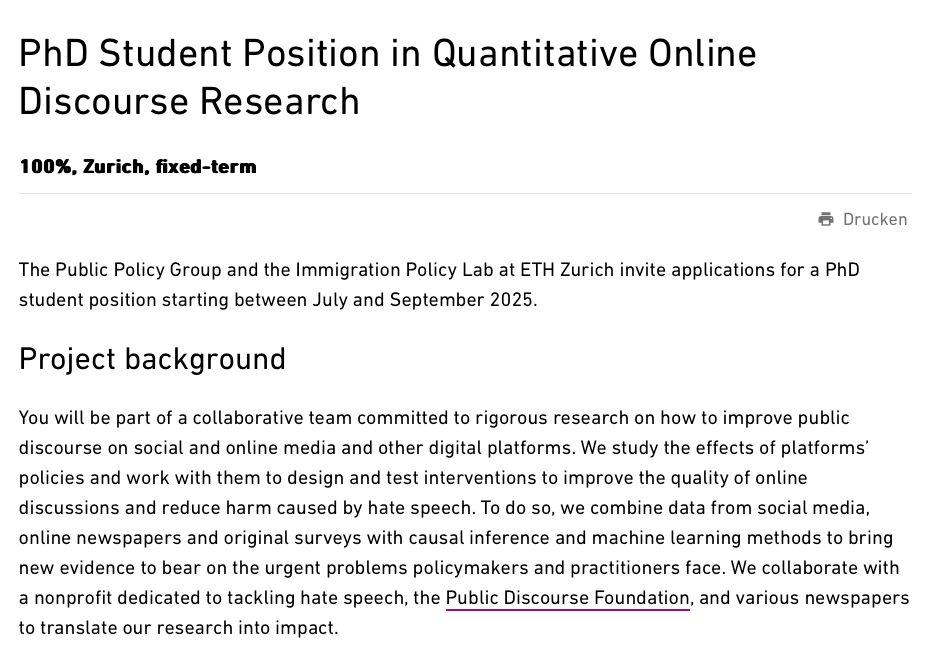
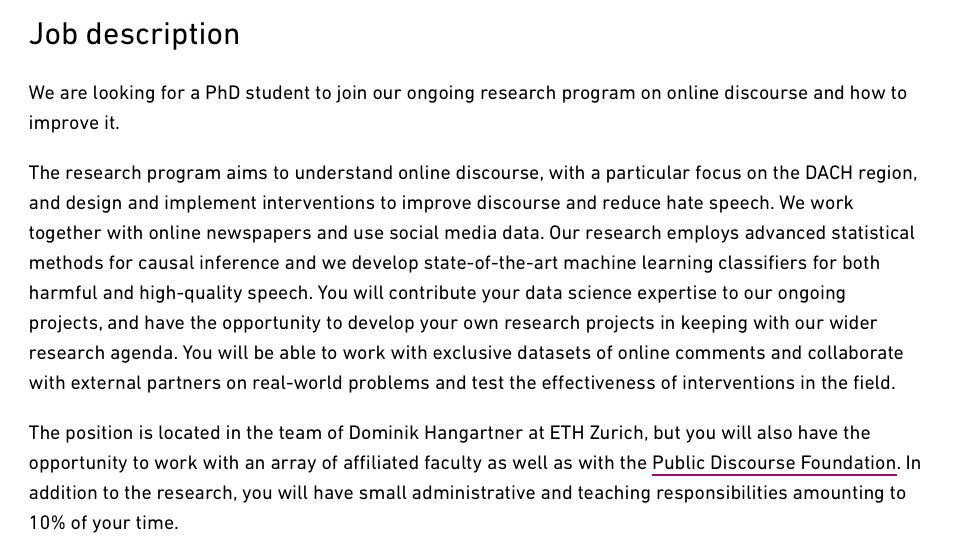
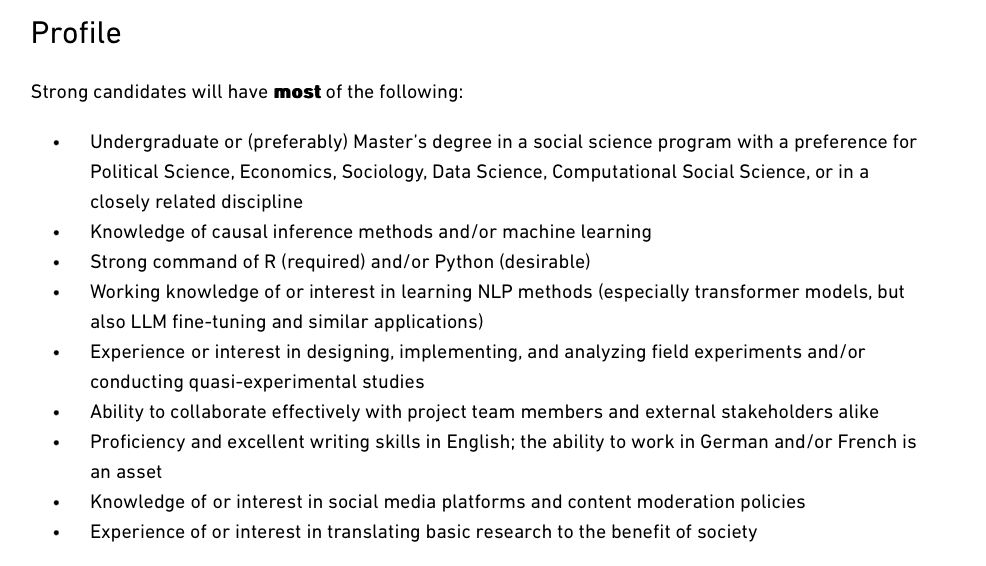
Interested in how people talk to each other online? Care about causal inference and/or NLP? Want to design and implement field experiments?
Come do a PhD with Dominik Hangartner, me, and a bunch of awesome people at IPL in Zurich:
jobs.ethz.ch/job/view/JOP...
07.02.2025 12:47
👍 10
🔁 9
💬 0
📌 0