Fig. 1. The relationship between mean shoot length per grass species to species richness of the endophytic insects found in these shoots.
A The number of herbivore species, B the sum of herbivore and parasitoid species. The five points indicating no species at all indicate that no one insect species has been reared from the five annual grass species studied, despite intensive shoot sampling (see Table 1). The inquilines of P. australis are included (see Table 2, see also Fig. S2A and S2B for regressions without inquilines). Regression lines were fitted to the species richness found in the ten perennial grass species.

Fig. 2. Images illustrating the insect community of the shoot-inhabiting gall midge Giraudiella inclusa on Common Reed Phragmites australis.
A Phragmites australis reedbelt with the ricegrain-like galls of Giraudiella inclusa inside internodes.
B The gall midge Giraudiella inclusa: Oviposition, C Early Giraudiella gall development, D late Giraudiella gall development,
E the Giraudiella parasitoid Torymus arundinis ovipositing, F the gregarious Giraudiella parasitoid Aprostocetus calamarius,
G T. arundinis eggs on a dead 2nd instar host larva, H the conspicuously hairy, solitary T. arundinis larva, I midge skin filled with pupae of the gregarious Platygaster szelenii, J the solitary parasitoid Platygaster cf. quadrifarius (Tscharntke et al. 1991).
🌾🐛 New #BAAE article: Hidden insect food webs thrive inside perennial grass shoots 🌿
Longer shoots host richer herbivore–parasitoid communities. Unmown refuges are key to protecting these overlooked specialists. 🕷️
DOI:https://doi.org/10.1016/j.baae.2026.01.004
@gfoesoc.bsky.social
23.02.2026 07:00
👍 10
🔁 7
💬 0
📌 0

Which country is most similar to Britain?
Clue: none of the ones its politicians obsess over
If Britons were to look at Spain, they would see a rapidly growing economy with a relaxed attitude to immigration—in both respects a sharp contrast to their own land. Yet the two share similarities
30.11.2025 13:20
👍 18
🔁 5
💬 1
📌 1
People should absolutely be writing about how ICE's occupation of their cities is transforming life in these places, and they should be publishing it in print on paper - not just social media posts. There needs to be a record of this. Things are changing in measurable ways for the worse every day.
22.10.2025 00:46
👍 1869
🔁 567
💬 37
📌 16

Titelbild der taz vom 22. Oktober. Sie zeigt zwei Frauen vor einem Olivenbaum. Dazu die Zeile: Ölkrise in Marokko. Der Klimawandel erschwert die Olivenernte. Wie marokkanische Bäuerinnen damit umgehen und was im neuen UN-Bericht zur Anpassung an die Erderwärmung steht
Unsere taz von heute 🗞️
22.10.2025 06:00
👍 26
🔁 7
💬 1
📌 1
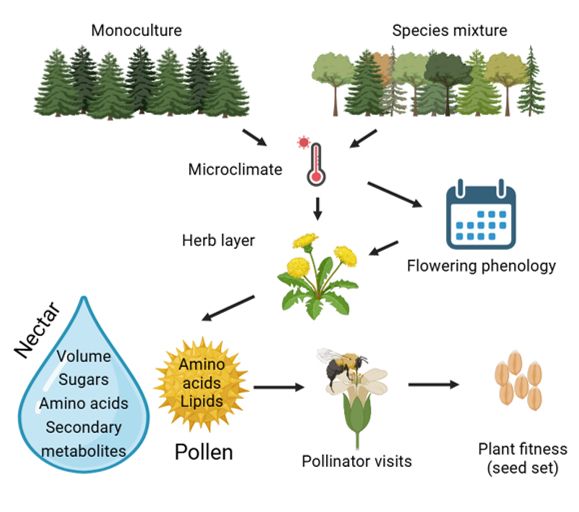
PhD applications are now open @treesdla.bsky.social for 2026 intake. Have a look at a project on effects of forest diversity on floral reward production for pollinators that we advertise with @philstevenson.bsky.social. Do apply/get in touch if you are interested! www.trees-dla.ac.uk/projects/eff...
21.10.2025 11:17
👍 30
🔁 30
💬 1
📌 1

Join the SCB Europe Fall Webinar 2025!
Thought-provoking sessions coming up this October & November:
20/22/29 Oct: DEIJ in conservation
23 Oct: Rethinking conservation narratives
7 Nov: Rights for organisms!
12 Nov: Habitat restoration & ecopsychology
Register here: bit.ly/4nYatdM
09.10.2025 08:27
👍 7
🔁 7
💬 0
📌 1


What are the consequences of pollinator decline for wild plants? Here we try to find out in @valor-project.eu. Interesting observations. I never see Centaurea jacea flowers with pollen. But keep the pollinators away and the flowers are dusted white. Very popular species.
23.05.2025 16:26
👍 9
🔁 2
💬 0
📌 0

Higher cutting frequency can restore habitat quality on farmland. doi.org/10.1111/1365...
27.09.2025 16:01
👍 8
🔁 6
💬 2
📌 0

Intensifying grassland management leads to massive loss of arthropod species. However, total arthropod numbers remain more or less stable. Many losers, few winners. doi.org/10.1016/j.bi...
10.10.2025 12:05
👍 39
🔁 14
💬 1
📌 0


Anyone thinking that having a car or two is ''quality of life'', should pay a visit to Paris to experience a city where a car is not only 'not necessary' but even a burden.
Paris was transformed by improving public transport, extending bike lanes, and by converting streets to green spaces. Amazing.
10.10.2025 12:31
👍 17
🔁 3
💬 1
📌 0

Why María Machado Deserved the Nobel Peace Prize
The Venezuelan opposition leader shows why participation matters.
Nobel Peace Prizes have often been awarded to people who fight autocracy. Maria Corina Machado fits right into that tradition
www.theatlantic.com/ideas/archiv...
10.10.2025 12:42
👍 6967
🔁 1630
💬 225
📌 105

Photograph shows villages and rolling fields and blue sky far away in the distance. Most of the photograph is taken up by a wide, green, lush field in the foreground. In the middle is a broad strip of large, white daisy-like flowers (ox-eye daisies or Leucanthemum vulgare). Thanks to Bea Maas for the photograph.
Strips of land planted with flowers are much loved: they are beautiful and attract bees and insects. Is that enough for #Biodiversity? Researchers call for more diversity and collaboration across the landscape: www.uni-goettingen.de/en/3240.html...
#BiologicalConvervation: doi.org/10.1016/j.bi...
29.09.2025 10:58
👍 11
🔁 3
💬 0
📌 0

Main Grape Varieties in Alsace, 1968-2022. Riesling's amazing surge from #3 to the undisputed #1. And Sylvaner's abysmal decline from #1 to #7.
01.10.2025 16:43
👍 10
🔁 6
💬 1
📌 0
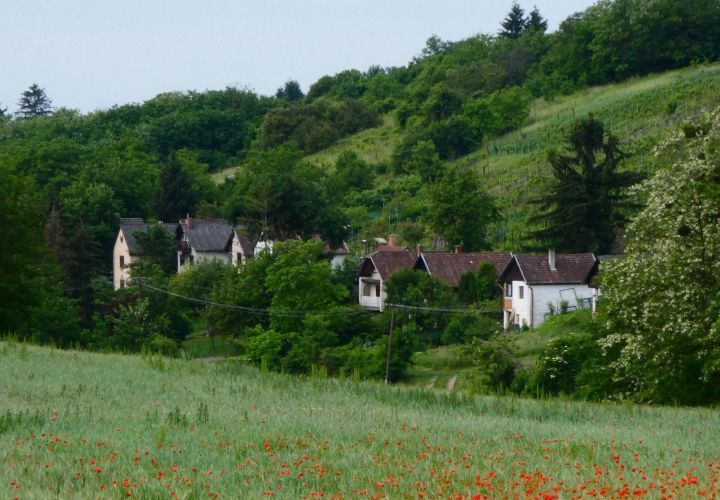
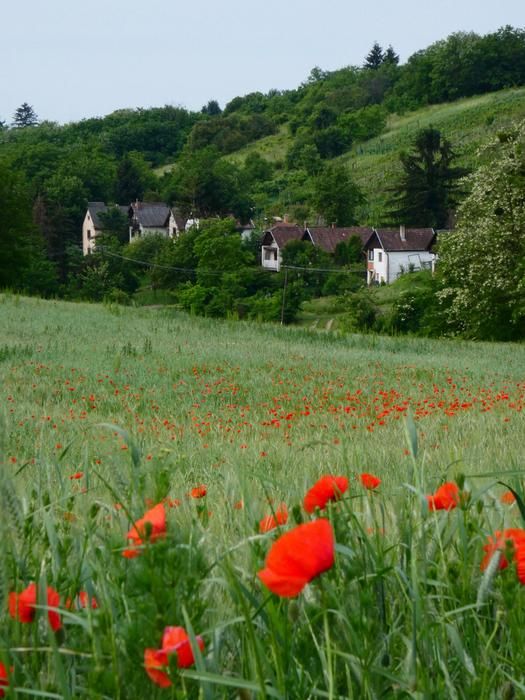
Ortsrand von Botfa, einem Dorf in einer waldreichen Landschaft nahe der Stadt Zalaegerszeg in Ungarn. Dargestellt sind acht Häuser in einer Reihe, die von Bäumen umgeben sind. Hinter den Häusern erhebt sich ein Hang mit Bäumen, vor den Häusern liegt eine Wiese mit vielen roten Mohnblüten. (Copyright: Tamas Lakatos)
#Wald im Umland fördert die #Artenvielfalt in Dörfern. Und Stadtnähe steigert das Wohlbefinden der Menschen dort. Das zeigen Untersuchungen in Ungarn und Rumänien. Mehr zur Studie: www.uni-goettingen.de/de/3240.html...
@agrarunigoe.bsky.social @funcagroeco.bsky.social @teja-tscharntke.bsky.social
14.07.2025 08:28
👍 5
🔁 2
💬 0
📌 0
While the prevalence of toxic agrochemicals in our food, water and urine tests is increasing,with known health impacts, and while the biodiversity crisis is accelerating, some agri ministers think that the best thing to do at the moment is to ease the route for approving agrochemicals.
27.09.2025 17:07
👍 9
🔁 5
💬 1
📌 0

We need much more semi-natural habitat (6-37%, depending on species group) in agricultural landscapes to effectively conserve pollinators. Large collaborative synthesis study looking at 59 studies in 1250 landscapes from 19 countries now published in Science www.science.org/doi/10.1126/...
25.09.2025 18:03
👍 66
🔁 33
💬 1
📌 1


🎉 Great team success! New publication just came out — the result of inspiring group discussions led by @teja-tscharntke.bsky.social It's fantastic to have such a collaborative spirit in the lab!
Biodiversity conservation needs mix of measures and collaboration
www.sciencedirect.com/science/arti...
28.09.2025 07:00
👍 29
🔁 7
💬 0
📌 0

Beyond Species Richness for Biological Conservation
Recent global policy developments have highlighted the need for straightforward, robust, and meaningful biodiversity metrics. However, much of conservation science is dominated by the use of a single....
Happy to share new work from the lab and a wonderful group of co-authors:
We argue that conservation biology needs to move beyond the current focus on species richness metrics.
While this has been argued before, we highlight the unappreciated impacts of using richness for a variety of problems:
07.08.2025 14:00
👍 52
🔁 25
💬 2
📌 1

Untangling host specialization in a “double dark taxa” system
Abstract. Platygastrine wasps (Hymenoptera: Platygastridae) are parasitoids of gall midges (Diptera: Cecidomyiidae). They and their hosts are exceptionally
Gall midges and their parasitoids are abundant, megadiverse, and very hard to identify! Such "double dark taxa" systems present special challenges for ecology and agriculture. 🧵🧪🐙 @smnstuttgart.bsky.social @marinamoser.bsky.social @krogmann.bsky.social doi.org/10.1093/aesa...
12.02.2025 23:01
👍 68
🔁 24
💬 3
📌 4

Cover Artenfocus

Titel Wildbienen-Artikel
Kürzlich ist ein Wildbienen-Artikel erschienen 🐝🐝
Autor*innen: Thomas Fechtler, Hanna Gardein (Julius-Kühn-Institut), Felix Kirsch @thuenen.de, Friederike Grau & Annika Haß @funcagroeco.bsky.social @unigoettingen.bsky.social & Fionn Pape.
▶️ www.researchgate.net/publication/...
22.01.2025 08:12
👍 45
🔁 11
💬 1
📌 0
well I have since drawn a sweat bee, so can complete this #SciArt #invertebrates checkerboard 🐝
02.07.2025 09:21
👍 53
🔁 17
💬 1
📌 0
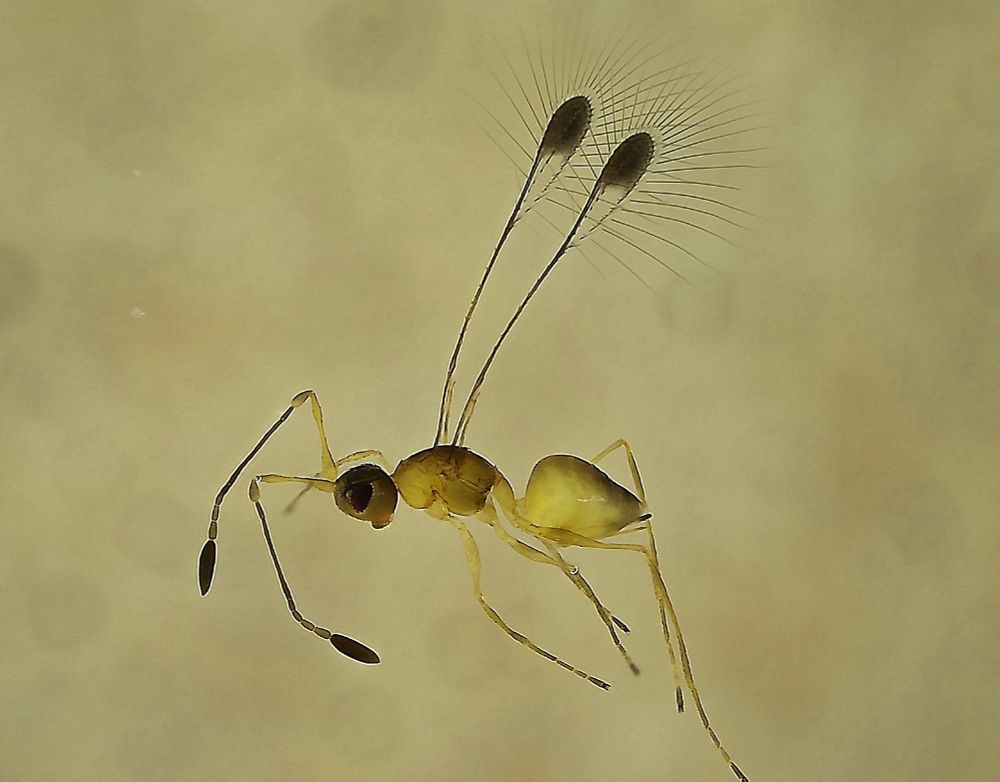
A tiny dark orange wasp with shaded fringed wings on long stalks, head and antennae are to the left of pictures
A beautiful female Mymar pulchellum parasitoid wasp of the Mymaridae found in Brede High Woods. This may be a common species but it is always worth a closer look!
#UKWildlife #wasps #Mymaridae #HighWeald
16.07.2025 12:02
👍 31
🔁 7
💬 1
📌 1

A most unwell Large White caterpillar on our wall today. I believe the cocoons below are those of the parasitoid Cotesia glomerata, and the adults wasps look like they may be Lysibia nanus. Any confirmation/correction very welcome as always.
23.07.2025 21:06
👍 9
🔁 2
💬 2
📌 0
Unlocking the hidden biodiversity of Europe’s villages | EurekAlert! www.eurekalert.org/news-release...
06.07.2025 08:08
👍 16
🔁 5
💬 1
📌 0